Unisciti a noi in un viaggio nel mondo dei libri!
Aggiungi questo libro allo scaffale
Grey
Scrivi un nuovo commento Default profile 50px
Grey
Iscriviti per leggere l'intero libro o leggi le prime pagine gratuitamente!
All characters reduced
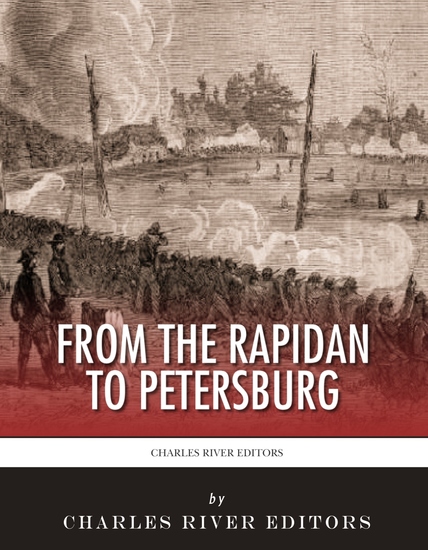
From the Rapidan to Petersburg - The Overland Campaign and the First Battles for Petersburg - cover

From the Rapidan to Petersburg - The Overland Campaign and the First Battles for Petersburg

Editors Charles River

Casa editrice: Charles River Editors

  • 0
  • 0
  • 0

Sinossi

With Robert E. Lee’s Army of Northern Virginia continuing to frustrate the Union Army of the Potomac’s attempts to take Richmond in 1862 and 1863, President Lincoln shook things up by turning command of all the armies of the United States to Ulysses S. Grant in March 1864. , Lee had won stunning victories at battles like Chancellorsville and Second Bull Run by going on the offensive and taking the strategic initiative, but Grant and Lincoln had no intention of letting him do so anymore. Attaching himself to the Army of the Potomac, Grant ordered Army of the Potomac commander George Meade, "Lee's army is your objective point. Wherever Lee goes, there you will go also."


From May 5-7, the two most famous generals of the Civil War squared off for the first time. The 100,000 strong Army of the Potomac was double the size of Lee’s hardened but battered Army of Northern Virginia. It was a similar position to the one George McClellan had in 1862 and Joe Hooker had in 1863, and Grant’s first attack, at the Battle of the Wilderness, followed a similar pattern. Nevertheless, Lee proved more than capable on the defensive.
 
The Battle of the Wilderness was fought so close to where the Battle of Chancellorsville took place a year earlier that soldiers encountered skeletons that had been buried in shallow graves in 1863. Moreover, the  woods were so thick that neither side could actually see who they were shooting at, and whole brigades at times got lost in the forest. Both armies sustained heavy casualties while Grant kept attempting to move the fighting to a setting more to his advantage, but the heavy forest made coordinated movements almost impossible.
 
On May 5 and May 6, both armies attempted desperate attacks and counterattacks to strike a knockout blow, but they were ultimately unable to dislodge each other. Given the terrain and the nature of the fighting, it was one of the most horrendous battles of the war, with some wounded men literally burning to death in fires ignited by the battle that sparked the nearby underbrush and spread rapidly. The defending Confederates technically won a tactical victory by holding their ground, but they did so at a staggering cost, inflicting 17,000 casualties on the Army of the Potomac and suffering 11,000 of their own.
 
On May 7, Grant disengaged his army from the battle. His objective had been frustrated by Lee’s skillful defense, the same position as Hooker at Chancellorsville, McClellan on the Virginian Peninsula, and Burnside after Fredericksburg. His men got the familiar dreadful feeling that they would retreat back toward Washington, as they had too many times before. This time, however, Grant made the fateful decision to keep moving south, inspiring his men by telling them that he was prepared to “fight it out on this line if it takes all Summer.” The Battle of the Wilderness would only be the beginning of the Overland Campaign, not the end of it.
 
From the Rapidan to Petersburg comprehensively covers the campaign and the events that led up to the battle, the fighting itself, and the aftermath of the battle. Accounts of the battle by important participants are also included, along with maps of the battle and pictures of important people, places, and events. You will learn about the Wilderness like you never have before.
Disponibile da: 02/05/2025.
Lunghezza di stampa: 156 pagine.

Altri libri che potrebbero interessarti

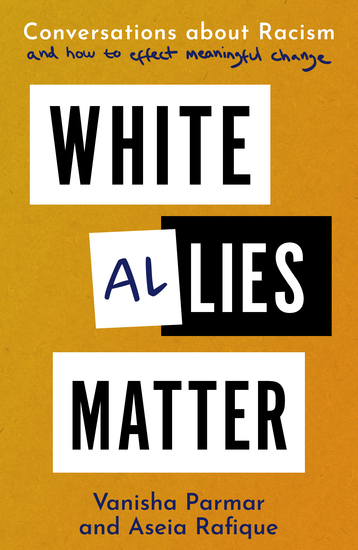
  • White Allies Matter - Conversations about Racism and How to Effect Meaningful Change - cover

    White Allies Matter -...

    Vanisha Parmar, Aseia Rafique

    • 0
    • 0
    • 0
    Why do organizations and individuals in the UK and other countries still deny the realities of structural racism and unconscious bias? And when there is an acknowledgement of the problem, why are long-term solutions constantly avoided?
    Mostra libro
  • F*CK HIM! - Nice girls always finish single - cover

    F*CK HIM! - Nice girls always...

    Brian Nox

    • 0
    • 0
    • 0
    Tired of being ghosted, taken for granted, or stuck in a cycle of one-sided relationships? 
     You’re not alone—and it’s time to take back the power. 
    The MANipulator Manual isn’t about playing games. It’s about winning the game by mastering the psychology of male behavior. If you've ever felt like you were doing all the work in your relationships and still ending up confused or heartbroken, this audiobook will flip the script. 
    This is your new dating bible—a fierce, no-nonsense guide to becoming the high-value woman who men pursue, respect, and obsess over.Inside, you'll discover how to:Flip the power dynamic without losing your femininityTrigger emotional investment from a man—without chasing himSpot red flags early and stop wasting time on emotionally unavailable menTake control of your love life by mastering subtle but powerful influence tacticsMake him believe your desires were his idea all alongGet treated like a queen—without begging, compromising, or overgiving 
    Whether you're dating, in a situationship, or want to reclaim your voice in a long-term relationship, this audiobook gives you the tools to shift from passive to powerful. 
    Listen now—because waiting for things to change on their own isn’t an option.
    Mostra libro
  • The PhD Debate - Is This Path Right for You? - cover

    The PhD Debate - Is This Path...

    Darius Robinson

    • 0
    • 0
    • 0
    Embark on a journey through the labyrinth of higher education with "The PhD Debate: Is This Path Right for You?" This guide serves as a compass, unraveling the rich history of a PhD and exploring personal and professional goals. Delve into financial considerations, uncover funding secrets, and experience the highs and lows of a PhD student's life. Discover the art of selecting a mentor and navigate the post-PhD career landscape. This book isn't just a guide; it's a mirror to your potential and the key to unlocking endless possibilities. Are you ready to step through the door to your future?
    Mostra libro
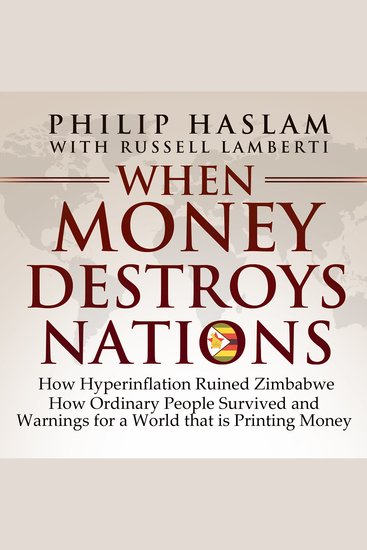
  • When Money Destroys Nations - How Hyperinflation Ruined Zimbabwe How Ordinary People Survived and Warnings for a World that is Printing Money - cover

    When Money Destroys Nations -...

    Philip Haslam, Russell Lamberti

    • 0
    • 0
    • 0
    The collapse of the Zimbabwe dollar in 2009 after years of rampant money printing is an alarming example of what lies in store for countries that print money to pay national debts, bail out banks and enrich political elites. 
    When Money Destroys Nations tells the gripping story of the disintegration of the once-thriving Zimbabwean economy and the inspiring and tragic accounts of how ordinary people survived in turbulent circumstances. Philip Haslam and Russell Lamberti give a straightforward and revealing account of the causes and consequences of Zimbabwe's hyperinflation and how they apply to you in our world today. 
    Zimbabwe's economic collapse is not an isolated tragedy. It holds lessons for all countries and for all political leaders tempted to take shortcuts to prosperity. Zimbabwe's lessons must not be ignored. 
    This is the story of When Money Destroys Nations.
    Mostra libro
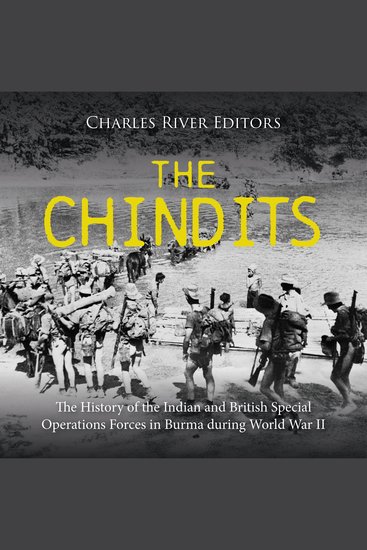
  • Chindits The: The History of the Indian and British Special Operations Forces in Burma during World War II - cover

    Chindits The: The History of the...

    Editors Charles River

    • 0
    • 0
    • 0
    While the fighting on the Asian mainland is often overlooked in favor of other theaters, at the beginning of 1942, Japanese soldiers in the 15th Army invaded Burma and drove out the British forces in a state of disorder. In fact, it was a headlong retreat, and with the fall of Burma, the Japanese posed a threat to India itself. As Britain scrambled to rebuild its forces and morale to hold back the Japanese, one British officer, Orde Wingate, with considerable experience with irregular operations in the Middle East, formed a radical plan to disrupt the Japanese forces now at the gates of India. He advocated taking the fight to the enemy by using a relatively small group of highly trained soldiers to attack the vulnerable Japanese supply lines that extended precariously through the Burmese jungle. 
    The “Chindits” came about as a result of Wingate’s idea. They were a British-trained force of British, Indian, and Gurkha soldiers designed to be employed on long-range offensive operations behind the lines of the Japanese. They were launched on two major campaigns, one in 1943 and one in 1944, and they fought in some of the most brutal and grueling terrain and climatic environments on the planet. In addition to facing enemy fire, soldiers in Burma had to deal with monsoons, tropical diseases, thick jungles, bad water, and poor nutrition, along with hidden booby traps and the potential of being ambushed by local villagers. On top of all that, the Chindits were up against an experienced, tenacious, and savage enemy who rarely took prisoners. 
    Training for the operations was intense, fighting was fierce, and the casualties were high, which has ensured their service is still a subject of heated debate.
    Mostra libro
  • How Does Change Happen? - Scenes from the Frontlines of Activism - cover

    How Does Change Happen? - Scenes...

    Sam Gonçalves

    • 0
    • 0
    • 0
    Mass protests and direct action have been familiar tactics against the many crises of the 21st century. Though methods vary, there's a collective longing for meaningful and transformative action. Some are deemed too weak, others too disruptive: from Instagram tiles to cans of soup thrown on famous paintings.
    Through conversations with activists and organisers, Sam Gonçalves recounts stories of protest and the fight for change, from a community of landless workers in Southern Brazil, to chefs unionising their workplace in Glasgow, Scotland. These narratives reveal the opportunities and challenges that are part of the difficult work of creating change, a wrestling with the question: how does change happen?
    Having a 'positive impact' in the world is often relegated to the 'personal', an individual endeavour. Gonçalves investigates that assumption and explores ways communities have resisted collectively, and fought against the individualising forces surrounding them.
    Mostra libro