Join us on a literary world trip!
Add this book to bookshelf
Grey
Write a new comment Default profile 50px
Grey
Subscribe to read the full book or read the first pages for free!
All characters reduced
The Last Asset - Enriched edition - cover

The Last Asset - Enriched edition

Edith Wharton

Publisher: DigiCat

  • 0
  • 0
  • 0

Summary

In "The Last Asset," Edith Wharton crafts a nuanced exploration of wealth, moral deterioration, and the complexities of human relationships against the backdrop of early 20th-century American society. Through incisive dialogue and a rich narrative style, Wharton delves into the lives of her characters, highlighting the interplay between financial interest and personal ethics. The novella stands out within Wharton's oeuvre as it encapsulates her keen observations on social stratification and the consequences of materialism, while also reflecting prevalent literary movements of her time that emphasized psychological depth and realism. Edith Wharton (1862-1937), the first woman to win the Pulitzer Prize in Literature, was deeply influenced by her own experiences in high society and her advocacy for women's rights. Having faced the confines of elite social expectations, Wharton turned her literary lens toward critiquing those very structures. "The Last Asset" not only showcases her talent for character development but also serves as a commentary on the moral dilemmas faced by individuals drawn into the labyrinth of affluence and expectations. Readers of Wharton's work will find "The Last Asset" an essential addition to the canon of American literature. Its exploration of the often unspoken dynamics of wealth and morality remains profoundly relevant today, making it a poignant and thought-provoking read for anyone interested in the social intricacies of human relations.

In this enriched edition, we have carefully created added value for your reading experience:
- A succinct Introduction situates the work's timeless appeal and themes.
- The Synopsis outlines the central plot, highlighting key developments without spoiling critical twists.
- A detailed Historical Context immerses you in the era's events and influences that shaped the writing.
- An Author Biography reveals milestones in the author's life, illuminating the personal insights behind the text.
- A thorough Analysis dissects symbols, motifs, and character arcs to unearth underlying meanings.
- Reflection questions prompt you to engage personally with the work's messages, connecting them to modern life.
- Hand‐picked Memorable Quotes shine a spotlight on moments of literary brilliance.
- Interactive footnotes clarify unusual references, historical allusions, and archaic phrases for an effortless, more informed read.
Available since: 11/17/2023.
Print length: 31 pages.

Other books that might interest you

  • Kings of Thrones - Short Stories - cover

    Kings of Thrones - Short Stories

    Lord Dunsany

    • 0
    • 0
    • 0
    Irish writer Lord Dunsany was considered a major influence on the work of J. R. R. Tolkien, H. P. Lovecraft, and Ursula K. Le Guin. 
     
    Story List: 
     
    The Sword of Welleran 
    The Fall of Babbulkund 
    The Kith of the Elf Folk, Ch 1 
    The Kith of the Elf Folk, Ch 2
    Show book
  • Elizabeth and Her German Garden - cover

    Elizabeth and Her German Garden

    Elizabeth von Arnim

    • 0
    • 0
    • 0
    Elizabeth von Arnim, who is best known for her later novel The Enchanted April, married a Prussian aristocrat and, with their five children, lived in Nassenheide, Pomerania. Elizabeth and Her German Garden is a semi-autobiographical novel about the joy that the protagonist finds in the delights of her Pomeranian garden, which provides relief from the stifling environment of her household. The novel was originally published anonymously because von Arnim feared that her husband, whom she satirised in the book, would disapprove.Each season of the year is wittily recorded, bringing new events and visitors, conveyed through von Arnim’s idiosyncratic perspective, while the ‘kingdom of heaven’ of the garden provides a calm place where the author finds solace.
    Show book
  • The Bell-Tower - cover

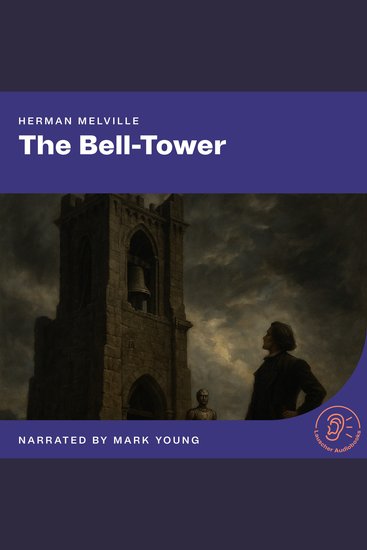
    The Bell-Tower

    Herman Melville

    • 0
    • 0
    • 0
    "The Bell-Tower" appeared in 1855 in Putnam's Monthly Magazine no. 32 (August).
    In the south of Europe, nigh a once frescoed capital, now with dank mould cankering its bloom, central in a plain, stands what, at distance, seems the black mossed stump of some immeasurable pine, fallen, in forgotten days, with Anak and the Titan.
    Show book
  • The Scarlet Letter - cover

    The Scarlet Letter

    Nathaniel Hawthorne

    • 0
    • 0
    • 0
    Set in 17th-century Puritan Massachusetts, The Scarlet Letter tells the haunting story of Hester Prynne, a woman condemned to wear a scarlet "A" for committing adultery. As Hester endures shame and isolation, she raises her daughter Pearl and protects the identity of the child’s father, the respected Reverend Dimmesdale. Nathaniel Hawthorne’s powerful exploration of guilt, sin, and redemption probes the heart of moral hypocrisy and human frailty. A foundational work of American literature, The Scarlet Letter remains a timeless meditation on the complexities of judgment, punishment, and forgiveness.
    Show book
  • The Tale of the Hands of God - From their pens to your ears genius in every story - cover

    The Tale of the Hands of God -...

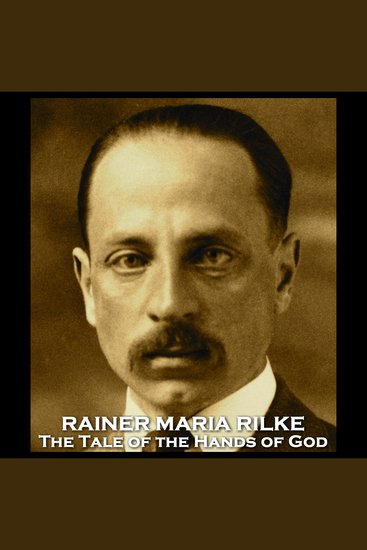
    Rainer Maria Rilke

    • 0
    • 0
    • 0
    René Karl Wilhelm Johann Josef Maria Rilke was born into a troubled marriage on the 4th December 1875 in Prague, then part of the Austro-Hungarian Empire.  His mother, having previously lost a baby girl, would dress the young boy up in girl’s clothing.   
    Later his father dispatched him to a military academy at age 10 but after a miserable 5 years the young Rilke left due to illness and instead entered first Prague and then Munich and finally Berlin university to study art history, philosophy and literature. 
    His initial forays into literature was in poetry.  His intense, mystical and lyrical style was much admired and over time inspired many in succeeding generations.    
    His short prose collection ‘Stories of God’, written in an impassioned burst over several nights was published in 1900 and offers a beguiling view of much of Rilke’s influences and outlook.  
    The following year he married the pioneering sculptor and artist Clara Westhoff.  The union produced one child, a daughter Ruth.   
    He lived in Paris for most of the Century’s first decade where he mixed with many great minds of the time.  Although he continued to write he also worked as a secretary to the sculptor, Rodin.   
    It was only after they settled in Switzerland in 1919 that his writing output was in full flow.  Here he wrote profusely in both German and French, which included much on his previous travels, his left-wing sympathies, his religious and existential thoughts, all part of a unique and consummate style. 
    From 1923 on, Rilke increasingly struggled with his health which was now in constant decline and often spent time rehabilitating at a sanatorium.   
    Rainer Maria Rilke died of leukaemia on the 29th December 1926 in Montreux, Switzerland.  He was 51.
    Show book
  • Blessed Are the Meek - From their pens to your ears genius in every story - cover

    Blessed Are the Meek - From...

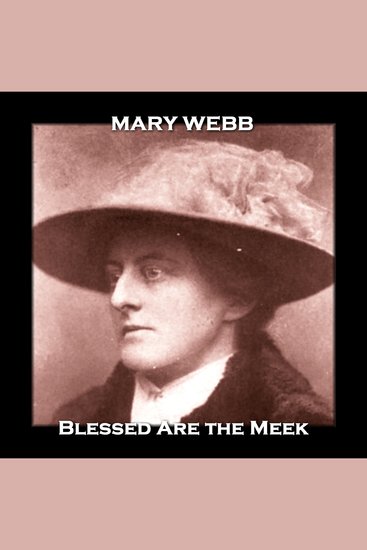
    Mary Webb

    • 0
    • 0
    • 0
    Mary Gladys Meredith was born on 25th March 1881 at Leighton Lodge in the village of Leighton, near Shrewsbury in Shropshire.  
    Mary was home-schooled by her father before being sent to a finishing school in Southport in 1895. Her longs walks in the countryside helped her develop a heightened sense of observation and description, of both people and places, which later infused both her poetry and prose. 
    When she was 20 she developed symptoms of Graves' disease, a thyroid disorder that caused bulging protuberant eyes and throat goitre. This caused life-long ill health and was a possible contributor to her early death.  
    Mary was first published as a teenager when her brother sent to a local newspaper her poem on a recent rail accident.  Mary, who was in the habit of destroying her work was appalled though placated when she discovered that it had received some positive appreciation in readers letters. 
    1912 brought marriage to Henry Bertram Law Webb, a teacher. He supported her literary work which, in 1917, resulted in the publication of her novel ‘The Golden Arrow.’ 
    A few years later they acquired a property in London where, it was hoped, recognition of her literary talents would be more easily recognised.   
    Her 1924 novel, ‘Precious Bane’, won the Prix Femina Vie Heureuse, the prestigious French literary prize awarded by an all-female jury. 
    Most of her poetry and various other works were only published after her death. 
    By 1927 her health was deteriorating and her marriage failing.   
    Mary Webb died on 8th October 1927 at St Leonards-on-Sea, East Sussex.  She was 46.
    Show book