¡Acompáñanos a viajar por el mundo de los libros!
Añadir este libro a la estantería
Grey
Escribe un nuevo comentario Default profile 50px
Grey
Suscríbete para leer el libro completo o lee las primeras páginas gratis.
All characters reduced
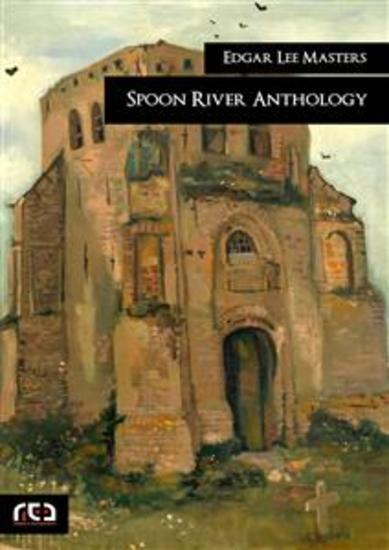
Spoon River Anthology - cover

Spoon River Anthology

Edgar Lee Masters

Editorial: REA Multimedia

  • 0
  • 0
  • 0

Sinopsis

Spoon River Anthology (1915) is a collection of short free verse poems by Edgar Lee Masters. The poems collectively narrate the epitaphs of the residents of Spoon River, a fictional small town named after the Spoon River, which ran near Masters's home town of Lewistown, Illinois. The aim of the poems is to demystify rural and small town American life. The collection includes 212 separate characters, in all providing 244 accounts of their lives, losses, and manners of death. Many of the poems contain cross-references that create a candid tapestry of the community.
Disponible desde: 31/10/2024.

Otros libros que te pueden interesar

  • The Snail House (NHB Modern Plays) - cover

    The Snail House (NHB Modern Plays)

    Richard Eyre

    • 0
    • 0
    • 0
    Sir Neil Marriot had a 'good pandemic', becoming familiar to millions from his TV appearances as a government medical advisor. His service even earned him a knighthood, and he is now rewarding himself with a lavish birthday party.
    But, amidst the oak panelling, the champagne and the silver service, his family are at one another's throats again, and he thinks there's something familiar – and somehow unsettling – about one of the catering staff...
    The Snail House is a play about how the past impacts on the present, and how overconfidence can have disastrous consequences. Written and directed by Richard Eyre, it premiered at Hampstead Theatre, London, in September 2022.
    Ver libro
  • Ways to Say Goodbye - cover

    Ways to Say Goodbye

    Anne Kellas

    • 0
    • 0
    • 0
    In this poetry collection 'Ways to Say Goodbye'. Anne Kellas takes the listener through dream sequences, abstract and imagistic poems and deeply personal poems of loss. The effect is a cumulative building of a quiet world of reflective resilience as the poet tries out possible ways to do what is almost impossible – to love and to say goodbye."These poems, their accounts of the ways art, chance talk, angels, birds, memories and music can come at us with terrible and tender truths, are gifts that teach us how ‘to read the mind of clouds’." (Kevin Brophy)
    Ver libro
  • The Rubaiyat of Omar Khayyam - cover

    The Rubaiyat of Omar Khayyam

    Omar Khayyam, Edward FitzGerald

    • 0
    • 0
    • 0
    The Rubaiyat of Omar Khayyam is a collection of quatrains (four-line verses) attributed to the 12th-century Persian poet, mathematician, and astronomer, Omar Khayyam. While the original Persian text is complex and open to interpretation, it is the English translation by Edward Fitzgerald that popularized the work in the Western world. 
    Fitzgerald's translation portrays a world view that is often characterized as: 
    Carpe Diem: Seize the day, emphasizing the fleeting nature of life and the importance of enjoying the present moment. 
    Skepticism: Questioning traditional beliefs and religious dogma, particularly in relation to the afterlife. 
    Epicureanism: Focusing on pleasure and the senses as the primary goods in life. 
    Fatalism: Accepting one's fate and the inherent unpredictability of existence.
    Ver libro
  • The Poet Li Po - A Study Of One Of China's Great Cultural Treasures - cover

    The Poet Li Po - A Study Of One...

    Arthur Waley

    • 0
    • 0
    • 0
    A dive into one of China's great poets by the first great populariser of Chinese literature, Arthur Waley.Also known as Li Bai (Chinese: 李白; pinyin: Lǐ Bái, 701–762), also pronounced as Li Bo, courtesy name Taibai (Chinese: 太白), was a Chinese poet, acclaimed from his own time to the present as one of the greatest and most important poets of the Tang dynasty and in Chinese history as a whole. He and his friend Du Fu (712–770) were two of the most prominent figures in the flourishing of Chinese poetry under the Tang dynasty, which is often called the "Golden Age of Chinese Poetry". The expression "Three Wonders" denotes Li Bai's poetry, Pei Min's swordplay, and Zhang Xu's calligraphy. - From the wiki
    Ver libro
  • Right of the Soil - cover

    Right of the Soil

    Yong Shu Hoong

    • 0
    • 1
    • 0
    The Latin phrase, jus soli (“right of the soil”), is an unconditional right of a person born within the territory of a country to be conferred citizenship. Singapore’s nationality law is based on jus sanguinis (“right of blood”, in which citizenship is determined by that of one or both parents) and a modified form of jus soli (with at least one Singaporean parent). 
     
    A two-time Singapore Literature Prize winner, Yong Shu Hoong contemplates how a person is invariably bound to the land on which he first sets foot. These poems address topics like belongingness and birthright by exploring the intermingling of the four fundamental elements of air, water, fire and earth. 
     
    Expanded from a 2016 chapbook published a year after the 50th anniversary of Singapore’s independence, this book also attempts to sharpen Yong’s understanding of his relationship with his homeland. A new sequence of poems then plunges readers into Hell, reimagined as Singapore’s third integrated resort that opens underground in the centennial year of 2065, with its concepts inspired by Haw Par Villa’s main attraction, the 10 Courts of Hell. 
     
    Beyond our earthly lives, is it soil – or another element or dimension – that will assert its right to claim us? 
     
    Shortlisted for the Singapore Literature Prize for Poetry 2020
    Ver libro
  • The Book of Jonah - cover

    The Book of Jonah

    Luke Kennard

    • 0
    • 0
    • 0
    Read by the author, Luke Kennard‘Kennard’s distinctive voice – surreal, funny, anxious, always overthinking, and cringingly self-deprecating – has made him one of the most widely liked and imitated British poets’ – Tristram Fane Saunders, TLSNone of the Old Testament prophets were especially happy or confident in their calling, but Jonah was the only one who rejected it outright, disobeying direct instruction from God and literally running away. In The Book of Jonah, Luke Kennard transforms the unique and awkward position Jonah’s story occupies in scripture – part dream, part joke, part provocation – into a madcap picaresque which marries the sacred and the absurd.Though Jonah’s encounter with the whale is most commonly interpreted as the story of a reluctant prophet being punished by his maker, Kennard’s Jonah is more wily business traveller than seer. Taking his instruction instead from non-governmental organizations, arts development agencies and public-relations gurus, this Jonah keeps relentlessly busy, accepting any assignment that will take him further away from Nineveh and drown out the word of God in his ears. On his travels he meets errant writers, fixers, artists and consultants, but nobody who can give him a sense of what his work might be beyond a five-star capitalist purgatory in a series of exotic locations. What would it mean to be a prophet – or even a false prophet – in this milieu?Taking on the decimation of funding for the arts, the emptiness of the hero’s journey and a literary culture regarded by wider society with cynicism, ignorance and apathy, The Book of Jonah is a blistering poetry collection from the Forward Prize-winning author of Notes on the Sonnets.
    Ver libro