Begleiten Sie uns auf eine literarische Weltreise!
Buch zum Bücherregal hinzufügen
Grey
Einen neuen Kommentar schreiben Default profile 50px
Grey
Jetzt das ganze Buch im Abo oder die ersten Seiten gratis lesen!
All characters reduced
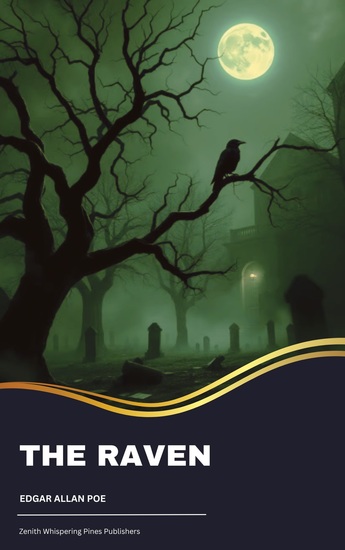
The Raven - cover

The Raven

Edgar Allan Poe

Verlag: Zenith Whispering Pines Publishers

  • 1
  • 0
  • 0

Beschreibung

"Quoth the Raven, 'Nevermore.'"

Few works of literature have captured the public imagination—or the chill of a winter's midnight—quite like Edgar Allan Poe's The Raven. First published in 1845, this hypnotic narrative poem remains the gold standard for atmospheric storytelling, tracing a grieving scholar's slow descent into insanity as he is visited by a mysterious, talking bird.

A Symphony of Dread and Beauty: The Raven is a masterclass in "The Philosophy of Composition." Poe meticulously engineered every stanza to evoke a singular effect: a beauty tinged with sadness. Through its rhythmic, driving meter and rich, classical allusions, the poem explores the universal human experience of grief and the terrifying realization that some losses are eternal. It is a work where the boundaries between the supernatural and the psychological blur, leaving the reader to wonder if the raven is a demonic messenger or a mere projection of a fractured mind.

From its "tapping" at the chamber door to the haunting shadow on the floor, The Raven continues to influence modern art, film, and music. This volume is an essential cornerstone for any library of classic poetry, horror fiction, and Dark Romanticism.

Open the door to the shadows. Buy "The Raven" today and experience the most famous poem in the English language.
Verfügbar seit: 24.12.2025.
Drucklänge: 81 Seiten.

Weitere Bücher, die Sie mögen werden

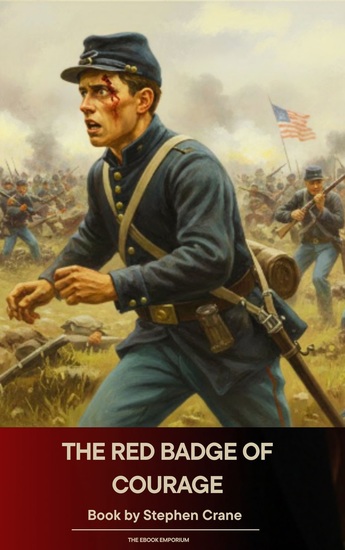
  • The Red Badge of Courage - cover

    The Red Badge of Courage

    Stephen Crane

    • 0
    • 0
    • 0
    "He had fled, he told himself, because annihilation had approached."
    
    Experience the American Civil War not through the grand strategy of generals, but through the frantic heartbeat of a single private. Henry Fleming, a young recruit known simply as "The Youth," enters the war with romantic visions of "Grecian" glory. However, when the real smoke of battle clears, he finds himself paralyzed by terror. After fleeing the front lines in a moment of panic, Henry becomes obsessed with his perceived cowardice. He longs for a "red badge of courage"—a visible wound—to hide his internal shame. Crane's vivid, impressionistic prose drags the reader through the mud, the chaos, and the transformative fire of the front lines as Henry seeks a way to redeem himself in his own eyes.
    
    The Birth of Impressionism in Fiction: Stephen Crane's style was revolutionary. Instead of a detached historical account, he uses colors, sounds, and fragmented images to mirror the sensory overload of combat. The "monstrous" machinery of war and the "red sun" pasted in the sky like a wafer create an atmosphere that feels more like a lived memory than a story.
    
    The Internal Battle: The true conflict of the novel isn't between the Union and the Confederacy, but within Henry himself. Crane explores the universal struggle of a young person confronting the reality that they might not be the hero they imagined. The novel deconstructs the concept of "courage," suggesting it is often a mixture of vanity, herd instinct, and mindless rage.
    
    Why It Is a Literary Essential: The Red Badge of Courage remains timeless because it focuses on the universal human condition under extreme pressure. It is a slim, intense volume that stripped away the Victorian sentimentality of war and replaced it with a psychological depth that influenced every great war writer of the 20th century, from Hemingway to O'Brien.
    
    Face the "Great Blue Monster" of war. Purchase "The Red Badge of Courage" today.
    Zum Buch
  • Tales Of The Divine Lila Sri Krishna - The Dark Blue Lord Of Vraj - cover

    Tales Of The Divine Lila Sri...

    Jagannatha Dasa

    • 0
    • 0
    • 0
    "If a person hears about, glorifies, meditates upon, worships, or simply offers great respect to the Supreme Lord Krishna, who is situated within the heart, the Lord will remove from his mind the contamination accumulated during many thousands of lifetimes." A.C. Bhaktivedanta Swami Prabhupada Krishna - the name itself is somehow transcendental and evokes a certain distant familiarity and evocative longing. In fact, it is said the name of Krishna is non-different from Himself. The ancient Vedic Scriptures also confirm that Krishna, as the Supreme Personality Of Godhead, is therefore present in the sound vibration of His holy name. If Krishna's name, and indeed Sanskrit itself, has this non-dual nature wherein that which is named and the name is one and the same, then the aspiring devotional yogi, can, by simply chanting Krishna's name, either by itself or via the iconic Maha Mantra: HARE KRISHNA HARE KRISHNA KRISHNA KRISHNA HARE HARE HARE RAMA HARE RAMA RAMA RAMA HARE HARE actually associate eternally with the Lord via this unique transcendental sound vibration. This has been the way of Bhakti Yoga in the Vaishnava tradition for over five thousand years. To further extrapolate this mystical ideal, it is said by sages everything relating to Sri Sri Radha Krishna has the same liberating potency including Their transcendental pastimes on this earth in Their many forms. This inspirational, devotional, entertaining, one of a kind, genuinely mystical audiobook presents Bhagavan Sri Krishna in his many alluring and mystifying incarnations (known as Das Avatar) accompanied by an amazing production of sound effects, music, and other talented performers which help tell these ancient fascinating tales so well. 
    Zum Buch
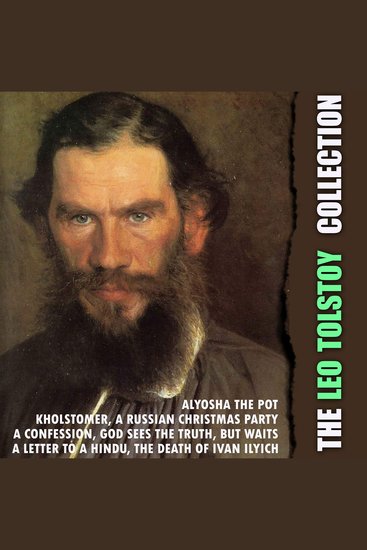
  • The Leo Tolstoy Collection - Alyosha the Pot Kholstomer A Russian Christmas Party A Confession God Sees the Truth But Waits A Letter to a Hindu The Death of Ivan Ilyich - cover

    The Leo Tolstoy Collection -...

    Leo Tolstoy

    • 0
    • 0
    • 0
    This collection brings together stories and reflections in which Leo Tolstoy turns inward.
    Stripped of grandeur, these works offer something more intimate: the inner noise of conscience, the weight of faith, the silence before death.
    A servant's silence, a horse's memory, a dying man's doubt—these are not performances.
    They are questions, waiting quietly for whoever dares to ask the same.
    Tolstoy isn't offering answers. He's writing toward something deeper. And the questions haven't aged a day.
    Contents:
    • Alyosha the Pot
    • Kholstomer: The Story of a Horse
    • A Russian Christmas Party
    • A Confession
    • God Sees the Truth, But Waits
    • A Letter to a Hindu
    • The Death of Ivan Ilyich
    Zum Buch
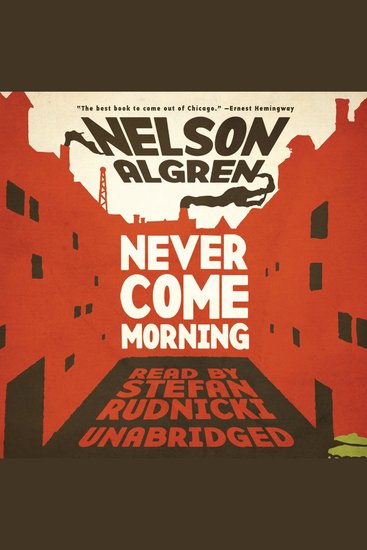
  • Never Come Morning - cover

    Never Come Morning

    Nelson Algren

    • 0
    • 0
    • 0
    Bruno Bicek, “Lefty,” is a prizefighter and small-time hood in Chicago. Boxing is his ticket to escape hard times and gang life, but when Bruno doesn’t prevent the brutal gang rape of his girlfriend, Steffi, it tears them apart, their worlds changed forever. Bruno is sent to jail and Steffi to a brothel governed by the brutality of a local crime boss, the Barber. Sinister and dark, the Barber controls Steffi and has no intention of letting her go. Why should he, when he holds all the cards? Bruno and Steffi, who dream of breaking free, learn this in the end and find that for them there will be no bright morning.
    Zum Buch
  • True Riches - cover

    True Riches

    Timothy Shay Arthur

    • 0
    • 0
    • 0
    "True Riches" is a novel written by Timothy Shay Arthur, an American author of the 19th century known for his moralistic tales. The book explores themes of wealth, morality, and the true meaning of riches. It tells the story of individuals who pursue material wealth but ultimately find that true richness lies in virtues such as kindness, generosity, and integrity.
    Zum Buch
  • Heart of Darkness - cover

    Heart of Darkness

    Joseph Conrad

    • 0
    • 0
    • 0
    Heart of Darkness (1899) is a short novel by Joseph Conrad, written as a frame narrative, about Charles Marlow's life as an ivory transporter down the Congo River in Central Africa.    The river is "a mighty big river, that you could see on the map, resembling an immense snake uncoiled, with its head in the sea, its body at rest curving afar over a vast country, and its tail lost in the depths of the land." In the course of his travel in central Africa, Marlow becomes obsessed with Mr. Kurtz.    The story is a complex exploration of the attitudes people hold on what constitutes a barbarian versus a civilized society and the attitudes on colonialism and racism that were part and parcel of European imperialism. Originally published as a three-part serial story, in Blackwood's Magazine, the novella Heart of Darkness has been variously published and translated into many languages.    In 1998, the Modern Library ranked Heart of Darkness as the sixty-seventh of the hundred best novels in English of the twentieth century. Short Summary Aboard the Nellie, anchored in the River Thames near Gravesend, England, Charles Marlow tells his fellow sailors about the events that led to his appointment as captain of a river-steamboat for an ivory trading company. He describes his passage on ships to the wilderness to the Company's station, which strikes Marlow as a scene of devastation: disorganized, machinery parts here and there, periodic demolition explosions, weakened native black men who have been demoralized, in chains, literally being worked to death, and strolling behind them a white Company man in a uniform carrying a rifle.    At this station Marlow meets the Company's chief accountant who tells him of a Mr. Kurtz, and explains that Kurtz is a first-class agent.
    Zum Buch