Unisciti a noi in un viaggio nel mondo dei libri!
Aggiungi questo libro allo scaffale
Grey
Scrivi un nuovo commento Default profile 50px
Grey
Iscriviti per leggere l'intero libro o leggi le prime pagine gratuitamente!
All characters reduced
The Giants of Literature: Series 3 - Complete Novels by Walter Scott Alexandre Dumas Fanny Burney Bram Stoker Nathaniel Hawthorne Anthony Trollope Frances Hodgson Burnett Émile Zola - cover

The Giants of Literature: Series 3 - Complete Novels by Walter Scott Alexandre Dumas Fanny Burney Bram Stoker Nathaniel Hawthorne Anthony Trollope Frances Hodgson Burnett Émile Zola

Edgar Allan Poe, Alexandre Dumas, Bram Stoker, Nathaniel Hawthorne, Anthony Trollope, Émile Zola, Walter Scott, H.P. Lovecraft, Frances Hodgson Burnett, Frances Burney

Casa editrice: e-artnow

  • 0
  • 0
  • 0

Sinossi

E-artnow presents to you "The Giants of Literature" – an ultimate anthology of world literature classics. This meticulously edited collection consists of the complete novels, short stories and poems by the greatest writers of all time. 
This volume includes:
Walter Scott: The Complete Novels
Frances Burney: The Complete Novels 
Alexandre Dumas: The Complete Novels 
Edgar Allan Poe: The Complete Stories & Poems 
H. P. Lovecraft: The Complete Fiction
Bram Stoker: The Complete Novels
Nathaniel Hawthorne: The Complete Novels 
Émile Zola: The Complete Rougon-Macquart Cycle
Anthony Trollope: The Complete Novels
Frances Hodgson Burnett: The Complete Novels
Disponibile da: 28/07/2024.
Lunghezza di stampa: 63558 pagine.

Altri libri che potrebbero interessarti

  • Little Bits of Ruined Beauty (NHB Modern Plays) - cover

    Little Bits of Ruined Beauty...

    Tom Wentworth

    • 0
    • 0
    • 0
    When Eddie returns home to Shropshire, he falls back into his fractious, complicated relationship with his father, both skirting around things long left unsaid. As their connection starts to evolve, can they break through and find the new beginning they both need?
    Tom Wentworth's Little Bits of Ruined Beauty is a darkly comic play examining the subtle shift from cared-for to carer, and how dignity and independence are maintained in isolated rural areas.
    It was premiered in 2022 by Pentabus on a tour of the UK, directed by Nickie Miles-Wildin, and commissioned and supported by Unlimited, celebrating the work of disabled artists.
    Mostra libro
  • The Poetry of Elizabeth Siddal - Talented poet who was also one of the most famous art models of her age - cover

    The Poetry of Elizabeth Siddal -...

    Anonimo

    • 0
    • 0
    • 0
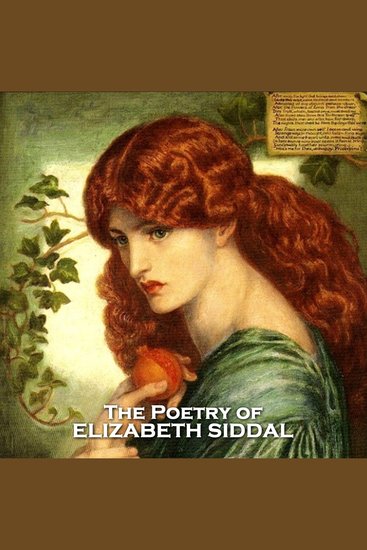
    Elizabeth Eleanor Siddall was born on the 25th July, 1829 in London into a working-class family where she received an ‘ordinary education’.   
    Whilst accounts differ, it is clear that she met the Pre-Raphaelite painter William Deverell whilst working in a millinery shop and he asked her to model for him, describing her as "magnificently tall, with a lovely figure, and a face of the most delicate and finished modelling ... she has grey eyes, and her hair is like dazzling copper, and shimmers with luster."  She personified female beauty for the Pre-Raphaelite Brotherhood and her face became well known in Victorian Britain, gracing many famous paintings such as John Everett Millais's Ophelia, where she is portrayed drowned, floating in a pond. From the experience she also caught pneumonia.  
    Although Siddal (she later changed the spelling of her name) endured a toxic and probably controlling relationship with Dante Gabriel Rossetti, who wouldn’t allow her to model for anyone but himself, she made great strides under his tuition and in her endeavours as an artist.  She was the only woman to exhibit with the Pre-Raphaelites in 1857 where she sold one of her paintings to an American collector. 
    She created many paintings, often inspired by Medieval themes, but her output of poetry was scant despite the positive reception to her verse.  Their motifs were sad and often tragic, dwelling on lost or doomed love.  As well they suggest a strong connection with nature and often plead with God with a haunting yet evocative simplicity. 
    Allied to this was a laudanum addiction which may have contributed to a still-born birth in 1861 and from which she never fully recovered.   
    Elizabeth Siddal committed suicide by an overdose, whilst pregnant, on the 11th February 1862.  She was 32.
    Mostra libro
  • The Poetry of John Milton - Sparkling poems from the famed man behind Paradise Lost - cover

    The Poetry of John Milton -...

    John Milton

    • 0
    • 0
    • 0
    John Milton was born in Bread Street, London, on December 9th, 1608.  His early years were privately tutored before gaining a place at St Paul’s School and in 1625 he matriculated at Christ's College, Cambridge, earning a BA in 1629 and an MA in 1632. At Cambridge he had developed a reputation for poetic skill but also experienced alienation from his peers and university life as a whole.  
    The next 6 years were spent in private study. He read both ancient and modern works of theology, philosophy, history, politics, literature and science, in preparation for a poetical career.  Milton mastered Latin, Greek, Hebrew, French, Spanish, and Italian. To these he would add Old English (whilst researching his History of Britain) and also acquired more than a passing acquaintance in Dutch.  
    Although he was studying, some of his poetry from this time is remarkable; L’Allegro and Il Penseroso in 1631 and Lycidias in 1638. 
    In May 1638, Milton embarked upon a 15 month tour of France and Italy. These travels added a new and direct experience of artistic and religious traditions, especially Roman Catholicism.  He cut the journey short to return home during the summer of 1639 because of what he claimed were "sad tidings of civil war in England."  
    Once home, Milton wrote prose tracts against episcopacy, in the service of the Puritan and Parliamentary cause.  
    He married 16-year-old Mary Powell in June 1643 but she left him after only a few months during which he wrote and published several writings on divorce. Mary did return after 3 years and their life thereafter seemed harmonious.  Milton received a hostile response to the divorce tracts and drove him to write Areopagitica, his celebrated attack on pre-printing censorship.  
    With the parliamentary victory in the Civil War, Milton wrote The Tenure of Kings and Magistrates (1649) which defended popular government and implicitly sanctioned the regicide which led to his appointment as Secretary for Foreign Tongues by the Council of State.  
    On 24 February 1652 Milton published his Latin defense of the English People, Defensio Pro Populo Anglicano, also known as the First Defense. Milton's Latin prose and intellectual sweep, quickly gained him a European reputation.  
    Tragically his first wife, Mary, died on May 5th, 1652 following the birth of their fourth child.   The following year Milton had become totally blind, probably due to glaucoma.  He then had to dictate his verse and prose to helpers, one of whom was the poet Andrew Marvell. 
    He married again to Katherine Woodcock but she died in February 1658, less than four months after giving birth to a daughter, who also tragically died.  
    Though Cromwell’s death in 1658 caused the English Republic to collapse Milton stubbornly clung to his beliefs and in 1659 he published A Treatise of Civil Power, attacking the concept of a state-dominated church. Upon the Restoration in May 1660, Milton went into hiding for his life. An arrest warrant was issued and his writings burnt. He re-emerged after a general pardon was issued, but was nevertheless arrested and briefly imprisoned before influential friends, such as Marvell, now an MP, intervened 
    His third marriage was to Elizabeth Mynshull. Despite a 31-year age gap, the marriage seemed happy and Milton spent the remaining decade of his life living quietly in London, apart from a short spell in Chalfont St. Giles, during the Great Plague of London.  
    Milton was to now publish his greatest works, which had been gestating for many years.
    Mostra libro

  • Smile People are watching - cover

    Smile People are watching

    Faaiz Mbelizi

    • 0
    • 0
    • 0
    Faaiz Mbelizi is an actor, writer and spoken word artist. This poetry collection is an accumulation of his poetry over the years. 
    In this poetry collection Mbelizi delves deep into the realms of pain and anxiety through vivid verses. A raw and honest representation of the struggles and inner turmoils faced. 
    Through evocative imagery and metaphors this collection explores the nature of these emotions and goes back and forth between darkness and moments of hope. Throughout the audiobook listeners are taken on a cathartic journey that resonates with their own experiences, providing solace and understanding in the midst of emotional upheaval.
    Mostra libro
  • Columbus - 19th century poem about exploration discovery and the dangers of industrialization - cover

    Columbus - 19th century poem...

    James Russell Lowell

    • 0
    • 0
    • 0
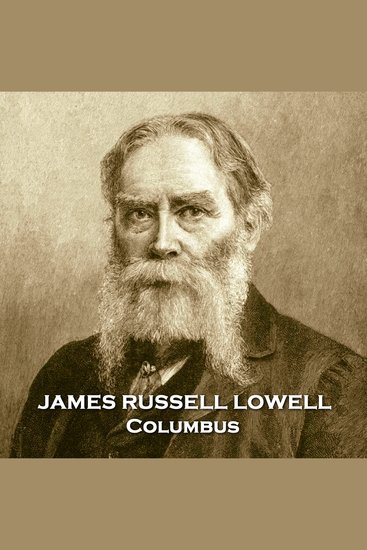
    James Russell Lowell was born on 22nd February 1819 in Cambridge, Massachusetts. 
    Lowell graduated from Harvard in 1838, and thence on to earn a law degree from Harvard Law School.  
    His literary life began in 1841 with his first published collection of poetry.  Three years later he married Maria White and they had several children although, sadly, only one was to survive childhood. 
    A consuming issue at the time was the abolition of slavery.  Lowell was a staunch supporter even going so far as to move to Philadelphia to edit an abolitionist newspaper.  His poems were fully in support of Emancipation and the ending of this terrible abomination.  His later views were milder and came in for some criticism.  
    His publication in 1848 of the long poem ‘A Fable for Critics’, satirising the poets and critics of the then current poetry scene caused an uproar.  That same year came ‘The Biglow Papers’, which increased his fame and his finances.  His use of the Yankee accent in his character’s dialogue was an inspiration for many. 
    Maria died in 1853 and Lowell decided to travel to Europe for some time before returning to Harvard to take up a professorship of languages.   In 1857 he re-married and also took on the editorship of that key periodical ‘The Atlantic Monthly’ whilst continuing to teach at Harvard. 
    Lowell wrote and published poetry and essay collections throughout his literary career and is acknowledged as one of the ‘Fireside Poets’, a group of New England poets that rivalled the popularity of British poets.  Their work was not controversial and suitable for whole families to enjoy hence their name and appeal.  Whilst Lowell’s own work does not now attract the same praise as his then contemporaries, he was their equal. 
    Towards the end of his life Lowell was appointed as ambassador to the Kingdom of Spain and later to the Court of St. James's.  
    His last years were a return home to his estate in Cambridge, Massachusetts.  By the summer of 1891 doctors had diagnosed cancer in his kidneys, liver and lungs.  There was nothing that they could do except prescribe opium for the pain. 
    James Russell Lowell died on the 12th of August 1891 on the Cambridge estate where he was also born.  He was 72.
    Mostra libro
  • Fairies and Fusiliers - cover

    Fairies and Fusiliers

    Robert Graves

    • 0
    • 0
    • 0
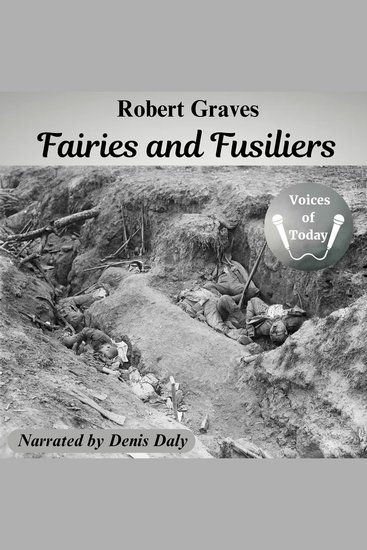
    Fairies and FusiliersBy Robert GravesNarrated by Denis DalyPoet, soldier, novelist, translator and critic Robert Graves (1895 - 1985) was deeply familiar with both war and death.  Three times during his life Graves was considered to be on the point of death due to serious illness.  One of these was after his participation in the Battle of the Somme, after which he had been actually pronounced dead due to severe wounding.Graves enlisted as soon as the First World War was declared, and was rapidly promoted to lieutenant and later to captain.  Among his fellow soldiers was another poet, Siegfried Sassoon.  Together with Wilfred Owen, who did not survive, Graves and Sassoon represented the new generation of war poets - perceptive critical surveyors of the horrific and wasteful futility of modern warfare, drawing their judgements from bitter personal experience. Fairies and Fusiliers is a collection of 47 short poems and was dedicated to Graves' former regiment, the Royal Fusiliers.Production copyright 2024 Voices of Today
    Mostra libro