Join us on a literary world trip!
Add this book to bookshelf
Grey
Write a new comment Default profile 50px
Grey
Subscribe to read the full book or read the first pages for free!
All characters reduced
Oxford Classics: Poetry - A Treasury of English-Language Verse from Medieval Ballads to Modern Symbolist Meditations - cover

Oxford Classics: Poetry - A Treasury of English-Language Verse from Medieval Ballads to Modern Symbolist Meditations

Edgar Allan Poe, William Shakespeare, Emily Brontë, Walt Whitman, SAMUEL TAYLOR COLERIDGE, Alexander Pope, Andrew Lang, Christopher Marlowe, Oliver Goldsmith, Robert Burns, Elizabeth Barrett Browning, Robert Louis Stevenson, John Keats, Percy Bysshe Shelley, George Meredith, Robert Browning, Thomas Love Peacock, Sir Walter Raleigh, William Wordsworth, Walter Scott, William Butler Yeats, Rudyard Kipling, William Blake, Alfred Tennyson, Edmund Spenser, Geoffrey Chaucer, Gilbert Parker, T. W. Rolleston, Sir Thomas Wyatt, John Milton, George MacDonald

Publisher: e-artnow

  • 0
  • 0
  • 0

Summary

Oxford Classics: Poetry surveys the capacious traditions of English-language verse, moving from medieval narrative and Renaissance lyric to Romantic vision, Victorian meditation, and transatlantic modernity. Its range encompasses sonnet, ballad, ode, dramatic monologue, pastoral, gothic reverie, patriotic song, and expansive free verse. Canonical achievements stand beside evocative shorter works, allowing Shakespearean lyric, Chaucerian storytelling, Romantic imagination, and Whitman's democratic cadences to illuminate poetry's changing forms and public purposes. The contributors collectively trace a literary history shaped by courtly culture, Reformation and Renaissance humanism, Augustan satire, Romanticism, Victorian aesthetic and social debate, Celtic revivalism, imperial encounter, and American self-fashioning. Voices associated with Scotland, Ireland, England, and the United States enlarge the volume's cultural map, while women poets and writers of markedly different temperaments complicate any single account of tradition. Across centuries, these poets test inherited meters and genres against questions of love, mortality, nature, nation, faith, artistic vocation, and individual liberty. Recommended for students and general readers alike, this anthology offers an unusually concentrated opportunity to compare styles, eras, and poetic philosophies within one volume. Its educational value lies not merely in its canon of memorable poems, but in the dialogue it creates among divergent voices: formal and experimental, intimate and public, visionary and satirical. Readers will find a rich foundation for studying poetic craft and literary history.
Available since: 11/09/2022.
Print length: 3089 pages.

Other books that might interest you

  • Born in England – Exploring English Poetry - The West Midlands - A celebration of English poems - cover

    Born in England – Exploring...

    Wilfred Owen, Michael Drayton, A...

    • 0
    • 0
    • 0
    Poetry. A form of words that seems so elegantly simple in one verse and so cleverly complex in another.  Each poet has a particular style, an individual and unique way with words and yet each of us seems to recognise the path and destination of where the verses lead, even if sometimes the full comprehension may be a little beyond us. 
     
    Through the centuries every culture has produced verse to symbolize and to describe everything from everyday life, natural wonders, the human condition and even in its more hubristic moments, the crushing triumph of an enemy. 
     
    In the volumes of this series, we take a look at poetry through the prism of individual regions of England, or sometimes more quaintly known as ‘Albion’, or ‘Blighty’, through the centuries of its gloried history. 
     
    England, despite its perception of reserve and under-statement has, in reality, strode the global stage at various time in many things, both good and bad, from Empire to long distance running. Here our focus in on its literature.  Famed for its fiction and dramas, it is equally admired for its plethora of gifted poets and the dazzling verse which has added so much to its artistic legacy.  These classic poets are wonders of their age and of their art.  Genius is written in their names. 
     
    In this volume we explore the West Midlands, land-locked, yet containing its second largest city, it is a cornucopia of landscapes and contrasts that make it distinct and yet a part of the whole.  And whether the poets are famous or obscure their talents remind us all of our inheritance of words.
    Show book
  • The Poetry of Robert Herrick - 17th Century lyrical poet that was also a cleric - cover

    The Poetry of Robert Herrick -...

    Robert Herrick

    • 0
    • 0
    • 0
    The Clergyman and poet, Robert Herrick was born in Cheapside, in London in 1591. An exact date is not known though he was baptized on August 24th, the seventh child of Nicholas Herrick, a wealthy goldsmith.  
    Some controversy surrounds several chapters in his early years.  The first are allusions that his father, in November 1592, two days after making a will, killed himself by jumping from the fourth-floor window of his house. However, the Queen's Almoner did not confiscate the Herrick estate for the crown as was the usual procedure with suicides, so an alternate narrative emerged that he fell accidentally which seems to have more credence. 
    There is no record of Herrick attending school. Some claim a poem alludes to Westminster School, others merely that he meant Westminster, the area. Another school of thought claims he was educated at Merchant Taylor’s School.  What is known is that in 1607 he was apprenticed to his uncle Sir William Herrick as a goldsmith.   
    Herrick certainly seems to have been a keen and avid poet. The earliest work known to be written by him dates from 1610; 'A Country Life', and deals with the move from London to farm life in Leicestershire.  
    After six years as an apprentice, when Herrick was 22 he matriculated at St John’s College, Cambridge before moving to Trinity College and graduating with his Bachelor of Arts in 1617, Master of Arts in 1620, and in 1623 he was ordained priest.  
    By 1625 he was well known as a poet, mixing in literary circles in London such as that around Ben Jonson. An avowed admirer of Jonson he was also one of a group whom became known as ‘The Sons of Ben’ writing both in his style and about him. 
    In 1629 he was presented by Charles I to the parishioners of Dean Prior, a remote parish of Devonshire. The best of his work was written in the peace and seclusion of country life; 'To Blossoms' and 'To Daffodils' are classical depictions of a devoted appreciation of nature.  
    However, after he refused to subscribe to The Solemn League and Covenant, he was ejected from Devonshire in 1647 and moved to London where he published his religious poems Noble Numbers (1647), and Hesperides (1648). 
    Herrick was distinguished as a lyric poet, and some of his love songs, for example, 'To Anthea' and 'Gather Ye Rose-buds' are considered exceptional.  
    By 1660 he was reinstated at Dean Prior where he lived for the remainder of his life. He wrote no more poems after 1648 but over his life it is thought he wrote in the region of 2,500 poems in total, only a small portion of which were ever published. 
    He died in October 1674, at the age of 83 in circumstances unknown.  He was buried on October 15th, 1674 in an unmarked grave in the churchyard at Dean Prior. 
     This volume comes to you from Portable Poetry, a specialized imprint from Deadtree Publishing.  Our range is large and growing and covers single poets, themes, and many compilations.
    Show book
  • Reconstruction of the Poet - Uncollected Works of Zbigniew Herbert - cover

    Reconstruction of the Poet -...

    Zbigniew Herbert

    • 0
    • 0
    • 0
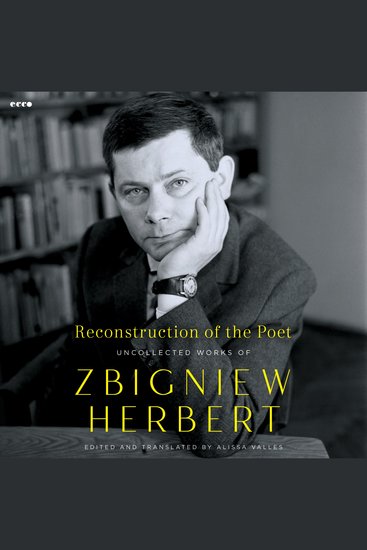
    From one of Poland's most acclaimed poets comes a new collection of poems and plays spanning almost five decades and translated for the first time. 
    Encapsulating the prolific work of the poet and playwright Zbigniew Herbert, Reconstruction of the Poet is both a celebration of a profound life of letters and a wide-ranging collection of work never published before that casts a new light on a much loved poet. Spanning 1950-1998, Reconstruction of the Poet contains three plays - The Philosophers Cave The Other Room, and Reconstruction of the Poet - and over fifty poems. This collection takes the reader through the mind of a man attempting to look at the ruins of a post-war world while seeking the living sources of European culture, with poems commemorating contemporaries fallen in wartime, erotic experience and friendship, and exploring political and metaphysical passions. 
    A rich expansion of previously published works by Herbert, Reconstruction of the Poet is also an introduction for those who might still be unfamiliar with this important poet’s work while being a fresh instigation to reflection and an enlargement of knowledge for longtime readers of Herbert.
    Show book
  • Hedonistic Propensities - Poems from a Wild Mind - cover

    Hedonistic Propensities - Poems...

    Taylor McCook

    • 0
    • 0
    • 0
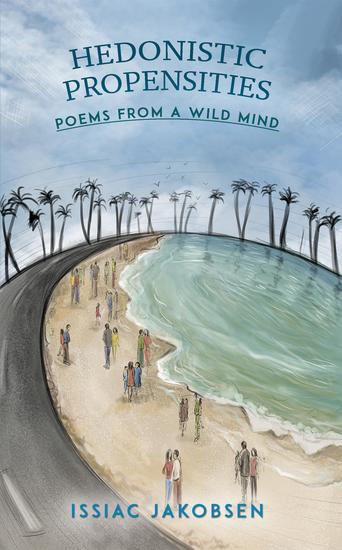
    From his darkest and most painful days to his bright and sunny days, this collection of poems embodies Issiac and the way he sees the world: painful and beautiful at the same time.  Hedonistic Propensities takes a deeper look at what makes his soul shine. You can feel that he is most at home when he is writing. This is Issiac's first collection of poems, including the poems on his Instagram. He has been working on his craft.
    Show book
  • Eþandun - Alfred's Epic Struggle Against The Danes - cover

    Eþandun - Alfred's Epic Struggle...

    William G. Carpenter

    • 0
    • 0
    • 0
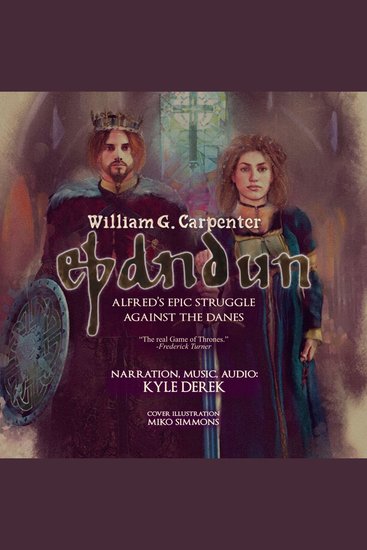
    The year is 878.  Young King Alfred struggles to regain his West Saxon kingdom from the invading pagan Danes led by Gormr (aka Guthrum, aka Godrum).   His kingdom overrun, Alfred joins Gormr's court disguised as a Welsh gleeman.  Gormr consults Alfred as a counselor and wizard, but resists Alfred's attempts to convert him.   Meanwhile Alfred learns that his lady and their children are Gormr's prisoners.  Escaping to the western fens, he leads a small army against the Danes.   The rest is history.  This is an epic poem set in the Old English culture of Christian warriors, i.e., Romanized Germanic former pagans, contending with contemporary Scandinavian Germanic pagans.  The great epic poet Frederick Turner (author of The New World, Genesis, and Apocalypse) called Eþandun "The real Game of Thrones."   Listen to actor-poet-producer Kyle Derek's heroic rendition of this book-length poem!
    Show book
  • The Top 10 Poets – The African-Americans - Five poems each from some of the best African American poets - cover

    The Top 10 Poets – The...

    Langston Hughes, Phillis...

    • 0
    • 0
    • 0
    The language of Poetry is an art that most of us attempt at some point in our lives.  Although its commonplace exposure has been somewhat marginalised in today’s often fast-paced lives we all recognise good verse that can empathise with our thoughts or open us up to experience new things in new ways, to better understand and to enjoy the many strands of our lives. 
    But finding a starting point can be overwhelming, even off-putting, so in this series we offer up our Top 10 classic poets, who brim with talent and verse, on a range of subjects and themes that we can all enjoy. 
    In this volume we collect together poets who, by the mere colour of their skin, were treated with such disdain and racism that it is difficult to believe that poetry of such tenderness, beauty and authority could exist.
    Show book