Join us on a literary world trip!
Add this book to bookshelf
Grey
Write a new comment Default profile 50px
Grey
Subscribe to read the full book or read the first pages for free!
All characters reduced
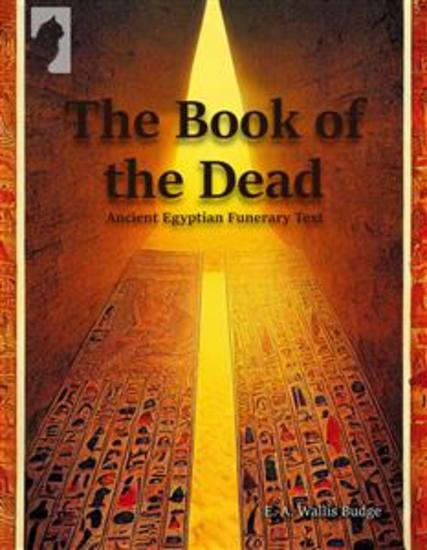
The Book of the Dead - Ancient Egyptian Funerary Text - cover

The Book of the Dead - Ancient Egyptian Funerary Text

E.A. Willis Budge

Publisher: Black Feline

  • 0
  • 0
  • 0

Summary

""Book of the Dead" is the title now commonly given to the great collection of funerary texts which the ancient Egyptian scribes composed for the benefit of the dead. These consist of spells and incantations, hymns and litanies, magical formulae and names, words of power and prayers, and they are found cut or painted on walls of pyramids and tombs, and painted on coffins and sarcophagi and rolls of papyri. The title "Book of the Dead" is somewhat unsatisfactory and misleading, for the texts neither form a connected work nor belong to one period; they are miscellaneous in character, and tell us nothing about the lives and works of the dead with whom they were buried. Moreover, the Egyptians possessed many funerary works that might rightly be called "Books of the Dead," but none of them bore a name that could be translated by the title "Book of the Dead." This title was given to the great collection of funerary texts in the first quarter of the nineteenth century by the pioneer Egyptologists, who possessed no exact knowledge of their contents. They were familiar with the rolls of papyrus inscribed in the hieroglyphic and the hieratic character, for copies of several had been published,(1) but the texts in them were short and fragmentary. The publication of the Facsimile(2) of the Papyrus of Peta-Amen-neb-nest-taui(3) by M. Cadet in 1805 made a long hieroglyphic text and numerous coloured vignettes available for study, and the French Egyptologists described it as a copy of the "Rituel Funéraire" of the ancient Egyptians. Among these was Champollion le Jeune, but later, on his return from Egypt, he and others called it "Le Livre des Morts," "The Book of the Dead," "Das Todtenbuch," etc. These titles are merely translations of the name given by the Egyptian tomb-robbers to every roll of inscribed papyrus which they found with mummies, namely, "Kitâb-al-Mayyit," "Book of the dead man," or "Kitâb al-Mayyitun," "Book of the dead" (plur.). These men knew nothing of the contents of such a roll, and all they meant to say was that it was "a dead man's book," and that it was found in his coffin with him."
Available since: 10/20/2022.

Other books that might interest you

  • Community Development - Empowering Urban Neighborhood - cover

    Community Development -...

    Lyric Vale

    • 0
    • 0
    • 0
    Community development lies at the heart of creating sustainable, thriving, and inclusive urban neighborhoods. It is a process that empowers residents, organizations, and stakeholders to work together toward shared goals, addressing pressing issues while building resilience and fostering a sense of belonging. This approach is not merely about improving infrastructure or economic growth; it is about nurturing the human connections that sustain communities and drive positive change. 
    At its core, community development is rooted in the idea that the people who live in a community are its greatest resource. Empowering individuals to take ownership of their neighborhoods fosters a sense of pride, responsibility, and collective action. By identifying and addressing local challenges—such as affordable housing, access to education, and environmental sustainability—residents can transform their shared spaces into vibrant, dynamic environments where everyone has the opportunity to thrive. 
    The importance of community development is particularly evident in urban areas, where challenges like overcrowding, economic disparity, and social fragmentation often intersect. These densely populated neighborhoods are microcosms of society, representing both its struggles and its potential for innovation and progress. Community development efforts help bridge divides by fostering dialogue, collaboration, and mutual understanding among diverse groups. Through initiatives such as leadership training, mentorship programs, and local events, urban residents can strengthen their networks and create a culture of support and inclusivity.
    Show book
  • The Old Norse Spell Book - A Deeper Dive Into Runes Spells and Magic - cover

    The Old Norse Spell Book - A...

    Alda Dagny

    • 0
    • 0
    • 0
    If you’re intrigued by centuries-old mythology and want to tap into your own powerful magic, then The Old Norse Spell Book is for you. 
    You can ignite the magic inside of you and discover the mystique of Old Norse magic to connect deeper with yourself, the Earth, and the divine powers of other realms using the sacred teachings inside The Old Norse Spell Book. 
    Inside The Old Norse Spell Book, you will discover: 
    ●     How to use runes, spells, divine rituals, and practices to tune into yourself and light the magic within you to discover the powers of energy and how to use it 
    ●     Old Norse mythology and how it spiritually connects to the practice of magic, or Seidr 
    ●     The ancient history of the folklore and its creation of a centuries-old tradition that is practiced by thousands today 
    ●     How to use Old Norse mystical teachings to develop your psychic abilities and practice your own magic 
    …plus the tips and tricks to discover how to use your divine magic to connect with your mind, body, and the world around you. 
    Norse magic evolves from its ancient applications into modern day rituals that uphold the beauty of the tradition. 
    The power of Norse magic exists within the people who practice it. 
    You can find this power when you understand the divine energy that is already inside you. 
    Unearth your spiritual essence and know your power with the guidance in The Old Norse Spell Book!
    Show book
  • The Curse of the Somers - The Secret History behind the US Navy's Most Infamous Mutiny - cover

    The Curse of the Somers - The...

    James P. Delgado

    • 0
    • 0
    • 0
    The greatest controversy in the history of the US Navy of the early American Republic was the revelation that the son of the Secretary of War had seemingly plotted a bloody mutiny that would have turned the US brig Somers into a pirate ship. The plot discovered, he and his coconspirators were hastily condemned and hanged at sea. 


    The repercussions of those acts brought headlines, scandal, a fistfight at a cabinet meeting, a court martial, ruined lives, lost reputations, and tales of a haunted ship "bound for the devil" and lost tragically at sea with many of its crew. The "Somers affair" led to the founding of the US Naval Academy and it remains the Navy's only acknowledged mutiny in its history. The story also inspired Herman Melville's White-Jacket and Billy Budd. Others connected to the Somers included Commodore Perry, a relation and defender of the Somers's captain Mackenzie; James Fenimore Cooper, whose feud with the captain, dating back to the War of 1812, resurfaced in his reportage of the affair; and Raphael Semmes, the Somers's last captain, who later served in the Confederate Navy. 


    The Curse of the Somers is a thorough recreation of this classic tale, told with the help of recently uncovered evidence.
    Show book
  • The Carolingian Renaissance - Revival of Learning - cover

    The Carolingian Renaissance -...

    Harris Ropes

    • 0
    • 0
    • 0
    The Carolingian Renaissance was a pivotal moment in European history, marking a revival of learning, culture, and intellectual activity during the reign of Charlemagne and his successors. To fully appreciate this movement, it is essential to understand the historical context from which it emerged. In the centuries following the fall of the Western Roman Empire, Europe experienced a period of cultural and intellectual decline often referred to as the Dark Ages. Classical texts were lost or neglected, education was limited, and much of the knowledge from antiquity was confined to isolated monastic communities. 
    Charlemagne, who became King of the Franks in 768 and later Emperor of the Carolingian Empire in 800, envisioned a unified Christian realm grounded in both faith and knowledge. He recognized that in order to strengthen his empire, he needed educated clergy, literate administrators, and a shared cultural foundation rooted in Roman and Christian traditions. Inspired by this vision, Charlemagne initiated a series of reforms aimed at restoring learning and promoting intellectual growth throughout his territories. This commitment to education and scholarship laid the groundwork for the Carolingian Renaissance. 
    One of the most significant influences on this movement was the Church. As the central institution of medieval Europe, the Church played a crucial role in preserving what remained of classical knowledge. Monasteries, in particular, became the hubs of literacy, where monks copied ancient manuscripts and engaged in theological study. Charlemagne capitalized on this religious infrastructure by encouraging the establishment and reform of monastic schools. These institutions became centers of education not just for future monks, but also for clergy and even lay officials serving in the empire.
    Show book
  • Capitalism - The Story behind the Word - cover

    Capitalism - The Story behind...

    Michael Sonenscher

    • 0
    • 0
    • 0
    What exactly is capitalism? How has the meaning of capitalism changed over time? And what's at stake in our understanding or misunderstanding of it? In Capitalism, Michael Sonenscher examines the history behind the concept and pieces together the range of subjects bound up with the word. Sonenscher shows that many of our received ideas fail to pick up the work that the idea of capitalism is doing for us, without us even realizing it. 


    "Capitalism" was first coined in France in the early nineteenth century. It began as a fusion of two distinct sets of ideas. The first involved thinking about public debt and war finance. The second involved thinking about the division of labor. Sonenscher shows that thinking about the first has changed radically over time. Funding welfare has been added to funding warfare, bringing many new questions in its wake. Thinking about the second set of ideas has offered far less room for maneuver. The division of labor is still the division of labor and the debates and discussions that it once generated have now been largely forgotten. By exploring what lay behind the earlier distinction before it collapsed and was eroded by the passage of time, Sonenscher shows why the present range of received ideas limits our political options and the types of reform we might wish for.
    Show book
  • Tribes of the Americas - A Comprehensive Look at Native American Culture - cover

    Tribes of the Americas - A...

    Days of History

    • 0
    • 0
    • 0
    Prepare to embark on a captivating journey through the rich and diverse heritage of the indigenous peoples of America!  
    This book offers an enlightening and comprehensive account of the unique histories, cultures, and contributions of Native Americans throughout time. 
    As you delve into this fascinating exploration, you'll discover the incredible stories and legacies that have shaped the world we know today. This book promises to captivate and educate, leaving you with a newfound appreciation for the resilience and cleverness of these incredible people. 
    Key features of the book include: 
    • An in-depth and immersive narrative that spans centuries: From the earliest indigenous societies to modern-day Native American communities, this book offers a sweeping account of the evolution of indigenous cultures, traditions, and ways of life. 
    • A celebration of the richness and diversity of Native American heritage: Through detailed accounts of customs, beliefs, and artistic expressions, our book showcases the unparalleled beauty and complexity of these ancient civilizations. 
    • Fascinating insights into the lives of famous Native American figures: Learn about the influential leaders, warriors, and visionaries who have left an indelible mark on history and helped shape the course of events in America and beyond. 
    Don't miss out on this enlightening and inspiring journey through the rich heritage and culture of indigenous peoples! Secure your copy today, and begin an unforgettable adventure that will transport you through time and unveil the incredible stories of the first Americans.
    Show book