Unisciti a noi in un viaggio nel mondo dei libri!
Aggiungi questo libro allo scaffale
Grey
Scrivi un nuovo commento Default profile 50px
Grey
Iscriviti per leggere l'intero libro o leggi le prime pagine gratuitamente!
All characters reduced
The Devil's Paw - cover

The Devil's Paw

E. Phillips Oppenheim

Casa editrice: Pharos Books

  • 0
  • 0
  • 0

Sinossi

During World War I, the son of a British aristocrat and the daughter of an English colonel get entangled in a treacherous scheme. They must negotiate with secret agents and spies who are persuaded of their innocence. Catherine Abbeway and Julian Orden meet by chance, which leads to a complicated narrative of suspicion and government corruption. Catherine is the daughter of an English colonel and is being pursued because she possesses sensitive papers. Julian collects the documents for fear of incriminating Catherine and confirming her status as a traitor. Julian and Catherine become involved in an expanding plot driven by both English and German forces.
Disponibile da: 01/11/2026.
Lunghezza di stampa: 228 pagine.

Altri libri che potrebbero interessarti

  • The Best Works of Franz Kafka - cover

    The Best Works of Franz Kafka

    Franz Kafka

    • 0
    • 0
    • 0
    Step Into a World Where Logic Fails and the Strange Becomes Reality.
    
    Franz Kafka is the architect of the modern nightmare. His writing captures the unique terror of the 20th century: the feeling of being a small, insignificant cog in a vast, incomprehensible machine. This collection brings together his most profound works, exploring the thin line between the mundane and the monstrous, and the struggle of the individual to find meaning in a world defined by silence and shadow.
    
    
    This collection explores the pillars of the "Kafkaesque" experience:
    
    The Bureaucracy of the Absurd: Navigate the endless corridors and faceless authorities that define Kafka's vision of modern society, where the rules are unknown and the guilt is assumed.
    
    The Anatomy of Alienation: Experience the visceral, often physical transformations that serve as metaphors for the isolation and rejection felt by the modern soul.
    
    Existential Uncertainty: Witness the struggle of characters who seek justice, entry, or understanding from a universe that remains stubbornly indifferent to their existence.
    
    Psychological Surrealism: Discover the "dream-logic" that governs his narratives, where the impossible is treated with chilling, matter-of-fact realism.
    
    Kafka's influence is inescapable, touching everything from philosophy to film. His ability to articulate the unspoken anxieties of the human condition makes this volume an essential cornerstone for any library of modernist literature, existential philosophy, and surrealist fiction.
    
    
    Don't just observe the labyrinth—enter it. Buy the "Essential Franz Kafka" today and own the definitive map of the modern mind.
    Mostra libro
  • Unnatural Death - cover

    Unnatural Death

    Dorothy L. Sayers

    • 0
    • 0
    • 0
    Unnatural Death , published in 1927, is the third novel written by Dorothy L. Sayers featuring her aristocratic detective Lord Peter Wimsey. The story begins with a conversation in a restaurant between Wimsey, his friend Detective Inspector Charles Parker, and a doctor who tells them about a situation he was involved in: an elderly lady, suffering from a slow-acting cancer, died suddenly and unexpectedly with no obvious immediate cause of death. She died intestate, but her great-niece, with whom she was living, was set to inherit the considerable estate. Suspecting something wrong, the doctor demanded an autopsy, which showed nothing unusual, but stirred up such local animosity that the he was forced to abandon his practice. Wimsey, sensing a mystery, decides to investigate—but his investigation triggers a series of deadly events. One of the delights of the book is the introduction of a new character in Miss Alexandra Climpson, a middle-aged spinster whom Wimsey employs as an investigative agent, and whose effusive reports of the gossip she picks up in the town are very amusing. Unnatural Death is notable for its inclusion of one clearly lesbian character—a decision unusual in detective fiction at the time—and the very sympathetic treatment by Wimsey of a black character (though offensively racist terms for him are used by others in the book). An adaptation of the book was made for BBC radio in 1975. Dorothy L. Sayers (died 1957) was an influential writer of the modernist period. Their work has endured across generations and continues to be read and studied worldwide. As a work of classic literary fiction, Unnatural Death exemplifies the narrative craft and social insight that defined great storytelling of its era. Literary fiction of this period was characterized by careful attention to character psychology, social milieu, and the moral questions that animated public discourse.
    Mostra libro
  • Many Waters Cannot Quench Love - From their pens to your ears genius in every story - cover

    Many Waters Cannot Quench Love -...

    Louisa Baldwin

    • 0
    • 0
    • 0
    Louisa MacDonald was born in 1845, one of eleven children of part Scottish descent.  Together with three of her sisters they were known as the ‘MacDonald sisters’ primarily because of their marriages to well-known men.   
    In 1866 she married the wealthy industrialist Alfred Baldwin in a double wedding with her sister Anne.   
    After giving birth to Stanley on the 3rd August 1867, who would go on to become Prime Minister, she drifted into an unhappy life in her then residence in Worcestershire.  She had at least one miscarriage and days alone depressed and in darkness. 
    During the 1870’s the couple travelled to find a lasting cure and tried a variety of treatments which led to her recovery in 1883.  She now became a leading figure in her local village of Wilden, near Stourbridge. 
    Her writing career of novels, short stories and poetry is often overlooked, as was the case with so many women, yet her works reveal many talents and a gift for melding odd and weird circumstances into seemingly everyday life.   
    Louisa Baldwin died in 1925.
    Mostra libro
  • Captain Fracasse - A Ruined Baron Joins the Strolling Players - cover

    Captain Fracasse - A Ruined...

    Théophile Gautier

    • 0
    • 0
    • 0
    Complete and unabridged, with 59 full-page plates by Jacob van Ruisdael, Edvard Munch and Jan van Goyen. A penniless young baron sits in his ruined château waiting to die of pride, until a troupe of strolling players asks for shelter — and by morning he has joined them as Captain Fracasse, the braggart in the mask. Gautier trained as a painter and led the Romantics at the riotous premiere of Hernani in 1830; he took twenty years over this book, and it is the most affectionate thing ever written about actors. Fifty-nine plates, from David Teniers the Younger to Edvard Munch, follow the same peasant and horse-borne world of the story through three centuries of painting.
    Mostra libro
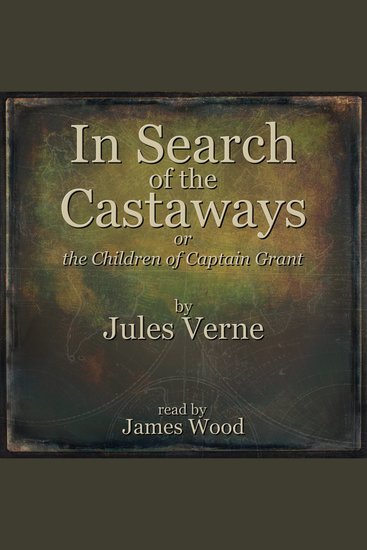
  • In Search of the Castaways - The Children of Captain Grant - cover

    In Search of the Castaways - The...

    Jules Verne

    • 0
    • 0
    • 0
    In Search of the Castaways (or, The Children of Captain Grant) tells the epic tale of an adventure around the world after Lord Edward Glenarvan discovers a mysterious message in a bottle while aboard his pleasure yacht, the DUNCAN. 
    This message leads him, his young wife Lady Helena, his cousin, Major McNabbs, and the children of Captain Grant, Mary and Robert on a quest to rescue the unfortunate castaways. 
    Many exciting adventures and calamities ensue, due in part to the antics of the french geographer, Paganel. 
    This tale will have you on the edge of your seat asking the question... what happens next? 
    Mostra libro
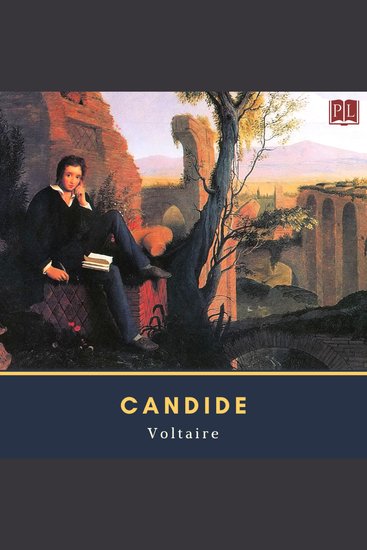
  • Candide - cover

    Candide

    Voltaire

    • 0
    • 0
    • 0
    Candide, ou l'Optimisme is a French satire first published in 1759 by Voltaire, a philosopher of the Age of Enlightenment. The novella has been widely translated, with English versions titled Candide: or, All for the Best (1759); Candide: or, The Optimist (1762); and Candide: Optimism (1947). It begins with a young man, Candide, who is living a sheltered life in an Edenic paradise and being indoctrinated with Leibnizian optimism by his mentor, Professor Pangloss. The work describes the abrupt cessation of this lifestyle, followed by Candide's slow and painful disillusionment as he witnesses and experiences great hardships in the world. Voltaire concludes Candide with, if not rejecting Leibnizian optimism outright, advocating a deeply practical precept, "we must cultivate our garden", in lieu of the Leibnizian mantra of Pangloss, "all is for the best" in the "best of all possible worlds".
    Candide is characterized by its tone as well as by its erratic, fantastical, and fast-moving plot. A picaresque novel with a story similar to that of a more serious coming-of-age narrative (Bildungsroman), it parodies many adventure and romance clichés, the struggles of which are caricatured in a tone that is bitter and matter-of-fact. Still, the events discussed are often based on historical happenings, such as the Seven Years' War and the 1755 Lisbon earthquake. As philosophers of Voltaire's day contended with the problem of evil, so does Candide in this short theological novel, albeit more directly and humorously. Voltaire ridicules religion, theologians, governments, armies, philosophies, and philosophers. Through Candide, he assaults Leibniz and his optimism.
    Candide has enjoyed both great success and great scandal. Immediately after its secretive publication, the book was widely banned to the public because it contained religious blasphemy, political sedition, and intellectual hostility hidden under a thin veil of naïveté. However, with its sharp wit and insightful portrayal of the human condition, the novel has since inspired many later authors and artists to mimic and adapt it. Today, Candide is considered as Voltaire's magnum opus and is often listed as part of the Western canon. It is among the most frequently taught works of French literature. The British poet and literary critic Martin Seymour-Smith listed Candide as one of the 100 most influential books ever written.
    Mostra libro