Unisciti a noi in un viaggio nel mondo dei libri!
Aggiungi questo libro allo scaffale
Grey
Scrivi un nuovo commento Default profile 50px
Grey
Iscriviti per leggere l'intero libro o leggi le prime pagine gratuitamente!
All characters reduced
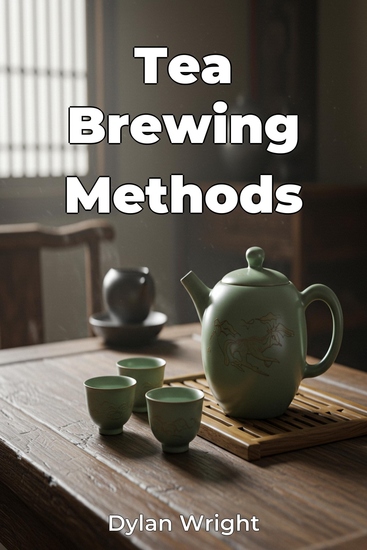
Tea Brewing Methods - cover

Tea Brewing Methods

Dylan Wright

Traduttore A AI

Casa editrice: Publifye

  • 0
  • 0
  • 0

Sinossi

Tea Brewing Methods explores the rich cultural history woven into the simple act of brewing and consuming tea. Delving into Chinese, Japanese, Indian, and British traditions, the book reveals how tea evolved from a medicinal herb to a central element of social and artistic life. The narrative highlights the impact of global trade and colonialism on the spread and adaptation of tea ceremonies, illustrating how a beverage became intertwined with cultural identity and economic power.

 
The book examines how each culture uniquely embraced tea. For instance, in Japan, tea was refined into Chanoyu, an art form emphasizing harmony and respect, while in India, tea cultivation was driven by British colonial efforts.

 
Structured chronologically and comparatively, Tea Brewing Methods begins with tea's origins in ancient China and progresses through each culture's unique practices, culminating in an analysis of common threads and divergences. Ultimately, the approach emphasizes tea consumption as a mirror reflecting a nation's history, economic status, and cultural values.

 
By examining historical texts, travel journals, and anthropological research, the book offers a comprehensive exploration valuable to both academic readers and tea enthusiasts, revealing the profound cultural implications hidden within a beloved beverage.
Disponibile da: 27/02/2025.
Lunghezza di stampa: 64 pagine.


Altri libri che potrebbero interessarti

  • Artificial Intelligence in the Primary Classroom - 101 ways to save time cut your workload and enhance your creativity - cover

    Artificial Intelligence in the...

    Gemma Clarke

    • 0
    • 0
    • 0
    Artificial intelligence (AI) undoubtedly sparks debate among teachers. Questions arise about the trajectory of this new technology: where will it take us?; how will we differentiate between student-authored work and AI-generated content?; what impact will it have on the dynamics of learning and teaching within schools? These are all crucial topics for discussion, yet AI has already become an integral part of our reality, and Gemma Clark firmly believes that embracing its potential is in our best interests.
    In an era defined by technological advancements, Artificial Intelligence in the Primary Classroom stands as an indispensable resource that holds the key to transforming teaching and learning. For educators burdened by bureaucratic tasks that divert precious time from actual teaching, this book offers a lifeline. It showcases how AI-powered tools can alleviate administrative burdens, enabling teachers to focus more on crafting personalised and imaginative lessons that resonate with young minds. From automating report-writing processes to facilitating content creation, the book imparts tangible methods to streamline workflows and elevate teaching quality. Other examples include:
    
    - Spelling Lessons: Save time when planning your spelling lessons by using AI to automatically generate a comprehensive list of phonemes or 'sounds suitable for teaching young children.'
    - Mindfulness in the Classroom: If you are interested in incorporating mindfulness games and activities to assist children in relaxation and focus, AI can provide valuable suggestions for fostering pupil (and staff) wellbeing.
    - PE Lessons: You don't have to be an expert in sport to teach PE. Whether it's tennis, football, rugby or running, AI can offer suggestions for activities, warm-ups and cool-downs to use in your PE lessons.
    - Art Lessons: AI can be an excellent resource for planning art lessons, especially when seeking suggestions to emphasize one of the eight elements, such as line, shape, form, colour, value, texture, space, and value.
    - Maths Lessons: As with spelling, AI can significantly reduce the time spent on creating maths questions and simplify the process of differentiation.Artificial Intelligence in the Primary Classroom is filled with practical strategies, engaging activities and useful tips and tricks that will save teachers time and energy as well as transferrable lesson plans with step-by-step instructions. Backed up by real-world examples throughout, this book empowers teachers to embrace AI as a tool in fostering enhanced learning experiences, while also reclaiming invaluable time for pedagogical creativity.
    Suitable for primary school teachers of all levels of experience.
    Mostra libro
  • GIVE A F*CK - The Art of Caring in an Age of Apathy - cover

    GIVE A F*CK - The Art of Caring...

    Gigi Bird

    • 0
    • 0
    • 0
    This audiobook is a manifesto for those who are tired of pretending not to care. 
    “Apathy isn’t peace. It’s emotional starvation.” 
    It’s a mirror, a fire, and a hand reaching out from the noise — reminding you that your ability to give a f*** is not your weakness. 
    It’s your power. 
    Give a F*** will make you laugh, think, and maybe cry a little — but more than that, it will make you remember. 
    Remember who you are when you stop numbing, start feeling, and finally let yourself care again.*
    Mostra libro
  • Ludlow Massacre The: The History of the National Guard’s Attack on Striking Miners during the Colorado Coalfield War - cover

    Ludlow Massacre The: The History...

    Editors Charles River

    • 0
    • 0
    • 0
    As labor unions and movements began to form and coalesce in the 19th century, the tensions between workers and companies led to demonstrations, encounters, and even conflicts that descended into violence. Among those, few were as notorious as the fight that took place on April 20, 1914 at Ludlow in the southern Colorado coalfields, during which two units of the Colorado National Guard had a firefight with striking miners who lived in a United Mine Workers (UMW) camp. The Guardsmen had at least one machine gun, and the strikers were also armed. The gunfire lasted most of the day, and at the day’s end, the miners were routed and fled the camp with their families.  
    	Perhaps as many as a dozen miners in the camp were killed during the fighting, but after it was over, the Guardsmen cautiously entered the camp, did some looting, and then soaked the miners’ tents with kerosene in order to burn the whole camp to the ground. The Guard’s arsonists were unaware that in one tent, four women and 11 children had hidden themselves in a sort of cellar under a tent, seeking protection from the gunfire. After the camp burned, a deeply disturbing aspect of the fighting was discovered: two of those women and all 11 children had been asphyxiated from the smoke of their burning tent. 
    	These grim deaths marked Ludlow as more than just another regrettable coal war battle and earned it the title of the Ludlow Massacre. In the previous several decades, there had been a number of violent incidents during strikes in several states that killed more people, but in 1914, Victorian sentimentality about women and children was still prevalent, and the Ludlow tragedy deeply shocked the nation.
    Mostra libro
  • Emotions Matter - Teaching Emotional Intelligence in Early Childhood - cover

    Emotions Matter - Teaching...

    Brian Gibson

    • 0
    • 0
    • 0
    This audiobook is narrated by an AI Voice.  
    Do you wish your child could better manage their emotions, but aren't sure how to guide them? 
    Tantrums, tears, and frustration are often brushed off as "just part of growing up." Still, emotional intelligence isn't something children automatically develop—it's a skill that needs to be taught and nurtured. Without support, children can carry emotional confusion into adolescence and beyond, affecting their relationships, learning, and well-being. 
    Emotions Matter: Teaching Emotional Intelligence in Early Childhood is your practical guide to nurturing emotional awareness, empathy, and self-regulation in young children—right from the start. Whether you're a parent, caregiver, teacher, or early childhood professional, this book gives you the tools to help kids not only name their feelings but also navigate them. 
    Inside, you'll learn how to: 
    •	Foster a safe emotional climate at home or in the classroom 
    •	Use everyday interactions to model healthy emotional behavior 
    •	Teach children how to identify, express, and manage their feelings 
    •	Support empathy, cooperation, and social-emotional growth 
    •	Use stories, play, and routines to build emotional literacy 
    If you're ready to raise more emotionally aware, resilient, and confident kids, this book is your essential starting point. 
    Buy Emotions Matter today and begin building the emotional intelligence your child needs to thrive at home, in school, and in life.
    Mostra libro
  • The Shaking Woman or A History of My Nerves - cover

    The Shaking Woman or A History...

    Siri Hustvedt

    • 0
    • 0
    • 0
    While speaking at a memorial event in 2006, Siri Hustvedt suffered a violent seizure from the neck down. Despite her flapping arms and shaking legs, she continued to speak clearly and was able to finish her speech. It was as if she had suddenly become two people: a calm orator and a shuddering wreck. Then the seizures happened again and again. The Shaking Woman tracks Hustvedt's search for a diagnosis, one that takes her inside the thought processes of several scientific disciplines, each one of which offers a distinct perspective on her paroxysms but no ready solution. In the process, she finds herself entangled in fundamental questions: What is the relationship between brain and mind? How do we remember? What is the self? 


    During her investigations, Hustvedt joins a discussion group in which neurologists, psychiatrists, psychoanalysts, and brain scientists trade ideas to develop a new field: neuropsychoanalysis. She volunteers as a writing teacher for psychiatric in-patients at the Payne Whitney clinic in New York City and unearths precedents in medical history that illuminate the origins of and shifts in our theories about the mind-body problem. Hustvedt synthesizes her experience and research into a compelling mystery: Who is the shaking woman? In the end, the story she tells becomes, in the words of George Makari, "a brilliant illumination for us all."
    Mostra libro
  • Stories from kathasaritasagara series - 16 - From various sources - cover

    Stories from kathasaritasagara...

    Anusha HS

    • 0
    • 0
    • 0
    The book Kathasaritsagara has been created by Soma Deva. It consists of 21,500 shlokas. 
    This book Kathasaritsagara has been divided into 18 lambakaas, and those 18 lambakaas are still more divided into 125 Tharanga's. 
    Some lambakaas are very big, while some are very small. 
    If there are 115 Shlokas in the 11th Lambaka, there are around 4925 Shlokas in 12th Lambaka. 
    During ancient times from the mouth of Lord Shiva, this story got birth. Those who listen to this story will experience all sorts of worldly pleasures. They will be blessed by Lord Shiva and at last reach jnana Loka by the blessings of lord shiva.
    Mostra libro