Unisciti a noi in un viaggio nel mondo dei libri!
Aggiungi questo libro allo scaffale
Grey
Scrivi un nuovo commento Default profile 50px
Grey
Iscriviti per leggere l'intero libro o leggi le prime pagine gratuitamente!
All characters reduced
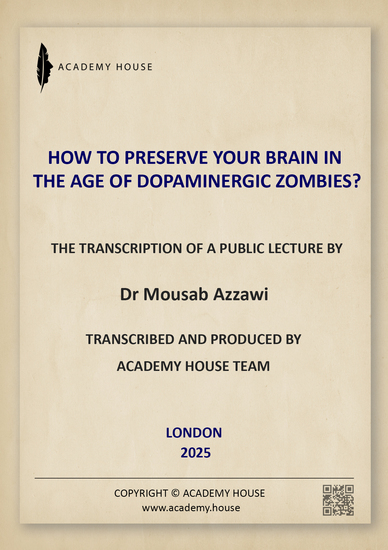
How to Preserve Your Brain in the Age of Dopaminergic Zombies? - cover

How to Preserve Your Brain in the Age of Dopaminergic Zombies?

Dr Mousab Azzawi

Casa editrice: Publishdrive

  • 0
  • 0
  • 0

Sinossi

How to Preserve Your Brain in the Age of Dopaminergic Zombies is a thought-provoking public lecture delivered by Dr. Mousab Azzawi at the Academy House Forum in London. In this compelling talk, Dr. Azzawi explores the modern challenges to mental clarity and cognitive resilience in an age dominated by instant gratification and overstimulation. The lecture, transcribed and thoughtfully produced by the Academy House team, offers valuable insights into neuroscience, digital habits, and practical strategies for protecting the brain’s long-term health.
Disponibile da: 15/06/2025.
Lunghezza di stampa: 13 pagine.

Altri libri che potrebbero interessarti

  • A Rare Recording of Film Icon Barbara Stanwyck - cover

    A Rare Recording of Film Icon...

    Barbara Stanwyck

    • 0
    • 0
    • 0
    Barbara Stanwyck, born Ruby Catherine Stevens (July 16, 1907 - January 20, 1990), was an American actress, model and dancer. During her 60-year professional career, Stanwyck was known for her strong, realistic screen presence and versatility. She was nominated four times for a Best Actress Academy Award, received an Honorary Oscar in 1982, and the Golden Globe Cecil B. DeMille Award in 1986. This recording includes a 1989 interview, followed by a 1965 interview.
    Mostra libro
  • Unterstadt - A Novel - cover

    Unterstadt - A Novel

    Ivana Šojat

    • 1
    • 0
    • 0
    The novel Unterstadt tells the story of an urban family of German origin living in Osijek from the end of the nineteenth till the end of the twentieth century. It is narrated through the portrayal of the destinies of four generations of women – a great grandmother, a grandmother, mother, and a daughter – their shattered illusions, the education of their children, the historical events that brutally lash out at them.
     
    Ivana Šojat creates a world rich in detail and nuance, all her characters, both major and minor, are expressive and suggestive, abundant in virtues and flaws, complex and multidimensional, as life itself is. By depicting a clash of generations through the female characters of a family, the author creates a world in which, often due to bizarre strokes of fate or wrongly selected life-cards, both horrible and beautiful events occur. Yet the central theme, running through all the generations and all the characters, is that of hiding away from the past, fleeing from it, concealing it, which sooner or later leads to traumas and misunderstandings.
     
    Unterstadt is a book about a family and a town, written in the manner of the best and greatest modernist novels. Through the history of one family, it speaks of the twentieth century in a multiethnic town, of dictatorships, of wrongly selected sides, of fate which one can hardly defy.Unterstadt reveals the richness of Ivana Šojat’s narrative talent, and it is thus not surprising that she has emerged as one of the most interesting writers of contemporary Croatian prose.
     
    The book Understadt was published as part of the Growing Together project, co-financed by the European Union.
    Mostra libro
  • Intelligence Isn't Enough - A Black Professional’s Guide to Thriving in the Workplace - cover

    Intelligence Isn't Enough - A...

    Carice Anderson, Joyce Roché

    • 0
    • 0
    • 0
    Master the balance between working on your career and working in it. Intelligence Isn't Enough helps Black professionals make strategic decisions and learn the unspoken rules for success. 
     
     
    Recounting the despair she felt as a frustrated young Black professional, Carice Anderson knows that many Black professionals are relying on their education alone to break into the workplace. In this book, she empowers young Black professionals everywhere with the right knowledge by exposing them to advice and little-known principles of career success from her interviews with thirty successful Black leaders. 
     
    Intelligence Isn't Enough is divided into six chapters that guide readers through what Anderson calls the six "major corporate muscles": 
     
    -	IQ 
    -	Mental attitude 
    -	People matters 
    -	Cultural intelligence 
    -	Personal branding 
    -	Communication 
     
    This book includes personal stories, quotes, lessons learned, and advice from both the author and Black leaders who have worked in some of the finest institutions across North America, Africa, and Europe. Readers will learn tips and tools to strategically chart their career paths and advance in the workplace for lifelong success.
    Mostra libro
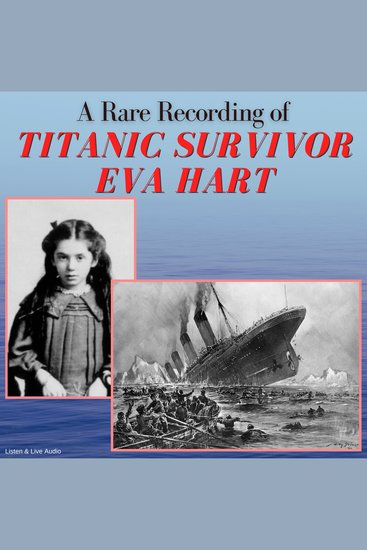
  • A Rare Recording of Titanic Survivor Eva Hart - cover

    A Rare Recording of Titanic...

    Eva Hart

    • 0
    • 0
    • 0
    RMS Titanic was a British passenger liner, operated by the White Star Line, that sank in the North Atlantic Ocean on April 15, 1912, after striking an iceberg during her maiden voyage from Southampton, England, to New York City. Of the estimated 2,224 passengers and crew aboard, more than 1,500 died, making it the deadliest sinking of a single ship up to that time. It remains the deadliest peacetime sinking of an ocean liner or cruise ship. In this 1993 interview, Eva Hart, a seven year-old passenger on the Titanic, offers a vivid account of her family's unexpected journey aboard the Titanic, and her mother's unsettling premonition. As Hart said of the ship having too few lifeboats: "One life is worth more than the whole ship, surely."
    Mostra libro
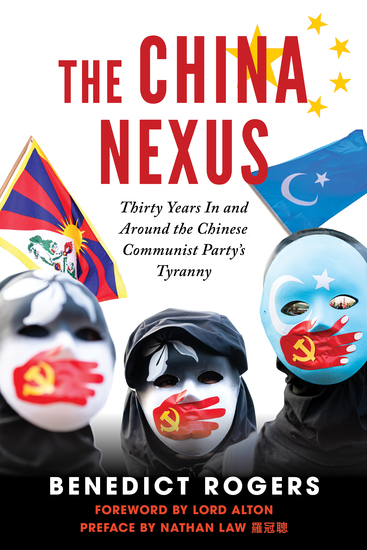
  • China Nexus - Thirty Years In and Around the Chinese Communist Party’s Tyranny - cover

    China Nexus - Thirty Years In...

    Benedict Rogers

    • 0
    • 0
    • 0
    Benedict Rogers, born in London, England, first went to China at age eighteen to teach English for six months in Qingdao, three years after the Tiananmen Square massacre. That opened the door to a thirty-year adventure with China, from teaching English in schools and hospitals to working as a journalist in Hong Kong for the first five years after the handover to travelling to China’s borders with Myanmar/Burma and North Korea to document the plight of refugees escaping from Beijing-backed satellite dictatorships and then campaigning for human rights in China, especially for Uyghurs, Christians and Falun Gong practitioners, human rights defenders, journalists and dissidents, and the people of Hong Kong.
    		 
    This book tells the story of his fight for freedom for the peoples of China and neighbouring countries Myanmar and North Korea and sets out how a global movement for human rights in China is emerging and what the free world should do next. It describes the importance of the “China Nexus” in the author’s journey and geopolitics and its challenges. Pioneering international inquiries into forced organ harvesting from prisoners of conscience, the genocide of the Uyghurs and global action for Hong Kong, as well as highlighting the Vatican’s silence, the author has been at the heart of advocacy for human rights in China in recent years.
    		 
    In 2017, on the orders of Beijing, he was denied entry to Hong Kong, 20 years after he had moved to the city and began his working life as a journalist and activist. Benedict Rogers co-founded Hong Kong Watch and worked with a variety of other international groups at the forefront of the fight for freedom, including the Inter-Parliamentary Alliance for China (IPAC), the Stop Uyghur Genocide Campaign, the China Democracy Foundation, the Conservative Party Human Rights Commission which he co-founded, and the international human rights organization CSW with which he has worked for over 25 years.
    		 
    This book hits the Chinese Communist Party hard on their lack of Human Rights efficacy, genocide, and despicable and barbaric organ harvesting programs (an estimated $1 billion US a year business).
    		 
    Rogers takes the readers on a journey through some of the leaders and participants in the Human rights activities that China has suppressed since its inception in 1949. He goes on to dispute and lays to rest all of the specious claims by the tyrants in Beijing that all Chinese citizens are equal and are afforded human and civil rights. Currently, the regime is engaged in re-education, cultural assimilation, and multiple genocides, leading to better citizens for China and the world if one believes Chinese officials.
    		 
    China’s ambassador to Canada says reports of genocide and forced labour of Uyghur Muslims in Xinjiang province are the “lie of the century,” despite international bodies like the United Nations deeming the reports of such activities “numerous and credible.” The author will completely dispel that notion.
    Mostra libro

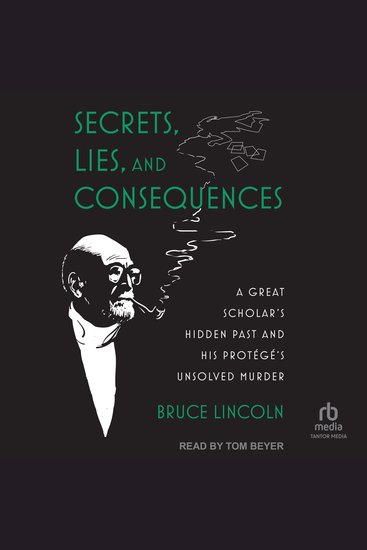
  • Secrets Lies and Consequences - A Great Scholar's Hidden Past and his Protégé's Unsolved Murder - cover

    Secrets Lies and Consequences -...

    Bruce Lincoln

    • 0
    • 0
    • 0
    In 1991, Ioan Culianu was on the precipice of a brilliant academic career. Culianu had fled his native Romania and established himself as a widely admired scholar at just forty-one years old. He was teaching at the University of Chicago Divinity School where he was seen as the heir apparent to his mentor, Mircea Eliade, a fellow Romanian expatriate and the founding father of the field of religious studies, who had died a few years earlier. When Culianu began to receive threatening messages, he asked a colleague to hold onto some papers for safekeeping. A week later someone fired a bullet into the back of his head, killing him instantly. The case was never solved, though the prevailing theory is that Culianu was targeted by the Romanian secret police as a result of critical articles he wrote after the fall of Nicolae Ceausescu. 


    What was in those papers and what connection might they have to Culianu's death? The papers eventually passed into the hands of Bruce Lincoln, and their story is at the heart of this book. The documents were English translations of articles that Eliade wrote in the 1930s, some of which voiced Eliade's support for the Iron Guard. Bruce Lincoln explores what the articles reveal about Eliade's past, his subsequent efforts to conceal that past, his complex relations with Culianu, and the possible motives for Culianu's shocking murder.
    Mostra libro