Join us on a literary world trip!
Add this book to bookshelf
Grey
Write a new comment Default profile 50px
Grey
Subscribe to read the full book or read the first pages for free!
All characters reduced
like starlings falling - cover

like starlings falling

Dillon Jaxx

Publisher: Nine Arches Press

  • 0
  • 0
  • 0

Summary

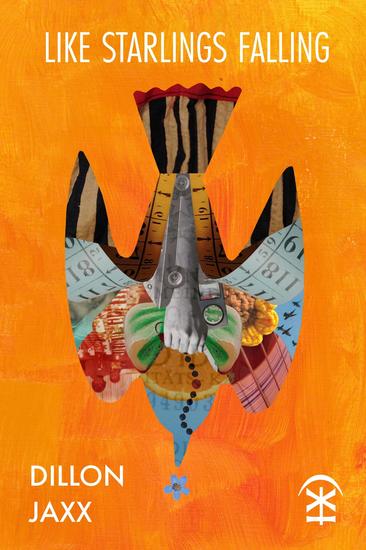
The debut poetry collection by Dillon Jaxx, like starlings falling, is a mixtape from an eighties childhood that moves between requiems for a dead brother, anthems for the queer self, and love songs for a body sabotaging itself and its keeper through chronic illness.
In Jaxx's bold and precise poems of absence and discovery, surreal and sometimes grotesque family portraits are painted through the changing weather of time, with humour, irony, and love. Unsettling and tender, this forensic poetry knows how the traces of bereavement and dislocation cling to us like evidence, and the way languages and precious memory stitches things together. And ultimately, how we find belonging and selfhood, keeping the 'holy days' of childhood self-discovery alive within us.
Poetry Book of the Month, The Observer, July 2026
Jerwood Prize for Best First Collection longlist
Available since: 07/02/2026.
Print length: 72 pages.

Other books that might interest you

  • Franklyn: A Path of Twisting Reality - cover

    Franklyn: A Path of Twisting...

    Richard Cliff

    • 0
    • 0
    • 0
    Franklyn was born into a gritty north of England town. His expected path through life would have him live out his years in the manner of that town's baseline existence. But it wasn't to be.Perhaps he was pre-selected to break rank so that bigger dreams could be fulfilled. Whatever the prime force may have been, he was to know a different life.Perhaps, too, the corridors of our own reality are flimsier than we believe! On the other side of the wall may lie another path.  As Franklyn himself discovers, a perceived reality can be as real as reality itself.
    Show book
  • Cafés (Unabridged) - cover

    Cafés (Unabridged)

    Holly Pester

    • 0
    • 0
    • 0
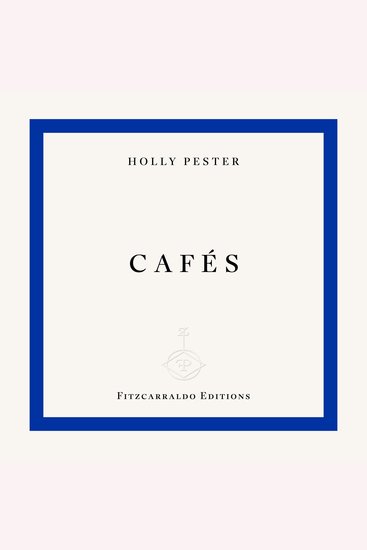
    Welcome to Cafés! Somewhere to eat and forget about work, where we can meet friends and not think about love, where we can meet lovers and be too nervous to eat. In Holly Pester's unique lyric, the café becomes a structure of fantasy and language exploring life at the pressurized edges. It becomes a form - a canto or a verse - unearthing what this space promises us in terms of freedom and thought, and what it holds back. In each iteration, the café remakes itself through the people who pass through it. A worker tries to run a café franchise. A lover sits in the corner, waiting. A woman mourns a friendship while contemplating age and childlessness. An artist tries to launch an art café and hosts an open mic. Both a stylish political intervention and an elegy for communal space, Holly Pester's newest collection reaffirms her as one of the most exciting poets of our time.
    Show book
  • Questa - cover

    Questa

    Stephanie Fleischmann

    • 0
    • 0
    • 0
    Jessie, who hasn’t seen her mother since she was 14, is on her way home, bringing with her a foster child who won’t talk and a runaway they’ve picked up along the way. Meanwhile, her estranged mother awaits their arrival at the bus station in Questa, New Mexico, next to a woman who longs for a disappeared love to return.


    Questa debuted at the historic CHARAS/El Bohio Community Center in New York City in 1991, and received its West Coast premiere in L.A. Theatre Works’ production.


    Recorded at The Guest Quarters Suite Hotel, Santa Monica, in June 1991.


    Directed by Michael Bloom
     
    Producing Director: Susan Albert Loewenberg


    An L.A. Theatre Works full-cast recording, starring:
     
    Christopher Dreyer as Albert
     
    Valerie Landsburg as Jessie
     
    Dorothy Lyman as Sophie
     
    Alma Martinez as Swan Lady
     
    Bianca Sanchez as Delia


    Produced for Radio by Steve Barker
     
    Stage Manager: Christopher Fox
     
    Original music by Michele Navazio
    Show book
  • Berliners - A Dark Angels poem - cover

    Berliners - A Dark Angels poem

    John Simmons

    • 0
    • 0
    • 0
    Berliners is a poem that originated from a conversation in Berlin. After several visits to Berlin, and a recent work assignment there with the German Film Academy, John Simmons became fascinated by the role of the city in 20th century world history. From the First World War to the Weimar Republic; the rise of the Nazis leading to the next world war; followed by the Cold War, the separation of the city by a wall into east and west representing opposed ideologies; then eventually the destruction of the wall by the people and the reunification of Germany. Berlin was at the centre of the conflict and drama that shaped the modern world, and its history still resonates today. The poem tells the story of the 20th century through a tableau of vivid scenes brought to life by a diversity of poetic forms – all seen through the lens of the people and places of this one extraordinary city, Berlin.
    Show book
  • John Browns Body - cover

    John Browns Body

    Stephen Vincent Benét

    • 0
    • 0
    • 0
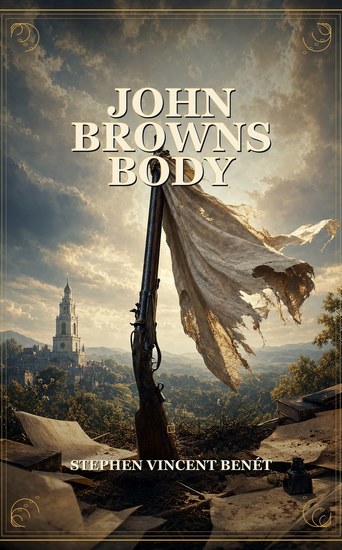
    Stephen Vincent Benét's epic poem John Brown's Body uses the figure of the radical abolitionist John Brown as a symbolic catalyst to explore the vast and complex tapestry of the American Civil War. Rather than focusing on a single narrative, the poem employs a wide range of fictional characters and a shifting perspective to present the conflict from multiple angles, encompassing the experiences of soldiers and civilians from both the Union and the Confederacy. It delves into the deep-seated causes of the war, the fervent ideologies on each side, and the immense human cost, all while grappling with the central, haunting issue of slavery that divided the nation. Benét wrote John Brown's Body in the late 1920s, as the last Civil War veterans were passing away. He felt an urgent need to capture their fading stories before they were lost forever. He and his wife, Rosemary, buried themselves in research, turning their home into a map-strewn "war room." The resulting poem, which won the Pulitzer Prize, was his attempt to build a national memorial out of words—not just for the generals, but for the forgotten soldiers, farmers, and enslaved people whose personal stories, he believed, were the true soul of American history. Stephen Vincent Benét (died 1943) was an influential writer of the modernist period. Their work has endured across generations and continues to be read and studied worldwide. Poetry has always been the most concentrated and powerful form of literary expression. The verse collected in John Browns Body represents a high point of the poetic tradition, offering language of beauty and precision that speaks to the deepest levels of human experience.
    Show book
  • Grimm Tales Made Gay - cover

    Grimm Tales Made Gay

    Guy Wetmore Carryl

    • 0
    • 0
    • 0
    "Grimm Tales Made Gay" is a hilarious reinterpretation of classic Grimm fairy tales infused with humor and irreverence. In this collection, each Brother's Grimm tale is transformed into a witty and whimsical narrative, featuring absurd situations, clever wordplay, and unexpected plot developments. From Cinderella's sassy stepsisters to Little Red Riding Hood's encounter with a cunning wolf, Carryl's reinterpretations offer a fresh and entertaining take on beloved childhood favorites. With its charm, wit, and laugh-out-loud humor, "Grimm Tales Made Gay" is sure to delight readers of all ages! 
    (Illustrations by Albert Levering)
    Show book