Unisciti a noi in un viaggio nel mondo dei libri!
Aggiungi questo libro allo scaffale
Grey
Scrivi un nuovo commento Default profile 50px
Grey
Iscriviti per leggere l'intero libro o leggi le prime pagine gratuitamente!
All characters reduced
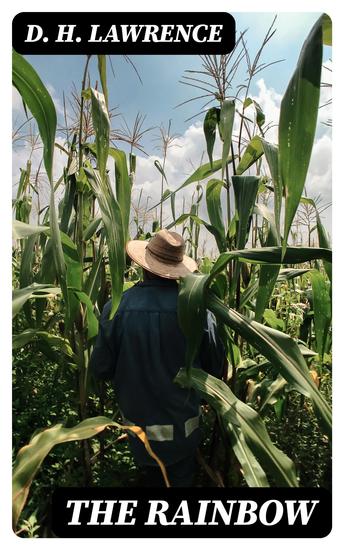
The Rainbow - Enriched edition - cover

The Rainbow - Enriched edition

D.H. Lawrence

Casa editrice: DigiCat

  • 0
  • 0
  • 0

Sinossi

D. H. Lawrence's "The Rainbow" is a profound exploration of human relationships and the interplay of individuality within the framework of society. Set in the English countryside, the novel unfolds across three generations of the Brangwen family, delving into themes of sexuality, identity, and the quest for self-understanding. Lawrence employs a rich, lyrical prose style characterized by vivid imagery and emotional depth, reflecting the turbulent societal changes of the early 20th century. The novel stands as a pivotal work in modernist literature, emphasizing the necessity of personal transformation, while questioning the constraints imposed by conventional norms and familial expectations. D. H. Lawrence, an influential figure in modernist literature, drew upon his own experiences of class struggle, familial discord, and the quest for authenticity as he penned this ambitious work. Growing up in a working-class family and witnessing the struggles of industrialization informed his empathetic portrayal of his characters' internal conflicts. Lawrence's passionate relationships and his interest in psychological and existential themes also permeate the narrative, inviting readers to engage with his own philosophical inquiries about life and love. "The Rainbow" is highly recommended for readers seeking a rich, introspective journey into human connection and the inner workings of identity. This novel not only challenges societal norms but also invites readers to interrogate their own lives in relation to the forces that shape their existence. Lawrence's powerful prose and keen psychological insights make this work an enduring classic that resonates deeply with contemporary audiences.

In this enriched edition, we have carefully created added value for your reading experience:
- A succinct Introduction situates the work's timeless appeal and themes.
- The Synopsis outlines the central plot, highlighting key developments without spoiling critical twists.
- A detailed Historical Context immerses you in the era's events and influences that shaped the writing.
- An Author Biography reveals milestones in the author's life, illuminating the personal insights behind the text.
- A thorough Analysis dissects symbols, motifs, and character arcs to unearth underlying meanings.
- Reflection questions prompt you to engage personally with the work's messages, connecting them to modern life.
- Hand‐picked Memorable Quotes shine a spotlight on moments of literary brilliance.
- Interactive footnotes clarify unusual references, historical allusions, and archaic phrases for an effortless, more informed read.
Disponibile da: 11/10/2022.
Lunghezza di stampa: 404 pagine.
Altri libri che potrebbero interessarti

  • A Saga of the Seas - From their pens to your ears genius in every story - cover

    A Saga of the Seas - From their...

    Kenneth Grahame

    • 0
    • 0
    • 0
    Kenneth Grahame was born on 8th March 1859 in Edinburgh. 
    At age 5 his mother succumbed to puerperal fever.  His father, who had a drinking problem, now sent his 4 children to live with their grandmother at her large house in Cookham, Berkshire. Here the children lived in large open grounds next to the river.  These early experiences would in later years, be retold in his writing through a myriad of characters. 
    Grahame loved being a pupil at St Edward's School, Oxford and wanted to enroll at the university there but his guardian demurred on account of the cost. 
    Instead, a banking career was chosen for him, starting in 1879 at the Bank of England, where he rose steadily to the rank of its Secretary until retiring, with a pension, in 1908 due to ill health. 
    Alongside his commercial career Grahame had written and published various stories and essays in several periodicals. Some were anthologized as ‘Pagan Papers’ in 1893, and two years later ‘The Golden Age’ and later still ‘Dream Days’ and its masterpiece ‘The Reluctant Dragon’ became part of many home libraries.  His ability to view life through the lens of a young and curious child was superb, enabling the reader to easily identify with the character.   
    Grahame married Elspeth Thomson in 1899 and they had one child; Alastair, born semi-blind and plagued by health problems.  In a heart-rending tragedy he would later take his own life whilst attending Oxford University in 1920.   
    In 1908 Grahame reworked many of the bedtime stories he had fashioned for his son into the enduring favourite; ‘The Wind in the Willows’, describing the heart-warming adventures of Mr Toad and his friends.   
    Kenneth Grahame died in Pangbourne, Berkshire, on 6th July 1932.
    Mostra libro
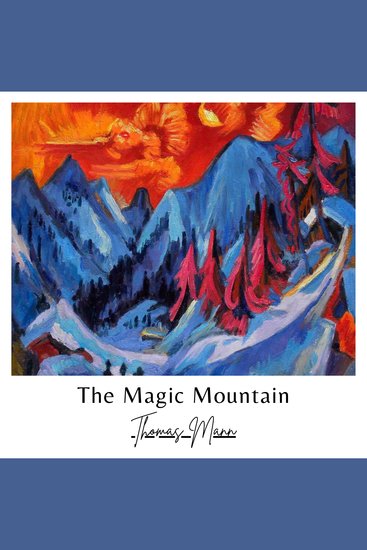
  • The Magic Mountain - cover

    The Magic Mountain

    Thomas Mann

    • 0
    • 0
    • 0
    A book that pulses with life in the midst of death, The Magic Mountain is a mammoth masterpiece of erudition and irony, sexual tension, and intellectual ferment. Mann utilises a sanatorium in the Swiss Alps, a community dedicated solely to illness, as a microcosm for Europe, which in the years prior to 1914 was already displaying the initial signs of its own terminal madness, in this dizzyingly dense novel of ideas.Death in Venice tells the tale of Gustav von Aschenbach, a successful but ageing writer who follows his wanderlust to Venice in search of spiritual fulfilment but instead leads to his erotic doom. It was published on the eve of World War I, ten years after Buddenbrooks had established Thomas Mann as a literary celebrity.Foreword - Track 1Chapter 1. Arrival - Track 2Chapter 2. Of the Christening Basin -Track 3 Chapter 3. Drawing the Veil - Track 4 to 6 Chapter 4. Necessary Purchases - Track 7 to 11Chapter 5. Soup-Everlasting Part 1 - Track 12 to 16./ Soup-Everlasting Part 2 - Track 17 to 21.Chapter 6. Changes Part 1 - Track 22 to 25. / Changes Part 2 - Track 26 to 29. / Changes Part 3 - Track 30 to 32.Chapter 7. By the Ocean of Time Part 1 - Track 33 to 37. / By the Ocean of Time Part 2 - Track 38 ./ By the Ocean of Time Part 3 - Track 39 to 43.
    Mostra libro
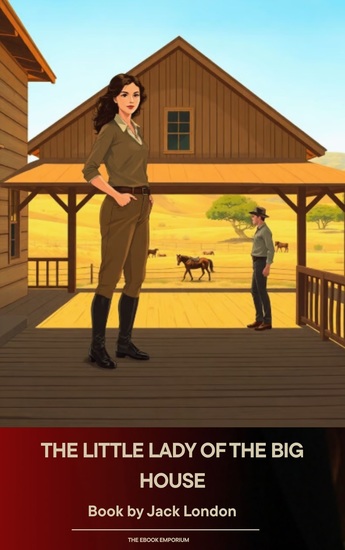
  • The Little Lady of the Big House - cover

    The Little Lady of the Big House

    Jack London

    • 0
    • 0
    • 0
    "She was the mistress of a kingdom, yet a prisoner of her own soul."
    
    Dick Forrest is a man of absolute efficiency, a millionaire rancher who has turned his sprawling California estate into a marvel of scientific agriculture. Beside him is his wife, Paula Forrest—the "Little Lady"—a woman of immense talent, beauty, and spirited independence. Their life is an ordered paradise until the arrival of Dick's old friend, Evan Graham. As Graham and Paula fall into an irresistible, soul-stirring attraction, the "Big House" becomes the stage for a devastating emotional conflict. London crafts a story that asks: can a life built on logic and mastery ever truly satisfy the wild, unpredictable demands of love?
    
    A Masterclass in Character: Moving away from the "primitive man," London provides a nuanced look at the modern elite. Paula Forrest is one of London's most complex female protagonists—a "boy-woman" who excels at riding and music but finds herself torn between the stable, brotherly devotion of her husband and the romantic fire of a new suitor.
    
    The Beauty of the Land: Set in the lush landscapes of California's Sonoma County, the novel is a love letter to the earth. London's vivid descriptions of breeding prize livestock and taming the wilderness serve as a backdrop to the characters' internal struggles, suggesting that even the most "civilized" surroundings cannot suppress the primal instincts of the heart.
    
    Experience the sunset of a golden age. Purchase "The Little Lady of the Big House" today.
    Mostra libro
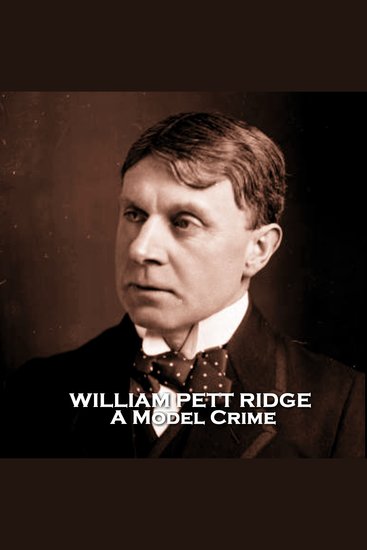
  • A Model Crime - From their pens to your ears genius in every story - cover

    A Model Crime - From their pens...

    William Pett Ridge

    • 0
    • 0
    • 0
    William Pett Ridge was born at Chartham, near Canterbury, Kent, on 22nd April 1859.  
    His family’s resources were certainly limited. His father was a railway porter, and the young Pett Ridge, after schooling in Marden, Kent became a clerk in a railway clearing-house. The hours were long and arduous, but self-improvement was Pett Ridge’s goal.  After working from nine until seven o’clock he would attend evening classes at Birkbeck Literary and Scientific Institute and then to follow his passion; the ambition to write.  He was heavily influenced by Dickens and several critics thought he had the capability to be his successor.  
    From 1891 many of his humourous sketches were published in the St James's Gazette, the Idler, Windsor Magazine and other literary periodicals of the day. 
    Pett Ridge published his first novel in 1895, A Clever Wife. By the advent of his fifth novel, Mord Em'ly, a mere three years later in 1898, his success was obvious.  His writing was written from the perspective of those born with no privilege and relied on his great talent to find humour and sympathy in his portrayal of working class life. 
    Today Pett Ridge and other East End novelists including Arthur Nevinson, Arthur Morrison and Edwin Pugh are being grouped together as the Cockney Novelists.   
    In 1924, Pugh set out his recollections of Pett Ridge from the 1890s: “I see him most clearly, as he was in those days, through a blue haze of tobacco smoke. We used sometimes to travel together from Waterloo to Worcester Park on our way to spend a Saturday afternoon and evening with H. G. Wells. Pett Ridge does not know it, but it was through watching him fill his pipe, as he sat opposite me in a stuffy little railway compartment, that I completed my own education as a smoker... Pett Ridge had a small, dark, rather spiky moustache in those days, and thick, dark, sleek hair which is perhaps not quite so thick or dark, though hardly less sleek nowadays than it was then”. 
    With his success, on the back of his prolific output and commercial success, Pett Ridge gave generously of both time and money to charity. In 1907 he founded the Babies Home at Hoxton.  This was one of several organisations that he supported that had the welfare of children as their mission.  
    His circle considered Pett Ridge to be one of life's natural bachelors. In 1909 they were rather surprised therefore when he married Olga Hentschel.  
    As the 1920’s arrived Pett Ridge added to his popularity with the movies. Four of his books were adapted into films.  
    Pett Ridge now found the peak of his fame had passed. Although he still managed to produce a book a year he was falling out of fashion and favour with the reading public and his popularity declined rapidly.  His canon runs to over sixty novels and short-story collections as well as many pieces for magazines and periodicals. 
    William Pett Ridge died, on 29th September 1930, at his home, Ampthill, Willow Grove, Chislehurst, at the age of 71. 
    He was cremated at West Norwood on 2nd October 1930.
    Mostra libro
  • The Woman of Andros - cover

    The Woman of Andros

    Thornton Wilder

    • 0
    • 0
    • 0
    “From the earliest pages of his first novels and plays, Wilder examined the universal quandaries encapsulated in the questions the young man Pamphilus asks in The Woman of Andros: “How does one live? What does one do first?” — Penelope Niven Thornton Wilder’s celebrated novel The Woman of Andros, set before the birth of Christ on an obscure Greek island, tells the story of the enigmatic Chrysis, a courtesan (and an outcast) of haunting beauty and intelligence. In her gatherings with the young men of the island, Chrysis probes what is precious about life, and how we live, love, and die in a harsh world, themes that Wilder revisited eight years later in his play, Our Town. Pamphilus, the only son of a prominent villager, fathers a baby out of wedlock with Chrysis’s sister, whom he wants to marry. The questions faced by Pamphilus, his family and the other “respectable” citizens of the island also explore themes of social class and status.
    Mostra libro
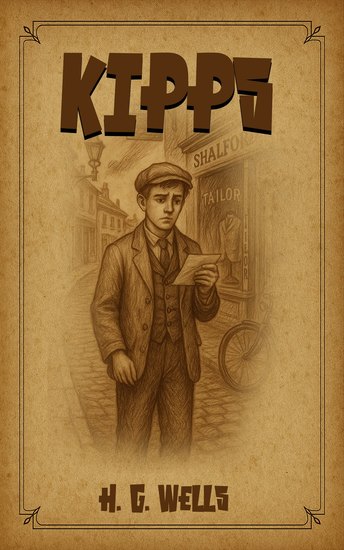
  • Kipps - cover

    Kipps

    H. G. Wells

    • 0
    • 0
    • 0
    Kipps is a humorous and insightful novel that explores social class, ambition, and personal identity in early 20th-century England. The story follows Arthur Kipps, a kind-hearted and somewhat naïve young man who works as a draper's assistant and dreams of a better life beyond his modest circumstances.
    
    When Kipps unexpectedly inherits a fortune, his world is turned upside down. Suddenly thrust into high society, he struggles to adapt to new expectations, manners, and relationships that feel foreign and restrictive. As Kipps navigates romance, social pressure, and the tension between authenticity and ambition, he must decide whether wealth truly offers happiness or merely complicates life.
    
    With warmth, realism, and gentle satire, H. G. Wells paints a vivid portrait of class mobility and social pretension. Kipps is both a coming-of-age story and a thoughtful critique of Edwardian society, celebrating honesty, individuality, and the quiet dignity of staying true to oneself.
    Mostra libro