Unisciti a noi in un viaggio nel mondo dei libri!
Aggiungi questo libro allo scaffale
Grey
Scrivi un nuovo commento Default profile 50px
Grey
Iscriviti per leggere l'intero libro o leggi le prime pagine gratuitamente!
All characters reduced
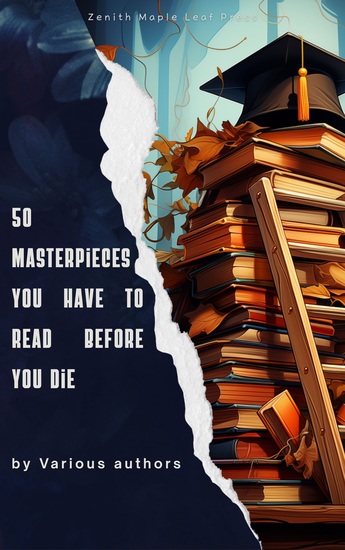
50 Masterpieces You Have to Read Before You Die - cover

50 Masterpieces You Have to Read Before You Die

Jerome K. Jerome, James Joyce, Charles Kingsley, Rudyard Kipling, La Fayette, Pierre Choderlos de Laclos, D.H. Lawrence, Sheridan Le Fanu, Matthew Gregory Lewis, Sinclair Lewis, Jack London, H.P. Lovecraft, Thomas Mann, William Somerset Maugham

Casa editrice: Zenith Maple Leaf Press

  • 0
  • 0
  • 0

Sinossi

Fifty books. Endless inspiration. One collection that will last a lifetime.

50 Masterpieces You Have to Read Before You Die gathers the world's greatest novels, plays, epics, and stories into a single volume. From ancient epics and Shakespearean drama to modern classics of love, tragedy, and adventure, this anthology offers a journey through the very best of world literature.

Inside this landmark collection you'll find:
✔ 50 complete works by legendary authors who defined culture and storytelling
✔ A wide range of genres: novels, poetry, drama, and philosophical works
✔ An essential guide to the masterpieces every reader should experience

Why readers love it:

Unparalleled value. Fifty complete books in one convenient edition.

A journey through time. Explore works spanning centuries and civilizations.

Perfect for collectors and learners. A must-have library of essential reading.

Celebrated across generations
This collection includes works by authors such as Homer, Dante, Shakespeare, Jane Austen, Charles Dickens, Leo Tolstoy, Fyodor Dostoevsky, and many others whose masterpieces continue to shape literature and thought today.

✨ Start your ultimate reading journey and discover the works that changed the world.

👉 Click "Buy Now" and claim 50 Masterpieces You Have to Read Before You Die—a definitive collection of the greatest classics ever written.
Disponibile da: 26/08/2025.
Lunghezza di stampa: 12348 pagine.
Altri libri che potrebbero interessarti

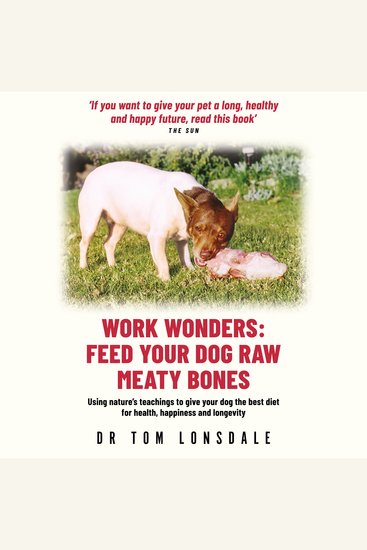
  • Work Wonders - cover

    Work Wonders

    Dr. Tom Lonsdale

    • 0
    • 0
    • 0
    If dogs could talk, what would they say is the best diet to keep them in tiptop condition?Would they recommend a selection of cans and packets from the supermarket. Or would they recommend half a chicken and a fresh rabbit?In Work Wonders, Dr Lonsdale looks at the dietary needs of dogs from a dog’s perspective, taking account of Nature’s teachings, easily understood science and sound common sense.This easy reader dispenses essential, easily understood information in eight chapters that will give you the confidence to provide the very best for your pets. You will learn about the deficiencies of modern-day so-called veterinary ‘science’. You will learn the importance of dental good health – both for you and your pets. Dr Lonsdale, from years of experience as a leader in his field, knows that pet owners need simple, clear, practical advice. First published in print in 2005, this audiobook stands the test of time.For your dog’s sake, enjoy this book, be inspired by this book. Your dog will be forever grateful.
    Mostra libro
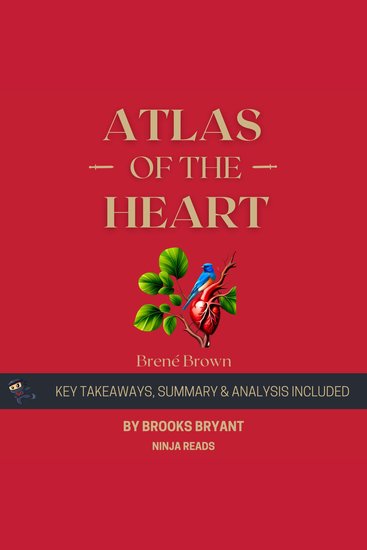
  • Summary: Atlas of the Heart - Mapping Meaningful Connection and the Language of Human Experience by Brené Brown: Key Takeaways Summary & Analysis - cover

    Summary: Atlas of the Heart -...

    Brooks Bryant

    • 0
    • 0
    • 0
    DISCLAIMER: This is NOT the Official Book, but a summary & it does NOT accompany the official book. 
    This comprehensive summary presents a condensed exploration of Brown's captivating insights, offering readers an accessible route to navigate through the atlas of the human heart. From understanding the most complex emotions to the power of vulnerability and empathy, this distilled version serves as an effective guide, opening pathways to the realization and acceptance of our shared humanity. 
    Embark on this transformational journey with Brene Brown's "Atlas of the Heart" and discover the hidden territories of your emotional world. This summary book is not just a reading experience—it's a journey of self-discovery, a cartographic guide to the human spirit, and a beacon lighting the way toward a more empathetic, compassionate world.
    Mostra libro
  • Bridging Our Political Divide - How Liberals and Conservatives Can Understand Each Other and Find Common Ground - cover

    Bridging Our Political Divide -...

    Kenneth Barish

    • 0
    • 0
    • 0
    Bridging Our Political Divide: How Liberals and Conservatives Can Understand Each Other and Find Common Ground is an essential contribution to a better national conversation. 


    Psychologist Kenneth Barish explains the sources and consistency of our political beliefs and why we continue to disagree about fundamental issues in American life. He offers antidotes to the angry, repetitive, and unproductive arguments that now dominate our political culture. Barish teaches us how to listen, think, and speak about our political opinions in a way that allows us to understand each other's concerns, resist false dichotomies and ideological certainty, see new perspectives and possibilities, and find common ground. The concluding chapter shows how we can move beyond partisan divisions toward pragmatic solutions and a better future for America's children. 


    This fundamentally hopeful book is an essential listen for students in all areas of study, for professionals in the fields of conflict resolution, communication, political science, and social psychology, and for anyone seeking to improve the quality of their conversations with people who may disagree with them, in both politics and in their personal relationships.
    Mostra libro
  • Charlemagne - King of the Franks King of Lombardy and Emperor of the Romans - cover

    Charlemagne - King of the Franks...

    Kelly Mass

    • 0
    • 0
    • 0
    From 768 to 800, Charlemagne, also referred to as Charles the Great, was King of the Franks, King of the Lombards, and Emperor of the Romans. Charlemagne combined many western and main Europe at the time of the Early Middle Ages. Since the fall of the Western Roman Empire 3 centuries before, he was the first acknowledged emperor to rule from western Europe. The Carolingian Empire is the name given to Charlemagne's broadening Frankish world. Antipope Paschal the Third later canonized him.Pepin the Short and Bertrada of Laon had an oldest child, Charlemagne, who was born before their main marriage.Following his dad's death in the year 768, he ended up being king of the Franks, at first as co-ruler with his brother Carloman I till the latter's death in the year 771. He followed his dad's position to the papacy as sole king and became its protector, driving the Lombards out of northern Italy and leading an attack into Muslim Spain. He waged a project against the Saxons to his east, requiring them to convert to Christendom or face death, resulting in events like the Massacre of Verden. He reached the peak of his power in the year 800, when Pope Leo the Third crowned him "Emperor of the Romans" on Christmas Day at Rome's Old St. Peter's Basilica.
    Mostra libro
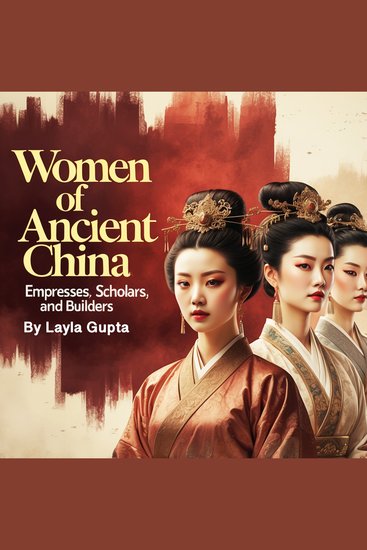
  • Women of Ancient China - Empresses Scholars and Builders - cover

    Women of Ancient China -...

    Layla Gupta

    • 0
    • 0
    • 0
    In ancient China, a woman’s place in society was shaped by a deep-rooted system of values that emphasized hierarchy, duty, and tradition. From birth, girls were taught the virtues of obedience, humility, and domestic responsibility—qualities believed to ensure familial harmony and uphold social order. These expectations were not merely cultural but were reinforced by state philosophy, especially Confucianism, which placed women within a strict patriarchal structure. 
    Confucian teachings emphasized a "Three Obediences" rule: a woman must obey her father before marriage, her husband during marriage, and her son in widowhood. This framework confined women largely to the private sphere and discouraged female independence. Even so, this ideology did not completely erase their influence. Women often wielded subtle but meaningful power within the home, guiding family affairs, managing finances, and raising the next generation in accordance with moral and cultural norms. 
    Women’s lives were further shaped by their class and family background. Elite women had access to education, poetry, and the arts, and they could sometimes play key roles in managing household affairs or even participating in court life. Their influence, though largely informal, could stretch far when navigating palace politics or securing power through marriage alliances. In contrast, women of lower classes worked alongside men in the fields, sold goods in markets, or labored in homes and workshops. These working women formed the backbone of the economy, though their contributions often went unrecorded in historical texts.
    Mostra libro
  • Anaxagoras - Mind and Cosmos in Ancient Greece - cover

    Anaxagoras - Mind and Cosmos in...

    Hector Davidson

    • 0
    • 0
    • 0
    Anaxagoras of Clazomenae, born around 500 BCE, was a pre-Socratic philosopher whose ideas bridged the gap between the earlier Milesian school and the more developed metaphysical and scientific theories of later Greek philosophy. His life and work significantly influenced subsequent thinkers, including Socrates, Plato, and Aristotle. 
    Early Life and Education: 
    Anaxagoras was born in Clazomenae, a city in Ionia, an area known for its vibrant intellectual culture. His early education exposed him to the philosophies of Thales, Anaximander, and Anaximenes, laying the groundwork for his own philosophical inquiries. He later moved to Athens, where he became a prominent figure in the intellectual circles of the time. 
    Philosophical Innovations: 
    Anaxagoras is best known for his introduction of the concept of Nous (Mind or Intellect), which he posited as the organizing principle of the cosmos. Unlike his predecessors who sought a single material principle as the origin of all things, Anaxagoras argued that the universe is governed by a rational, intelligent principle, Nous, which imparts order and structure to the chaotic flux of matter.
    Mostra libro