Unisciti a noi in un viaggio nel mondo dei libri!
Aggiungi questo libro allo scaffale
Grey
Scrivi un nuovo commento Default profile 50px
Grey
Iscriviti per leggere l'intero libro o leggi le prime pagine gratuitamente!
All characters reduced
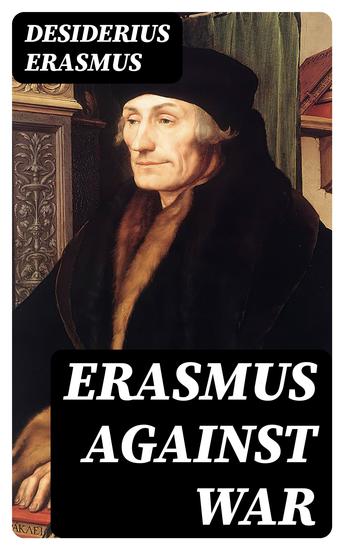
Erasmus Against War - cover

Ci dispiace! L'editore o autore ha rimosso questo libro dal nostro catalogo. Ma per favore non ti preoccupare, hai ancora oltre 500.000 altri libri da scegliere!

Erasmus Against War

Desiderius Erasmus

Casa editrice: DigiCat

  • 0
  • 0
  • 0

Sinossi

In 'Erasmus Against War,' the venerable humanist and thinker Desiderius Erasmus crafts a compelling and cogent treatise on the horrors of war, articulating an argument that transcends the centuries. Written during the Renaissance, a period marked by the revival of classical learning and values, Erasmus's text stands apart for its timeless moral inquiry and masterful use of classical rhetoric. His persuasive literary style, built on the robust foundations of humanism, offers a resonant critique of military conflict which not only reflected the intellectual currents of his time but also prefigured modern pacifist thought. Erasmus artfully weaves ethical concerns with theological reflections, creating a work that remains an essential piece in the corpus of peace literature. Desiderius Erasmus, a towering intellect of the Northern Renaissance, brings a distinct depth of scholarly acumen and ethical reasoning to 'Erasmus Against War.' His experiences during a time of transformative cultural shifts and frequent military skirmishes informed his passionate plea for peace. A celebrated scholar of Greek and Latin texts, Erasmus utilized his formidable understanding of Christian doctrine and humanist principles to lay bare the moral bankruptcy of warfare. His legacy as a seminal figure in European intellectual history, encapsulated in the Erasmus Project, continues to influence educational and cultural exchange, attesting to the enduring relevance of his ideas. 'Erasmus Against War' is a seminal work that resonates with readers seeking both historical perspective and contemporary relevance in discussions of conflict and human values. Scholars, students of philosophy, and advocates for peace will find in its pages a rich tapestry of humanist thought, an argumentative prowess still incisive after half a millennium. Erasmus's eloquent appeal to the better angels of our nature calls for a rediscovery by those striving for a world where dialogue triumphs over destruction, and reason over recklessness. This book encapsulates a vision of societal harmony that remains as pertinent now as it was in Erasmus's day.
Disponibile da: 21/11/2022.
Lunghezza di stampa: 57 pagine.

Altri libri che potrebbero interessarti

  • Waltz Through Eternity - cover

    Waltz Through Eternity

    Margaret Teegarden

    • 0
    • 0
    • 0
    Sit back and relax. Let your mind slip right into the characters of the pages that follow. When you completely drift into the lives of the characters you'll experience frustration, anger, hurt and despair and soon you'll feel pain and agony that lasts for all eternity. This type of suffering can only be relieved by truth and everlasting love.
    Mostra libro
  • Eyes for the Blind - From their pens to your ears genius in every story - cover

    Eyes for the Blind - From their...

    Frederick Cowles

    • 0
    • 0
    • 0
    Frederick Ignatius Cowles was born in 1900 in Cambridge, England. 
    This unfamiliar name is one of the gems of English supernatural fiction as well as several other works of travelogues, history, folklore, and children's books.  
    When his supernatural short stories, and some are very short indeed, were first published they were compared to the works of M R James and EF Benson, yet unlike those two authors he fell, unfairly, into obscurity. 
    In all he wrote perhaps 60 short stories with weird and supernatural themes. 
    Frederick Cowles died in 1948 although some accounts offer that it was 1949.
    Mostra libro
  • Souls of Black Folk The (Unabridged) - cover

    Souls of Black Folk The...

    W. E. B. Du Bois

    • 0
    • 0
    • 0
    This landmark book is a founding work in the literature of black protest. W. E. B. Du Bois (1868-1963) played a key role in developing the strategy and program that dominated early 20th-century black protest in America. In this collection of essays, first published together in 1903, he eloquently affirms that it is beneath the dignity of a human being to beg for those rights that belong inherently to all mankind. He also charges that the strategy of accommodation to white supremacy advanced by Booker T. Washington, then the most influential black leader in America, would only serve to perpetuate black oppression. Publication of The Souls of Black Folk was a dramatic event that helped to polarize black leaders into two groups: the more conservative followers of Washington and the more radical supporters of aggressive protest. Its influence cannot be overstated. It is essential reading for everyone interested in African-American history and the struggle for civil rights in America.
    Mostra libro
  • The Most Dangerous Game - cover

    The Most Dangerous Game

    Richard Connell

    • 0
    • 0
    • 0
    "The Most Dangerous Game" by Richard Connell is a gripping adventure thriller that explores the fine line between hunter and hunted. The story follows Sanger Rainsford, a seasoned big-game hunter who, after falling overboard from a yacht, washes up on a mysterious island. There, he encounters General Zaroff, an aristocratic hunter with a sinister passion—hunting humans for sport. As Rainsford becomes the next target in Zaroff’s deadly game, he must rely on his wits, survival skills, and sheer determination to outmaneuver his ruthless pursuer. This timeless tale of suspense, morality, and survival will keep listeners on the edge of their seats until the very last moment. 
    Cover photo by Ntsikelelo Radebe: https://www.pexels.com/photo/a-silhouette-of-a-wine-in-a-glass-and-bottle-11357544/
    Mostra libro
  • The Sister of the Baroness - cover

    The Sister of the Baroness

    Mansfield Katherine

    • 0
    • 0
    • 0
    In The Sister of the Baroness by Katherine Mansfield we have the theme of appearance, identity, self-importance, class and escape. Taken from her In a German Pension collection the story is narrated in the first person by an unnamed English woman and after reading the story the reader realises that Mansfield may be exploring the theme of appearance. With the exception of the narrator all the visitors at the Pension are in awe of the Baroness’ sister.
    Mostra libro
  • The Episode in Room 222 - Short tale from the Staffordshire born literary great - cover

    The Episode in Room 222 - Short...

    Arnold Bennett

    • 0
    • 0
    • 0
    Enoch Arnold Bennett was born on the 27th May 1867 in Hanley, one of the six towns that formed the Potteries and that later joined together to become Stoke-On-Trent.  
    After passing entrance examinations for Cambridge University his solicitor father instead decided that he should work for him, unpaid, in his thriving office.  In the evenings the young Bennett wrote or studied and one skill he developed was Pitman’s shorthand which gave him entrance to a position as a clerk at a solicitor’s office in London.  From there followed various jobs but none seemed to be able to ignite his career as a full-time author. 
    By 1903 he had moved to live in Paris; he was 35, unmarried and keen to settle into his new life.  In 1908 he published his first remarkable novel; ‘Clayhanger’, that drew on his earlier life in the Potteries.   
    A prolific writer he was able to deliver very fine works but also write many that were described as ‘potboilers’.  Despite this disclaimer many were lapped up by an audience eager for his prose and helped turn him into the most financially successful author of the times.    
    As the First World War drew to a close, he was appointed to run the Ministry of Information.  During the 1920s he was reputedly the highest paid literary journalist in the land and continued to write novels, plays and short stories.   
    Arnold Bennett died in his flat at Chiltern Court on the 27th March 1931, from typhoid after drinking water in France on his last holiday.  He was 63.
    Mostra libro