Unisciti a noi in un viaggio nel mondo dei libri!
Aggiungi questo libro allo scaffale
Grey
Scrivi un nuovo commento Default profile 50px
Grey
Iscriviti per leggere l'intero libro o leggi le prime pagine gratuitamente!
All characters reduced
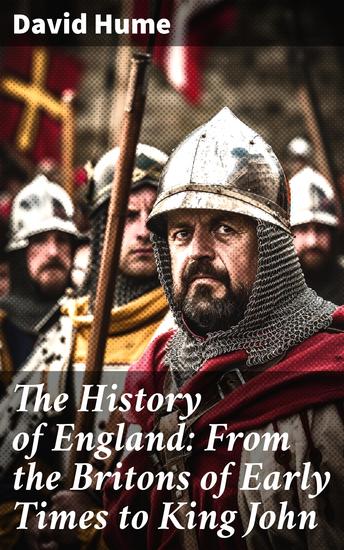
The History of England: From the Britons of Early Times to King John - Skeptical Insights into Early English Civilization - cover

The History of England: From the Britons of Early Times to King John - Skeptical Insights into Early English Civilization

David Hume

Casa editrice: Good Press

  • 0
  • 0
  • 0

Sinossi

In "The History of England: From the Britons of Early Times to King John," David Hume presents a comprehensive chronicle that deftly intertwines political narrative with philosophical reflection. Hume's literary style is marked by its clarity and elegance, employing a conversational tone that invites readers into the complex web of England'Äôs past. The book is situated within the Enlightenment context, showcasing Hume'Äôs commitment to rational examination and skepticism, thereby setting a precedent for historical analysis that balances empirical inquiry with moral consideration. David Hume, an eminent Scottish Enlightenment philosopher and historian, drew upon his profound intellectual tradition to craft this monumental work. His rigorous training in philosophy and economics informed his historical approach, which emphasizes the interplay between human nature, governance, and societal evolution. Hume'Äôs own experiences in an age ripe with political upheaval and scientific progress deeply influenced his perception of history as a vital commentary on civilization's moral and social trajectory. Hume's "The History of England" is an essential read for those interested in the evolution of historical writing. It offers insights not only into England's formative years but also into the nature of history itself. Scholars and history enthusiasts alike will find this work enlightening, as it encourages a critical lens through which to view both the past and its implications for contemporary society.
Disponibile da: 22/08/2023.
Lunghezza di stampa: 529 pagine.

Altri libri che potrebbero interessarti

  • In RNJesus They Trust - Game Design Your Time & Your Luck - cover

    In RNJesus They Trust - Game...

    Kobra KaiSa, Sage Reedfields

    • 0
    • 0
    • 0
    In RNJesus They Trust: Game Design, Your Time & Your Luck is a witty, sharp-eyed exploration of randomness in modern gaming — and how it blesses, tests, or exploits the players who kneel before it. From the ecstatic thrill of a rare drop to the soul-crushing grind of gacha pulls, game developers have turned RNG (random number generation) into a design pillar that fuels excitement and monetization. But where does randomness stop being fun and start wasting your time — or draining your wallet? This book unpacks that question across genres: MMOs, gacha games, roguelikes, shooters, and strategy titles. It blends game design insight with psychological analysis and a dash of sacred satire, portraying “RNJesus” as the unpredictable deity we’ve all prayed to at 2 AM. Whether you're a game designer, critic, or lifelong gamer tired of losing to the dice, this book offers clarity, laughter, and empowerment. Learn to recognize fair design, spot exploitative patterns, and advocate for gaming systems that respect your time — and your luck.
    Mostra libro
  • Anaxagoras - Mind and Cosmos in Ancient Greece - cover

    Anaxagoras - Mind and Cosmos in...

    Hector Davidson

    • 0
    • 0
    • 0
    Anaxagoras of Clazomenae, born around 500 BCE, was a pre-Socratic philosopher whose ideas bridged the gap between the earlier Milesian school and the more developed metaphysical and scientific theories of later Greek philosophy. His life and work significantly influenced subsequent thinkers, including Socrates, Plato, and Aristotle. 
    Early Life and Education: 
    Anaxagoras was born in Clazomenae, a city in Ionia, an area known for its vibrant intellectual culture. His early education exposed him to the philosophies of Thales, Anaximander, and Anaximenes, laying the groundwork for his own philosophical inquiries. He later moved to Athens, where he became a prominent figure in the intellectual circles of the time. 
    Philosophical Innovations: 
    Anaxagoras is best known for his introduction of the concept of Nous (Mind or Intellect), which he posited as the organizing principle of the cosmos. Unlike his predecessors who sought a single material principle as the origin of all things, Anaxagoras argued that the universe is governed by a rational, intelligent principle, Nous, which imparts order and structure to the chaotic flux of matter.
    Mostra libro
  • Wanda and Janelle's Lesbian Love Life - cover

    Wanda and Janelle's Lesbian Love...

    Giselle Renarde

    • 0
    • 0
    • 0
    What’s it like, dating a woman with two kids? Just ask Janelle. She’s not sure if it’s better to pretend they’re only friends, especially in the beginning. Will their love last?  If it doesn’t, she doesn’t want to break three hearts.  Sometimes it’s hard to know what’s right. But when the little ones spend the night with their grandparents, Wanda and Janelle can really let loose. This is their lusty lesbian love story.
    Mostra libro
  • Revolution Road Trip - Our Two Wild and World-Changing Weeks behind the Iron Curtain - cover

    Revolution Road Trip - Our Two...

    Kelly Kimball, Trish Whitcomb,...

    • 0
    • 0
    • 0
    Kelly Kimball, Trish Whitcomb, Andrew Frank, and Barry Fadem met as political consultants, each passionate about the power and potential of democracy throughout the world. A trip to Eastern Europe in 1990 was supposed to be a chance to experience the culture they’d only witnessed from afar. But as the first election approached in Czechoslovakia, the friends and counterparts found themselves in the middle of history—and not just as witnesses.In Revolution Road Trip, Kimball, Whitcomb, Frank, and Fadem share their story of two weeks spent in the heart of Eastern Europe during the fall of the Iron Curtain. In the right place at the right time, their guidance during a pivotal election allowed them a front-row seat to a complex, bygone era. With entertaining anecdotes and enlightening perspectives, Revolution Road Trip provides a fascinating look at democracy in action and the impact of a few on the lives of millions.
    Mostra libro
  • How to Stop Being Toxic - Quit Manipulative Behaviors Avoid Hurting the People You Love and Start Healthy Relationships - cover

    How to Stop Being Toxic - Quit...

    Tom Stokes

    • 0
    • 0
    • 0
    Do you find yourself stuck in a loop of negativity, spreading the toxicity around like wildfire? 
    Does any of these situations sound familiar? 
    - Your toxicity has seeped into your personal relationships, causing tension, disagreements, and heartbreak. 
    - The constant negativity is affecting your mental health, leading to anxiety, stress, and feelings of guilt and regret. 
    - You're becoming the person you swore you'd never be: impatient, controlling, and harsh. 
    - Loved ones have started keeping their distance, wary of your unpredictability and hostile behavior. 
    Here's a little sneak preview of what you’ll get: 
    - Discover the TRUE origin of your toxic behavior and ways to overcome it. 
    - Insightful guidance on transitioning from manipulative habits to constructive ones. 
    - Master the art of healthy communication: LISTEN more, HURT less. 
    - Become an expert in emotional intelligence: Understand, Empathize, and Connect. 
    - How to make APOLOGIES that are sincere and healing. 
    - Crucial tips to avoid RELAPSE into old toxic patterns. 
    - Say GOODBYE to blame games and hello to ACCOUNTABILITY. 
    - Effective strategies to rebuild TRUST in damaged relationships. 
    - A step-by-step guide to foster SELF-LOVE and self-improvement. 
    It's time for a change. It's time to drop the venom, to untangle the web of toxicity, and step into a life of healthier, more meaningful relationships.This book is not just a guide, it's a lifeline to a brighter, more positive, less toxic future. Grab it with both hands, hold on tight, and be ready to transform your world.
    Mostra libro
  • German Tanks in the World Wars: The History of Germany’s Most Famous Tanks during Both Conflicts - cover

    German Tanks in the World Wars:...

    Charles River Editors

    • 0
    • 0
    • 0
    One of the most important breakthroughs in military technology associated with World War I, and certainly the one that continues to capture the public imagination, was the introduction of a war machine that came to dominate the face of land battles throughout most of the 20th century: the tank. As a concept, it was not revolutionary; in fact, it harkened back to classical antiquity and to the Middle Ages, such as the covered battering rams and testudos which had made frequent appearances on ancient battlefields. In essence, it was designed to solve the age-old problem of protecting infantry from enemy projectiles while remaining mobile. 	Ironically, Germany, which would subsequently become famous for panzers and blitzkrieg warfare, was late in taking up the idea. During World War I, the Germans continued to rely on other techniques, and they produced less than two dozen models for battlefield use.  
    	The beginning of World War II found the major powers developing tanks to some extent, but lingering ideas from World War I affected the development of tanks during the Interwar period. As a result, aside from the blitzkrieg doctrine developed by the Nazis, tanks were still used in terms of infantry support, and there were few wars during this period to give strategists the chance to develop better uses for the new armored vehicles before World War II started. Commanders soon found that many of the tanks fielded in the campaigns of 1939-1941 lacked the necessary armor, guns, and designs. Inevitably, tactics evolved throughout the war. The Germans were early leaders in tank tactics, as their successes from Poland through the opening phases of Operation Barbarossa demonstrated. The main German tank tactic was the so-called Schwerpunkt (“center of gravity”), in which a concentration of tanks achieved a local superiority, broke through, and drove deep behind enemy lines.
    Mostra libro