Unisciti a noi in un viaggio nel mondo dei libri!
Aggiungi questo libro allo scaffale
Grey
Scrivi un nuovo commento Default profile 50px
Grey
Iscriviti per leggere l'intero libro o leggi le prime pagine gratuitamente!
All characters reduced
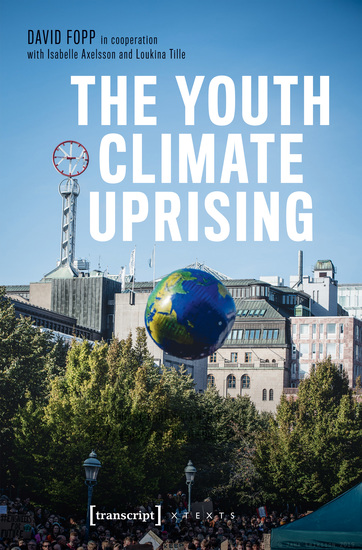
The Youth Climate Uprising - From the School Strike Movement to an Ecophilosophy of Democracy - cover

The Youth Climate Uprising - From the School Strike Movement to an Ecophilosophy of Democracy

David Fopp, Isabelle Axelsson, Loukina Tille

Traduttore Lucy Duggan

Casa editrice: transcript Verlag

  • 0
  • 0
  • 0

Sinossi

Species are going extinct, forests are burning, and children are worried about the future and their peers worldwide. But that is not the whole story: One Friday in 2018, a few young people joined Greta Thunberg to protest, and the global climate strike movement was born. Scientist David Fopp spent 250 Fridays with the newly formed grassroots movements. Together with activists Isabelle Axelsson and Loukina Tille, he offers an insider perspective on how scientists and activists can fight for a just and sustainable global society. The volume also offers both an introduction to ecophilosophy and a unified science of democracy in times of interdependent crises. How can research in all disciplines - from (drama) education and economics to psychology - help with this struggle? And how can we all fight the climate crisis by transforming and deepening democracy?
Disponibile da: 30/06/2024.
Lunghezza di stampa: 599 pagine.


Altri libri che potrebbero interessarti

  • Navigating Life With ADHD - cover

    Navigating Life With ADHD

    Sarah Cheyette, Benjamin Cheyette

    • 0
    • 0
    • 0
    The understanding of ADHD has been evolving: Once seen as a problem of "bad kids with bad parents," today people of all ages and from all walks of life are diagnosed with ADHD. With effective treatment, people with ADHD can have amazing career trajectories and make highly original and valuable contributions to society. But what does it mean to have ADHD? The recognition of ADHD has been increasing steadily, and the American Academy of Neurology is proud to shed light on this topic and bring greater understanding to all involved. 


    Listeners will learn about the effects of ADHD on the lives of children and adults with the disorder and how to navigate these effects with loved ones and caregivers. The authors discuss how best to manage the many challenges associated with ADHD holistically: not simply focusing on ADHD but also its relationship to anxiety, depression, sleep disorders, and other commonly co-occurring conditions. Medication and non-medication treatments are covered in an easy-to-understand way. With the liberal use of patient vignettes throughout, listeners will relate and feel comfortable understanding what ADHD is—and isn't—and how to maximize success for the ADHDer in their life or for themselves if they themselves have ADHD.
    Mostra libro
  • Muslim Cool - Race Religion and Hip Hop in the United States - cover

    Muslim Cool - Race Religion and...

    Su'ad Abdul Khabeer

    • 0
    • 0
    • 0
    This groundbreaking study of race, religion, and popular culture in the twenty-first century United States focuses on a new concept, "Muslim Cool." Muslim Cool is a way of being an American Muslim—displayed in ideas, dress, social activism in the 'hood, and in complex relationships to state power. Constructed through hip hop and the performance of Blackness, Muslim Cool is a way of engaging with the Black American experience by both Black and non-Black young Muslims that challenges racist norms in the U.S. as well as dominant ethnic and religious structures within American Muslim communities. 


    Su'ad Abdul Khabeer illuminates the ways in which young and multiethnic US Muslims draw on Blackness to construct their identities as Muslims. Thus, by countering the notion that Blackness and the Muslim experience are fundamentally different, Muslim Cool poses a critical challenge to dominant ideas that Muslims are "foreign" to the United States and puts Blackness at the center of the study of American Islam. Yet Muslim Cool also demonstrates that connections to Blackness made through hip hop are critical and contested—critical because they push back against the pervasive phenomenon of anti-Blackness and contested because questions of race, class, gender, and nationality continue to complicate self-making in the United States.
    Mostra libro
  • Tending the Heart of Virtue - How Classic Stories Awaken a Child's Moral Imagination 2nd edition - cover

    Tending the Heart of Virtue -...

    Vigen Guroian

    • 0
    • 0
    • 0
    In Tending the Heart of Virtue, Vigen Guroian illuminates the power of classic tales and their impact on the moral imagination. He demonstrates how these stories teach the virtues through vivid depictions of the struggle between good and evil, while he also unveils components of the good, the true, and the beautiful in plot and character. With clarity and elegance, Guroian reads deeply into the classic stories. He demonstrates how these stories challenge and enliven the moral imaginations of children. And he shows the listener how to get "inside" of classic stories and communicate their lessons to the child. 


    For more than two decades Tending the Heart of Virtue has been embraced by parents, guardians, and teachers for whom the stories it discusses are not only beloved classics but repositories of moral wisdom. This revised and expanded second edition includes three new chapters in which Guroian inteprets such stories as Hans Christian Andersen's The Ugly Duckling, the Grimms' Cinderella, and John Ruskin's The King of the Golden River.
    Mostra libro
  • Spanish Empire in the Americas The: The History of Spain’s Colonization across Central America and South America - cover

    Spanish Empire in the Americas...

    Editors Charles River

    • 0
    • 0
    • 0
    By the time Christopher Columbus started setting east from the New World, he had explored San Salvador in the Bahamas (which he thought was Japan), Cuba (which he thought was China), and Hispaniola, the source of gold. As the common story goes, Columbus, en route back to Spain from his first journey, called in at Lisbon as a courtesy to brief the Portuguese King John II of his discovery of the New World. King John subsequently protested that according to the 1479 Treaty of Alcáçovas, which divided the Atlantic Ocean between Spanish and Portuguese spheres of influence, the newly discovered lands rightly belonged to Portugal. To make clear the point, a Portuguese fleet was authorized and dispatched west from the Tagus to lay claim to the “Indies,” which prompted a flurry of diplomatic activity in the court of Ferdinand and Isabella. At the time, Spain lacked the naval power to prevent Portugal from acting on this threat, and the result was the hugely influential 1494 Treaty of Tordesillas. 
    The Treaty of Tordesillas was one of the most important documents of its kind of the age, for it established the essential parameters of the two competing empires, the first of the major European imperial entities. The Treaty of Tordesillas drew an imaginary line from pole to pole, running 100 leagues west of the westernmost islands of the Azores. According to the terms of a supporting papal bull, all the lands to the west of that belonged to Spain, and all of those to the east belonged to Portugal. What this meant in practical terms was that Portugal was given Africa and the Indian Ocean while Spain was granted all the lands to the west, including the Americas and the Caribbean, all collectively known as the “Indies,” or the New World. 
    Perhaps inevitably, a regional rivalry had developed as the Portuguese began to establish a colony in Brazil and push its boundaries southwards. 
    Mostra libro
  • Ace University: An Easy to Follow Guide for University Students - 80+ Quick-Fire Tips and Tricks for a Fun Balanced and Productive Life at Uni - cover

    Ace University: An Easy to...

    D.J.F

    • 0
    • 0
    • 0
    So much effort in our early lives is spent aimed towards university, but upon arrival, we are left to fend for ourselves. While this is partly the beauty of university, there are many useful tips, tricks and guidance that the author and their cohort have prepared to help you get the most out of these precious (and expensive!) years. 
    The author started as an underachiever at school, entering university only through sheer luck. Despite initial doubts from teachers and admissions staff, the freedom at university fostered significant personal growth, reflected throughout this book's chapters. The author's journey includes academic and extracurricular achievements, showcasing the accelerated personal growth that university can provide. 
    “I know plenty of people who worked their way from under confident and lost individuals, to happy and content high achievers at university.” 
    This book aims to;Give you some first hand accounts about what uni is really like, hopefully reducing any anxiety or stress for those who are about to go.Guide you to get the most out of your course and social life.Implore you to find balance in life at uni.Provide some practical guidance for your career after uni.But mainly, to help you to ace YOUR university experience. 
    Supplemental material and the free newsletter can be found here: 
    https://howtoaceuniversity.substack.com/
    Mostra libro
  • Lifehouse - Taking Care of Ourselves in a World on Fire - cover

    Lifehouse - Taking Care of...

    Adam Greenfield

    • 0
    • 0
    • 0
    How to reclaim power in a time of perpetual crisis 


    We are living through a Long Emergency: a near-continuous train of pandemics, heatwaves, droughts, resource wars, and other climate-driven disasters. In Lifehouse, Adam Greenfield asks what might happen if the tactics and networks of care that spring up in response to these times might be brought together in a single, coherent way of life? 


    Using examples from the Black Panthers' "survival programs," the astonishingly effective Occupy Sandy disaster-relief effort, and the neighborhood-based mutual aid groups that sustained many during COVID lockdowns to the large-scale, self-organized polities of municipalist Spain and Kurdish Rojava, Greenfield argues for rethinking local power as a bulwark against despair—a way to discover and develop the individual and collective capacities that have gone underutilized during all the long years of late capitalism, and a means for thriving in the face of impending catastrophe.
    Mostra libro