Unisciti a noi in un viaggio nel mondo dei libri!
Aggiungi questo libro allo scaffale
Grey
Scrivi un nuovo commento Default profile 50px
Grey
Iscriviti per leggere l'intero libro o leggi le prime pagine gratuitamente!
All characters reduced
The Divine Comedy of Dante Alighieri: The Inferno - cover

The Divine Comedy of Dante Alighieri: The Inferno

Dante Alighieri

Traduttore James Romanes Sibbald

Casa editrice: DigiCat

  • 0
  • 0
  • 0

Sinossi

In "The Divine Comedy: The Inferno," Dante Alighieri embarks on an allegorical journey through the depths of Hell, skillfully employing the terza rima structure that contributes to the poem's rhythmic and musical quality. The narrative is rich with symbolism, intricately woven with theological, philosophical, and historical allusions that illuminate the moral ramifications of sin and redemption. Dante's vivid imagery and profound characterizations vividly bring to life the torments of the damned, reflecting the medieval worldview on justice and divine retribution, set against the backdrop of a pivotal cultural moment in the transition from the Middle Ages to the Renaissance. Dante, a Florentine poet and philosopher, was profoundly influenced by his personal exile and political strife, which ignited his reflections on morality and the human soul's navigation through sin. His experiences shaped the themes of justice and the quest for divine understanding within this work. "The Inferno" serves not only as a narrative exploration of posthumous consequences but also as a commentary on the sociopolitical dynamics of Dante's time, richly detailing the poet's struggle with issues of identity and belief. Recommended for scholars and enthusiasts alike, "The Divine Comedy: The Inferno" invites readers to contemplate the complex interplay of good and evil. Through Dante's evocative prose, readers engage with universal themes of redemption and the human condition, fostering a deeper understanding of one of literature's most significant works. This masterpiece remains a cornerstone of world literature, essential for anyone seeking insight into the ethical dilemmas that continue to resonate today.
Disponibile da: 02/06/2022.
Lunghezza di stampa: 290 pagine.
Altri libri che potrebbero interessarti

  • Birds Knit My Ribs Together - cover

    Birds Knit My Ribs Together

    Phil Barnett

    • 0
    • 0
    • 0
    what if / I actually – am – a bird / my cupped hands / opening to release me... Phil Barnett's relationship with birds is so close that his poetry blurs the distinctions between himself and the birds - a kind of ornimorphology where rather than giving the birds human characteristics, the reverse happens, and he imagines himself as a bird. Phil Barnett is a photographer, writer, musician, artist and naturalist, who has a passion for the birds that kept him company through a long hard illness. His photography and poetry have quite a following on social media, which is where we found him, on The Daily Haiku. His skill as a photographer leads to an acute visual sensibility, and his slow recovery moves from a tick sheet his mother had to fill in for him, to extraordinary poetry - full of wit and wonder and spectacular language.
    Mostra libro
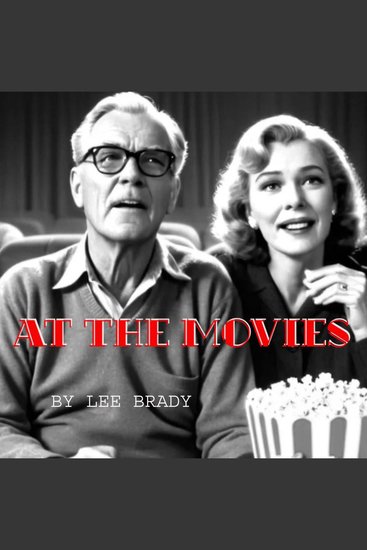
  • At the Movies - cover

    At the Movies

    Lee Brady

    • 0
    • 0
    • 0
    A married woman recalls her obsession with movies and movie stars in her earlier days but then comes to realize she is much happier with reality.
    Mostra libro
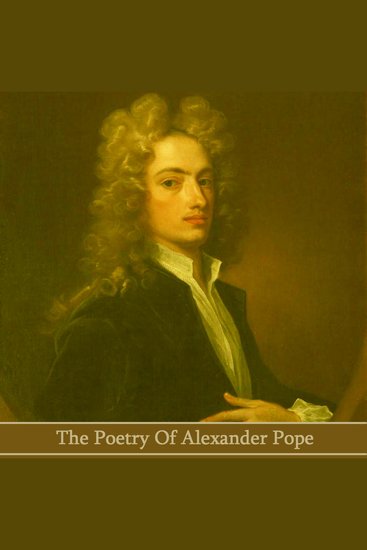
  • The Poetry of Alexander Pope - Celebrated enlightenment poet who was also the first person to translate the works of Homer & Virgil into English - cover

    The Poetry of Alexander Pope -...

    Alexander Pope

    • 0
    • 0
    • 0
    Alexander Pope was born on May 21st, 1688 into a Catholic family in London.  
    His education was affected by the then recent Test Acts, which upheld the status of the Church of England and banned Catholics from teaching.  In effect this meant his formal education was over by the age of 12 but Pope was to immerse himself in classical literature and languages and too, in effect, educate himself.   
    From this age too he also suffered from numerous health problems including Pott’s disease, a type of tuberculosis, which resulted in a stunted, deformed body.  Only to grow to a height of 4’ 6”, with a severe hunchback and complicated further by respiratory difficulties, high fevers, inflamed eyes and abdominal pain all of which served to further isolate him, initially, from society. 
    However his talent was evident to all. Best known for his satirical verse, his translations of Homer and the use of the heroic couplet, he is the second-most frequently quoted writer in The Oxford Dictionary of Quotations, after Shakespeare. 
    With the publication of Pastorals in 1709 followed by An Essay on Criticism in 1711 and his most famous work The Rape of the Lock in 1712, Pope became not only famous but wealthy. 
    His translations of the Iliad and the Odyssey further enhanced both reputation and purse.  His engagement to produce an opulent new edition of Shakespeare met with a mixed reception. Pope attempted to "regularise" Shakespeare's metre and rewrote some of his verse and cut 1500 lines, that Pope considered to be beneath the Bard’s standard, to mere footnotes. 
    Alexander Pope died on May 30th, 1744 at his villa at Twickenham (where he created his famous grotto and gardens) and was buried in the nave of the nearby Church of England Church - St Mary the Virgin. 
    Over the years and centuries since his death Pope’s work has been in and out of favour but with this distance he is now truly recognised as one of England’s greatest poets. 
     This volume comes to you from Portable Poetry, a specialized imprint from Deadtree Publishing.  Our range is large and growing and covers single poets, themes, and many compilations.
    Mostra libro
  • H P Lovecraft - Chapter & Verse - Poetry and prose together from literary greats - cover

    H P Lovecraft - Chapter & Verse...

    HP Lovecraft

    • 0
    • 0
    • 0
    Literature is a world of words and wonder, able to take us on almost unimaginable journeys from the wild and fantastic to the grind and minutiae of life. 
     
    An author’s ideas are his building blocks, his architecture of the mind, building a structure on which all else will rest; the narrative, the characters, the words - those few words that begin the adventure. 
     
    In this series we look at some of our leading classic authors across two genres: the short story and the poem.  In this modern world there is an insatiable need to categorise and pigeon-hole everyone and everything.  But ideas, these grains and saplings of the brain, need to roam, to explore and find their perfect literary use vehicle.  Our authors are masters of many literary forms, perhaps known for one but themselves favouring another. 
     
    Story. Poems. Story.  Within these boundaries come all manner of invention and cast of characters.  And, of course, each author has their own way of revealing their own chapter and verse.    
     
    1 - Chapter & Verse - H P Lovecraft - An Introduction 
    2 - The Lurking Fear by H P Lovecraft 
    3 - Laeta - a Lament by H P Lovecraft 
    4 - Despair by H P Lovecraft 
    5 - The Conscript by H P Lovecraft 
    6 - Nemesis by H P Lovecraft 
    7 - Hallowe'en in a Suburb by H P Lovecraft 
    8 - What the Moon Brings by H P Lovecraft 
    9 - Sunset by H. P. Lovecraft 
    10 - The City by H P Lovecraft 
    11 - Providence by H P Lovecraft 
    12 - The Wood by H P Lovecraft 
    13 - Fact and Fancy by H P Lovecraft 
    14 - The Picture In The House by H P Lovecraft
    Mostra libro
  • On the Morning of Christ's Nativity - cover

    On the Morning of Christ's Nativity

    John Milton

    • 0
    • 0
    • 0
    John Milton's On the Morning of Christ's Nativity is no ordinary Christmas poem. Written when he was just twenty-one, it reveals an early glimpse of the depth and ambition that would later shape Paradise Lost. Here, the nativity is not sentimental but cosmic: a quiet moment that echoes across heaven, earth, and myth.
    This is poetry as vision—blending classical imagery, biblical themes, and rich musical language. Angels descend, stars pause in wonder, and the natural world falls into a hush. Pagan gods retreat into silence, as if even they recognize the shift in power. The newborn Christ is portrayed not as a helpless child but as a divine force whose presence alters the very fabric of time and meaning.
    Milton's language is grand but not distant. Each stanza is alive with texture, rhythm, and the gravity of ideas beyond the page. This is not a poem that tells a story—it opens a door. And on the other side is a world both ancient and eternal, where poetry and theology walk hand in hand.
    Listeners will find here not just a work of seasonal reverence but a meditative, imaginative journey. It's a bold start from a young poet already aware of the weight of words—and how they can shape both heaven and earth.
    Mostra libro
  • Peak Stuff - cover

    Peak Stuff

    Billie Collins

    • 0
    • 0
    • 0
    'I like having things. I like having lots of things. It reminds me that I'm... Y'know? A person.'
    Alice is done with fast fashion. Ben can't stop buying trainers. And Charlie just wants to sell out… one organ at a time.
    Billie Collins's play Peak Stuff is a fast-paced, funny, fearless deep-dive into consumer culture. In an age of retail therapy, climate crisis and click and collect - how does our 'stuff' define us? And have we reached peak stuff?
    The play was commissioned by ThickSkin and Lawrence Batley Theatre, was a winner of the New Play Commission Scheme, and was first presented on tour of the UK in 2024.
    Mostra libro