Begleiten Sie uns auf eine literarische Weltreise!
Buch zum Bücherregal hinzufügen
Grey
Einen neuen Kommentar schreiben Default profile 50px
Grey
Jetzt das ganze Buch im Abo oder die ersten Seiten gratis lesen!
All characters reduced
Robinson Crusoe(Illustrated) - cover

Robinson Crusoe(Illustrated)

Daniel Defoe

Verlag: Swish

  • 0
  • 0
  • 0

Beschreibung

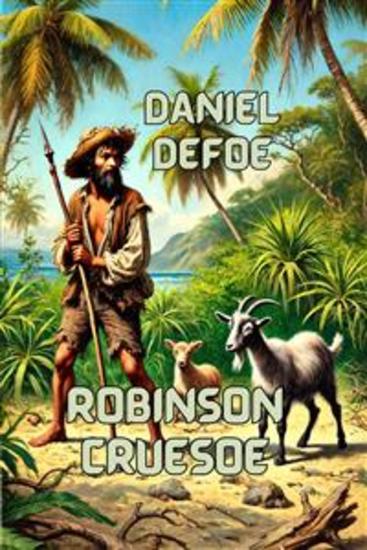
Illustrated Edition with 20 captivating illustrationsIncludes a comprehensive summary for quick understandingDetailed character list to keep track of key figuresAuthor biography of Daniel Defoe, giving insights into his life and workRobinson Crusoe by Daniel Defoe is a classic adventure novel that has captivated readers for centuries with its tale of survival, self-reliance, and the indomitable human spirit. This timeless story follows Robinson Crusoe, an ambitious young man who defies his family’s wishes and sets sail in pursuit of adventure, only to find himself shipwrecked on a deserted island.Alone on the island, Crusoe must use his ingenuity and inner strength to survive. As he builds shelter, cultivates the land, and faces both natural and psychological challenges, Crusoe undergoes a profound personal transformation. His life takes a dramatic turn when he encounters Friday, a native man who becomes his loyal companion, adding another layer of depth to this tale of human connection and cultural differences.This special illustrated edition brings Robinson Crusoe to life with 20 vivid illustrations that enhance key moments of the story. Whether you are rediscovering this classic or experiencing it for the first time, these illustrations offer a fresh, immersive way to engage with the narrative.With a comprehensive summary, a detailed character list, and an author biography, this edition is perfect for both casual readers and literary enthusiasts alike. Explore the adventure, survival, and moral dilemmas that make Robinson Crusoe an enduring masterpiece of English literature. 
Verfügbar seit: 02.11.2024.

Weitere Bücher, die Sie mögen werden

  • Man Overboard - A horror tale set on a ship full of mystery and twists along the way - cover

    Man Overboard - A horror tale...

    F. Marion Crawford

    • 0
    • 0
    • 0
    Francis Marion Crawford, an only child, was born on 2nd August 1854 at Bagni di Lucca, Italy. He was a nephew to Julia Ward Howe, the American poet and writer of ‘The Battle Hymn of the Republic’.  
     
    Crawford was educated at St Paul's School, Concord, New Hampshire and then on to Cambridge University, the University of Heidelberg and the University of Rome.  
     
    In 1879 he went to India, to study Sanskrit and then to edit The Indian Herald. In 1881 he returned to America to continue his Sanskrit studies at Harvard University. 
     
    His family became increasingly concerned about his employment prospects.  After an attempt at a singing career as a baritone was ruled out, he was encouraged to write.  
     
    In December 1882 his first novel, ‘Mr Isaacs’, was published and was an immediate hit as was his second novel ‘Dr Claudius’ in 1883.  
     
    In October 1884 he married Elizabeth Berdan and encouraged by his excellent start to a literary career they returned to Sant Agnello, Italy to make a permanent home, buying the Villa Renzi that then became Villa Crawford.  
     
    In the late 1890s, Crawford began work on his historical works which would later include ‘Corleone’, in 1897, the first major treatment of the Mafia in literature.  
     
    Crawford is also exceedingly popular and anthologized as a short story writer of bizarre and creepy tales.   
     
    In 1908 came his classic ‘The Screaming Skull’. Without doubt its unsettling nature is heightened as the reader/listener is drawn into to the story by its narrator.  Everything is explained and plausible until, of course, it isn’t. 
     
    Francis Marion Crawford died at Sorrento on Good Friday 1909 at Villa Crawford of a heart attack.  
     
    In ‘Man Overboard’ Crawford uncovers the story of identical twins.  When one falls overboard it unravels a sequence of events that take years to complete, all with a growing sense of uneasiness that further misery awaits
    Zum Buch
  • Queen of the Black Coast - cover

    Queen of the Black Coast

    Robert E. Howard

    • 0
    • 0
    • 0
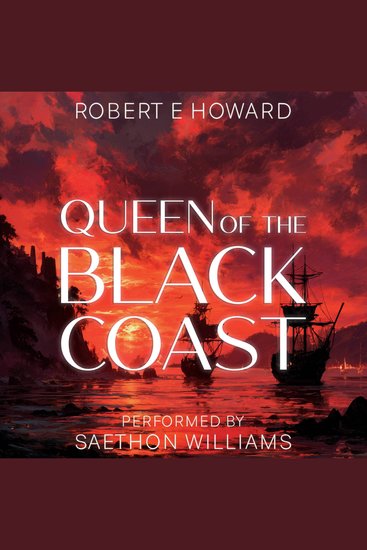
    Queen of the Black Coast by Robert E. Howard is one of the most iconic tales of Conan the Barbarian—a gripping fantasy adventure filled with passion, piracy, and peril. When Conan flees tyranny and joins the infamous pirate queen Bêlit, their fiery romance ignites a saga of blood-soaked raids, supernatural horrors, and tragic destiny. Set against a backdrop of cursed rivers, haunted lands, and ruthless battles, this early 20th-century sword-and-sorcery classic blends high-seas adventure with themes of love, honor, and loss. Perfect for fans of epic fantasy, pulp adventure, and timeless tales of heroism and doom.
    Zum Buch
  • The Prince and the Pauper - cover

    The Prince and the Pauper

    Mark Twain

    • 0
    • 0
    • 0
    "When I am king they shall not have bread and shelter only, but also teachings out of books, for a full belly is little worth where the mind is starved."
    
    A classic tale of switched identities, Mark Twain's The Prince and the Pauper is both a rollicking adventure yarn and a sharp social satire.
    
    In bustling Tudor London, two boys are born into opposite worlds: Edward Tudor, heir to the English throne, and Tom Canty, a ragged pauper from the slums. When chance brings them together, their uncanny resemblance sparks a daring exchange of identities. Suddenly, the prince is cast into the harsh realities of poverty, experiencing the brutal life of a London pauper and becoming aware of the stark class inequality in England, while the pauper is thrust into the bewildering splendour of royal life where he must navigate ceremonies, politics, and suspicion convincingly to avoid exposure.
    
    Using his trademark wit and humour to highlight inequality and the absurdity of rigid social divisions, and to highlight Edward's journey towards becoming a humane ruler, The Prince and the Pauper is a skilful blend of historical detail and fast-paced storytelling.
    Samuel Langhorne Clemens, better known by his pen name Mark Twain (1835–1910), grew up along the banks of the Mississippi River, and his early experiences inspired many of his most famous works, including The Adventures of Tom Sawyer and Adventures of Huckleberry Finn. Widely celebrated as America's greatest humorist, Twain captured the spirit of a rapidly changing nation, and his sharp wit, keen eye for human nature, and gift for storytelling made him not only a beloved novelist but also a popular lecturer and essayist.
    
    Twain's innovative style, character-driven storytelling and ability to interweave humour with profound social critique laid the groundwork for modern American literature and has inspired countless authors, including Ernest Hemingway and F. Scott Fitzgerald. Indeed, Hemingway famously declared that "all modern American literature comes from one book by Mark Twain called Huckleberry Finn."
    Zum Buch
  • Federigo's Falcon - From their pens to your ears genius in every story - cover

    Federigo's Falcon - From their...

    Boccasio Giovanni

    • 0
    • 0
    • 0
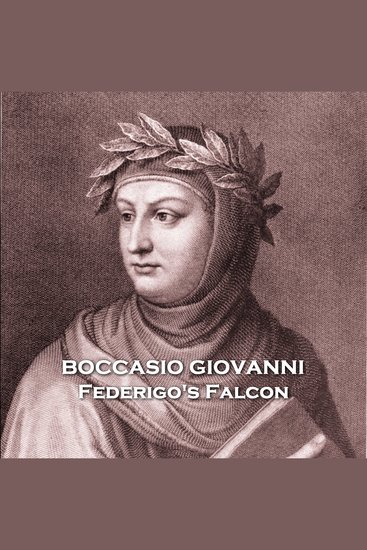
    The bookshelves of European literature are incredible collections that have gathered together centuries of very talented authors.  From this continent their fame spread and whilst among their number many are now forgotten or neglected their talents endure.  Among them is Boccasio Giovanni.
    Zum Buch
  • Buddenbrooks - The Decline of a Family - cover

    Buddenbrooks - The Decline of a...

    Thomas Mann

    • 0
    • 0
    • 0
    Buddenbrooks is a 1901 novel by Thomas Mann, chronicling the decline of a wealthy north German merchant family over the course of four generations, incidentally portraying the manner of life and mores of the Hanseatic bourgeoisie in the years from 1835 to 1877. Mann drew deeply from the history of his own family, the Mann family of Lübeck, and their milieu.
    It was Mann's first novel, published when he was twenty-six years old. With the publication of the second edition in 1903, Buddenbrooks became a major literary success. Its English translation by Helen Tracy Lowe-Porter was published in 1924. The work led to a Nobel Prize in Literature for Mann in 1929; although the Nobel award generally recognises an author's body of work, the Swedish Academy's citation for Mann identified "his great novel Buddenbrooks" as the principal reason for his prize.
    Mann began writing the book in October 1897, when he was twenty-two years old. The novel was completed three years later, in July 1900, and published in 1901. His objective was to write a novel on the conflicts between businessman and artist's worlds, presented as a family saga, continuing in the realist tradition of such 19th-century works as Stendhal's Le Rouge et le Noir (1830; The Red and the Black). Buddenbrooks is his most enduringly popular novel, especially in Germany, where it has been cherished for its intimate portrait of 19th-century German bourgeois life.
    Before Buddenbrooks Mann had written only short stories, which had been collected under the title Der kleine Herr Friedemann (1898, Little Herr Friedemann). They portrayed spiritually challenged figures who struggle to find happiness in (or at the margins of) bourgeois society. Similar themes appear in the Buddenbrooks, but in a fully developed style that already reflects the mastery of narrative, subtle irony of tone, and rich character descriptions of Mann's mature fiction.
    The exploration of decadence in the novel reflects the influence of Schopenhauer's The World as Will and Representation (1818, 1844) on the young Mann. The Buddenbrooks of successive generations experience a gradual decline of their finances and family ideals, finding happiness increasingly elusive as values change and old hierarchies are challenged by Germany's rapid industrialisation. The characters who subordinate their personal happiness to the welfare of the family firm encounter reverses, as do those who do not.
    The city where the Buddenbrooks live shares so many street names and other details with Mann's native town of Lübeck that the identification is unmistakable, although the novel makes no mention of the name. The young author was condemned for writing a scandalous, defamatory roman à clef about (supposedly) recognisable personages. Mann defended the right of a writer to use material from his own experience.
    The years covered in the novel were marked by major political and military developments that reshaped Germany, such as the Revolutions of 1848, the Austro-Prussian War, and the establishment of the German Empire. Historic events nevertheless generally remain in the background, having no direct bearing on the lives of the characters.
    Zum Buch
  • The Monkey's Paw - cover

    The Monkey's Paw

    W.W. Jacobs

    • 0
    • 0
    • 0
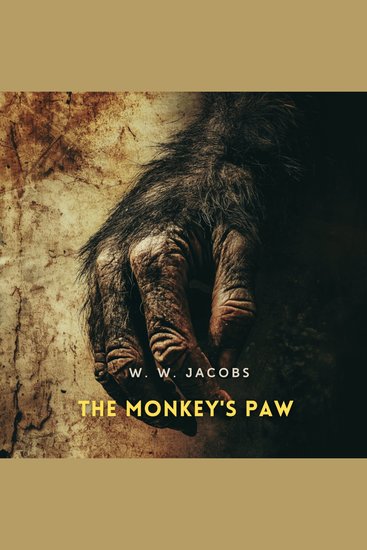
    The Monkey’s Paw by W. W. Jacobs is a chilling tale of fate, greed, and the dangers of tampering with forces beyond human control. The story follows the White family, who acquire a mysterious monkey’s paw said to grant three wishes. Despite warnings of dire consequences, they succumb to curiosity and wish for wealth. Tragedy strikes when their wish is fulfilled at a devastating cost. As grief consumes them, further wishes spiral into horror, revealing the paw’s sinister power. Jacobs masterfully crafts an atmosphere of suspense and inevitability, exploring themes of unintended consequences and humanity’s futile attempts to defy fate. A timeless classic, The Monkey’s Paw serves as a haunting reminder that some desires come at too great a price.
    Zum Buch