Rejoignez-nous pour un voyage dans le monde des livres!
Ajouter ce livre à l'électronique
Grey
Ecrivez un nouveau commentaire Default profile 50px
Grey
Abonnez-vous pour lire le livre complet ou lisez les premières pages gratuitement!
All characters reduced
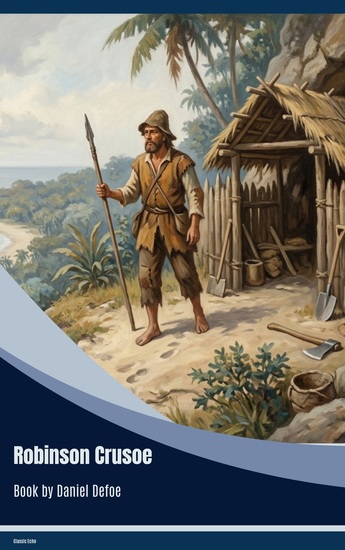
Robinson Crusoe - cover

Robinson Crusoe

Daniel Defoe

Maison d'édition: Classic Echo

  • 0
  • 0
  • 0

Synopsis

Stranded alone on a remote island, one man must learn how to survive with nothing but his courage and ingenuity.

In Robinson Crusoe, Daniel Defoe tells the unforgettable story of a young man's extraordinary journey from adventure and exploration to isolation and survival.

After a series of voyages and misfortunes, Robinson Crusoe finds himself shipwrecked on a deserted island. Far from civilization, he must rely on his own determination and resourcefulness to find food, build shelter, make tools, and create a new life from almost nothing.

As the years pass, Crusoe faces loneliness, danger, unexpected encounters, and difficult moral choices. His struggle becomes a powerful exploration of survival, self-reliance, perseverance, faith, exploration, and human ingenuity.

First published in 1719, Robinson Crusoe is widely regarded as one of the foundational works of the English novel. Its combination of adventure, exploration, survival, and personal transformation has influenced generations of writers and readers.

For readers who enjoy classic adventure novels, survival stories, exploration fiction, castaway tales, historical literature, and stories of resilience, Robinson Crusoe remains an enduring literary classic.

Join Robinson Crusoe on his remarkable journey from shipwreck to survival. Read Robinson Crusoe today and experience Daniel Defoe's timeless adventure of courage, ingenuity, exploration, and self-reliance.
Disponible depuis: 19/08/2026.
Longueur d'impression: 329 pages.
D'autres livres qui pourraient vous intéresser

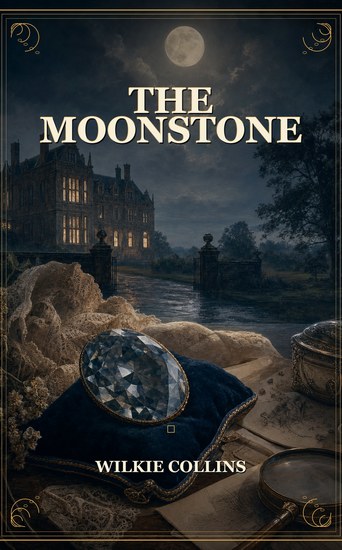
  • The Moonstone - cover

    The Moonstone

    Wilkie Collins

    • 0
    • 0
    • 0
    The "Moonstone" of the title is a large but flawed diamond, looted from India at the time of the Mutiny by an unscrupulous British officer. Many years later, estranged from his family due to his licentious lifestyle, the officer bequeaths the diamond to his sister's daughter, Rachel Verrinder, to be given to her on her 18th birthday. Due to the ill-omens surrounding the gem, this may have been an act of revenge rather than reconciliation. The diamond, it appears, was taken from a statue of the Moon God worshipped by a Hindu cult, and it has long been sought by a group of Brahmins determined to return it to their temple. On the night of the birthday party the gem mysteriously disappears from Rachel's room. While the first suspicions naturally fall on these Indians, they are eventually exculpated. Rachel becomes hysterical and angry when questioned about the theft and refuses to assist the police. Active efforts to assist them are taken up by Rachel's cousin (and sweetheart) Franklin Blake. These efforts simply drive Rachel into further fury, and she becomes completely estranged from him. Suspicion thus falls on her as having some secret reason for wishing to raise money on the diamond. The novel proceeds to slowly uncover the mysteries involved. Published in 1868, The Moonstone is often considered as one of the precursors of the modern detective novel, though this is a label which would not have been used by its author Wilkie Collins and his contemporaries. While it is true that the plot revolves around the mystery of a theft, and that it features Sergeant Cuff "in the Detective Force of Scotland Yard," the novel is much more about character and relationships than the mere revelation of secrets. It also has a good dose of Collins' humour, as the story is told in large part by eccentric characters such as the old house-steward Gabriel Betteredge who regards Robinson Crusoe as an oracle; and the ultra-religious Miss Clack, determined to convert everyone to her views. Immensely popular at the time of its publication in serial form, The Moonstone is rightly considered to be one of Collins' best works, and remains highly regarded today.
    Voir livre
  • Don Quixote - cover

    Don Quixote

    Miguel de Cervantes

    • 0
    • 0
    • 0
    Don Quixote has become so entranced by reading romances of chivalry that he determines to become a knight errant and pursue bold adventures, accompanied by his squire, the cunning Sancho Panza. As they roam the world together, the aging Quixote's fancy leads them wildly astray. At the same time the relationship between the two men grows in fascinating subtlety. Often considered to be the first modern novel, Don Quixote is a wonderful burlesque of the popular literature its disordered protagonist is obsessed with.
    Voir livre
  • Pride and Prejudice - cover

    Pride and Prejudice

    Jane Austen

    • 0
    • 0
    • 0
    Jane Austen's literary classic.   
    This is the love story of Elizabeth Bennet and Fitzwilliam Darcy, who misjudge, then challenge and change each other. 
    It is also a novel about the search for happiness and self- knowledge in a world of strict social rules, where a woman must marry well to survive.
    Voir livre
  • The Luft Bad - cover

    The Luft Bad

    Katherine Mansfield

    • 0
    • 0
    • 0
    The Luft Bad is a short story by Katherine Mansfield: I think it must be the umbrellas which make us look ridiculous. – When I was admitted into the enclosure for the first time, and saw my fellow-bathers walking about very nearly “in their nakeds,” it struck me that the umbrellas gave a distinctly “Little Black Sambo” touch...
    Voir livre
  • Eurasia - An Ideal Republic Described - cover

    Eurasia - An Ideal Republic...

    Christopher Evans

    • 0
    • 0
    • 0
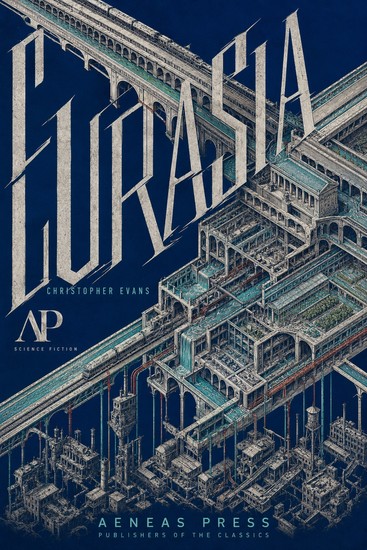
    A man falls asleep in his sailing boat one May afternoon and wakes off the coast of Eurasia, a republic where half the cabinet ministers are women, eight jurors of twelve can convict, the courts charge no costs and impose no fines, the prisons have no walls, and the railway tariff fits on a page. He goes from department to department, justice, prisons, the bank, mines, schools, war, railways and the income tax, and reports what he finds with the approval of a man who has seen the other system from the inside. The author was, by every sign, Chris Evans, the California train robber of the 1890s, who had spent more than fifteen years in Folsom Prison; the chapter on the model prison and the anger at railroad rates read differently once you know. Fifty-nine plates by painters including Vasily Vereshchagin and Ilya Repin, spanning 1820 to 1927, show beggars, prisoners, forgotten soldiers and fisher girls, the human cost of the old world the narrator has left behind.
    Voir livre
  • The Sacred Laws of the Âryas Part 1 - cover

    The Sacred Laws of the Âryas Part 1

    Georg Bühler

    • 0
    • 0
    • 0
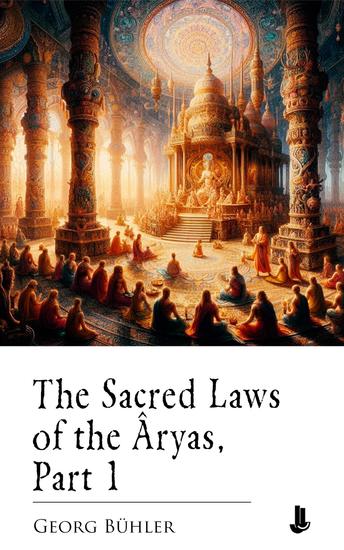
    FOR all students of Sanskrit philology and Indian history âpastamba's aphorisms on the sacred law of the Aryan Hindus possess a special interest beyond that attaching to other works of the same class. Their discovery enabled Professor Max Müller, forty-seven years ago, to dispose finally of the Brahmanical legend according to which Hindu society was supposed to be governed by the codes of ancient sages, compiled for the express purpose of tying down each individual to his station, and of strictly regulating even the smallest acts of his daily life1. It enabled him not only to arrive at this negative result, but also to substitute a sounder theory the truth of which subsequent investigations have further confirmed, and to show that the sacred law of the Hindus has its source in the teaching of the Vedic schools, and that the so-called revealed law codes are, in most cases, but improved metrical editions of older prose works which latter, in the first instance, were destined to be committed to memory by the young Aryan students, and to teach them their duties. This circumstance, as well as the fact that âpastamba's work is free from any suspicion of having been tampered with by sectarians or modern editors, and that its intimate connection with the manuals teaching the performance of the great and small sacrifices, the Srauta and Grihya-sûtras, which are attributed to the same author, is perfectly clear and indisputable, entitle it, in spite of its comparatively late origin, to the first place in a collection of Dharma-sûtras.
    Voir livre