
Unisciti a noi in un viaggio nel mondo dei libri!
Aggiungi questo libro allo scaffale
Grey
Scrivi un nuovo commento Default profile 50px
Grey
Iscriviti per leggere l'intero libro o leggi le prime pagine gratuitamente!
All characters reduced
Private Military Companies: Six Case Studies - cover

Private Military Companies: Six Case Studies

Daniel B. Smith

Casa editrice: Daniel B. Smith

  • 0
  • 0
  • 0

Sinossi

This book presents six private military companies and / or private security companies. The analyzed companies are: DynCorp International, Triple Canopy, Academi, G4S-Romania office-, Securitas-Romania office-, BGS Romania. The analysis was designed in an own pattern, chasing elements such as: company history, services that can be provided, the company's revenue, internal regulations and codes of conduct, the impact on civil society, employment opportunities, criticism. Information was obtained through the Open Source Intelligence, quality being thus guaranteed.

Besides these analyzes, at the end of the book you will find two chapters on two very important jobs today: intelligence officer and private investigator.
Disponibile da: 11/11/2022.

Altri libri che potrebbero interessarti

  • Technical Education Teacher Career Coaching Audio Book - With Job Interview Preparation & Counseling for Teens Men Women & Young Adults - cover

    Technical Education Teacher...

    Brian Mahoney

    • 0
    • 0
    • 0
    End Money Worries! 
    Technical Education Teacher Career Coaching Audio Book 
    With Job Interview Preparation & Counseling for Teens, Men, Women & Young Adults 
    by Brian Mahoney 
        Discover... 
    * What a Technical Education Teacher does 
      * How to Become a Technical Education Teacher  
        * What is the salary of a Technical Education Teacher  
         * What is the Technical Education Teacher Work Environment like 
           * What is the future Job outlook for a Technical Education Teacher  
         * How long does it take to become a Technical Education Teacher  
       * How to Prepare for Your Job Interview 
      * Tips the pros use to Ace their Job Interview 
    * You'll be confident with the best answers for the toughest job interview questions 
    The knowledge and ability to change your life all for less than the cost of 1 movie ticket! 
    If you are ready to get started & want the knowledge, help & motivation to change your life now!... 
    Then this Book is for you!!! 
               So Don't wait. You'll wait your life away...
    Mostra libro
  • The Book of the Dead - An Egyptian Guide to the Afterlife - cover

    The Book of the Dead - An...

    Omar Khalil

    • 0
    • 0
    • 0
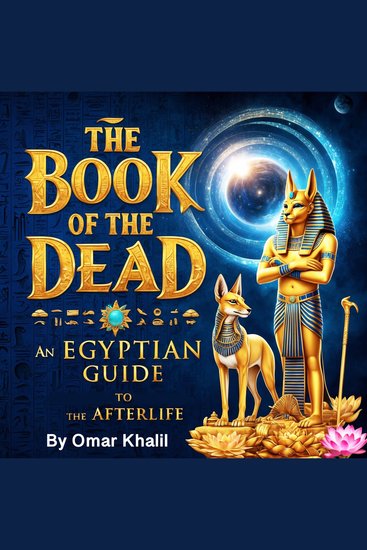
    To the ancient Egyptians, death was not the end—it was merely a transition to a new phase of existence. The afterlife was not a vague, distant concept but a vivid and essential part of their spiritual understanding. They believed in a continuation of life, one where the soul would live on in a realm filled with beauty, light, and eternal peace, provided certain conditions were met. This vision shaped much of their culture, from their art and architecture to their religious practices and personal values. 
    Central to this belief was the idea of the soul, which they saw as comprising multiple parts. The Ka was the life force, the vital essence that departed the body at death but still needed sustenance. The Ba represented personality and mobility—it was the part of the soul that could travel between the living world and the afterlife. The Akh, achieved through a successful transition and judgment, was the transformed spirit that lived among the gods. Each of these aspects had its own role to play in the journey beyond death, and maintaining their harmony was crucial. 
    Immortality was not automatic. It had to be earned through righteous living and proper burial. For the Egyptians, morality and order, guided by the principle of Ma’at—truth, balance, and justice—were essential. One had to live in accordance with Ma’at to hope for a favorable judgment in the afterlife. This belief extended into the funerary rituals, where the dead would be judged in the Hall of Two Truths, their heart weighed against the Feather of Ma’at to determine their fate.
    Mostra libro
  • Anxiety in Love - How to Eliminate Couple Conflicts to Establish Better Relationships Overcome Jealousy Depression Anger Negative Thinking Manage Insecurity and Attachment - cover

    Anxiety in Love - How to...

    Theresa B. Stevens

    • 0
    • 0
    • 0
    Looking for a powerful and insightful audiobook on navigating anxiety in relationships? Look no further than "Anxiety in Love" by acclaimed author Theresa B. Stevens. This groundbreaking guide offers expert advice and practical strategies for overcoming anxiety and building stronger, healthier relationships. Whether you're struggling with insecurity, jealousy, or other common relationship anxieties, this book provides the tools you need to break free from negative patterns and find lasting love and fulfillment. With engaging narration and a wealth of real-world examples, "Anxiety in Love" is an essential resource for anyone looking to improve their relationships and conquer their fears. So why wait? Download your copy today and start your journey towards a happier, more fulfilling love life!
    Mostra libro
  • What We Owe the Future - cover

    What We Owe the Future

    William MacAskill

    • 0
    • 0
    • 0
    An Oxford philosopher makes the case for “longtermism”—that positively influencing the long-term future is a key moral priority of our time 
     
    The fate of the world is in our hands. Humanity’s written history spans only five thousand years. Our yet-unwritten future could last for millions more—or it could end tomorrow. Astonishing numbers of people could lead lives of great happiness or unimaginable suffering, or never live at all, depending on what we choose to do today. 
      
    In What We Owe The Future, philosopher William MacAskill argues for longtermism, that idea that positively influencing the distant future is a key moral priority of our time. From this perspective, it’s not enough to reverse climate change or avert the next pandemic. We must ensure that civilization would rebound if it collapsed; counter the end of moral progress; and prepare for a planet where the smartest beings are digital, not human. 
      
    If we put humanity’s course to right, our grandchildren’s grandchildren will thrive, knowing we did everything we could to give them a world full of justice, hope, and beauty.
    Mostra libro
  • End of World War II The: The History of the Battles that Ended the Fighting in Europe and the Pacific - cover

    End of World War II The: The...

    Editors Charles River

    • 0
    • 0
    • 0
    After the successful amphibious invasion on D-Day in June 1944, the Allies began racing east toward Germany and liberating France along the way. The Allies had landed along a 50 mile stretch of French coast, and despite suffering 8,000 casualties on D-Day, over 100,000 still began the march across the western portion of the continent. By the end of August 1944, the German Army in France was shattered, with 200,000 killed or wounded and a further 200,000 captured. However, Adolf Hitler reacted to the news of invasion with glee, figuring it would give the Germans a chance to destroy the Allied armies that had water to their backs. As he put it, “The news couldn’t be better. We have them where we can destroy them.” While that sounds delusional in retrospect, it was Hitler’s belief that by splitting the Allied march across Europe in their drive toward Germany, he could cause the collapse of the enemy armies and cut off their supply lines.  
    Near the end of 1944, as Allied forces were pushing across the Pacific and edging ever closer to Japan, plans were drawn up to invade the Ryuku islands, the most prominent of them being Okinawa. Military planners anticipated that an amphibious campaign would last a week, but instead of facing 60,000 Japanese defenders as estimated, there were closer to 120,000 on the island at the beginning of the campaign in April 1945. The Battle of Okinawa was the largest amphibious operation in the Pacific theater, and it would last nearly 3 months and wind up being the fiercest in the Pacific theater during the war, with nearly 60,000 American casualties and over 100,000 Japanese soldiers killed. In addition, the battle resulted in an estimated 40,000-150,000 Japanese civilian casualties.
    Mostra libro
  • The State and Revolution - cover

    The State and Revolution

    Vladimir Lenin

    • 0
    • 0
    • 0
    The State and Revolution (1917), by Vladimir Lenin, describes the role of the State in society, the necessity of proletarian revolution, and the theoretic inadequacies of social democracy in achieving revolution to establish the dictatorship of the proletariat.
    Lenin began the composition of an early draft of State and Revolution while in exile in Switzerland in 1916, under the title "Marxism on the State".
    "Soviets", legislative bodies of workers and peasants were the de facto governments of Petrograd and many smaller cities. The Russian public was deeply upset with the continuation of Russia's involvement in World War One and the continued economic difficulties that it brought on. On November 7th The Congress of Soviets officially elected a coalition of Bolsheviks, Socialist Revolutionaries and Mensheviks to govern. Through the Red Guards, paramilitary organizations of revolutionary workers, sailors and soldiers; the Soviet government was able to storm The Winter Palace and officially abolishing the Provisional government. The revolution was not uniformly accepted among all Russians, resistance and disruption would occur routinely leading up to The Russian Civil War. A particular issue that Lenin covers in The State and Revolution was the right of nations to secession (The right to self determination); during the composition of this book The Mensheviks of Georgia declared independence soon after The Revolution forming The Democratic Republic of Georgia.
    Among other famous Marxists there were also: Georgi Plekhanov, Joseph Stalin, Leon Trotsky, Karl Marx, Friedrich Engels, Ernst Bloch, Pyotr Kropotkin, Jean-Paul Charles Aymard Sartre, Wilhelm Reich, Perry Anderson.
    Mostra libro