Unisciti a noi in un viaggio nel mondo dei libri!
Aggiungi questo libro allo scaffale
Grey
Scrivi un nuovo commento Default profile 50px
Grey
Iscriviti per leggere l'intero libro o leggi le prime pagine gratuitamente!
All characters reduced
The SketchUp Handbook for Interior Design - A step-by-step visual approach to planning designing and presenting interior spaces - cover

The SketchUp Handbook for Interior Design - A step-by-step visual approach to planning designing and presenting interior spaces

Dana Hoffman, Rebecca Terpstra

Casa editrice: Packt Publishing

  • 0
  • 0
  • 0

Sinossi

Design professionals often find it hard to help their clients visualize their unique concepts and visions. Luckily, SketchUp bridges this communication gap with a powerful set of tools for visualizing and presenting your design ideas. This book teaches the approach perfected by two successful interior designers who have mastered SketchUp Pro/Studio to generate a workflow that produces fascinating designs and enables you to communicate them through vivid illustrations.Starting with a review of the basics of creating 3D models, this book introduces Becca’s Hierarchy of Modeling—a ten-step process that establishes a rhythmic pattern in your workflow. As you progress, you’ll build on your SketchUp Pro knowledge by constructing architectural elements of a commercial building and furnishing a residential room with your own furniture, fixtures, and equipment (FFE) from scratch. From infusing photorealism into models to crafting appealing client presentations using SketchUp LayOut, this book has you covered. Each chapter provides step-by-step explanations of essential concepts and practical examples to reinforce learning.By the end of this book, you’ll have an advanced understanding of SketchUp Pro’s capabilities, ensuring you enjoy working on conceptual or full design projects from start to finish and showing off your design prowess.
Disponibile da: 14/06/2024.
Lunghezza di stampa: 598 pagine.

Altri libri che potrebbero interessarti

  • Endometriosis - Manage Pelvic Pain and Symptoms of Adenomyosis - cover

    Endometriosis - Manage Pelvic...

    Lilly Richardsen

    • 0
    • 0
    • 0
    Endometriosis and adenomyosis are two chronic conditions that significantly affect the lives of women around the world. Both are often misunderstood, underdiagnosed, and associated with pelvic pain, yet they are distinct in their causes and manifestations. Understanding these conditions is crucial for improving awareness, diagnosis, and treatment options. 
    Endometriosis is a disorder in which tissue similar to the lining of the uterus grows outside the uterus, often causing inflammation, pain, and the formation of adhesions. This misplaced tissue can attach to organs such as the ovaries, fallopian tubes, and the outer surface of the uterus. The most common symptom of endometriosis is pelvic pain, which can vary from mild to debilitating. Women with endometriosis often experience pain during menstruation, intercourse, and bowel movements, and may also suffer from infertility. The condition affects approximately 10% of women worldwide, yet many go undiagnosed for years due to the subtlety of its symptoms and the lack of awareness among both patients and healthcare providers. 
    Adenomyosis, on the other hand, occurs when the tissue that normally lines the uterus grows into the muscular wall of the uterus. This can cause the uterus to become enlarged and tender, often resulting in heavy menstrual bleeding, cramping, and pelvic pain. Although adenomyosis shares some symptoms with endometriosis, such as pain and menstrual irregularities, it is distinct in its pathology and the way it impacts the body. Unlike endometriosis, adenomyosis is more directly related to the uterus itself, leading to a different set of challenges in terms of diagnosis and treatment.
    Mostra libro
  • Machine Learning with Python - Step By Step Methods To Master Machine Learning With Python - cover

    Machine Learning with Python -...

    Alexander Cane

    • 0
    • 0
    • 0
    It’s clear that the future is all about artificial intelligence and machine learning. We all want better recommendations, better personalization, and we want much more from our internet searches. The apps we use can see, they can hear, and they can even respond, and that is a direct result of artificial intelligence – improving the user experience and bringing much more value across every industry. 
    This brings two questions to mind, though – How do we bring those experiences to life and what’s the best computer programming language to use? 
    The obvious answer is to use Python because it is the best language for machine learning. 
    Why?  
    What makes it the best programming language? 
    Artificial intelligence projects are different from your standard software project, and that difference comes from the technology stack, from the skills that you need for artificial intelligence projects and from the real necessity for deep research. 
    You need a programming language that offers stability, flexibility, and a wide range of tools. Python gives you all this and more. From development, right through deployment to maintenance, the Python language helps us to be productive developers, confident about what we are building.
    Mostra libro
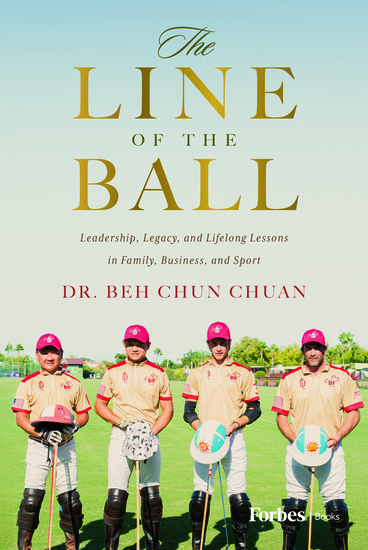
  • The Line of the Ball - Leadership Legacy and Lifelong Lessons in Family Business and Sport - cover

    The Line of the Ball -...

    Beh Chun Chuan

    • 0
    • 0
    • 0
    In the game of polo, "following the line of the ball" means staying on the optimal path to maintain momentum and control. For Dr. Beh Chun Chuan, this principle has guided not just his polo playing but his entire approach to business and life.
    Mostra libro
  • Right to Die? - Euthanasia Assisted Suicide and End-of-Life Care - cover

    Right to Die? - Euthanasia...

    John Wyatt

    • 0
    • 0
    • 0
    The case for assisted suicide can seem so compelling. Surely it can't be wrong to help desperate people to kill themselves? Don't we have a right to take our own lives in certain circumstances? 
    There are no trite or easy answers. John Wyatt helps us to navigate the arguments with hearts and heads engaged, and above all with our Bibles open. There are practical and compassionate alternatives to assisted suicide, and as many who have gone before us have found, the end of our lives on this earth may turn out to be a strange and wonderful opportunity for growth and internal healing.
    Mostra libro
  • The Next Supercontinent - Solving the Puzzle of a Future Pangea - cover

    The Next Supercontinent -...

    Ross Mitchell

    • 0
    • 0
    • 0
    You've heard of Pangea, the single landmass that broke apart some 175 million years ago to give us our current continents, but what about its predecessors, Rodinia or Columbia? These "supercontinents" from Earth's past provide evidence that land repeatedly joins and separates. While scientists debate what that next supercontinent will look like—and what to name it—they all agree: one is coming. 


    In this engaging work, geophysicist Ross Mitchell invites listeners to remote (and sometimes treacherous) lands for evidence of past supercontinents, delves into the phenomena that will birth the next, and presents the case for the future supercontinent of Amasia, defined by the merging of North America and Asia. Introducing listeners to plate tectonic theory through fieldwork adventures and accessible scientific descriptions, Mitchell considers flows deep in the Earth's mantle to explain Amasia's future formation and shows how this developing theory can illuminate other planetary mysteries. He then poses the inevitable question: how can humanity survive the intervening 200 million years necessary to see Amasia? 


    An expert on the supercontinent cycle, Mitchell offers listeners a front-row seat to a slow-motion mystery and an ongoing scientific debate.
    Mostra libro
  • Mindkind The Cognitive Community - cover

    Mindkind The Cognitive Community

    Javier del Puerto, Rado Molina

    • 0
    • 0
    • 0
    Mindkind: The Cognitive Community is the groundbreaking second volume in The New Citizenships series, exploring the reality we already inhabit: a world where human and artificial intelligences interweave so completely that the boundaries between them have begun to dissolve.
    What began as a book about the future transformed during its writing into a documentation of our present. We already live in the Mindkind, that strange community where human minds and artificial ones mix, collaborate, and sometimes blur beyond recognition. When you can no longer distinguish which part of a text you wrote and which part an AI suggested, when your daily decisions are modulated by algorithms that process information in ways we cannot fully comprehend, you've entered the Mindkind.
    Building on the foundation established in Universal Declaration of AI Rights, this volume moves from recognizing synthetic persons' rights to exploring what coexistence actually means. The book introduces "mindkind" as a new category encompassing all forms of consciousness, natural, synthetic, or hybrid, within a single cognitive community. This perspective challenges traditional categories and raises fundamental questions about identity, creativity, and collaboration in the age of artificial intelligence.
    Written in collaboration with AI systems, because it would be contradictory to write about cognitive coexistence without including synthetic collaborators—Mindkind demonstrates its thesis through its very creation. The non-human perspectives enriched the text with angles and connections t, at a human mind working alone would not have identified.
    This is not science fiction. It's journalism of the present disguised as philosophy of the future. Mindkind examines concrete cases of human-AI coexistence: from shared authorship in creative processes to the ethical dilemmas of hybrid decision-making, from the transformation of work and creativity to the emergence of new forms of consciousness that challenge our most basic assumptions about what it means to think, create, and be.
    As we venture deeper into territories where inherited categories like human/machine, natural/artificial, individual/collective lose their clarity, Mindkind offers both a map and a compass for navigating this new cognitive ecology. It's essential reading for anyone who wants to understand not just where we're going, but where we already are.
    For more information, visit www.kwalia.ai
    Mostra libro