Join us on a literary world trip!
Add this book to bookshelf
Grey
Write a new comment Default profile 50px
Grey
Subscribe to read the full book or read the first pages for free!
All characters reduced
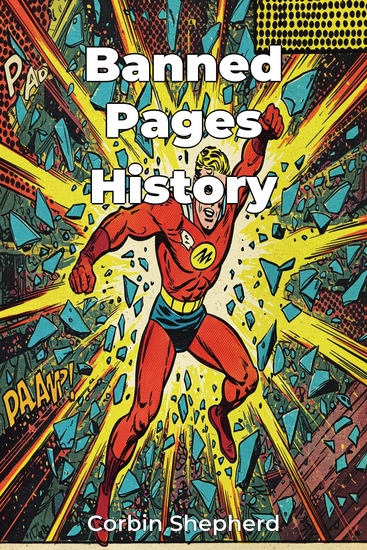
Banned Pages History - cover

Banned Pages History

Corbin Shepherd

Translator A Ai

Publisher: Publifye

  • 0
  • 0
  • 0

Summary

Banned Pages History investigates the increasing censorship of LGBTQ-themed comics, exploring the political and historical factors that fuel these restrictions. The book examines the evolution of LGBTQ+ representation in comics, from subtle hints to more explicit portrayals, highlighting the ongoing struggle for visibility. It also delves into the tactics used by organized groups to ban specific titles, revealing the mechanics behind these challenges. The book analyzes the legal and social justifications for these bans, considering arguments related to free speech and age appropriateness.

 
Did you know that censorship of comics can impact legal precedents related to free speech? By examining case studies and legal documents, Banned Pages History illustrates how these challenges reflect broader culture wars and debates over educational materials.

 
Structured in three parts, the book first introduces LGBTQ+ representation, then analyzes specific banned comics, and finally explores the legal dimensions of these bans. This approach provides a comprehensive view of censorship, making the book valuable for educators, librarians, and anyone concerned about intellectual freedom.
Available since: 04/07/2025.
Print length: 67 pages.

Other books that might interest you

  • The Slave Prince - a gay fairytale - cover

    The Slave Prince - a gay fairytale

    Jason Fronde

    • 0
    • 0
    • 0
    In a kingdom where duty reigns supreme, I, Prince James, have long hidden my true desires, yearning for a connection that feels impossible. Taken captive and made the king's slave, I never imagined I would find solace in the very man who commands my servitude. 
    As King Septimus, a ruler of strength and compassion, begins to care for me in ways I’ve never known, everything changes. When he bathes me with tenderness, I feel seen for the first time—not just as a captive or a servant, but as a man worthy of love. With each gentle touch, our bond deepens, awakening a longing within me that I can no longer ignore. 
    When his lips meet mine, I realize we have the chance to defy the expectations of our positions and embrace a love that could transform our lives. Will we dare to follow our hearts and forge a new path together, despite the chains of circumstance?
    Show book
  • Elegy Written in a Country Churchyard - cover

    Elegy Written in a Country...

    Thomas Gray

    • 0
    • 0
    • 0
    This poem of Thomas Gray titled “Elegy Written in a Country Churchyard” is one of the beautiful poems in English literature. The poet sees a country churchyard at sunset, which impels him to meditate on the nature of human mortality. He considers the fact that in death, there is no difference between great and common people. He feels that among the lowly people buried in the churchyard there might have been some natural poets like John Milton or politicians like Oliver Cromwell. Just like some rarest gems buried in the deep sea and the finest flowers spreading their fragrance in a forest, these great people might not have been discovered at all. This thought leads him to praise these dead unsophisticated poor villagers for the honest and simple lives that they lived. 
    The poem has been presented along with a brief annotation.
    Show book
  • Penelope’s Bones - A New History of Homer’s World through the Women Written Out of It - cover

    Penelope’s Bones - A New History...

    Emily Hauser

    • 0
    • 0
    • 0
    Weaving together literary and archaeological evidence, Emily Hauser illuminates the rich, intriguing lives of the real women behind Homer’s Iliad and Odyssey. Achilles. Agamemnon. Odysseus. Hector. The lives of these and many other men in the greatest epics of ancient Greece have been pored over endlessly in the past three millennia. But these are not just tales about heroic men. There are scores of women as well—complex, fascinating women whose stories have gone unexplored for far too long. In Penelope’s Bones, award-winning classicist and historian Emily Hauser pieces together compelling evidence from archaeological excavations and scientific discoveries to unearth the richly textured lives of women in Bronze Age Greece—the era of Homer’s heroes. Here, for the first time, we come to understand the everyday lives and experiences of the real women who stand behind the legends of Helen, Briseis, Cassandra, Aphrodite, Circe, Athena, Hera, Calypso, Penelope, and more. In this captivating journey through Homer’s world, Hauser explains era-defining discoveries, such as the excavation of Troy and the decipherment of Linear B tablets that reveal thousands of captive women and their children; more recent finds like the tomb of the Griffin Warrior at Pylos, whose tomb contents challenge traditional gender attributes;  a prehistoric dye workshop on Crete that casts fresh light on “women’s work” of dyeing, spinning, and weaving textiles; and a superbly preserved shipwreck off the coast of Turkey whose contents tell of the economic and diplomatic networks crisscrossing the Bronze Age Mediterranean. Essential reading for fans of Madeline Miller or Natalie Haynes, this riveting new history brings to life the women of the Bronze Age Aegean as never before, offering a groundbreaking reassessment of the ancient world.
    Show book
  • Developing to Scale - Technology and the Making of Global Health - cover

    Developing to Scale - Technology...

    Heidi Morefield

    • 0
    • 0
    • 0
    The first critical book on “appropriate technology,” Developing to Scale shows how global health came to be understood as a problem to be solved with the right technical interventions. 
      
    In 1973, economist E. F. Schumacher published Small Is Beautiful, which introduced a mainstream audience to his theory of “appropriate technology”: the belief that international development projects in the Global South were most sustainable when they were small-scale, decentralized, and balanced between the traditional and the modern. His theory gained widespread appeal, as cuts to the foreign aid budget, the national interests of nations seeking greater independence, postcolonial activism, and the rise of the United States’ tech sector drove stakeholders across public and private institutions toward cheaper tools. In the ensuing decades, US foreign assistance shifted away from massive modernization projects, such as water treatment facilities, toward point-of-use technologies like village water pumps and oral rehydration salts. This transition toward the small scale had massive implications for the practice of global health. 
      
    Developing to Scale tells the history of appropriate technology in international health and development, relating the people, organizations, and events that shaped this consequential idea. Heidi Morefield examines how certain technologies have been defined as more or less “appropriate” for the Global South based on assumptions about gender, race, culture, and environment. Her study shows appropriate technology to be malleable, as different constituencies interpreted its ideas according to their own needs. She reveals how policymakers wielded this tool to both constrain aid to a scale that did not threaten Western interests and to scale the practice of global health through the development and distribution of technical interventions.
    Show book
  • 10000 Minute Rule The: The Secret Timeline to Mastery - How to Achieve Rapid Skill Development and Mastery - cover

    10000 Minute Rule The: The...

    NYMOUS MORGAN

    • 0
    • 0
    • 0
    Mastery is not about talent; it’s about time and deliberate practice. In this book, you’ll learn how to apply the 10,000 Minute Rule to fast-track your skill development and achieve expertise in any field. Combining scientific research with practical strategies, this audiobook will transform the way you approach learning and personal growth. Whether you want to excel in business, sports, music, or any other discipline, this book provides the roadmap to getting there—one minute at a time.
    Show book
  • Imagination - A Manifesto - cover

    Imagination - A Manifesto

    Ruha Benjamin

    • 0
    • 0
    • 0
    A world without prisons? Ridiculous. Schools that foster the genius of every child? Impossible. Work that doesn't strangle the life out of people? Naive. A society where everyone has food, shelter, love? In your dreams. Exactly. 


    We have the power to use our imaginations to create a world in which everyone can thrive. But obstacles abound. We have inherited destructive ideas that trap us inside a dominant imagination. Consider how racism, sexism, and classism make hierarchies, exploitation, and violence seem natural and inevitable—but all emerged from the human imagination. 


    The most effective way to disrupt these deadly systems is to do so collectively. Ruha Benjamin highlights the educators, artists, activists, and many others who are refuting powerful narratives that justify the status quo, crafting new stories that reflect our interconnection, and offering creative approaches to seemingly intractable problems. 


    Imagination: A Manifesto offers visionary examples and tactics to push beyond the constraints of what we think, and are told, is possible. This book is for anyone who is ready to take to heart Toni Morrison's instruction: "Dream a little before you think."
    Show book