Unisciti a noi in un viaggio nel mondo dei libri!
Aggiungi questo libro allo scaffale
Grey
Scrivi un nuovo commento Default profile 50px
Grey
Iscriviti per leggere l'intero libro o leggi le prime pagine gratuitamente!
All characters reduced
A Year In Psychology - A Psychology Student's Guide To Placement Years Working In Academia and More - cover

A Year In Psychology - A Psychology Student's Guide To Placement Years Working In Academia and More

Connor Whiteley

Casa editrice: CGD Publishing

  • 0
  • 0
  • 0

Sinossi

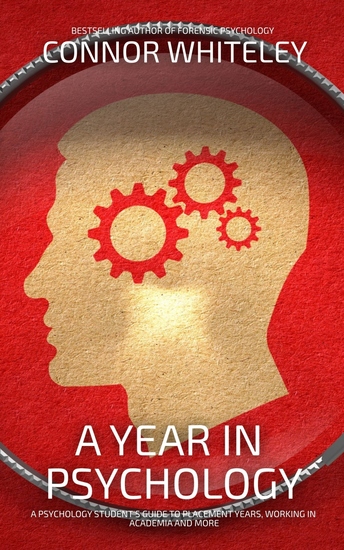
Want an honest account of working in psychology for a year?
 
Bestselling writer and University Student Connor Whiteley spends a year working in psychology academia. He experiences working in psychology first-hand. Connor tells you all the ups and downs and realities of work.
 
Follow Connor in this brilliant, conversational and engaging book as he tells you about psychology placement years, why do one and reflects on his own interesting experience.
 
If you want to work in psychology, do a placement year and more. Then you NEED this absolutely brilliant book!
 
BUY NOW!
 
Year In Psychology includes
 
Introduction
 
What is A Psychology Placement And What Are The Benefits?
 
Why Did I Choose A Psychology Placement?
 
How Did I Find A Placement?
 
The First Reflection
 
A Week Of Improvement, Learning and A Major Google Scholar Trick
 
FOMO On Placements
 
The Pickiness And Prettiness Of Academia And Tips And Hope
 
Week 10 Reflection
 
Personal And Professional Development So Far And Other Note Worthy Mentions
 
What have I Done For My Placement: mHealth Literature Review
 
Something Annoying And The Solution For You
 
The New Year So Far
 
A Week Into Examining Papers
 
After The Behemoth Task
 
The University Looks After You And Back To University Days
 
Placement Experiences From Other People And Extremely Useful Tips
 
The New Literature Review
 
How Did I Find Writing A Literature Review From Scratch?
 
After The First and Final Improvements
 
Conclusion: Do I Recommend Placements And Other Final Tips?
Disponibile da: 23/06/2023.
Lunghezza di stampa: 152 pagine.

Altri libri che potrebbero interessarti

  • Acropolis and the Agora The: The History of Ancient Athens’ Most Important Sites - cover

    Acropolis and the Agora The: The...

    Editors Charles River

    • 0
    • 0
    • 0
    The Acropolis, which literally means “a city on the heights,” is a citadel whose currently surviving structures were mostly built during the 5th century B.C. in honor of Athena, the patron goddess of Athens. It functioned as a sacred precinct that contained the city’s most important religious and municipal structures, many of which have remained relatively intact for over 2,000 years. The Propylaea (the gateway to the Acropolis), the Parthenon (the principal shrine to the goddess), the Erechtheion (a shrine that supposedly houses the burial grounds of mythical Athenian kings), and the Temple of Athena Nike all survive to this day, and for these reasons, the Acropolis is perhaps the definitive and most eloquent expression of classical architecture, if not of the classical form itself. The Acropolis, which literally means “a city on the heights,” is a citadel whose currently surviving structures were mostly built during the 5th century B.C. in honor of Athena, the patron goddess of Athens.  
    	The center of political and commercial interaction in the Ancient Greek polis was the agora. The word essentially means a gathering place or an open space, and in all Greek city states, the agora was central to all aspects of daily life and commerce. As the agora developed as a civic space, particularly from the 6th century B.C. onward in Athens, the architectural splendor of the buildings associated with it became an ever more obvious demonstration of the power and glory of Athenian democracy. 	In its earliest forms, an agora in maritime cities was invariably situated near the sea, while in inland urban centers, it was usually located at the foot of the hill that normally provided the city’s ultimate defense. The agora was always the oldest part of any city and, as such, and as well as being the commercial hub of the area, also became the center of the religious and political life of the polis.
    Mostra libro
  • TV Lobotomy The Scientific Truth About the Effects of Television - cover

    TV Lobotomy The Scientific Truth...

    Michel Desmurget

    • 0
    • 0
    • 0
    "TV unleashes the imagination and feeds intelligence." • "A child deprived of TV risks social isolation." • "TV dumbs you down." • "TV makes you obese." It seems that everything—and its opposite—has already been said about TV. But what is it really? How can we distinguish between the radical "No TV" of some and the supposedly entertaining virtues touted by others? Michel Desmurget, a doctor in neuroscience, has sifted through and synthesized thousands of research articles published over the last fifty years in the most rigorous international journals. The conclusion is unequivocal—we must stop watching television for good, whatever the program. All content, even that meant to teach, can never come close to any other learning method. The data is clear—television viewing is detrimental to school performance. For a child in elementary school, for example, every hour spent daily watching television increases the likelihood that he or she will one day leave the school system without any qualifications. For specialists, there is no doubt that television has a negative influence, not only on intellectual development but also on behavior. Thus, certain eating disorders (anorexia, bulimia) are related to a frantic consumption of—television programs! In short, watching television has an impact on our life expectancy. However, the harmful impact of this risk is largely underestimated, because of the large sector of the public exposed to television (more than 85% of Western households have at least one television set), and because of a debate on the subject that has become inaudible and confused. Moreover, the results of the research initiated by the big media groups on the subject remain "proprietary," i.e., closed to the general public. Believing that we is facing a real public health problem, Michel Desmurget wants to act as a responsible scientist—with a clear, concise and rigorously referenced book, the message cannot go unnoticed. Michel Desmurget is a doctor of neuropsychology. He attended several major American universities (MIT, Emory, UCSF) and is now a research director at INSERM in cognitive neuroscience. He is particularly interested in the problems of brain organization and plasticity. He is the author of the book TV Lobotomy (Max Milo, 2022), which is based in part on his personal history. Exasperated by having to constantly justify the choice not to have television at home—and to prevent his children from having access to it—and not to be seen as a sociopath in the eyes of those around him, he has done a massive job to argue his point. 
    This audiobook is read by a synthesized voice.
    Mostra libro
  • Cratylus - cover

    Cratylus

    Plato

    • 0
    • 0
    • 0
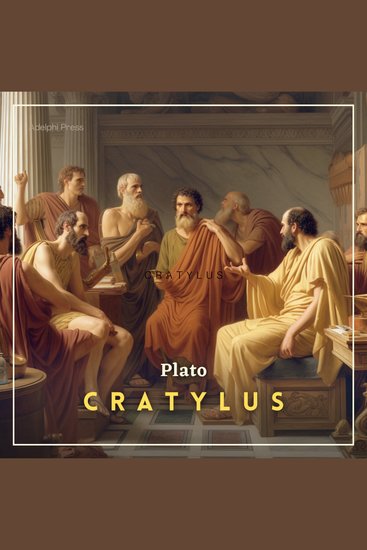
    Cratylus, written by the ancient Greek philosopher Plato, is an exploration of the nature of language and its relationship to reality. In this dialogue, Plato engages in a discourse with two interlocutors, Hermogenes and Cratylus, about the distinction between conventional and natural languages. Through this discussion, Plato suggests that language is an expression of knowledge which can be used to understand reality. Read in English, unabridged.
    Mostra libro
  • Epicurus - Pleasure Atoms and the Good Life - cover

    Epicurus - Pleasure Atoms and...

    Hector Davidson

    • 0
    • 0
    • 0
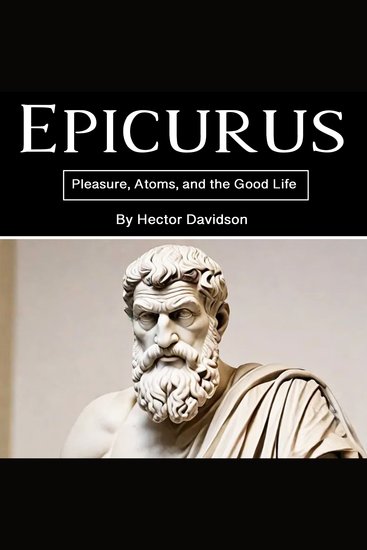
    Epicurus, a Greek philosopher born in 341 BCE on the island of Samos, founded the school of philosophy known as Epicureanism, which emphasized the pursuit of happiness through the cultivation of pleasure and the avoidance of pain. His teachings were revolutionary for their focus on the individual’s inner peace and well-being, rather than devotion to the gods or the pursuit of wealth and power. Epicurus advocated for a life of simple pleasures, good friendships, and intellectual contemplation, arguing that these were the true sources of happiness. 
      
    His philosophy was grounded in atomism, the belief that everything in the universe is made up of small, indivisible particles, or atoms, moving through the void. For Epicurus, the natural world was not governed by divine intervention, but by laws that could be understood through reason and observation. He believed that by understanding the workings of nature, individuals could free themselves from irrational fears, especially the fear of death and the gods. 
      
    Epicurus placed great importance on pleasure, defining it not as indulgence in material excess, but as the absence of pain (ataraxia) and the pursuit of a serene and balanced life. He argued that physical and mental pleasures, when experienced in moderation, contributed to a life of tranquility. Furthermore, he saw pain not as an inherent part of life, but as something to be minimized or avoided through thoughtful living and wise choices.
    Mostra libro
  • The Native American - The Ultimate Guide: Build Your Garden & Herbal Apothecary and Improve Naturally Your Life-Long Vitality with Herbal Medicines & Plant Remedies - cover

    The Native American - The...

    Benjamin X. Campbell

    • 0
    • 0
    • 0
    Do you want to learn how to use alternative, effective, and easily accessible treatments to address many of the most common health problems? 
    There are natural remedies to cure any common diseases, significantly improve our health, and continue to feel vigorous. 
    Thanks to Native Americans' tradition of natural healing, anyone can do it. You can prepare your own remedies to treat any common illness and build up your apothecary table.  
    In this audiobook, you will find:HISTORY AND INTRODUCTION TO HERBALISMNATIVE AMERICAN HERBAL ENCYCLOPEDIAESSENTIAL OILSNATIVE AMERICAN HERBAL APOTHECARYMEDICINAL HERBSMEDICINAL PLANTSNATIVE AMERICAN HERBAL RECIPES NATIVE AMERICAN HERBAL REMEDIES 
    and more... 
    The Native American offers all these benefits in one audiobook, so you can get back to living a full life of health without having to sacrifice your well-being, energy, and empty your pockets anymore!
    Mostra libro
  • Remember Me As Human - What Three Final Days With My Grandmother Wanda Taught Me About Truly Living - cover

    Remember Me As Human - What...

    Lucy Walsh

    • 0
    • 0
    • 0
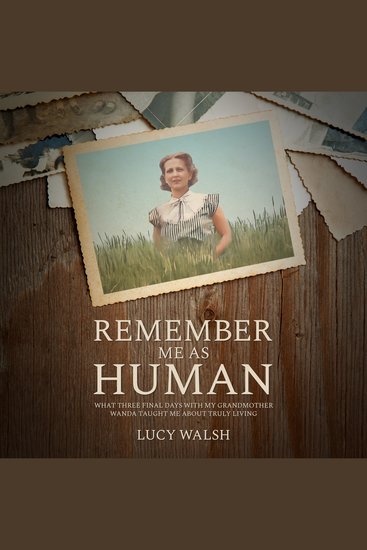
    When Lucy Walsh was seventeen, she was given sixty-three of the love letters her Grandfather Dale wrote her Grandmother Wanda while he was overseas in World War II. A dozen years later, life changing events compelled Lucy to fly from Los Angeles to tiny Newman, Illinois, to spend three days talking with Wanda for what would be their final conversations. What began for Lucy as asking about the letters, became an unexpected master class in truly living. 
    This is the story, much of it conveyed in Wanda's inimitable voice, of Wanda's ninety-seven-year-long life, encompassing everything from her English ancestors to the residents in her nursing home. Through Lucy's candid questions and Wanda's soulful stories, we are swept up into one family's legacy that transports readers right into their own experiences and memories of family. 
    When Lucy isn't talking with Wanda, she visits other relatives and her own memories: the many trips over the years to Illinois and her mother's family; growing up in Los Angeles with two fathers, one a rock star; becoming a performer herself. Inevitably, in her effort to understand where and who she comes from, it becomes the story of Lucy's life as well, to which all readers can relate to in their own search for Self. 
    We fall in love with the unforgettable Grandma Wanda Mae, as she shares insights and confessions with plenty of comedic relief amongst the pain; making us laugh so hard we cry, and cry so hard we come back around to laughter. This book is a treasure trove of all Wanda has to teach us about what it truly means to be deeply, imperfectly, gloriously human, at every age.
    Mostra libro