Unisciti a noi in un viaggio nel mondo dei libri!
Aggiungi questo libro allo scaffale
Grey
Scrivi un nuovo commento Default profile 50px
Grey
Iscriviti per leggere l'intero libro o leggi le prime pagine gratuitamente!
All characters reduced
Spring and Autumn Annals - Enriched edition - cover

Spring and Autumn Annals - Enriched edition

Confucius

Traduttore James Legge

Casa editrice: DigiCat

  • 0
  • 0
  • 0

Sinossi

The "Spring and Autumn Annals" is a remarkable historical chronicle attributed to Confucius, detailing events in the State of Lu from 722 to 481 BCE. Written in an austere and concise style, the text employs a unique blend of factual recounting and moral reflection, marking an early attempt at recording history with an ethical lens. Confucius's annotations on morality, governance, and human conduct suggest a philosophical context that seeks to establish a civil order through virtue, illuminating the complex interplay between history and moral philosophy in early Chinese thought. Confucius, a revered philosopher and the foundation of Confucianism, emerged during a period of social turbulence and disunity in ancient China. His dedication to moral integrity and social responsibility is palpably reflected in the "Spring and Autumn Annals," which serves not just as a historical account, but as a didactic tool aimed at cultivating virtue among leaders and citizens alike. The text is steeped in Confucian ideals, emphasizing the necessity of ethical governance amidst moral decay. For scholars and enthusiasts of philosophy, history, and ancient Chinese culture, the "Spring and Autumn Annals" is an indispensable text. It offers profound insights into Confucian thought and remains a cornerstone of the Chinese literary and philosophical tradition. Engaging with this work allows readers to understand the foundations of societal values and governance that resonate to this day.

In this enriched edition, we have carefully created added value for your reading experience:
- A succinct Introduction situates the work's timeless appeal and themes.
- The Synopsis outlines the central plot, highlighting key developments without spoiling critical twists.
- A detailed Historical Context immerses you in the era's events and influences that shaped the writing.
- An Author Biography reveals milestones in the author's life, illuminating the personal insights behind the text.
- A thorough Analysis dissects symbols, motifs, and character arcs to unearth underlying meanings.
- Reflection questions prompt you to engage personally with the work's messages, connecting them to modern life.
- Hand‐picked Memorable Quotes shine a spotlight on moments of literary brilliance.
- Interactive footnotes clarify unusual references, historical allusions, and archaic phrases for an effortless, more informed read.
Disponibile da: 27/11/2023.
Lunghezza di stampa: 191 pagine.

Altri libri che potrebbero interessarti

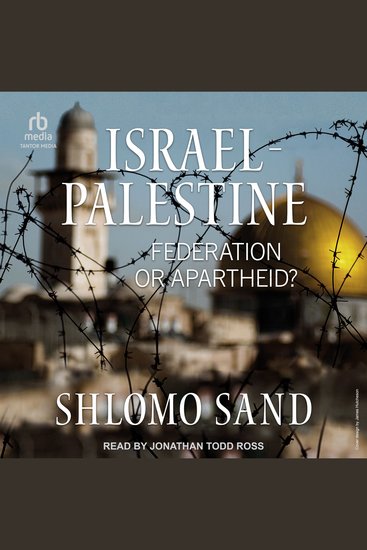
  • Israel-Palestine - Federation or Apartheid? - cover

    Israel-Palestine - Federation or...

    Shlomo Sand

    • 0
    • 0
    • 0
    What kind of political structure might one day enable Israelis and Palestinians to overcome the seemingly interminable cycle of violence and live in peace with one another? For many years, politicians and citizens have called for a two-state solution—two independent states, Israel and Palestine, coexisting side by side. This was Shlomo Sand's view too, but as more settlements were built in the occupied West Bank and millions of Palestinians were forced to live in a situation of de facto apartheid, deprived of their basic civil rights and political freedoms, he came to the conclusion that the two-state solution had become an empty formula that no one seriously intended to implement. 


    It was in this context that Sand sought to find an alternative way out of the Israeli-Palestinian imbroglio. He discovered that some Zionists and other Jewish intellectuals had rejected the idea of an exclusive Jewish state and had supported moves to create a binational federation. They believed that only egalitarian integration within the framework of a common state would ensure that Israel could be a safe haven for all of its inhabitants. While the chances of realizing this egalitarian vision may seem remote in the current hostile context, it may well be that a binational state in which Israelis and Palestinians are treated as equals is the only realistic solution in the end.
    Mostra libro
  • Apocalypse Television - How The Day After Helped End the Cold War - cover

    Apocalypse Television - How The...

    David Craig, Robert Iger

    • 0
    • 0
    • 0
    On November 20, 1983, a three-hour made-for-TV movie, The Day After, premiered on ABC. Set in the heartland of Lawrence, Kansas, the film depicted the events before, during, and after a Soviet nuclear attack with vivid scenes of the post-apocalyptic hellscape that would follow. The film was viewed by over 100 million Americans and remains the highest rated TV movie in history. 


    The path to primetime for The Day After proved nearly as treacherous as the film's narrative. Battles ensued behind the scenes at the network, between the network and the filmmakers. But these skirmishes pale in comparison to the culture wars triggered by the film in the press, alongside a growing Nuclear Freeze movement, and from a united, pro-nuclear Right. Once efforts to alter the script failed, the White House conducted a full-throttled propaganda campaign to hijack the film's message. 


    Apocalypse Television features a dramatic insider's account of the making of and backlash against The Day After. No other book has told this story in similar fashion, venturing behind-the-scenes of the programming and news divisions at ABC, the backlash from the conservative movement and Religious Right, the challenges encountered by the film's production team, and the experiences of the citizens of Lawrence, Kansas, where the film was set and shot.
    Mostra libro
  • Aliens on the Moon - cover

    Aliens on the Moon

    Raphael Terra

    • 0
    • 0
    • 0
    This audiobook has been recorded using Text to speech (TTS). 
     
    We all wonder whether planet Earth has been visited by aliens. Millions of people around the planet have seen them. But very few people can see what is happening on our moon. It is in fact a perfect place for aliens to use as a base for visiting us. Especially because the dark side of the moon cannot be observed by us. 
     
    Could it be that our secretive governments know about them? Has NASA come into contact with them? The fact is astronauts from several countries claim to have seen UFO’s on or near the moon. Even NASA astronauts have claimed in public that there was and is a government cover up. 
     
    So what is the truth? Are there aliens on the moon?
    Mostra libro
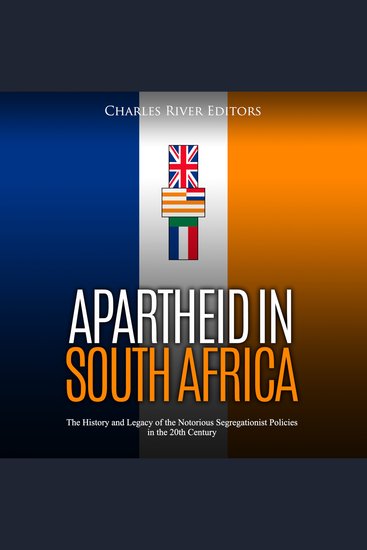
  • Apartheid in South Africa: The History and Legacy of the Notorious Segregationist Policies in the 20th Century - cover

    Apartheid in South Africa: The...

    Charles River Editors

    • 0
    • 0
    • 0
    “During my lifetime I have dedicated myself to this struggle of the African people. I have fought against white domination, and I have fought against black domination. I have cherished the ideal of a democratic and free society in which all persons will live together in harmony and with equal opportunities. It is an ideal which I hope to live for. But, my lord, if needs be, it is an ideal for which I am prepared to die.” – Nelson Mandela, 1964 
    On June 1, 1948, Daniel Malan arrived in Pretoria by train to take office, and there he was met by a huge crowd of cheering whites. He told the audience, “In the past, we felt like strangers in our own country, but today, South Africa belongs to us once more. For the first time since Union, South Africa is our own. May God grant that it always remain our own.” 
    Back in Johannesburg, the leadership of the ANC, including the young attorney Nelson Mandela, listened to these celebratory prognostications in a grim mood. As strangers in their own country, they all understood that the South African liberation struggle would not be won overnight. In fact, the era of apartheid was only just about to formally start. 
    Although apartheid is typically dated from the late 1940s until its dismantling decades later, segregationist policies had been the norm in South Africa from nearly the moment European explorers sailed to the region and began settling there. Whether it was displacing and fighting indigenous groups like the Khoi and San, or fighting other whites like the Boer, separation between ethnicities was the norm in South Africa for centuries before the election of Malan signaled the true rise of the Afrikaner far right. 
    The man most associated with dismantling apartheid, of course, is Nelson Mandela. With the official policy of apartheid instituted in 1948 by an all-white government, Mandela was tried for treason between the years of 1956-61 before being acquitted. He participated in the Defiance Campaign of 1952, and oversaw the 1955 Congress of the People, but when the African National Congress was banned in 1960, he proposed a military wing, despite his initial reluctance toward violent resistance, a reluctance which had its roots in original nonviolent protests through the South African Communist Party. The ANC did not openly discourage such an idea, and the Umkhonto we Sizwe was established. Mandela was again arrested in 1962 and tried for attempts to overthrow the government by violence. The sentence was five years of hard labor, but this was increased to a life sentence in 1964, a sentence handed down to seven of his closest colleagues as well.  
    Mandela would eventually serve 27 years, but his statements made in court received enormous international coverage and acclaim, and his reputation grew during his time in Robben Island Prison of Capetown, the Pollsmoor and Victor Verster Prisons. He was ultimately released in February 1990, in large part as a result of the international campaign generated by his words and the current South African story. Shortly after that, he was elected as the first man of African descent to the presidency of South Africa, which he held from 1994–1999. Most significant was that Mandela was elected from the first multi-factional, multi-racial election ever held in the country, a result of extensive negotiations with then President F.W. Klerk. 
    Apartheid in South Africa: The History and Legacy of the Notorious Segregationist Policies in the 20th Century looks at the controversial policies, the background behind them, and their influence on the country. Along with pictures and a bibliography, you will learn about apartheid in South Africa like never before.
    Mostra libro
  • Naughty Lynn: An Erotic Lesbian Romance (The Ellis Chronicles - book 17) - cover

    Naughty Lynn: An Erotic Lesbian...

    T.E. Robbens

    • 0
    • 0
    • 0
    Ellis struggles to deal with Lynn moving to Lexington, not wanting to lose her new love. Katie tries to console Ellis now that Lynn is gone, but Ellis refuses to fall for Katie's attempts and spends a steamy weekend in Lynn's bed.
    Mostra libro
  • Pensées - cover

    Pensées

    Blaise Pascal

    • 0
    • 0
    • 0
    Compiled after his death in 1662, Pascal's"pens├®es" (thoughts) are his ideas for a book in defense of faith in a rational world. These fragments give evidence of a profoundly original thinker who had resolved the conflict between his scientific mind and his heart-felt faith. 
    The book begins with an analysis of the difference between mathematical and intuitive thinking and goes on to consider the value of skepticism, contradictions, feeling, memory, and imagination. It is a powerful look at humanity's weakness and the futility of worldly life. Much of the value ofPens├®eslies in the clarity with which Pascal was able to present his intuitive thoughts. 
    Pascal spent much of his life composing this magnum opus, which offers some of the most powerful aphorisms about human experience and behavior ever written.
    Mostra libro