Join us on a literary world trip!
Add this book to bookshelf
Grey
Write a new comment Default profile 50px
Grey
Subscribe to read the full book or read the first pages for free!
All characters reduced
Codebreakers - cover

Codebreakers

Clive Whitmore

Translator A AI

Publisher: Publifye

  • 0
  • 0
  • 0

Summary

Codebreakers explores the fascinating realm of cryptology through the stories of individuals who dedicated their lives to deciphering codes and safeguarding sensitive information. It reveals how these unsung heroes significantly influenced military conflicts, intelligence operations, and the solving of intricate mysteries. For instance, the book highlights the breaking of the Enigma code at Bletchley Park during World War II, showcasing the profound impact of codebreaking on historical events.

 
The book traces the evolution of cryptographic methods from simple substitution ciphers to complex algorithms, emphasizing the constant innovation required in both code creation and codebreaking.

 
The narrative unfolds chronologically, beginning with fundamental cryptographic concepts and progressing through major historical periods like World War I, World War II, and the Cold War. This historical journey provides a comprehensive understanding of how cryptography has shaped national security and continues to influence modern cybersecurity.
Available since: 03/06/2025.
Print length: 72 pages.

Other books that might interest you

  • Mr Prohartchin - Poverty Pride and the Tragic Irony of a Miser’s Life - cover

    Mr Prohartchin - Poverty Pride...

    Fyodor Dostoevsky, Tim Zengerink

    • 0
    • 0
    • 0
    He lived simply. He died quietly. Then the truth came out. 
    In Mr. Prohartchin, Fyodor Dostoevsky reveals the inner life of a lonely, tight-fisted man scorned by his neighbors. Through subtle storytelling and emotional detail, the story explores how poverty, shame, and pride shape the way we live—and how we’re remembered after we’re gone. 
    This modern audiobook adaptation brings fresh clarity and rhythm to Dostoevsky’s understated tale, preserving its quiet intensity while making it accessible for today’s listeners. 
    What You’ll Hear in This Modern Translation: 
    •	A revealing story about a reclusive man’s misunderstood life 
    •	Rich insights into human judgment, insecurity, and secret generosity 
    •	A quiet tragedy wrapped in subtle irony and deep empathy 
    Included in This Edition: 
    Updated for clarity and modern sensibilities, this audiobook presents Dostoevsky’s tale with emotional nuance and accessibility—perfect for fans of psychological fiction and hidden gems from classic literature. 
    Listen today—and uncover the truth behind a life no one bothered to understand.
    Show book
  • The Shaking Woman or A History of My Nerves - cover

    The Shaking Woman or A History...

    Siri Hustvedt

    • 0
    • 0
    • 0
    While speaking at a memorial event in 2006, Siri Hustvedt suffered a violent seizure from the neck down. Despite her flapping arms and shaking legs, she continued to speak clearly and was able to finish her speech. It was as if she had suddenly become two people: a calm orator and a shuddering wreck. Then the seizures happened again and again. The Shaking Woman tracks Hustvedt's search for a diagnosis, one that takes her inside the thought processes of several scientific disciplines, each one of which offers a distinct perspective on her paroxysms but no ready solution. In the process, she finds herself entangled in fundamental questions: What is the relationship between brain and mind? How do we remember? What is the self? 


    During her investigations, Hustvedt joins a discussion group in which neurologists, psychiatrists, psychoanalysts, and brain scientists trade ideas to develop a new field: neuropsychoanalysis. She volunteers as a writing teacher for psychiatric in-patients at the Payne Whitney clinic in New York City and unearths precedents in medical history that illuminate the origins of and shifts in our theories about the mind-body problem. Hustvedt synthesizes her experience and research into a compelling mystery: Who is the shaking woman? In the end, the story she tells becomes, in the words of George Makari, "a brilliant illumination for us all."
    Show book
  • 99 Names of God - cover

    99 Names of God

    Sarim Abbasi

    • 0
    • 0
    • 0
    Did you know that God is one? Given that no god is God unless He is able to do all things, i.e., All-Able, consider two such gods. The first god decides to make something. The second god then makes some changes to it. The first god then makes something, but this time makes it so no changes can be made to it. The second god now can't make any changes to it, so it is not All-Able and thus not a god. But consider if the second god is indeed All-Able; he does go ahead and make changes. But this then makes the first god not able to do all things. So this shows there can only be one God if God is to be able to do all things.
    
    Did you know that doubts can enter the mind if you go ahead and seek the joys of doing charity and worship? But with the correct knowledge of God's attributes, they can dissipate. For example, does God exist? He is Ever-Living and Self-Subsisting. Okay then, who created God? God can exist despite being uncreated because God is unique and apart from all His creation. Okay, where is the actual proof He exists? He is Manifest and Hidden. We can't see Him because He is the Most-High. But that's why He shows His signs, but only those who believe in Him unseen cannot receive them blindly. Proving that He exists will actually contradict one of His attributes, i.e., The Hidden One.
    
    Did you know that we live in a reality that is governed by the mathematical statement 1/infinity? We live in a reality that is infinite, and we can't count till infinity, so we can't exit out of it. But you can simply count infinity as one infinity, so this then gives us the statement above. One is the greatest. It is also the first, and it is also the last. All of these are attributes of God. And God, who is One, is always at the top.
    
    You go for a stroll, and whilst doing so, you encounter a rolling ball in front of you. You look around and see no one. You think for a moment. Where did it come from? Who does it belong to? Seeing no one to claim it, you ignore it and move along. The same thing happens to you with the sun, moon, and stars. No harm done. But then a Messenger (peace be upon him) comes along and says God has revealed to me that all things in the universe belong to one God. Is the Messenger to be believed? He claims this God has 99 attributes. So we put these names to the test. Will these names be enough for us to believe in his God? Beyond doubt?
    Show book
  • Reflections on Gandhi - cover

    Reflections on Gandhi

    George Orwell

    • 0
    • 0
    • 0
    This audiobook is narrated by an AI Voice. "Reflections on Gandhi" is an essay by George Orwell, first published in 1949, which responds to Mahatma Gandhi's autobiography The Story of My Experiments with Truth. The essay, which appeared in the American magazine Partisan Review, discusses the autobiography and offers both praise and criticism to Gandhi, focusing in particular on the effectiveness of Gandhian nonviolence and the tension between Gandhi's spiritual worldview and his political activities.
    Show book
  • Beyond Belief: A Defence of Gossip and the Women Who Do It - cover

    Beyond Belief: A Defence of...

    Katie Baskerville

    • 0
    • 0
    • 0
    A celebration and exploration of gossip, reclaiming it as a powerful tool for building relationships, sharing vital information and enabling women’s voices to be heard. 
    Tittle-tattle. Hearsay. Rumours. Bitching. Tea. 
    Call it what you will: the fact remains that gossip is entwined into our daily lives. From group WhatsApp chats to click-bait headlines, social media snooping to reality television, there is nothing more devilishly delicious, scandalous, and satisfying than a juicy piece of gossip. 
    All-too-often dismissed as the pastime of silly schoolgirls and bored housewives, there’s more to gossip than meets the eye. In today’s world of misinformation, where the voices and stories of women are being silenced, gossip has the power to shatter reputations and destroy credibility. Yet it can also be a vital political tool; a communication style that strengthens relationships and can even act a life-saving measure. 
    Tracing gossip’s roots from old wives’ tales and the witch trials to reality TV, whisper networks and defamation lawsuits, Beyond Belief asks, have we lost the ability to listen; to hear, and to believe women who speak up and speak out? 
    A joyous reclamation of women’s words, this book is for anyone who’s ever uttered the words, ‘You won’t believe this…’ 
    Blending non-fiction with gender studies, history and culture, Baskerville uses feminism and theory to reveal why gossip matters in a world of misinformation. Popular and up-coming, this latest, top read is among the best for anyone who wants to understand the science of social stories—and why believing women is urgent. 
    HarperCollins 2026
    Show book
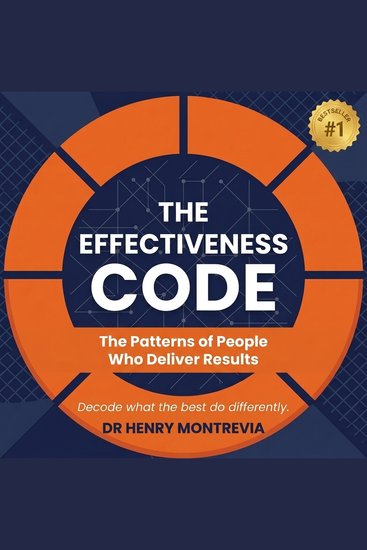
  • The Effectiveness Code - The Patterns of People Who Deliver Results - cover

    The Effectiveness Code - The...

    Henry Montrevia

    • 0
    • 0
    • 0
    What separates people who consistently deliver results from those who remain perpetually busy yet never quite get there? In The Effectiveness Code, behavioral psychologist and bestselling author Dr. Henry Montrevia argues that the answer is not a better productivity system, a smarter strategy, or a sharper set of skills. It is something more fundamental: a set of deeply interwoven patterns that begin with character and radiate outward into every dimension of professional and personal life.
    Drawing on decades of research in behavioral psychology, economics, organizational science, and philosophy, Dr. Montrevia builds a comprehensive, evidence-based framework for understanding why some people thrive over the long term while others plateau or collapse. Beginning with the foundational claim that character is not a moral luxury but the bedrock of all durable achievement, the book moves outward through perception, will, personal principles, weekly architecture, trust, listening, cooperation, creative conflict, and renewal—each chapter building on the last in a tightly interlocking system.
    Readers will discover why even deeply principled people cave under situational pressure, as the famous Good Samaritan experiment reveals; why intelligence and drive are dangerous amplifiers without integrity, as Enron so catastrophically demonstrated; and why the framing of a problem—not the facts themselves—often determines the decision that follows. They will learn why willpower is a fragile and overrated resource, and why building environments that make better choices easier is more powerful than trying to be stronger. They will explore how to write a personal constitution that makes values durable enough to survive stress, confusion, and the erosion of time.
    Beyond the inner life, The Effectiveness Code turns to relationships. Trust, the book argues, is the most undervalued asset in human interaction—built slowly through consistent small behavior and destroyed quickly through inconsistency. Genuine listening is revealed as not a passive courtesy but the mechanism through which trust deepens, better information surfaces, and real influence becomes possible. The mathematics of mutual gain—grounded in game theory, Elinor Ostrom's commons research, and Axelrod's cooperation tournaments—shows why cooperation is not naive but strategically superior over time. And creative collision, the well-managed friction between different perspectives, is shown to be the engine of breakthrough thinking.
    The book also addresses the concrete challenges of modern life: the distraction economy, remote work, burnout, digital saturation, and the application of leadership principles within families. It closes with case studies of ordinary people who changed their trajectories not through heroic moments but through honest perception, supportive structures, and patient practice—and with a vision of effectiveness not as a destination but as a lifelong upward spiral of deliberate return.
    Rich with research, honest about complexity, and deeply practical in its recommendations, The Effectiveness Code is a rare synthesis: a book that takes seriously both the science of human behavior and the wisdom of lived experience, and uses both to answer the question that underlies all genuine achievement—not just how to perform better, but what kind of person one is becoming in the process.
    Show book