Unisciti a noi in un viaggio nel mondo dei libri!
Aggiungi questo libro allo scaffale
Grey
Scrivi un nuovo commento Default profile 50px
Grey
Iscriviti per leggere l'intero libro o leggi le prime pagine gratuitamente!
All characters reduced
The American Operations in WW2: Rome-Arno - 22 January–9 September 1944 - cover

The American Operations in WW2: Rome-Arno - 22 January–9 September 1944

Clayton D. Laurie

Casa editrice: Madison & Adams Press

  • 0
  • 0
  • 0

Sinossi

World War II was the largest and most violent armed conflict in the history of mankind. Highly relevant today, World War II has much to teach us, not only about the profession of arms, but also about military preparedness, global strategy, and combined operations in the coalition war against fascism. This book follows military operations of the US Army in Italy from 22 January to 9 September 1944. 
Rome was quiet on the morning of 4 June 1944. Propaganda leaflets dropped during the early morning hours by order of the commander of the Allied 15th Army Group, General Sir Harold R. L. G. Alexander, urged Romans "to stand shoulder-to-shoulder to protect the city from destruction and to defeat our common enemies." Even though the retreating Germans had declared Rome an open city, citizens were urged to do everything possible to protect public services, transportation facilities, and communications. "Citizens of Rome," the leaflets declared, "this is not the time for demonstrations. Obey these directions and go on with your regular work. Rome is yours! Your job is to save the city, ours is to destroy the enemy."
Disponibile da: 05/09/2023.
Lunghezza di stampa: 22 pagine.

Altri libri che potrebbero interessarti

  • The Tempest - cover

    The Tempest

    William Shakespeare

    • 0
    • 0
    • 0
    "THE TEMPEST" is Shakespeare's last book. The story Prospero relates is that he is the rightful Duke of Milan and that his younger brother, Antonio, betrayed him, seizing his title and property. Twelve years earlier, Prospero and Miranda were put out to sea in little more than a raft. Miraculously, they both survived and arrived safely on this island, where Prospero learned to control the magic that he now uses to manipulate everyone on the island. Upon his arrival, Prospero rescued a sprite, Ariel, who had been imprisoned by the witch Sycorax. Ariel wishes to be free and his freedom has been promised within two days.    The last inhabitant of the island is the child of Sycorax and the devil: Caliban, whom Prospero has enslaved. Caliban is a natural man, uncivilized and wishing only to have his island returned to him to that he can live alone in peace.    Soon the royal party from the ship is cast ashore and separated into three groups. The king's son, Ferdinand, is brought to Prospero, where he sees Miranda, and the two fall instantly in love. Meanwhile, Alonso, the king of Naples, and the rest of his party have come ashore on another part of the island. Alonso fears that Ferdinand is dead and grieves for the loss of his son. Antonio, Prospero's younger brother, has also been washed ashore with the king's younger brother, Sebastian.    Antonio easily convinces Sebastian that Sebastian should murder his brother and seize the throne for himself. This plot to murder Alonso is similar to Antonio's plot against his own brother, Prospero, 12 years earlier.    Another part of the royal party — the court jester and the butler — has also come ashore. Trinculo and Stefano each stumble upon Caliban, and each immediately sees a way to make money by exhibiting Caliban as a monster recovered from this uninhabited island. Stefano has come ashore in a wine cask, and soon Caliban, Trinculo, and Stefano are drunk. While drinking, Caliban hatches a plot to murder Prospero and enrolls his two new acquaintances as accomplices. Ariel is listening, however, and reports the plot to Prospero.    Next, Prospero stages a masque to celebrate the young couple's betrothal, with goddesses and nymphs entertaining the couple with singing and dancing. While Ferdinand and Miranda have been celebrating their love, Alonso and the rest of the royal party have been searching for the king's son. Exhausted from the search and with the king despairing of ever seeing his son alive, Prospero has ghosts and an imaginary banquet brought before the king's party. A god-like voice accuses Antonio, Alonso, and Sebastian of their sins, and the banquet vanishes. The men are all frightened, and Alonso, Antonio, and Sebastian run away.    Prospero punishes Caliban, Trinculo, and Stefano with a run through a briar patch and swim in a scummy pond. Having accomplished what he set out to do, Prospero has the king's party brought in. Prospero is clothed as the rightful Duke of Milan, and when the spell has been removed, Alonso rejects all claims to Prospero's dukedom and apologizes for his mistakes. Within moments, Prospero reunites the king with his son, Ferdinand. Alonso is especially pleased to learn of Miranda's existence and that Ferdinand will marry her.    Prospero then turns to his brother, Antonio, who offers no regrets or apology for his perfidy. Nevertheless, Prospero promises not to punish Antonio as a traitor. When Caliban is brought in, Caliban tells Prospero that he has learned his lesson. His two co-conspirators, Trinculo and Stefano, will be punished by the king. Soon, the entire party retires to Prospero's cell to celebrate and await their departure home. Only Prospero is left on stage.    In a final speech, Prospero tells the audience that only with their applause will he be able to leave the island with the rest of the party. Prospero leaves the stage to the audience's applause.
    Mostra libro

  • Works and Customs in Palestine Volume III - From Harvest to Flour Harvesting Threshing Winnowing Sifting Storing Grinding - cover

    Works and Customs in Palestine...

    Gustaf Dalman

    • 0
    • 0
    • 0
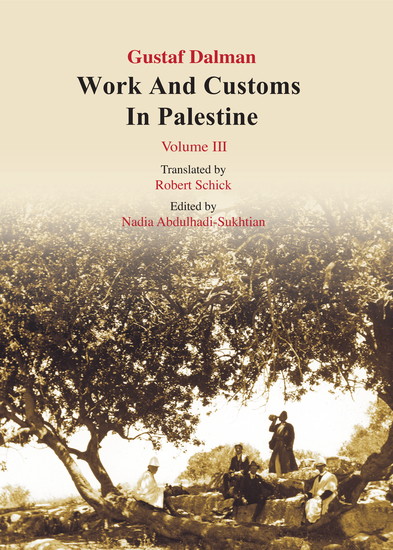
    Volume III, continues where Volume II left off, with the harvest up to the milling and storing of the flour. It starts with the harvest weather, the human work force, the various harvest tools, continues with the work on the threshing floor, the threshing tools, the production of flour and groats together with the tools used, as well as the different kinds of storage equipment.
    Mostra libro
  • Beyond Ethnic Loneliness - The Pain of Marginalization and the Path to Belonging - cover

    Beyond Ethnic Loneliness - The...

    Prasanta Verma

    • 0
    • 0
    • 0
    "So what are you? Go back where you belong!" 


    Majority white American culture has historically marginalized people of color, who at times feel invisible and alienated and at other times are traumatized by oppression and public discrimination. This reality leads to a particular kind of aloneness: ethnic and racial loneliness. 


    An Indian American immigrant who grew up in white Southern culture, Prasanta Verma names and sheds light on the realities of ethnic loneliness. She unpacks the exhausting effects of cultural isolation, the dynamics of marginalization, and the weight of being other. In the midst of disconnection and erasure, she points to the longing to belong, the need to share our stories, and the hope of finding safe friendships and community. Our places of exile can become places where we find belonging—to ourselves, to others, and to God.
    Mostra libro
  • The Making of Modern New Zealand - From Colonization to Sovereignty - cover

    The Making of Modern New Zealand...

    Lillian Brooks

    • 0
    • 0
    • 0
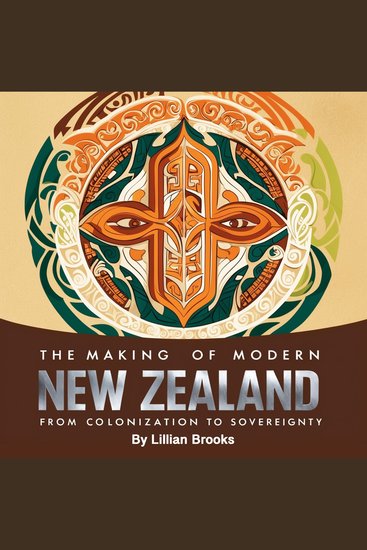
    Before the arrival of Europeans, New Zealand, or Aotearoa, was inhabited solely by the Māori people, who had arrived from Polynesia over a thousand years earlier. Their ancestors navigated vast distances across the Pacific Ocean, using their advanced knowledge of stars, winds, and ocean currents. They eventually settled in Aotearoa, forming distinct tribal communities known as iwi, each with its own territory, social structures, and traditions. 
    The Māori society was organized around iwi (tribes), hapū (sub-tribes), and whānau (families). Each iwi had a paramount chief, or rangatira, who was responsible for making decisions that affected the entire tribe. The rangatira was supported by a council of elders, or kaumatua, who provided guidance based on wisdom and experience. The hapū, made up of extended families, was the primary unit of Māori society, with a strong emphasis on kinship and collective responsibility. 
    Māori were deeply connected to the land, or whenua, and believed that their ancestors, the atua, or gods, imbued the earth, sea, and sky with sacred energy. This connection formed the foundation of Māori spiritual beliefs, which revolved around whakapapa (genealogy), mana (spiritual power or authority), and tapu (sacredness). Their spiritual worldview tied their identity to the land and natural resources, and they saw themselves as stewards, responsible for the care and preservation of the environment.
    Mostra libro
  • Bulletproof - Healing After Gun Violence & Trauma: A Guide for Survivors Caregivers and Clinicians - cover

    Bulletproof - Healing After Gun...

    Jill McMahon

    • 0
    • 0
    • 0
    Bulletproof is written specifically for people impacted by gun violence and traumatic loss. 
    Jill McMahon is a licensed professional counselor and gun violence survivor. She shares the wisdom she’s gained from working with thousands of trauma survivors to help others find a path forward. 
    Bulletproof is about healing, not politics. It outlines in simple terms what trauma survivors experience and why, providing straightforward explanations and useful techniques to regain control over pain and begin to heal. Jill shares survivor stories to illustrate how they overcame trauma and took back their lives. 
    Bulletproof is ultimately a book about hope. 
    The goal of this book is to show survivors that they have the strength to overpower their pain and find a life filled with immeasurable possibilities. There is life after this trauma, and that life can be good!
    Mostra libro
  • Marine Pollution - What Everyone Needs to Know(r) - cover

    Marine Pollution - What Everyone...

    Judith S. Weis

    • 0
    • 0
    • 0
    For millennia, human societies have viewed the ocean as a dumping ground for waste products of all kinds. The sources of marine pollution are extensive, including oil spills, sewage, fertilizers, pesticides, industrial wastes, heavy metals, ocean acidification, plastics, and even invasive species, considered biological pollution. Yet, the solutions are not as clear. 
     
    Updated to reflect recent research, this book discusses the sources of marine pollutants, their effects on marine organisms and humans, and how to reduce or eliminate them. Weis covers the aftermath of oil spills in addition to "emerging" topics like flame retardants, pharmaceuticals, noise pollution, and PFAS. A new chapter examines the prevalence of microplastics and how they rise through the food chain into human beings, along with their associated toxic chemicals. Additional chapters address the deadly effects of climate change in the ocean but also focus on actions that all people can take, citing recent environmental improvements as a cause for hope.
    Mostra libro