Unisciti a noi in un viaggio nel mondo dei libri!
Aggiungi questo libro allo scaffale
Grey
Scrivi un nuovo commento Default profile 50px
Grey
Iscriviti per leggere l'intero libro o leggi le prime pagine gratuitamente!
All characters reduced
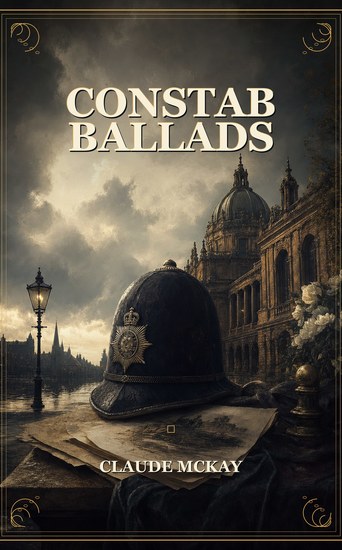
Constab Ballads - cover

Constab Ballads

Claude McKay

Casa editrice: Caelwick Press

  • 0
  • 0
  • 0

Sinossi

Constab Ballads by Claude McKay is offered here in a clean English digital edition prepared for fluent ebook reading. The work stands within classics and gives modern readers direct access to a public-domain classic with navigable structure and a restrained typographic presentation. The opening pages establish the book's atmosphere with this first movement: Let me confess it at once. I had not in me the stuff that goes to the making of a good constable; for I am so constituted that imagination outruns discretion, and it is my misfortune to have a most improper sympathy with wrong-doers. I therefore never "made cases," but turning, like Nelson, a blind This edition is suited to readers who want a reliable, uncluttered version of the text for study, rediscovery, and sustained reading.
Disponibile da: 06/06/2026.
Lunghezza di stampa: 35 pagine.

Altri libri che potrebbero interessarti

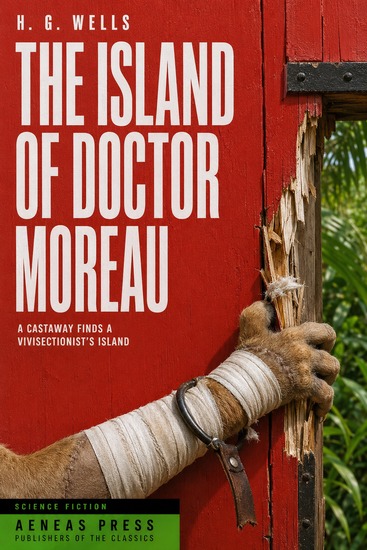
  • The Island of Doctor Moreau - A Castaway Finds a Vivisectionist's Island - cover

    The Island of Doctor Moreau - A...

    H. G. Wells

    • 0
    • 0
    • 0
    A shipwrecked man is taken in on an island where a surgeon works nights and the servants do not walk quite right. Wells wrote it a year after The Time Machine, at the height of the anti-vivisection quarrel, and reviewers called it disgusting; he later called it an exercise in youthful blasphemy. The Law the beast-folk recite is the coldest thing in the book. Sixty moonlit plates by painters including Aivazovsky and Joseph Heard carry the castaway's night sea and its lonely coasts through the whole volume.
    Mostra libro
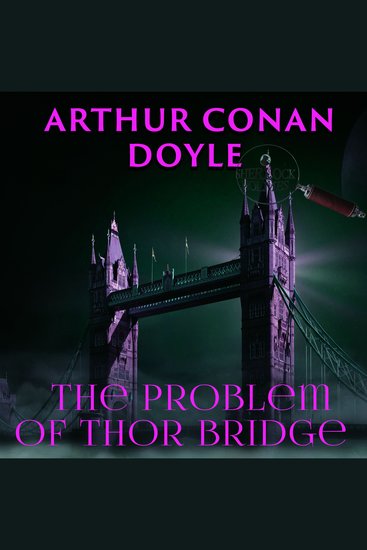
  • The Problem of Thor Bridge - cover

    The Problem of Thor Bridge

    Arthur Conan Doyle

    • 0
    • 0
    • 0
    The Problem of Thor Bridge is a Sherlock Holmes murder mystery by Arthur Conan Doyle in The Case-Book of Sherlock Holmes, first published in 1922 in The Strand Magazine (UK) and Hearst's International (US).Neil Gibson, the Gold King and former Senator from "some Western state", approaches Holmes to investigate the murder of his wife Maria in order to clear his children's governess, Grace Dunbar, of the crime. It soon emerges that Mr. Gibson's marriage had been unhappy and he treated his wife very badly. He had fallen in love with her when he met her in Brazil, but soon realised they had nothing in common. He became attracted to Miss Dunbar; since he could not marry her, he had attempted to please her in other ways, such as trying to help people less fortunate than himself.Maria Gibson was found lying in a pool of blood on Thor Bridge with a bullet through the head and note from the governess, agreeing to a meeting at that location, in her hand. A recently discharged revolver with one shot fired is found in Miss Dunbar's wardrobe. Holmes agrees to look at the situation in spite of the damning evidence....Famous works of the author Arthur Conan Doyle: A Study in Scarlet, The Sign of the Four, The Adventures of Sherlock Holmes, The Memoirs of Sherlock Holmes, The Hound of the Baskervilles, The Return of Sherlock Holmes, The Valley of Fear, His Last Bow, The Case-Book of Sherlock Holmes, Stories of Sherlock Holmes, The Lost World.
    Mostra libro
  • A Man with Two Lives - From their pens to your ears genius in every story - cover

    A Man with Two Lives - From...

    Ambrose Bierce

    • 0
    • 0
    • 0
    Ambrose Gwinnett Bierce was born on 24th June 1842 at Horse Cave Creek in Meigs County, Ohio. His parents were poor but they introduced him to literature at an early age, instilling in him a deep appreciation of books, the written word and the elegance of language.  
    Growing up in Koscuisko County, Indiana poverty and religion were defining features of his childhood, and he would later describe his parents as “unwashed savages” and fanatically religious, showing him little affection but always quick to punish. He came to resent religion, and his introduction to literature appears to be their only positive effect. 
    At age 15 Bierce left home to become a printer’s devil, mixing ink and fetching type at The Northern Indian, a small Ohio paper. Falsely accused of theft he returned to his farm and spent time sending out work in the hopes of being published. 
    His Uncle Lucius advised he be sent to the Kentucky Military Institute. A year later he was commissioned as an Officer.  As the Civil War started Bierce enlisted in the 9th Indiana Infantry Regiment.  
    In April 1862 Bierce fought at the Battle of Shiloh, an experience which, though terrifying, became the source of several short stories. Two years later he sustained a serious head wound and was off duty for several months. He was discharged in early 1865.  
    A later expedition to inspect military outposts across the Great Plains took him all the way to San Francisco. He remained there to become involved with publishing and editing and to marry, Mary Ellen on Christmas Day 1871.  They had a child, Day, the following year.  
    In 1872 the family moved to England for 3 years where he wrote for Fun magazine. His son, Leigh, was born, and first book, ‘The Fiend’s Delight’, was published.  
    They returned to San Francisco and to work for a number of papers where he gained admiration for his crime reporting. In 1887 he began a column at the William Randolph Hearst’s San Francisco Examiner.  
    Bierce’s marriage fell apart when he discovered compromising letters to his wife from a secret admirer. The following year, 1889 his son Day committed suicide, depressed by romantic rejection. 
    In 1891 Bierce wrote and published the collection of 26 short stories which included ‘An Occurrence at Owl Creek Bridge’.  Success and further works including poetry followed.  
    Bierce with Hearst’s resources helped uncover a financial plot by a railroad to turn 130 million dollars of loans into a handout. Confronted by the railroad and asked to name his price Bierce answered “my price is $130 million dollars. If, when you are ready to pay, I happen to be out of town, you may hand it over to my friend, the Treasurer of the United States”.  
    He now began his first foray as a fabulist, publishing ‘Fantastic Fables’ in 1899.  But tragedy again struck two years later when his second son Leigh died of pneumonia relating to his alcoholism.  
    He continued to write short stories and poetry and also published ‘The Devil’s Dictionary’.  
    At the age of 71, in 1913 Bierce departed from Washington, D.C., for a tour of the battlefields where he had fought during the civil war. At the city of Chihuahua he wrote his last known communication, a letter to a friend. It’s closing words were “as to me, I leave here tomorrow for an unknown destination,” Ambrose Bierce then vanished without trace.
    Mostra libro

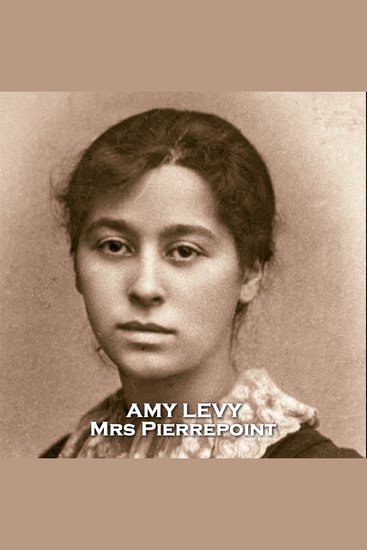
  • Mrs Pierrepoint - From their pens to your ears genius in every story - cover

    Mrs Pierrepoint - From their...

    Amy Levy

    • 0
    • 0
    • 0
    Amy Levy was born in London, England in 1861, the second of seven in a fairly wealthy Anglo-Jewish family. The children read and participated in secular literary activities and became firmly integrated into Victorian life. 
    Her education was at Brighton High School, Brighton, before studies at Newnham College, Cambridge; she was the first Jewish student when she arrived in 1879, but left after four terms. 
    Amy’s writing career began early; her poem ‘Ida Grey’ appeared when she was only fourteen. Her acclaimed short stories ‘Cohen of Trinity’ and ‘Wise in Their Generation,’ were published by Oscar Wilde in his magazine ‘Women's World’. 
    Her poetic writings reveal feminist concerns; ‘Xantippe and Other Verses’, from 1881 includes a poem in the voice of Socrates's wife. ‘A Minor Poet and Other Verse’ from 1884 comprises of dramatic monologues and lyric poems. 
    In 1886, Amy began a series of essays on Jewish culture and literature for the Jewish Chronicle, including ‘The Ghetto at Florence’, ‘The Jew in Fiction’, ‘Jewish Humour’ and ‘Jewish Children’. 
    That same year while travelling in Florence she met the writer Vernon Lee. It is generally assumed they fell in love and this inspired the poem ‘To Vernon Lee’. 
    Her first novel ‘Romance of a Shop’, written in 1888 is based on four sisters who experience the pleasures and hardships of running a London business during the 1880s. This was followed by Reuben Sachs (also 1888) and concerned with Jewish identity and mores in the England of her time and was somewhat controversial. 
    Her final book of poems, ‘A London Plane-Tree’ from 1889, shows the beginnings of the influence of French symbolism. 
    Despite many friendships and an active life, Amy suffered for many years with serious depressions and this, together with her growing deafness, led her to commit suicide by inhaling carbon monoxide on September 10th, 1889. She was 27.
    Mostra libro
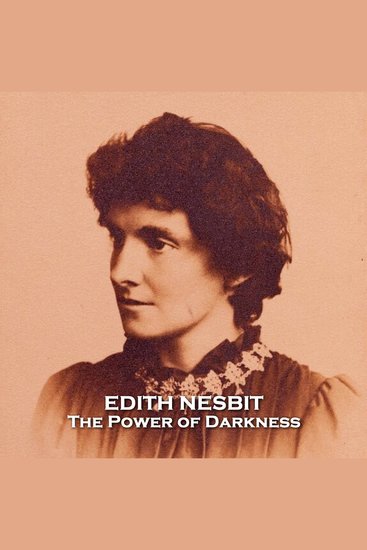
  • The Power of Darkness - From their pens to your ears genius in every story - cover

    The Power of Darkness - From...

    Edith Nesbit

    • 0
    • 0
    • 0
    Edith Nesbit was born on the 15th August 1858 in Kennington, then part of Surrey.   
    Due to the health issues and tuberculosis of her sister Mary, Nesbit’s early life was one of constant changes of house both in England and on the continent. 
    At age 17, Nesbit met Hubert Bland and they married three years later―whilst she was 7 months pregnant.  Bland also kept his affair with another woman going throughout their marriage and the two children of that relationship were raised by Nesbit as well as her own three with Bland. 
    Together they were founder members of the Fabian Society in 1884 naming their son Fabian in its honour.  They also edited the Society's journal; ‘Today’.  Nesbit was an active lecturer and prolific writer on socialism during those years but gradually her work for them dwindled as her career as a children’s writer grew.  Her most famous success was ‘The Railway Children’ but she was also very prolific and greatly accomplished in poetry, short stories―especially her macabre ghost and supernatural stories―and novels for adults.  
    In February 1917, some three years after the death of Bland she married Thomas ‘the Skipper’ Tucker in Woolwich, where he was a ship's engineer on the Woolwich Ferry. 
    Edith Nesbit died from lung cancer on the 4th May 1924 at her house ‘The Long Boat’ at Jesson, St Mary's Bay, New Romney in Kent.  She was 65.
    Mostra libro
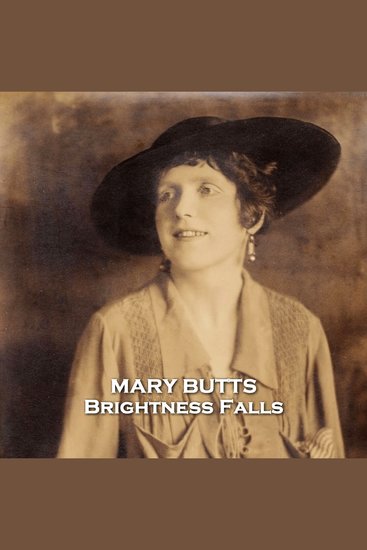
  • Brightness Falls - From their pens to your ears genius in every story - cover

    Brightness Falls - From their...

    Mary Butts

    • 0
    • 0
    • 0
    Mary Frances Butts was born on 13th December 1890 in Poole, Dorset. 
    Her early years were spent at Salterns, an 18th-century house overlooking Poole Harbour.  Sadly in 1905 her father died, and she was sent for boarding at St Leonard's school for girls in St Andrews. 
    Her mother remarried and, from 1909, Mary studied at Westfield College in London, and here, first became aware of her bisexual feelings.  She was sent down for organising a trip to Epsom races and only completed her degree in 1914 when she graduated from the London School of Economics.  By then Mary had become an admirer of the occultist Aleister Crowley and she was given a co-authorship credit on his ‘Magick (Book 4)’. 
    In 1916, she began the diary which would now detail her future life and be a constant reference point for her observations and her absorbing experiences. 
    During World War I, she was doing social work for the London County Council in Hackney Wick, and involved in a lesbian relationship.  Life changed after meeting the modernist poet, John Rodker and they married in 1918. 
    In 1921 she spent 3 months at Aleister Crowley's Abbey of Thelema in Sicily; she found the practices dreadful and also acquired a drug habit.  Mary now spent time writing in Dorset, including her celebrated book of short stories ‘Speed the Plough’ which saw fully develop her unique Modernist prose style. 
    Europe now beckoned and several years were spent in Paris befriending many artists and writing further extraordinary stories.   
    She was continually sought after by literary magazines and also published several short story collections as books. Although a Modernist writer she worked in other genres but is essentially only known for her short stories.  Mary was deeply committed to nature conservation and wrote several pamphlets attacking the growing pollution of the countryside. 
    In 1927, she divorced and the following year her novel ‘Armed with Madness’ was published.  A further marriage followed in 1930 and time was spent attempting to settle in London and Newcastle before setting up home on the western tip of Cornwall.  By 1934 the marriage had failed. 
    Mary Butts died on 5th March 1937, at the West Cornwall Hospital, Penzance, after an operation for a perforated gastric ulcer. She was 46.
    Mostra libro