Unisciti a noi in un viaggio nel mondo dei libri!
Aggiungi questo libro allo scaffale
Grey
Scrivi un nuovo commento Default profile 50px
Grey
Iscriviti per leggere l'intero libro o leggi le prime pagine gratuitamente!
All characters reduced
Winston Churchill: The Wartime Leader - Micro Book - C4 - Series Historical Figures Who Changed the World - cover

Winston Churchill: The Wartime Leader - Micro Book - C4 - Series Historical Figures Who Changed the World

Ciro Irmici

Casa editrice: Ciro Irmici

  • 0
  • 0
  • 0

Sinossi

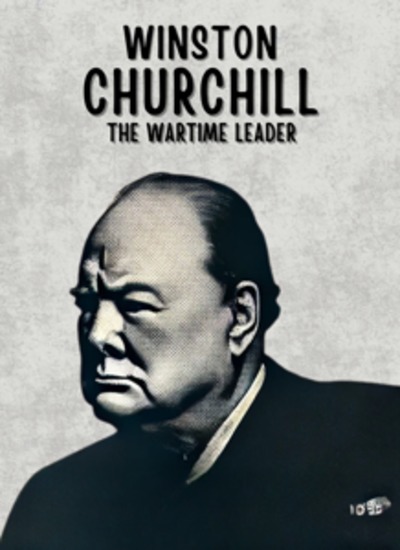
Winston Churchill: The Wartime Leader takes readers on an immersive journey through the life and legacy of one of history’s most iconic leaders. From his early days as a young officer to his pivotal role in shaping the Allied victory in World War II, Winston Churchill’s story is a testament to courage, resilience, and visionary leadership.

With insightful analysis, powerful narratives, and rich historical context, this book explores Churchill’s rise, his strategic genius, his famous speeches that inspired millions, and his enduring impact on modern society.

Perfect for history enthusiasts, leadership aficionados, and those seeking inspiration from a leader who stood firm in the face of unimaginable odds, Winston Churchill: The Wartime Leader sheds light on the lessons from Churchill’s life that remain profoundly relevant today.

If you’re captivated by historical figures, fascinated by wartime strategy, or simply looking for a compelling story of courage and determination, this is the book for you. Journey through Churchill’s life and discover the enduring power of resilience and hope that can inspire readers in any era.
Disponibile da: 31/10/2024.
Lunghezza di stampa: 84 pagine.
Altri libri che potrebbero interessarti

  • The Ripple Effect - China's Complex Presence in Southeast Asia - cover

    The Ripple Effect - China's...

    Enze Han

    • 0
    • 0
    • 0
    Many studies of China's relations with and influence on Southeast Asia tend to focus on how Beijing has used its power asymmetry to achieve regional influence. Yet, scholars and pundits often fail to appreciate the complexity of the contemporary Chinese state and society, and just how fragmented, decentralized, and internationalized China is today. 


    In The Ripple Effect, Enze Han argues that a focus on the Chinese state alone is not sufficient for a comprehensive understanding of China's influence in Southeast Asia. Instead, we must look beyond the Chinese state, to non-state actors from China, such as private businesses and Chinese migrants. These actors affect people's perception of China in a variety of ways, and they often have wide-ranging as well as long-lasting effects on bilateral relations. Looking beyond the Chinese state's intentional influence reveals many situations that result in unanticipated changes in Southeast Asia. Han proposes that to understand this increasingly globalized China, we need more conceptual flexibility regarding which Chinese actors are important to China's relations, and how they wield this influence, whether intentional or not.
    Mostra libro
  • Self Reliance - cover

    Self Reliance

    Ralph Waldo Emerson

    • 0
    • 0
    • 0
    When Ralph Waldo Emerson published his seminal essay on self-reliance in 1841, the United States was still reeling from the effects of a calamitous financial collapse four years earlier.
    
    His positive vision for the power of individualism and personal responsibility was issued in a climate of panic and uncertainty, at a time when the values of society and humanity were shifting. Emerson's call to independence remains as relevant and energizing as ever.
    Mostra libro
  • Civil Wars of the Late Roman Republic The: The History of the Conflicts that Made Sulla and Caesar the Dictators of Rome - cover

    Civil Wars of the Late Roman...

    Editors Charles River

    • 0
    • 0
    • 0
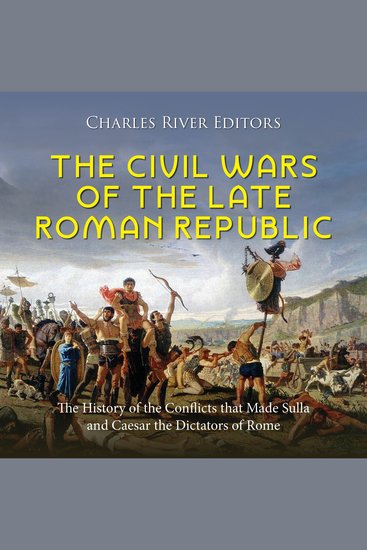
    Julius Caesar is still remembered for winning a civil war and helping bring about the end of the Roman Republic, leaving a line of emperors in its place, but it’s quite possible that none of what Caesar did would’ve happened without the template for such actions being set 40 years earlier. At the time, when Caesar was in his teens, war was being waged both on the Italian peninsula and abroad, with domestic politics pitting the conservative, aristocratic optimates against the populist, reformist populares, and this tension ultimately escalated into an all-out war. One of the leading populares was Caesar’s uncle, Gaius Marius, a military visionary who had restructured the legions and extended the privileges of land ownership and citizenship to legionaries on condition of successful completion of a fixed term of service. In the late 2nd century B.C., Marius had waged a successful campaign against several Germanic tribes, and after earning eternal fame in the Eternal City, Marius was appointed a consul several times. In 88 B.C., he entered into conflict with his erstwhile protégé, the optimate Sulla, over command of the army to be dispatched against Mithridates VI of Pontus, a long-time enemy of Rome and its Greek allies.   
    Ironically, Marius’s reforms had made the legions fiercely loyal to their individual generals rather than the state, which allowed Sulla to march his army against Rome and force Marius into exile. With that, Rome’s first civil war was officially underway, but Sulla’s triumph proved short-lived. Just as Sulla departed for a campaign, Marius returned at the head of a scratch army of veterans and mercenaries, taking over the city and purging it of Sulla’s optimate supporters, and though Marius died in 86 B.C., his party remained in power. 
    Mostra libro
  • Civil War in 1862 The: The Battles that Saved Both the North and South - cover

    Civil War in 1862 The: The...

    Editors Charles River

    • 0
    • 0
    • 0
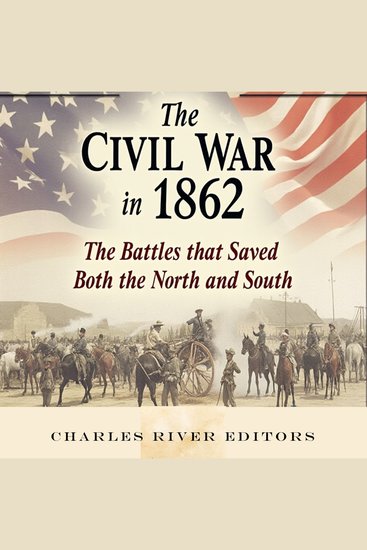
    Americans have long been fascinated by the Civil War and its biggest battles, particularly Gettysburg, Antietam, and Shiloh, all of which involved Robert E. Lee or Ulysses S. Grant. But one of the 6 biggest battles of the war, and the one that took the heaviest toll by % on both armies was fought at the end of 1862 in Tennessee, and it involved neither of those generals.  
    	In late December 1862, William Rosecrans’s Union Army of the Cumberland was contesting Middle Tennessee against Braxton Bragg’s Army of Tennessee, and for three days the two armies savaged each other as Bragg threw his army at Rosecrans in a series of desperate assaults. Bragg’s army was unable to dislodge the Union army, and he eventually withdrew his army after learning that Rosecrans was on the verge of receiving reinforcements. Though the battle was stalemated, the fact that the Union army was left in possession of the field allowed Rosecrans to declare victory and embarrassed Bragg.  
    	Though Stones River is mostly overlooked as a Civil War battle today, it had a decisive impact on the war. The two armies had both suffered nearly 33% casualties, an astounding number in 1862 that also ensured Rosecrans would not start another offensive campaign in Tennessee until the following June. The Union victory also ensured control of Nashville, Middle Tennessee, and Kentucky for the rest of the war, prompting Lincoln to tell Rosecrans, “You gave us a hard-earned victory, which had there been a defeat instead, the nation could scarcely have lived over." The battle and its results also set into motion a chain of events that would lead to Rosecrans and Bragg facing off at the crucial battle of Chickamauga in September 1863, a battle that is often viewed as the last gasp for the Confederates’ hopes in the West. 
    Mostra libro
  • The Existentialist's Survival Guide - How to Live Authentically in an Inauthentic Age - cover

    The Existentialist's Survival...

    Anonimo

    • 0
    • 0
    • 0
    Existentialism offers enduring lessons and insight on how to understand ourselves and improve our lives. 
    Your existence is not the result of a pre-determined set of events, it’s the direct result of your thinking and your actions, and therefore, according to Soren Kierkegaard, Frederick Nietzsche, Albert Camus, and other Existentialist philosophers, you have the freedom to control the outcome of your existence—sophisticated ""philosophy meets psychology"" self-help for the twenty-first-century. 
    As Kierkegaard and his ilk made clear in their respective works, human beings are moody creatures. Rather than understanding moods such as anxiety and depression as afflictions that can only be treated with a pill, the Existentialists regard these troublesome feelings as instructive, something revealing about what it means to be human. The Existentialists believed that how we negotiate our emotional ups-and-downs plays an important hand in the lives we sculpt for ourselves. 
    While offering listeners a useful primer on Existentialism as an animating body of thought, Marino distills and delivers the life-altering and, in some cases, life-saving insights Kierkegaard, Nietzsche, Camus, and other Existentialists articulate for becoming more emotionally attuned human beings. Enhancing our sense of meaning in the midst of an uncertain world, Marino interjects gripping anecdotes from his own experiences to demonstrate how we can use existentialist thought to ignite truly transformative experiences.
    Mostra libro
  • The Autists - Women on the Spectrum - cover

    The Autists - Women on the Spectrum

    Clara Törnvall

    • 0
    • 0
    • 0
    An incisive and deeply candid account that explores autistic women in culture, myth, and society through the prism of the author's own diagnosis. 


    Until the 1980s, autism was regarded as a condition found mostly in boys. Even in our time, autistic girls and women have largely remained undiagnosed. When portrayed in popular culture, women on the spectrum often appear simply as copies of their male counterparts—talented and socially awkward. 


    Yet autistic women exist, and always have. They are varied in their interests and in their experiences. Autism may be relatively new as a term and a diagnosis, but not as a way of being and functioning in the world. It has always been part of the human condition. So who are these women, and what does it mean to see the world through their eyes? 


    In The Autists, Clara Törnvall reclaims the language to describe autism and explores the autistic experience in arts and culture throughout history. From popular culture, films, and photography to literature, opera, and ballet, she dares to ask what it might mean to re-read these works through an autistic lens—what we might discover if we allow perspectives beyond the neurotypical to take center stage.
    Mostra libro