Unisciti a noi in un viaggio nel mondo dei libri!
Aggiungi questo libro allo scaffale
Grey
Scrivi un nuovo commento Default profile 50px
Grey
Iscriviti per leggere l'intero libro o leggi le prime pagine gratuitamente!
All characters reduced
News Fit To Print - The Birth of War Reporting - cover

News Fit To Print - The Birth of War Reporting

Christopher Dodd

Casa editrice: Brown Dog Books

  • 0
  • 0
  • 0

Sinossi

George Washburn joined the New York Tribune as a rookie reporter soon after the American Civil War broke out in 1861. He was assigned to follow the Union army’s commander, General George McClellan, to assess his ability to prevent the Rebel army under Robert E Lee and Stonewall Jackson from rampaging in Maryland and occupying the capital, Washington. After scrapes and scraps at the bloody Battle of Antietam, Washburn rides horseback, train and ferry to New York to deliver his account of the action, his assessment of the generals and his analyses of whether the state of the conflict will allow President Lincoln to add freedom for slaves to his war aims. The Civil War created immense thirst for news which was eagerly satisfied by newspaper proprietors already engaged in circulation wars. Larger and faster presses printed millions of papers and illustrated weeklies for millions of literate Americans and their armies on the move. Railroads and their accompanying electric telegraphs spread news – and fake news - across the continent. The Tribune published Washburn’s scoop in a special edition on Saturday 20 September 1862, two and a half days after the battle ended. It was syndicated to 180 papers across the world. That night George Washburn, the Father of War Reporters, celebrated with his fellow correspondents, the self-styled Bohemians, in their favorite watering hole at Pfaff’ Cave under Broadway – in the arms of Ida Godiva, the bareback rider from Vaudeville.
Disponibile da: 17/09/2024.
Altri libri che potrebbero interessarti

  • Modern Man in Search of a Soul - cover

    Modern Man in Search of a Soul

    Carl Gustav Jung

    • 0
    • 0
    • 0
    "Modern Man in Search of a Soul" by Carl Gustav Jung is a seminal work that delves into the complexities of the human psyche and the challenges faced by individuals in the modern world. Jung, one of the most influential figures in the field of psychology, explores various aspects of the human experience, including dreams, religion, art, and the unconscious mind.  In this insightful book, Jung argues that modern society has led to a fragmentation of the human psyche, resulting in feelings of disconnection and alienation. He examines the impact of cultural and societal forces on the individual, as well as the importance of introspection and self-discovery in achieving wholeness and fulfillment.  Drawing on his extensive knowledge of mythology, philosophy, and anthropology, Jung offers profound insights into the nature of the soul and its journey towards individuation. He explores the role of symbolism and archetypes in the unconscious, shedding light on the deeper layers of the human psyche.  Through a series of essays and lectures, Jung invites readers to embark on a journey of self-exploration and inner transformation. He challenges conventional wisdom and offers alternative perspectives on issues such as spirituality, creativity, and the quest for meaning.  "Modern Man in Search of a Soul" is a thought-provoking and enlightening exploration of the human condition, offering valuable insights for individuals seeking to navigate the complexities of modern life and find deeper meaning and purpose in their existence.
    Mostra libro
  • Denmark Vesey's Bible - The Thwarted Revolt That Put Slavery and Scripture on Trial - cover

    Denmark Vesey's Bible - The...

    Jeremy Schipper

    • 0
    • 0
    • 0
    On July 2, 1822, Denmark Vesey, a formerly enslaved man, was hanged in Charleston, South Carolina. He was convicted of plotting what might have been the largest insurrection against slaveholders in US history. Witnesses claimed that Vesey appealed to numerous biblical texts to promote and justify the revolt. While sentencing Vesey to death, Lionel Henry Kennedy, a magistrate at the trial, accused Vesey not only of treason but also of "attempting to pervert the sacred words of God into a sanction for crimes of the blackest hue." Denmark Vesey's Bible tells the story of this momentous trial, examining the role of scriptural interpretation in the deadly struggle against American white supremacy and its brutal enforcement. 


    Jeremy Schipper brings the trial and its aftermath vividly to life, drawing on court documents, personal letters, sermons, speeches, and editorials. He shows how Vesey compared people of African descent with enslaved Israelites in the Bible, while his accusers portrayed plantation owners as benevolent biblical patriarchs responsible for providing religious instruction to the enslaved. What emerges is an explosive portrait of an antebellum city in the grips of racial terror, violence, and contending visions of biblical truth.
    Mostra libro
  • The Best Is Possible - Book Sub Title: Modern Morocco Viewed Through the Lens of King Mohammed VI’s Speeches (1999–2019) - cover

    The Best Is Possible - Book Sub...

    Desmond Swan, Touria Jouilla McKee

    • 0
    • 0
    • 0
    “A compact, well-written and well-researched book. I am sure it will be welcomed as a valuable contribution to the history of contemporary Morocco and the remarkable process of transition it is undergoing as we speak.”
     
    Prof. Karim Bejjit, UniversityAbdelmalek Essadi, Tetouan, Morocco


    “Morocco has been experiencing major socio-economic transformation from an agricultural to an industrial economy… and His Majesty has been to the fore in these hugely significant developments. The authors paint a wonderful picture in this highly recommended book.”       
     
    Charles Flanagan, Minister for Foreign Affairs and Trade (2014–2017), Minister for Justice (2017–2020), Current Chair of Parliamentary Committee on Foreign Affairs and Defence (Irish Parliament)
    Mostra libro
  • Coming Home - Uncovering the Foundations of Psychological Well-being - cover

    Coming Home - Uncovering the...

    Dr. Dicken Bettinger, Natasha...

    • 0
    • 0
    • 0
    You already have within you all that you need for psychological well-being. In Coming Home you will be gently guided toward your own realizations of the fundamental principles that underlie all human experience. These insights will raise your overall level of psychological well-being. They will help you realize your spiritual and psychological nature and allow you to live in harmony with life more fully. This book is a heartfelt tribute to Sydney Banks, who uncovered the foundational Three Principles that create and shape all of our psychological experiences. This understanding that is known as the Three Principles is now being shared worldwide in the fields of education, business, community renewal, policing and criminal justice, addictions, prevention, psychology and psychiatry. Coming home is realizing the truth of what it is that is creating all of your experiencing, and then being at ease with all the different experiences that life brings you. It is waking up to this always-existing inner world, and as you do, you will experience a shift in your level of well-being so that your feelings are uplifted and your thinking is helpful and inspired.
    Mostra libro
  • Code Name Blue Wren: Book Summary and Analysis - cover

    Code Name Blue Wren: Book...

    Briefly Summaries

    • 0
    • 0
    • 0
    This is a concise summary and analysis of Code Name Blue Wren, by Jim Popkin.
     
    It is not the original book and is not affiliated with or endorsed by Jim Popkin.
     
    Ideal those seeking a quick and insightful overview.
     
    Step into the shadowy world of espionage with Code Name Blue Wren, a gripping true story that unveils one of the most devastating betrayals in U.S. intelligence history. Ana Montes, a high-ranking Defense Intelligence Agency analyst, lived a double life, secretly working as a spy for Cuba while safeguarding some of America’s most sensitive secrets. For nearly two decades, her deception endangered national security, compromised military operations, and put countless lives at risk.
     
    In this masterfully crafted narrative, the author takes you behind the scenes of Ana Montes’s rise through the intelligence ranks, her radicalization, and the sophisticated tactics she used to evade detection. As investigators close in on her, the suspense builds to a dramatic climax that will leave you questioning how a single individual could infiltrate and exploit one of the most secure institutions in the world.
    Mostra libro
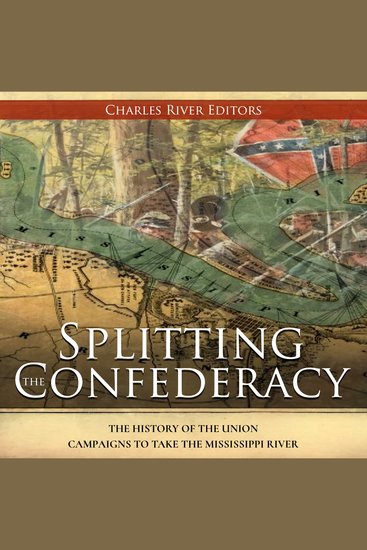
  • Splitting the Confederacy: The History of the Union Campaigns to Take the Mississippi River - cover

    Splitting the Confederacy: The...

    Editors Charles River

    • 0
    • 0
    • 0
    Given its importance, it’s somewhat surprising in retrospect that the Union managed to capture New Orleans in an easier manner than places like Vicksburg and Atlanta. Admiral David Farragut’s naval forces battered their shaky Confederate counterparts and were able to get over a dozen ships upriver past a couple of crucial Confederate forts along the Mississippi. By May 1862, Union forces occupied the city and General Benjamin Butler became its military governor, leaving the last true bastion of Confederate defenses on the Mississippi at Vicksburg. 
    At the start of 1863, Robert E. Lee’s Army of Northern Virginia had been frustrating the Union in the Eastern theater for several months, but the situation in the West was completely different. The Confederates had lost control of several important states throughout 1862, and after New Orleans was taken by the Union, the North controlled almost all of the Mississippi River, which Confederate general James Longstreet called “the lungs of the Confederacy”. By taking control of that vital river, the North would virtually cut the Confederacy in two, putting the South in a dire situation. 
    The only domino left to fall was the stronghold of Vicksburg, and both sides knew it. The Union Army of the Tennessee, led by Ulysses S. Grant, would spend months trying to encircle the army and eventually force John Pemberton’s Confederate army to surrender. Grant eventually succeeded on July 4, 1863, but since it came a day after the climactic finish of the Battle of Gettysburg, Vicksburg was (and still is) frequently overlooked as one of the turning points of the Civil War. In fact, had the Confederate’s military leadership listened to Longstreet, who advocated detaching soldiers from Lee’s army to head west and help the Confederates deal with Grant or Rosecrans in that theater, the Battle of Gettysburg might never have happened.
    Mostra libro