Unisciti a noi in un viaggio nel mondo dei libri!
Aggiungi questo libro allo scaffale
Grey
Scrivi un nuovo commento Default profile 50px
Grey
Iscriviti per leggere l'intero libro o leggi le prime pagine gratuitamente!
All characters reduced
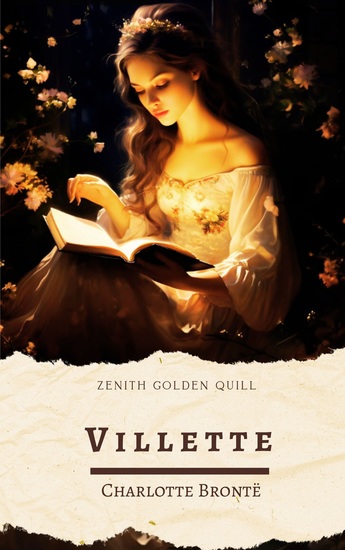
Villette - Charlotte Brontë's Haunting Tale of Identity Exile and Emotional Awakening - cover

Villette - Charlotte Brontë's Haunting Tale of Identity Exile and Emotional Awakening

Charlotte Brontë, Zenith Golden Quill

Casa editrice: Zenith Golden Quill

  • 0
  • 0
  • 0

Sinossi

Alone in a foreign city. Haunted by shadows of the past. Searching for self in silence and solitude.

Villette, the final novel by Charlotte Brontë, is a powerful and introspective masterpiece that follows Lucy Snowe as she flees tragedy in England to begin anew in a Belgian girls' school. As she navigates cultural isolation, inner demons, and complex relationships, Lucy's resilience and emotional depth create a heroine like no other in Victorian literature.

Dark, mysterious, and psychologically profound, Villette is often considered Brontë's most daring and mature work—one that rewards patient readers with rich prose, sharp wit, and a deeply human story of self-discovery.

📘 This Edition Features:
✔ Complete and unabridged original text
✔ Kindle-optimized layout with clickable table of contents
✔ Ideal for fans of literary fiction, feminist classics, and introspective narratives

💬 What Readers Say:
"More layered and daring than Jane Eyre."
"A haunting psychological portrait of repression and resilience."
"Lucy Snowe's voice lingers long after the final page."

📥 Download Villette today and explore Charlotte Brontë's most underappreciated—and unforgettable—novel.
Disponibile da: 08/05/2025.
Lunghezza di stampa: 643 pagine.
Altri libri che potrebbero interessarti

  • Mr Barlow (Unabridged) - cover

    Mr Barlow (Unabridged)

    Charles Dickens

    • 0
    • 0
    • 0
    Charles Dickens was a writer and social critic who created some of the world's best-known fictional characters and is regarded as the greatest novelist of the Victorian era. His works enjoyed unprecedented popularity during his lifetime, and by the twentieth century critics and scholars had recognised him as a literary genius. His novels and short stories enjoy lasting popularity.
    MR. BARLOW: A Great reader of good fiction at an unusually early age, it seems to me as though I had been born under the superintendence of the estimable but terrific gentleman whose name stands at the head of my present reflections.
    Mostra libro
  • The Longest Journey - cover

    The Longest Journey

    E. M. Forster

    • 0
    • 0
    • 0
    In "The Longest Journey" by E. M. Forster, readers follow the introspective path of Rickie Elliot, a sensitive young man grappling with the constraints of society and his own ideals. Rickie's journey from the cloistered walls of Cambridge to the challenges of married life is fraught with emotional turmoil and self-discovery. Torn between his artistic dreams and the harsh realities of existence, he confronts love, loss, and the yearning for meaning, in a poignant exploration of human aspiration and reality.
    Mostra libro
  • Gabriel-Ernest - From their pens to your ears genius in every story - cover

    Gabriel-Ernest - From their pens...

    Saki Saki

    • 0
    • 0
    • 0
    Hector Hugh Munro, more familiarly known by his pen-name ‘Saki’ was born in what was then Akyab in British Burma on 18th December 1870. His father was an Inspector General for the Indian Imperial Police, and his mother the daughter of a Rear Admiral. 
    When he was 2 his mother died and he and his siblings were sent back to England to be raised by their grandmother and paternal maiden aunts in a strict, puritanical household near Barnstaple, Devon. Educated by governesses Saki used many of these women as character models for his later writing. 
    At 17 his father retried and returned to England and then embarked on a series of European travels with Saki and his siblings. 
    After a short stint working in Burma with the Indian Imperial Police Saki decided to move to London to make a living as a writer. Initially he wrote as a journalist for a number of newspapers and magazines before attempting an historical study, ‘The Rise of the Russian Empire’, whose real value lay in directing him to writing short stories instead, the first of which, ‘Dogged’, he published in 1899. 
    From here it was a short stab of the pen to writing political satire before in 1902 he became the foreign correspondent for The Morning Post, first in the Balkans, then Russia, Paris and back to London in 1908, where 'the agreeable life of a man of letters with a brilliant reputation awaited him.'  
    Collections of his short stories full of witty, mischievous and often macabre stories that satirized Edwardian society and two novels now appeared in the years up to the Great War.  At its’ outbreak he was 43 but managed to join as an ordinary trooper. More than once he returned to the battlefield when officially too sick or injured.  
    On 14th November 1916 Hector Hugh Munro was sheltering in crater during the Battle of the Ancre, when he was shot and killed by a German sniper. According to several sources, his last words were "Put that bloody cigarette out!"
    Mostra libro
  • The Island of Dr Moreau - cover

    The Island of Dr Moreau

    H. G. Wells

    • 0
    • 0
    • 0
    Edward Prendick, a shipwrecked gentleman stranded on a Pacific island, is lorded over by the notorious Dr. Moreau. He is forced to confront dark secrets, strange creatures, and a reason to run for his life.
    Mostra libro
  • Innocents Of Fr Brown - Produced by John Pridmore - cover

    Innocents Of Fr Brown - Produced...

    G K Chesterton

    • 0
    • 0
    • 0
    The Innocence of Father Brown is the first of five collections of mystery stories featuring Chesterton's canny priest. It's probably the best collection and it introduces the holy detective—as well as his sometime opponent, sometime collaborator, Flambeau. But each collection offers some great stories. 
    I'm very fond of Father Brown—despite several potential obstacles. 
    For one thing, the plots of these stories are implausible. They are part of the tradition of British murder mysteries that the later American hardboiled school revolted against. Murders are carried out in ridiculously complicated fashions, as no crimes are committed in the real world. 
    Father Brown is the prototype of the intuitive amateur sleuth (like Agatha Christie's Miss Marple and TV's Jessica Fletcher on Murder, She Wrote), who runs into murders everywhere he goes and manages to solve the crimes with only one or two clues where thorough, professional investigators are stumped. 
    The mysteries are extremely clever on the most superficial level, with several innovations on the classic locked-door mystery and other more novel situations. But on top of that, they involve an understanding of human nature—or at least of how human nature operates in society. 
    Typically, Father Brown solves crimes by sharing the perpetrators' own insights into human perception, which allow them to commit the deeds and him to uncover them. He sees what others, including the readers, do not, even when it is right before our eyes. 
    Not always though. In about a third of the stories I did see the solution coming from a long way off. I suspect though this is because these stories, like the mysteries of Arthur Conan Doyle and Edgar Allen Poe, have become embedded in our culture. The surprise has worn off because the tricks have been replayed so many times in stories, movies and television shows since they were invented by these masters.
    Mostra libro
  • The Adventure of the Cardboard Box - cover

    The Adventure of the Cardboard Box

    Arthur Conan Doyle

    • 0
    • 0
    • 0
    The Adventure of the Cardboard Box is one of the 56 short Sherlock Holmes stories written by Sir Arthur Conan Doyle. It is the second of the twelve Memoirs of Sherlock Holmes in most British editions of the canon, and the second of the eight stories from His Last Bow in most American versions. The story was first published in The Strand Magazine in 1893.Miss Susan Cushing of Croydon receives a parcel in the post that contains two severed human ears packed in coarse salt. Inspector Lestrade of Scotland Yard suspects a prank by three medical students whom Miss Cushing was forced to evict because of their unruly behaviour. The parcel was sent from Belfast, the city of origin of one of the former boarders. Upon examining the parcel himself, Holmes is convinced that it is evidence of a serious crime. He reasons that a medical student with access to a dissection laboratory would likely use something other than plain salt to preserve human remains, and would be able to make a more precise cut than the roughly hacked ears suggest. The address on the package, roughly written and with a spelling correction, suggests to Holmes that the sender lacks education and is unfamiliar with Croydon. The knot in the string suggests to Holmes that they are looking for someone with sailing experience...Famous works of the author Arthur Conan Doyle: A Study in Scarlet, The Sign of the Four, The Adventures of Sherlock Holmes, The Memoirs of Sherlock Holmes, The Hound of the Baskervilles, The Return of Sherlock Holmes, The Valley of Fear, His Last Bow, The Case-Book of Sherlock Holmes, Stories of Sherlock Holmes, The Lost World.
    Mostra libro