Unisciti a noi in un viaggio nel mondo dei libri!
Aggiungi questo libro allo scaffale
Grey
Scrivi un nuovo commento Default profile 50px
Grey
Iscriviti per leggere l'intero libro o leggi le prime pagine gratuitamente!
All characters reduced
Bb Soprano Clarinet 3: "Je Veux Vivre" for Clarinet Quartet - Ariette from “Romeo and Juliet” - cover

Bb Soprano Clarinet 3: "Je Veux Vivre" for Clarinet Quartet - Ariette from “Romeo and Juliet”

Charles Gounod, a cura di Francesco Leone

Casa editrice: Glissato Edizioni Musicali

  • 0
  • 0
  • 0

Sinossi

Bb Soprano Clarinet 3 part of "Je Veux Vivre" ariette by Charles Gounod arranged for Clarinet Quartet (3 Bb soprano and bass) Intermediate level, key concert F, duration 3.30 (+-) . Score and Parts available in series. Scan Qr code (in cover) for audio demo or visit www.glissato.it. product code: EG0861
____________________________
Parte di Clarinetto soprano Sib 3 : Je Veux Vivre, arietta da "Romeo e Giulietta" per Quartetto di Clarinetti s.s.s.b. di livello medio. Partitura e Parti staccate disponibili nella collana.
Disponibile da: 01/03/2022.

Altri libri che potrebbero interessarti

  • Violins of Hope - Violins of the Holocaust-Instruments of Hope and Liberation in Mankind's Darkest Hour - cover

    Violins of Hope - Violins of the...

    James A. Grymes

    • 0
    • 0
    • 0
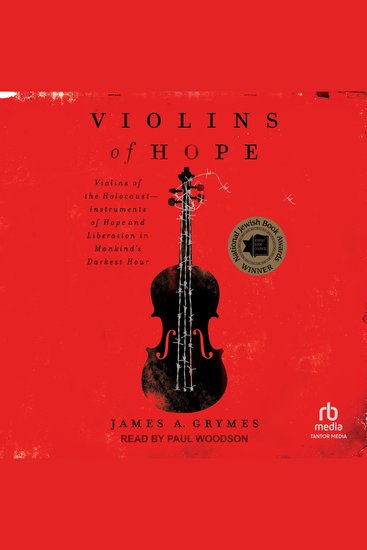
    The violin has formed an important aspect of Jewish culture for centuries, both as a popular instrument with classical Jewish musicians—Jascha Heifetz, Yehudi Menuhin, Itzhak Perlman—and also a central factor of social life as part of the enduring Klezmer tradition. But during the Holocaust, the violin assumed extraordinary new roles within the Jewish community. For some musicians, the instrument was a liberator; for others, it was a savior that spared their lives. For many, the violin provided comfort in mankind's darkest hour, and, in at least one case, helped avenge murdered family members. Above all, the violins of the Holocaust represented strength and optimism for the future. 


    In Violins of Hope, music historian James A. Grymes tells the amazing, horrifying, and inspiring story of the violins of the Holocaust, and of Amnon Weinstein, the renowned Israeli violinmaker who has devoted the past twenty years to restoring these instruments in tribute to those who were lost, including 400 members of his own family. Juxtaposing tales of individual violins with one man's harrowing struggle to reconcile his own family's history and the history of his people, it is a poignant, affecting, and ultimately uplifting look at the Holocaust and its enduring impact.
    Mostra libro
  • A Rare Recording of Film Icon Deborah Kerr - cover

    A Rare Recording of Film Icon...

    Deborah Kerr

    • 0
    • 0
    • 0
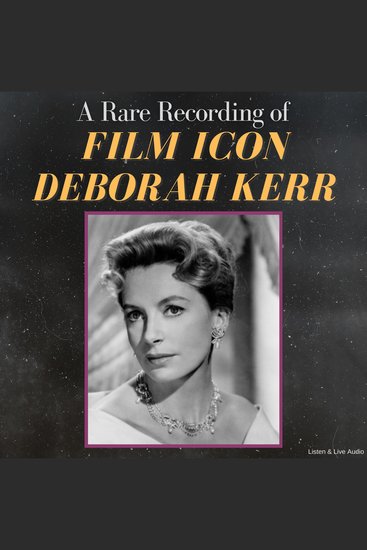
    Deborah Jane Trimmer (September 30, 1921 - October 16, 2007), known professionally as Deborah Kerr, was a British actress who was nominated six times for the Academy Award for Best Actress. Kerr was known for her roles as elegant, ladylike but also sexually repressed women who deeply yearn for sexual freedom. Kerr won a Golden Globe Award for her performance in the 1956 musical film The King and I. The following recording includes clips from a variety of tv interviews.
    Mostra libro
  • Mississippian Culture - Forgotten Cities of North America - cover

    Mississippian Culture -...

    Rolf Hedger

    • 0
    • 0
    • 0
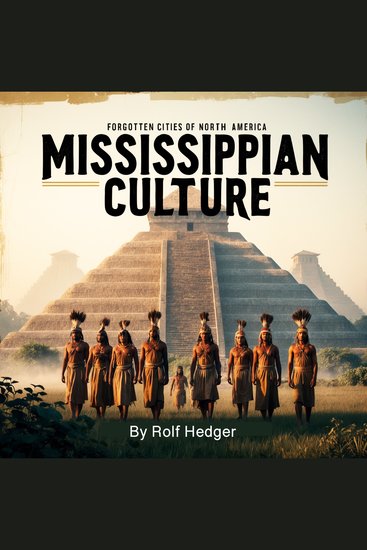
    The Mississippian culture, a sophisticated and influential civilization, thrived in the southeastern United States from approximately 800 CE to 1600 CE. This culture, named after the Mississippi River, was centered around the river valleys and floodplains of the American Midwest, particularly in areas that are now parts of modern-day Illinois, Missouri, Arkansas, and Mississippi. It is best known for its massive earthworks, especially mounds, which were used for both ceremonial and burial purposes. The Mississippian people developed a complex society that was marked by large-scale agriculture, intricate trade networks, and powerful political and religious institutions. 
    The origins of the Mississippian culture can be traced back to the earlier Woodland period, during which smaller villages and simple mound-building practices began to emerge. By around 800 CE, however, the Mississippian culture had fully developed, distinguished by its highly organized cities, monumental architecture, and wide-reaching trade connections. The Mississippians were expert farmers, cultivating staple crops such as maize, beans, and squash, which allowed their settlements to flourish and grow in both size and complexity. 
    One of the most notable features of the Mississippian culture was its social and political structure. The culture was organized around large chiefdoms, with powerful leaders who held both political and religious authority. These chiefs often resided in large, fortified towns that served as hubs of trade, governance, and religious activity. The largest and most famous of these urban centers was Cahokia, located near present-day St. Louis, Missouri. At its height, Cahokia had a population of over 10,000 people, making it one of the largest urban centers in pre-Columbian North America.
    Mostra libro

  • The Legendary Toad's Place - Stories from New Haven's Famed Music Venue - cover

    The Legendary Toad's Place -...

    Randall Beach, Brian Phelps

    • 0
    • 0
    • 0
    Anyone who has lived near New Haven, Connecticut, in the past forty-plus years has surely heard of Toad's Place. With a capacity of 750, Toad's has served as the perfect spot for musicians who prefer smaller venues. U2 played one of their first US concerts there, on their Boy tour. In 1978, Bruce Springsteen was in New Haven and arrived at Toad's unannounced, and got up and played. The surprises kept coming and the club was attracting big names, as well as up-and-comers. In 1989, the Rolling Stones played a surprise show on a Saturday night, giving 700 fans the night of their dreams. Nothing could have been better—the Rolling Stones in downtown New Haven was unimaginable! That is only a taste of the stories that are uncovered in this book. Randall Beach and Toad's owner Brian Phelps recall the legendary shows and behind-the-scenes stories.
    Mostra libro
  • Summary: The Creative Act - A Way of Being By Rick Rubin: Key Takeaways Summary and Analysis - cover

    Summary: The Creative Act - A...

    Brooks Bryant

    • 0
    • 0
    • 0
    DISCLAIMER: THIS IS NOT THE OFFICIAL BOOK. 
    This is a summary, & it does not accompany the official 
    In 'The Creative Act: A Way of Being' by Rick Rubin, the renowned music producer takes readers on a journey beyond the traditional notions of artistry. Instead of focusing solely on the mechanics of creating great works of art, Rubin explores the profound concept of 'how to be.' He shares his unique approach of providing a space where artists from diverse genres can discover their true selves and unlock their creative potential. 
    Throughout the book, Rubin emphasizes the importance of transcending self-imposed limitations and reconnecting with a sense of innocence that leads to unexpected and inevitable moments of creativity. He argues that being an artist is not solely about the output but about one's relationship with the world. Creativity, he asserts, is a universal capacity that can be expanded by all individuals, making it a significant responsibility for everyone. 
    'The Creative Act' offers readers a generous and enlightening exploration of the artist's path—one that is accessible to all. It distills a lifetime of wisdom into a captivating read that empowers individuals to create moments of exhilaration and transcendence in their own lives. Rick Rubin's book encourages everyone to embrace their creative potential and broaden the scope of their creative endeavors.
    Mostra libro
  • The Pirates of Penzance - cover

    The Pirates of Penzance

    Arthur Sullivan, W. S. Gilbert

    • 0
    • 0
    • 0
    The Pirates of Penzance 
    by William S. Gilbert and Sir Arthur Sullivan 
     
    A comic opera in two acts, with music by Arthur Sullivan and libretto by W. S. Gilbert. Its official premiere was at the Fifth Avenue Theatre in New York City on 31 December 1879, where it was well received by both audiences and critics.Its London debut was on 3 April 1880, at the Opera Comique, where it ran for 363 performances. 
     
     
    Cast 
    Narrator: Julie VW 
    Frederic: Karen Savage 
    Pirate King: StephenC 
    Samuel: Phil Chenevert 
    Ruth: Liberty Stump 
    Major-General Stanley: Kevin S. Mellis 
    Mabel: Catharine Eastman 
    Edith: BookAngel7 
    Kate: Ezwa 
    Isabel: JemmaBlythe 
    Sergeant of Police: John Fricker 
    Chorus: 
    Alex Foster 
    BookAngel7 
    Catharine Eastman 
    Ezwa 
    Fred DeBerardinis 
    Helen Song 
    Henry Frigon 
    Jane Smith 
    JemmaBlythe 
    John Fricker 
    Karen Savage 
    Liberty Stump 
    Miriam Esther Goldman 
    StephenC 
    ToddHW
    Mostra libro