Unisciti a noi in un viaggio nel mondo dei libri!
Aggiungi questo libro allo scaffale
Grey
Scrivi un nuovo commento Default profile 50px
Grey
Iscriviti per leggere l'intero libro o leggi le prime pagine gratuitamente!
All characters reduced
The Old Inns of England (Vol 1&2) - cover

The Old Inns of England (Vol 1&2)

Charles G. Harper

Casa editrice: DigiCat

  • 0
  • 0
  • 0

Sinossi

In "The Old Inns of England (Vol. 1&2)," Charles G. Harper meticulously chronicles the rich tapestry of England's historic inns, capturing their architectural splendor and social significance. Through a blend of vivid descriptions and anecdotal narratives, Harper reveals the centuries-old stories hidden within these establishments, often intertwined with folklore, local legends, and the evolving landscape of English society. His narrative style is both accessible and erudite, embedding the reader in a historical context that underscores the cultural and social fabric of England, particularly during the late 19th and early 20th centuries when inn culture was at its zenith. Charles G. Harper was a noted illustrator and writer, whose keen interest in antiquities and English social history substantially informed his work. His extensive travels throughout England equipped him with firsthand experience and insight into the architectural nuances and atmospheric qualities of these inns. This personal exploration, coupled with his professional dedication to documenting the past, imbues his writing with authenticity and depth, allowing readers to appreciate the inns not just as structures, but as living repositories of memory and tradition. For readers fascinated by history, architecture, and the nuances of English culture, Harper's "The Old Inns of England" offers an invaluable exploration. It invites you to traverse time and space amidst these storied realms, enriching your understanding of a quintessential aspect of England's heritage. This meticulously researched work is a testament to the enduring spirit of hospitality and the fascinating narratives that continue to echo within these ancient walls.
Disponibile da: 15/11/2023.
Lunghezza di stampa: 345 pagine.


Altri libri che potrebbero interessarti

  • Imperial Japan - Expansion World War and the Rise of a Global Power - cover

    Imperial Japan - Expansion World...

    Rolf Hedger

    • 0
    • 0
    • 0
    The rise of Imperial Japan is a remarkable story of transformation and ambition. It was a journey from isolation to global power, marked by rapid modernization, industrialization, and an expanding empire. At the start of the 19th century, Japan was still a feudal society, deeply rooted in its traditional ways, with the Tokugawa shogunate governing the country in relative peace for over two centuries. However, Japan’s world would change forever when the United States, under Commodore Matthew Perry, forced the country to open its ports in 1854 after a period of strict isolation. 
    This marked the beginning of the Meiji Restoration in 1868, a pivotal event that reshaped Japan’s destiny. The Meiji Restoration was a time of intense reform, where Japan sought to modernize in order to survive and compete with the Western powers. The young Emperor Meiji played a crucial role in transforming Japan from a feudal society into a centralized, modern state. The Japanese government adopted Western methods of governance, education, and technology, while also developing a new sense of national pride and unity. The feudal system was dismantled, and Japan was rapidly industrialized, building a powerful military and a burgeoning economy. 
    The Meiji government’s aggressive modernization policies allowed Japan to catch up with the West in terms of technological and military advancements. Railroads, factories, and telegraphs quickly spread throughout the country. The education system was restructured, producing a new generation of skilled workers and intellectuals who were eager to contribute to Japan’s growing power. By the late 19th century, Japan had established a modern, strong economy capable of competing on the world stage.
    Mostra libro
  • Mapuche Empire - The Defenders of Chile and Unconquered Warriors of South America - cover

    Mapuche Empire - The Defenders...

    Rolf Hedger

    • 0
    • 0
    • 0
    The origins of the Mapuche people trace back thousands of years, long before the arrival of Europeans in South America. They are one of the most resilient and enduring indigenous groups in the region, with a deep-rooted history in present-day Chile and Argentina. Archaeological evidence suggests that their ancestors inhabited these lands for at least 2,000 years, developing a distinct culture shaped by the diverse landscapes of the Andean foothills, valleys, and coastal regions. 
    The name "Mapuche" itself reflects their strong connection to the land, as it derives from "mapu" (earth) and "che" (people), meaning "people of the land." This bond influenced their way of life, from agriculture to spiritual beliefs. They cultivated maize, potatoes, quinoa, and beans while also engaging in hunting, fishing, and gathering. Unlike some of the great civilizations of South America, such as the Inca or the Maya, the Mapuche did not build massive stone cities. Instead, they lived in small, scattered settlements made up of rucas, traditional thatched-roof houses constructed from wood and straw, designed to withstand the varied climate of their territories. 
    Language played a crucial role in shaping the Mapuche identity. They spoke Mapudungun, a unique language that remains central to their culture today. Unlike the Quechua language of the Andes, which spread widely due to the influence of the Inca Empire, Mapudungun remained relatively isolated, preserving its distinct linguistic structure. Oral tradition was the primary means of passing down knowledge, with elders recounting stories, myths, and historical events that shaped the collective memory of the Mapuche people.
    Mostra libro
  • Skiing Around The World - Launching Oneself From Places On Top Of The Planet! - cover

    Skiing Around The World -...

    Owen Jones

    • 0
    • 0
    • 0
    Embark on a thrilling journey into the heart of extreme skiing with our exploration, Skiing Around The World. This book invites you to delve into the adrenaline-charged world of those who dare to defy gravity, pushing the boundaries of conventional skiing into uncharted territory. From the formidable slopes of Chamonix to the untouched powder of Alaska's vast wilderness, we unravel the tales of intrepid skiers navigating the steepest descents our planet has to offer. Join us as we venture into the back-country, where untracked snow and the raw beauty of nature set the stage for an exhilarating dance with gravity. Safety gear in hand and skills finely tuned, these thrill-seekers document their descents, sharing the heart-stopping moments and awe-inspiring landscapes through the lens of extreme skiing films. Skiing Around The World is your passport to the world of skiing, where every descent is a conquest, every slope a challenge, and every adventure an ode to the indomitable spirit of those who seek the thrill of the steepest descents on Earth. Get ready to experience the rush, the beauty, and the sheer audacity of extreme skiing like never before.
    Mostra libro
  • Becoming a Travel Nurse - Everything You need to Know - cover

    Becoming a Travel Nurse -...

    Patrice M Foster

    • 0
    • 0
    • 0
    Have you always wondered if travel nursing would be a good fit for you as an RN? Have you had questions about how to become a travel nurse, and what it takes to become a successful and fulfilled one? 
    Have you been wondering about the other side of travel nursing that no one talks about, and you want to know everything before you commit to this career path? 
    Have you been experiencing difficulties with settling in your assignments and seeking advice, on what you can do better? 
    In this book, you will learn everything there is to know about travel nursing – most of which is never said out loud. Written by an experienced travel nurse, who has been on this journey and knows the path so well, the lessons are invaluable; they are real and practical in the real world of a traveling nurse! 
    If you have been looking for the truth regarding this career path, and only getting bread cramps of truth, then this book is a honest blueprint for the journey of a travel nurse. 
    Have you been wondering; 
    What does it take to become a travel nurse? 
    What is the negative side of this career path, and how can I survive it? 
    How do I ensure that I work with the right agency and sign contracts that fulfill my needs? 
    How do I make settling down in new locations smooth and save money and time? 
    How do I handle the downsides such as housing issues, license troubles, hostile environments, socializing problems etc. that are common in a travel nurses ‘nomad’ life? 
    If you have these and other related questions, you will find legitimate answers in this book.
    Mostra libro
  • The Passenger: Rome - cover

    The Passenger: Rome

    Passenger The

    • 0
    • 0
    • 0
    The best new writing, photography, art, and reportage from and about Rome—in the series that’s “like a literary vacation” (Publishers Weekly). 
     
    If you believe recent chatter about Rome—in the media and by its residents—the city is on the verge of collapse. Each year, it slips further down the ranking of the world’s most livable cities. To the problems faced by all large capitals—hit-and-run tourism, traffic, the divide between elegant, Airbnb-dominated city centers and run-down suburbs—in recent years Rome seems to have added a list of calamities of its own: a string of failing administrations, widespread corruption, the resurgence of fascist movements, rampant crime. A seemingly hopeless situation, perfectly symbolized by the fact that Rome currently leads the world in the number of self-combusting public buses. 
     
    One might expect mass migration in the face of problems like these—yet the vast majority of Romans don’t think for a second of “betraying” their hometown, and the many newcomers who’ve populated it in recent decades resemble the natives in the profound love that binds them to the city. 
     
    The largest metropolis in Europe is a place of contradictions and opposites. We think of it as ancient, but it is profoundly modern—it was founded almost three millennia ago, but 92 per cent of its buildings have been built after 1945. To understand Rome and fix its problems, we should start considering it a normal city, not unlike Chicago or Manchester . . . just incomparably more beautiful. This volume is filled with portraits of Rome and thoughts not just on its famous past but its present and future, including: 
     
    Rome doesn’t judge you by Nicola Lagioia · The soul of the city by Matteo Nucci · 39 memos for a book about Rome by Francesco Piccolo · Plus: a guide to the sounds of Rome by Letizia Muratori; the feigned unrest and real malaise of the suburbs; the influence of the Vatican; the excessive power of real estate speculators and the rule of gangs; disillusioned trappers; football fans of every age, and much more . . .  
     
    “A pleasure to read.” —La Repubblica
    Mostra libro
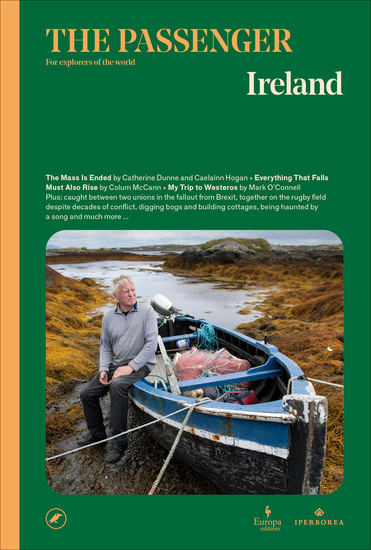
  • The Passenger: Ireland - cover

    The Passenger: Ireland

    Passenger The

    • 0
    • 0
    • 0
    The best new writing, photography, art, and reportage from and about Ireland—in the series that’s “like a literary vacation” (Publishers Weekly). 
     
    Ireland is a land full of charm and conflict, a country that in just a few decades has gone from being a poor, semi-theocratic society to a thriving economy free from the influence of the Catholic Church. With the 1998 peace agreements, the conflict between nationalists and unionists seemed, if not resolved, at least dormant. But Brexit—with the ambiguous position it leaves Northern Ireland in—caused old tensions to resurface, with ramifications in politics, society, culture, and sport. 
     
    Meanwhile, south of the border, epochal transformation has seen a deeply patriarchal, conservative society give space to diversity, the only country in the world to enshrine gay marriage in law through a referendum. And there’s a whole other Ireland abroad, an Irish diaspora that looks to the old country with newfound pride but doesn’t forget the ugliness it fled from. 
     
    Memory and identity intertwine with the transformations—from globalization to climate change—that are remodeling the Irish landscape, from the coastal communities under threat of disappearing along with the Irish language fishermen use to talk about the sea, inland the peat bogs, until recently important sources of energy and jobs, are being abandoned. Pieces in this collection include: 
     
    The mass is ended by Catherine Dunne and Caelainn Hogan · The Way Back by Colum McCann · A Trip to Westeros by Mark O’Connell · Plus: life on the margins of two unions and right in the middle of Brexit, making war on each other for thirty years while playing on the same national rugby team, emigrating to the great enemy or transforming the country one referendum at a time, digging peat bogs and building cottages, talking of the sea in Gaelic, and much more . . .  
     
    “These books are so rich and engrossing that it is rewarding to read them even when one is stuck at home.” —The Times Literary Supplement
    Mostra libro