Rejoignez-nous pour un voyage dans le monde des livres!
Ajouter ce livre à l'électronique
Grey
Ecrivez un nouveau commentaire Default profile 50px
Grey
Abonnez-vous pour lire le livre complet ou lisez les premières pages gratuitement!
All characters reduced
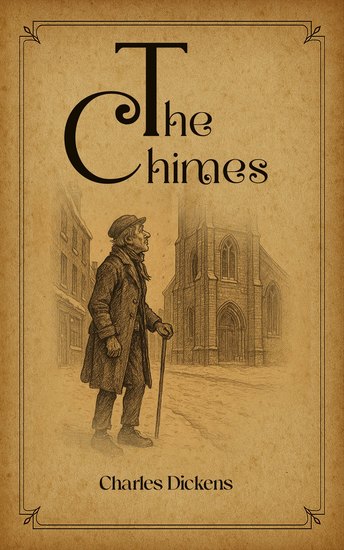
The Chimes - cover

The Chimes

Charles Dickens

Maison d'édition: CLXBX

  • 0
  • 0
  • 0

Synopsis

The Chimes is a powerful and emotionally charged novella by Charles Dickens that delivers a passionate critique of social injustice, poverty, and moral hypocrisy. Written as part of Dickens's Christmas books, the story blends realism with supernatural elements to challenge harsh attitudes toward the poor in Victorian society.

The story follows Toby "Trotty" Veck, a humble ticket-porter whose life has been shaped by hardship and self-doubt. Influenced by the cold philosophies of the wealthy and powerful, Trotty comes to believe that poverty is a personal failure and that people like himself are a burden on society. On New Year's Eve, as the church bells—known as the Chimes—ring out, Trotty experiences a series of haunting visions that force him to confront the devastating consequences of despair, injustice, and social cruelty.

Through these visions, Dickens exposes the damaging effects of neglect, exploitation, and moral indifference, particularly toward working-class families. At the same time, the story offers a message of hope, emphasizing compassion, social responsibility, and the possibility of renewal.

The Chimes is a moving blend of social protest and spiritual awakening. With its vivid imagery, emotional intensity, and enduring moral message, the novella stands as a heartfelt call for empathy and reform, reminding readers that kindness, understanding, and human dignity must lie at the heart of any just society.
Disponible depuis: 05/02/2026.
Longueur d'impression: 129 pages.

D'autres livres qui pourraient vous intéresser

  • The Power-House - cover

    The Power-House

    Anonyme

    • 0
    • 0
    • 0
    John Buchan’s The Power-House is a gripping early spy thriller that introduces lawyer Edward Leithen, drawn into a shadowy world of international conspiracy. When a chance encounter leads to a cryptic warning—“You see, I’m in the Power-House”—Leithen uncovers a vast, hidden network of criminal influence led by the enigmatic Andrew Lumley. Operating beyond borders and laws, this secret organization threatens national security and personal freedom. As Leithen races to expose the truth, he confronts the chilling power of unseen forces manipulating society. A masterclass in suspense, the novel explores paranoia, modernity, and the fragility of order in the early 20th century. One of the first modern espionage novels, The Power-House set the stage for the genre’s golden age.
    Voir livre
  • Home of the Gentlefolk - cover

    Home of the Gentlefolk

    Ivan Turgenev

    • 0
    • 0
    • 0
    "Home of the Gentlefolk" by Ivan Turgenev is a captivating novel that offers a poignant exploration of the lives and struggles of the Russian gentry in the mid-19th century. Set against the backdrop of a changing society, Turgenev weaves a narrative that delves into themes of love, social expectations, and the clash between traditional values and evolving attitudes. "Home of the Gentlefolk" stands out for its keen social observations and the intricate portrayal of human relationships. Turgenev's lyrical prose captures the nuances of the characters' inner lives, their hopes, disappointments, and quiet triumphs. The novel presents a compelling commentary on the limitations of societal expectations and the impact they have on individuals' ability to pursue their true desires. With its evocative descriptions, nuanced characterizations, and timeless exploration of human emotions, "Home of the Gentlefolk" stands as a remarkable work of Russian literature. Turgenev's ability to reflect the complexities of the human condition and the transformative power of love makes this novel a compelling and resonant read, offering a glimpse into the hearts and lives of the Russian gentry during a time of societal change.
    Voir livre
  • Births - Mrs Meek of a Son (Unabridged) - cover

    Births - Mrs Meek of a Son...

    Charles Dickens

    • 0
    • 0
    • 0
    Births. Mrs. Meek, of a Son and A Child's Dream of a Starmare short stories by Charles Dickens. Charles John Huffam Dickens (7 February 1812 - 9 June 1870) was an English writer and social critic. He created some of the world's most memorable fictional characters and is generally regarded as the greatest novelist of the Victorian period. During his life, his works enjoyed unprecedented fame, and by the twentieth century his literary genius was broadly acknowledged by critics and scholars. His novels and short stories continue to be widely popular. Born in Portsmouth, England, Dickens was forced to leave school to work in a factory when his father was thrown into debtors' prison. Although he had little formal education, his early impoverishment drove him to succeed.
    Voir livre
  • The Blazing World - cover

    The Blazing World

    Margaret Cavendish

    • 0
    • 0
    • 0
    'I had rather die in the adventure of noble achievements, than live in obscure and sluggish security.'
    
    Part romance, part adventure story, The Blazing World is a seventeenth century classic, and a prime example of proto-science fiction.
    
    Often considered an early feminist work, Cavendish compellingly chronicles how a young Lady became a powerful empress of a fantastical parallel kingdom. Captured by a lustful merchant in the hope of marrying the young woman, we first find our protagonist travelling towards the North Pole, unsure of her future. But soon the merchant and his crew freeze to death, allowing the young Lady to escape and discover a pole to an alternative land: the Blazing World. Here, the laws of science and nature are upturned: peculiar hybrid creatures – with animal bodies but minds like humans – inhabit the kingdom. Believed to be a goddess by the Emperor of Paradise city, the young woman soon becomes betrothed to the leader of the strange land, and is able to rule and govern the world as she pleases. This audiobook edition is brilliantly brought to life by Karen Cass.
    Margaret Cavendish (1632 – 1673), Duchess of Newcastle-upon-Tyne, was a successful poet, playwright, scientist and philosopher. She was one of the first women of her time to publish extensively under her own name, and used her work to explore topics such as gender, marriage and courtship.
    Voir livre
  • A Farewell to Arms - cover

    A Farewell to Arms

    Ernest Hemingway

    • 0
    • 0
    • 0
    This new audiobook edition of Hemingway's classic is narrated by Audie Award nominee and AudioFile Golden Voice Kevin R. Free.  
    It is a moving and beautiful book. —Percy Hutchison in the The New York Times Book Review, 1929  
    Hemingway’s rhythmic, stripped-down, often-mimicked style lulls readers into a sort of trance that allows his final line to explode like a tossed grenade, devastating in its simplicity. —Valerie Trapp in The Atlantic, in their list of The Great American Novels  
    Frederic Henry is an American lieutenant of an ambulance corps serving in the Italian front of World War I. During his service he meets Catherine Barkley, an English nurse who goes on to work closely with him.  
    As the relationship between Frederic and Catherine develops, the novel follows the effects the war has on them and those around them. But the war is not the centerpiece of the book; rather, it serves more as a background and plot device for the growth of the characters’ interpersonal relationships.  
    A Farewell to Arms went on to become his first bestseller, with contemporary critics calling it “the premier American war novel from World War I.” It cemented his reputation as a powerful voice of the Lost Generation, and modern critics consider it among his best works.
    Voir livre
  • Champagne - cover

    Champagne

    Anton Chekhov

    • 0
    • 0
    • 0
    Champagne is a short story by Anton Pavlovich Chekhov, written in 1887.
    The story is written in the first person. The young head of a remote railway stop lived with his wife and without children in solitude, amusing himself with vodka and watching passing trains.
    Life was boring. One day before celebrating the New Year, he sat with his wife at the festive table, drank enough and thought about boredom. We waited for the clock to show the arrival of the New Year. At five minutes to twelve he uncorked the bottle, the cork flew out, and the bottle slipped out of his hands and fell to the floor. The wife greeted Happy New Year with frightened eyes. She knew that the falling bottle was a bad omen and meant that something bad would happen in the new year.
    After arguing with his wife, the narrator left the house thinking that this had already happened to them, that the worst could not happen. He remembered his dead parents, how he was kicked out of the gymnasium, how he wandered around with nothing to do and friends. He did not love his wife; he married when he was still a boy.
    Returning home, he saw his wife cheerful - "good aunt" Natalya Petrovna, the wife of the hero's wife's uncle, a woman of free behavior, came to them for three days. At dinner, "aunt" and "nephew" drank well, they became dizzy, and their romance began (a terrible, mad whirlwind). In this whirlwind, the hero loses his wife, mistress, and job. He asks "what else bad could happen to me?"
    Voir livre