Unisciti a noi in un viaggio nel mondo dei libri!
Aggiungi questo libro allo scaffale
Grey
Scrivi un nuovo commento Default profile 50px
Grey
Iscriviti per leggere l'intero libro o leggi le prime pagine gratuitamente!
All characters reduced
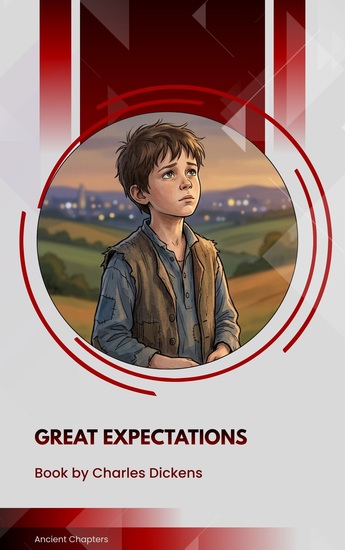
Great Expectations - cover

Great Expectations

Charles Dickens

Casa editrice: Ancient Chapters

  • 0
  • 0
  • 0

Sinossi

A compelling story of dreams, identity, and the journey from innocence to experience.

Pip, an orphan with humble beginnings, is suddenly given the opportunity to rise above his social status. As he enters a world of wealth and refinement, he becomes entangled in complex relationships, hidden truths, and shifting expectations.

Through his journey, Pip struggles with ambition, pride, and the desire for acceptance. His experiences reveal the cost of chasing status and the importance of loyalty, kindness, and self-awareness.

Rich in character development and emotional depth, the novel explores themes of personal growth, social class, and the meaning of true success. Its memorable characters and layered storytelling make it one of Dickens' most celebrated works.

Written by Charles Dickens, this classic continues to resonate with readers across generations.

Follow a journey shaped by hope and transformation—download your copy today.
Disponibile da: 08/05/2026.
Lunghezza di stampa: 666 pagine.
Altri libri che potrebbero interessarti

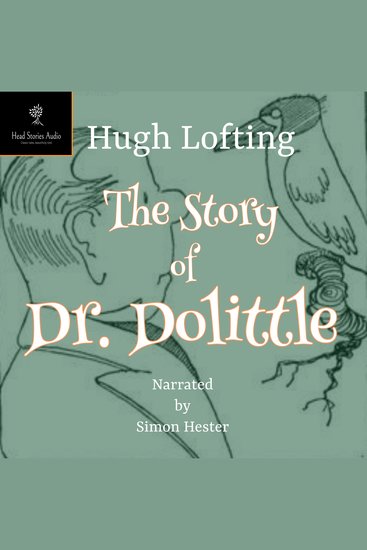
  • The Story of Dr Dolittle - cover

    The Story of Dr Dolittle

    Hugh Lofting

    • 0
    • 0
    • 0
    Hugh Lofting’s The Story of Doctor Dolittle is a timeless tale that has delighted readers of all ages for over a century. Published in 1920, this charming story introduces us to the peculiar yet endearing Dr. John Dolittle, whose love for animals transcends the ordinary bounds of human-animal relationships. With the aid of his unique ability to speak the languages of animals, Dr. Dolittle embarks on adventures that are as whimsical as they are heartwarming. 
    It is also important to consider the context of the time in which The Story of Doctor Dolittle was written. The book reflects certain perspectives and cultural attitudes that were common in the early 20th century but may feel outdated or problematic today.  We have the opportunity to engage with the story thoughtfully, appreciating its merits while critically examining the parts that no longer align with modern values.  
    Head Stories Audio presents " The Story of Dr Dolittle" by Hugh Lofting. Narrated by Simon Hester, with original music.
    Mostra libro
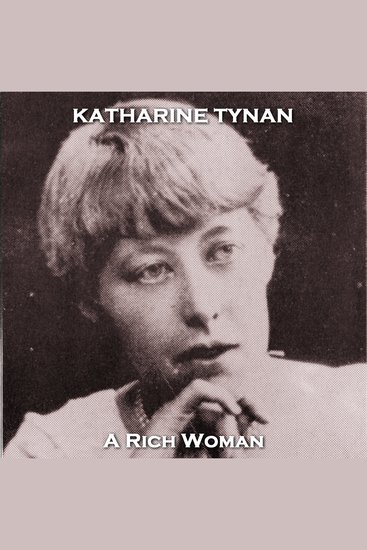
  • A Rich Woman - From their pens to your ears genius in every story - cover

    A Rich Woman - From their pens...

    Katharine Tynan

    • 0
    • 0
    • 0
    Katharine Tynan was born on 23rd January 1859 into a large family in Clondalkin, County Dublin. 
    The family business was cattle rearing and the farmhouse, set with the mountains for a backdrop, was a wonderful world for a young mind to learn and imagine. 
    She was educated at the convent school, St Catherine of Sienna, in Drogheda.  A stubborn streak inhibited her ability to learn as easily as the school wished. However she did learn on her own terms and soon began to take her ‘forbidden literature’, hidden in her clothing, to her loft in a stable hideaway.  
    Until she turned seventeen nothing appeared to point to a literary career.  But some verse printed in a Dublin newspaper changed everything. It led to a sonnet being printed in the Spectator.  Thereafter the Graphic published several others and even paid a half guinea for the privilege.   
    In 1884 Katharine dispatched herself to London and made an abiding friendship in Alice Meynell.  Alice was an established poet and helped, with her husband Wilfred, to publish many poets. The following year it was arranged for the publication of her first poetry volume, ‘Louise de la Vallière’.  
    She formed valuable friendships with the poets Gerard Manley Hopkins, William Butler Yeats and later Francis Ledwidge.  
    As she gathered friends and contacts into her life her literary output began to gather pace. Katharine had begun to write prose for the Speaker and for the Scots and National Observer.  
    In 1892 she married Henry Albert Hinkson, a fellow writer and a barrister.  They moved to England and had five children although two were to tragically die in infancy.   
    By now her output was prolific and ranged from poetry to novels to short stories.  It would later include a biography and further extend to editing and reviewing.   
    In 1912 the family returned to Claremorris, County Mayo, when her husband was appointed magistrate, a post he held until his early death in 1919.     
    Tynan is sometimes grouped amongst the War Poets of the First World War. Her experience was not direct but as a Mother with one son serving in France and another in Palestine, the emotions, fears and doubts are expressed in a beautiful and heart-felt way.  
    Involved in the Irish Literary Revival, Tynan expressed concern for feminist causes, the poor, and the effects of World War I in her work. She also meditated on her Catholic faith. 
    She is said to have written over 100 novels, 12 collections of short stories, plays and many volumes of enduring poetry as well as five volumes of autobiography. 
    Katharine Tynan Hinkson died at age 72 on 2nd April 1931 in London and is buried in Kensal Green Cemetery.
    Mostra libro
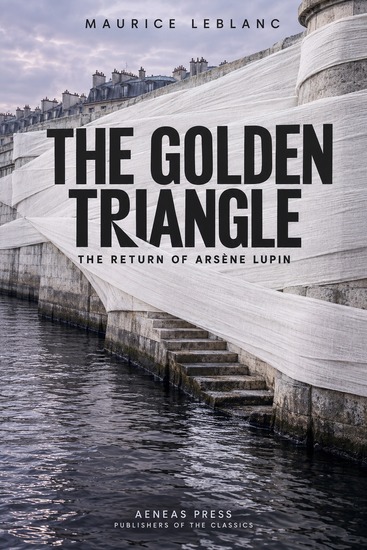
  • The Golden Triangle - The Return of Arsène Lupin - cover

    The Golden Triangle - The Return...

    Maurice Leblanc

    • 0
    • 0
    • 0
    A crippled officer and a nurse in wartime Paris, four gold ingots and a house on the quay where somebody has been walled up. Leblanc published it in 1917 with the war going on outside the pages, and brought Lupin in halfway through under another name. The trail runs from a hospital garden to the mud of the Seine. Fifty-six plates, among them Whistler's Thames in Ice and night scenes by James McNeill Whistler, carry the river fog and quayside dread that hang over Leblanc's wartime Paris.
    Mostra libro
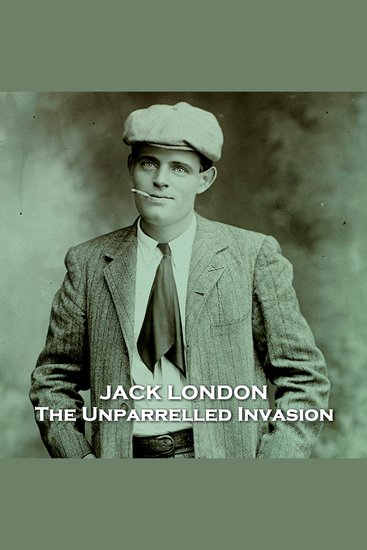
  • The Unparrelled invasion - From their pens to your ears genius in every story - cover

    The Unparrelled invasion - From...

    Jack London

    • 0
    • 0
    • 0
    John Griffith Chaney was born on January 12th, 1876 in San Francisco.   
    His father, William Chaney, was living with Flora Wellman when she became pregnant.  Chaney insisted she have an abortion.  Flora's response was to turn a gun on herself.  Although her wounds were not severe the trauma made her temporarily deranged. 
    In late 1876 his mother married John London and the young child was brought to live with them as they moved around the Bay area, eventually settling in Oakland where now, calling himself Jack, he completed grade school. 
    Jack worked hard at several jobs, sometimes 12-18 hours a day, but his dream was university.  He studied hard and borrowed the money to enrol in the summer of 1896 at the University of California in Berkeley. 
    In 1897, at 21, Jack searched out newspaper accounts of his mother's suicide attempt and for the name of his biological father. He wrote to Chaney, then living in Chicago, who claimed he could not be Jack’s father because he was impotent and casually asserted that London's mother had relations with other men.  Jack, devastated by the response, quit Berkeley and went to the Klondike. Other accounts suggest that his dire finances presented Jack with the excuse he needed to leave. 
    In the Klondike Jack began to gather material for his writing but also accumulated many health problems, including scurvy, which together with hip and leg problems he would carry for the rest of his life. 
    During the late 1890's Jack was regularly publishing short stories and by the turn of the century full blown novels. 
    By 1904 Jack had married, fathered two children and was now in the process of divorcing.  A stint as a reporter on the Russo-Japanese war of 1904 was equal amounts trouble and experience. But that experience was always put to good use in a continuing and remarkable output of work. 
    In 1905 he married Charmian Kittredge who at last was a soul and companion who brought him some semblance of peace despite his advancing alcoholism and his incurable wanderlust. 
    Twelve years later Jack had amassed both wealth and a literary reputation through such classics as ‘The Call of the Wild’, ‘White Fang’ and many others. He had a reputation as a social activist and was a tireless friend of the workers.   
    Jack London died suffering from dysentery, late-stage alcoholism and uremia, aged only 40, on November 22nd 1916 at his property in Glen Elen in California.
    Mostra libro
  • The Island of Doctor Moreau - cover

    The Island of Doctor Moreau

    H. G. Wells

    • 0
    • 0
    • 0
    Edward Prendick finds himself floating perilously in the ocean after having been shipwrecked. He is picked up and his life saved by the curious Dr Montgomery, a medical man travelling with a cargo of various wild animals. Prendick soon finds himself once again adrift at sea after an argument with a hostile and drunken captain. 
    For a second time Montgomery appears as his saviour and he is hauled ashore on the Island of Dr Moreau, Montgomery’s mysterious colleague and mentor. 
    As he encounters some of the deformed and bestial inhabitants on the island, Prendick soon comes to realise that he has heard of this infamous Dr Moreau before. Now begins a nightmarish existence as the full truth of Moreau’s scientific ambitions become horribly apparent. 
    Head StoriesAudio presents "The Island of Dr Moreau" by H.G. Wells. Narrated by Simon Hester. With original music.
    Mostra libro
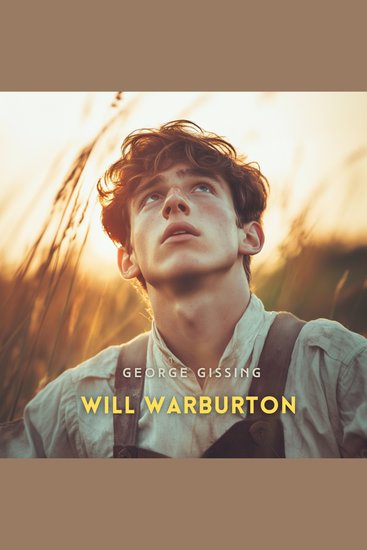
  • Will Warburton - cover

    Will Warburton

    George Gissing

    • 0
    • 0
    • 0
    Will Warburton follows the life of its titular character, a talented but restless young man from a working-class background who aspires to rise above his circumstances through intellect and ambition. As he navigates London’s literary and artistic circles, Will grapples with personal desires, moral dilemmas, and the harsh realities of class division. His relationships—with women, friends, and society at large—reveal the tensions between idealism and pragmatism in Victorian England. Gissing crafts a nuanced portrait of a man torn between passion and principle, dreams and duty. With psychological depth and social critique, the novel explores the struggles of self-made individuals in a rigidly stratified world, offering a poignant reflection on ambition, identity, and the cost of independence.
    Mostra libro