Unisciti a noi in un viaggio nel mondo dei libri!
Aggiungi questo libro allo scaffale
Grey
Scrivi un nuovo commento Default profile 50px
Grey
Iscriviti per leggere l'intero libro o leggi le prime pagine gratuitamente!
All characters reduced
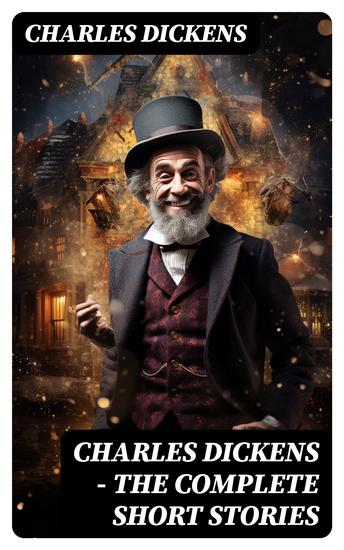
CHARLES DICKENS – The Complete Short Stories - cover

CHARLES DICKENS – The Complete Short Stories

Charles Dickens

Casa editrice: DigiCat

  • 0
  • 0
  • 0

Sinossi

In "The Complete Short Stories," Charles Dickens presents a rich tapestry of narratives that encapsulates the diverse human experience during the Victorian era. His writings, characterized by vivid character development, intricate plots, and social commentary, explore themes of poverty, class disparity, and moral redemption. Each story mirrors Dickens' literary style, often blending humor with poignancy, allowing readers to traverse the landscapes of 19th-century England through the eyes of unforgettable characters, from the whimsical to the tragic. This collection offers a valuable glimpse into Dickens' ability to capture the zeitgeist of his time while also showcasing his mastery of the short story format, a genre in which he innovatively employed a variety of tones and voices to effect profound impact in concise narratives. Charles Dickens, one of the most prominent literary figures of the Victorian period, was profoundly influenced by his own experiences of hardship and social injustice, leading to the themes prevalent in his work. Growing up in a poor London neighborhood, his personal encounters with the flaws of society galvanized his passion for social reform and shaped his literary pursuits. This collection not only reflects his narrative genius but also serves as a testament to his dedication to illuminating the truths of his era. "The Complete Short Stories" is an essential read for those seeking to understand Dickens' literary legacy. It invites readers into a world where every tale conveys a powerful moral lesson while engaging their hearts and minds, making it a perfect introduction to the complexities of human nature and societal challenges. Whether you are a long-time admirer of Dickens or a newcomer to his work, this collection will undoubtedly enrich your appreciation of his profound insights and storytelling prowess.
Disponibile da: 11/12/2023.
Lunghezza di stampa: 4952 pagine.

Altri libri che potrebbero interessarti

  • Crocker's Hole - From their pens to your ears genius in every story - cover

    Crocker's Hole - From their pens...

    R D Blackmore

    • 0
    • 0
    • 0
    Richard Doddridge Blackmore was born on 7th June, 1825 at Longworth in Berkshire (now part of Oxfordshire), where his father, John Blackmore, was Curate-in-charge of the parish. His mother died a few months after his birth the victim of an outbreak of typhus. With this loss the family moved to Bushey, Hertfordshire, then on to their native Devon.  His elder brother Richard (by a year), however, was taken by his aunt to live near Oxford. His father married again in 1831, whereupon Richard returned to live with them.  With much of his childhood spent in the lush and pastoral "Doone Country" of Exmoor, and along the Badgworthy Water, Blackmore came to love the very countryside he immortalised in Lorna Doone.  In November 1853 he married his wife Lucy.  And the following year, 1854, his literary career began with a collection of Poems and for the next 15 years he would write in the winters and garden in the summers.  In 1860 with inherited money he built a house in Teddington just outside of London and established a market garden for the cultivation of fruit.  He loved horticulture but having little business experience could never really exploit it.  However with the publication of Lorna Doone in 1869 he was catapulted to fame.  And although he continued to write extensively nothing caught the public imagination quite like Lorna Doone.  RD Blackmore died at Teddington on 20th January, 1900 after a long and painful illness, and was buried next to his wife in Teddington cemetery.
    Mostra libro
  • About Love - From their pens to your ears genius in every story - cover

    About Love - From their pens to...

    Anton Chekhov

    • 0
    • 0
    • 0
    Anton Pavlovich Chekhov was born on 29th January 1860 in Taganrog, on the south coast of Russia.  
    His family life was difficult; his father was strict and over-bearing but his mother was a passionate story-teller, a subject Chekhov warmed to. As he later said; ‘our talents we got from our father, but our soul from our mother’.  
    At school Chekhov was distinctly average. At 16 his father mis-managed his finances and was declared bankrupt. His family fled to Moscow. Chekhov remained and eked out a living by various means, including writing and selling short sketches to newspapers, to finish his schooling. That completed and with a scholarship to Moscow University obtained he rejoined his family. 
    He was able to help support them by selling satirical sketches and vignettes of Russian lifestyles and gradually obtained further commissions. In 1884, he qualified as a physician and, although it earned him little, he often treated the poor for free, he was fond of saying ‘Medicine is my lawful wife, and literature is my mistress.’ 
    His own health was now an issue as he began to cough up blood, a symptom of tuberculosis.  Despite this his writing success enabled him to move the family into more comfortable accommodation.  
    Chekhov wrote over 500 short stories which included many, many classics including ‘The Kiss’ and ‘The Lady with a Dog’.  His collection ‘At Dusk’ won him the coveted Pushkin Prize when was only 26.  
    He was also a major playwright beginning with the huge success of ‘Ivanov’ in 1887.   
    In 1892 Chekhov bought a country estate north of Moscow. Here his medical skills and money helped the peasants tackle outbreaks of cholera and bouts of famine. He also built three schools, a fire station and a clinic.  It left him with less time for writing but the interactions with real people gained him detailed knowledge about the peasantry and their living conditions for his stories.  
    His most famous work, ‘The Seagull’ was received disastrously at its premiere in St Petersburg. It was later restaged in Moscow to highlight its psychological aspects and was a huge success. It led to ‘Uncle Vanya’, ‘The Three Sisters’ and ‘The Cherry Orchard’.  
    Chekhov suffered a major lung hemorrhage in 1897 while visiting Moscow. A formal diagnosis confirmed tuberculosis and the doctors ordered changes to his lifestyle.  
    Despite a dread of weddings the elusive literary bachelor quietly married the actress Olga Knipper, whom he had met at rehearsals for ‘The Seagull’, on 25th May 1901. 
    By May 1904 with his tuberculosis worsening and death imminent he set off for the German town of Badenweiler writing cheerful, witty letters to his family and assuring them his health was improving.  
    On 15th July 1904 Anton Chekhov died at Badenweiler.  He was 44.
    Mostra libro
  • Araby - From their pens to your ears genius in every story - cover

    Araby - From their pens to your...

    James Joyce

    • 0
    • 0
    • 0
    James Augustine Aloysius Joyce was born on the 2nd February 1882 in Dublin into a middle-class family, and the eldest of ten surviving siblings 
    Admired as a brilliant student he briefly attended the Christian Brothers-run O'Connell School before excelling at the Jesuit schools of Clongowes and Belvedere.  From there he went on to attend University College Dublin from 1898, studying English, French and Italian 
    In 1902, Joyce was now in his early twenties, and went to Paris to study Medicine but soon abandoned his teachings.  Back in Dublin to attend to his dying Mother he met Nora Barnacle. They bonded immediately into a life-long match. Together they decided to emigrate to Europe.  The couple lived in Trieste, Rome, Paris, and finally Zürich where Joyce pursued a variety of jobs and ventures to supplement his literary pursuits but none of these paid off.  
    After publishing a poetry volume, ‘Chamber Music’, in 1907, his short story collection ‘The Dubliners’, in 1914, helped establish his talent in the rapidly changing world.  
    Although far from home Joyce’s literary heart and works were set in his recollections of Dublin.  Characters are close resemblances of family and friends and indeed enemies.  His landmark work ‘Ulysses’, published in 1922, is set in the streets and alleyways of the city as it parallels Homer’s Odyssey in a variety of styles including its famed stream of consciousness. 
    His pen continued to produce classics of the order of ‘A Portrait of the Artist as A Young Man’ and ‘Finnegan’s Wake’ together with several volumes of poetry and a play ‘The Exiles, in 1918.   
    On the 11th January 1941, Joyce underwent surgery in Zürich for a perforated duodenal ulcer. The next day he fell into a coma. On the 13th after a brief period of lucidity in which he called for his wife and son he passed.  He was 58.
    Mostra libro
  • Tono-Bungay - Book the First: The Days Before Tono-Bungay Was Invented (Unabridged) - cover

    Tono-Bungay - Book the First:...

    H. G. Wells

    • 0
    • 0
    • 0
    Herbert George "H. G." Wells (1866 - 1946) was an English writer.
    He was prolific in many genres, including the novel, history, politics, social commentary, and textbooks and rules for war games. Wells is now best remembered for his science fiction novels and is called a "father of science fiction"
    BOOK THE FIRST: THE DAYS BEFORE TONO-BUNGAY WAS INVENTED: Most people in this world seem to live "in character"; they have a beginning, a middle and an end, and the three are congruous one with another and true to the rules of their type. You can speak of them as being of this sort of people or that. They are, as theatrical people say, no more (and no less) than "character actors." They have a class, they have a place, they know what is becoming in them and what is due to them, and their proper size of tombstone tells at last how properly they have played the part.
    Mostra libro
  • The Picture of Dorian Gray - cover

    The Picture of Dorian Gray

    Oscar Wilde

    • 0
    • 0
    • 0
    A gothic melodrama full of subtle impression and epigram, which tells a story about moral corruption. The Picture of Dorian Gray touches on many of Wilde's recurring themes, such as the nature and spirit of art, aestheticism and the dangers inherent to it.
    Mostra libro
  • What Will Pay? (Unabridged) - cover

    What Will Pay? (Unabridged)

    Booker T. Washington

    • 0
    • 0
    • 0
    Booker Taliaferro Washington (April 5, 1856 - November 14, 1915) was an American educator, author, orator, and adviser to several presidents of the United States. Between 1890 and 1915, Washington was the dominant leader in the African American community and of the contemporary black elite. Washington was from the last generation of black American leaders born into slavery and became the leading voice of the former slaves and their descendants. They were newly oppressed in the South by disenfranchisement and the Jim Crow discriminatory laws enacted in the post-Reconstruction Southern states in the late 19th and early 20th centuries.
    WHAT WILL PAY: I wish to talk with you for a few minutes upon a subject that is much discussed, especially by young people-What things pay in life? There is no question, perhaps, which is asked oftener by a person entering upon a career than this-What will pay? Will this course of action, or that, pay?
    Mostra libro