Junte-se a nós em uma viagem ao mundo dos livros!
Adicionar este livro à prateleira
Grey
Deixe um novo comentário Default profile 50px
Grey
Assine para ler o livro completo ou leia as primeiras páginas de graça!
All characters reduced
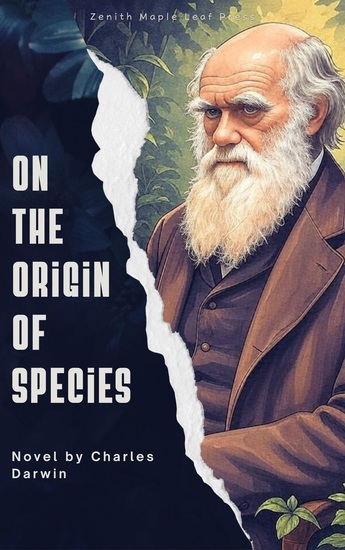
On the Origin of Species - The Landmark Work That Revolutionized Biology and Changed How We See Life - cover
LER

On the Origin of Species - The Landmark Work That Revolutionized Biology and Changed How We See Life

Charles Darwin, Zenith Maple Leaf Press

Editora: Zenith Maple Leaf Press

  • 0
  • 0
  • 0

Sinopse

The book that forever transformed our understanding of the natural world.
First published in 1859, On the Origin of Species is Charles Darwin's groundbreaking work that introduced the theory of evolution by natural selection—a concept that reshaped science, religion, and humanity's place in the universe.

Drawing on years of meticulous observation and research during his voyage on the HMS Beagle, Darwin explains how species evolve over time through the survival and reproduction of the fittest individuals. His ideas challenged centuries of established belief and laid the foundation for modern biology.

Accessible, methodical, and deeply insightful, this is more than a scientific treatise—it is one of the most influential books ever written.

"The most important single work in the history of the biological sciences."
– The New York Times

"Darwin didn't just write about evolution—he transformed the way we see life itself."
– Scientific American

✅ Why Readers Love It:
🌱 The cornerstone of evolutionary biology and natural history

📚 Essential reading for scientists, students, and curious minds

🧠 A blend of rigorous observation, persuasive argument, and clear prose

🎯 Click 'Buy Now' to explore the scientific masterpiece that changed the world—and continues to shape our understanding of life today.
Disponível desde: 08/08/2025.
Comprimento de impressão: 380 páginas.

Outros livros que poderiam interessá-lo

  • Virtues of Devotion - Faith and Spiritual Commitment (3 in 1) - cover

    Virtues of Devotion - Faith and...

    Esther Jameson

    • 0
    • 0
    • 0
    This book delves into the spiritual virtues that anchor and guide us toward a deeper connection with the divine. By embracing Faith, Trust in God, and Reverence, we develop a strong spiritual foundation that nurtures our relationship with God and fosters a life filled with devotion, peace, and purpose. These virtues are central to cultivating a life of spiritual commitment, love, and dedication. 
    Faith is the cornerstone of spiritual devotion. This section emphasizes the importance of believing in something greater than ourselves, even when faced with doubt or uncertainty. Faith in God allows us to see beyond the immediate challenges and trust that His plan for us is purposeful. It nurtures hope, provides guidance, and fosters resilience in the face of adversity. With faith, we find strength in moments of weakness and clarity in times of confusion. 
    Trust in God goes hand in hand with faith but focuses more specifically on surrendering our worries and uncertainties to God. This section explores how trust in God allows us to relinquish control and fully rely on His wisdom and timing. Trusting in God means believing that He is always with us, guiding our path, and providing the grace we need, even in moments of doubt or hardship. It nurtures a profound sense of peace and security, knowing that God’s love and guidance are unwavering. 
    Reverence involves a deep respect and awe for the divine. This part highlights the importance of showing honor, humility, and deep admiration for God's holiness. Reverence calls us to approach life with a sense of sacredness, recognizing the presence of the divine in all aspects of creation. It encourages us to live in a way that reflects our reverence for God, through acts of kindness, gratitude, and devotion. Reverence strengthens our spiritual connection and inspires us to live a life that honors the divine in all things.
    Ver livro
  • Pursuit Trap The: Finding Harmony Beyond Achievement - Master The Pursuit Trap! Experience immersive audio lessons for balance beyond mere success - cover

    Pursuit Trap The: Finding...

    Reginald Hawthorne

    • 0
    • 0
    • 0
    The Pursuit Trap: Finding Harmony Beyond Achievement 
    ⭐⭐ Simplified Guide & Explanations Included ⭐⭐ 
    Are you striving to find harmony and joy beyond relentless ambition while achieving success? Seeking a comprehensive resource to guide you through this transformative journey? 
    Your search ends here! 
    This audiobook serves as the definitive companion for deepening your understanding, applying your skills, and engaging in hands-on exercises. With this, you're geared for success. 
    Updated for the latest insights and practices. 
    Key features of this enriched guide: 
    - Profound insights about finding harmony and joy beyond relentless ambition 
    - Detailed explanation of achieving balanced success 
    - Fruitful strategies for personal growth and fulfillment 
    Our guide distinguishes itself through comprehensive coverage, which is essential for your journey to a harmonious and fulfilling life. Concepts aren't merely skimmed; they are delved into with precision. 
    Please note that this guide is not affiliated with any official entity and is purely an independent resource for your benefit. 
    Designed with a clear structure and easy-to-understand language, our guide ensures smooth transitions between topics. Say goodbye to dense jargon and welcome clear, precise, and technically accurate content. 
    So, why wait? Click the BUY NOW button, secure your guide, and begin your journey to achieving harmony and joy beyond relentless ambition!
    Ver livro
  • Summary of Edward Bernays’s Propaganda - cover

    Summary of Edward Bernays’s...

    Falcon Press

    • 0
    • 0
    • 0
    Buy now to get the main key ideas from Edward Bernays’s Propaganda 
      
    People talk about “propaganda” all the time. Although the word seems to have negative connotations, whether it is good or bad depends entirely on the cause behind it and the correctness of the information it carries. 
    In Propaganda (1928), Edward Bernays explores the structure of systems that control the public mind and public opinion, and examines how propaganda affects all political and social practices. He explains how people are controlled by hidden governments that try to achieve public acceptance of certain concepts. Bernays also attempts to establish the role of intelligent propaganda in society.
    Ver livro
  • Colombia - Historical and Economic Development - cover

    Colombia - Historical and...

    Anya Solace

    • 0
    • 0
    • 0
    Colombia, located in the northwestern part of South America, is a country of remarkable geographical diversity and cultural richness. Bordered by the Caribbean Sea to the north, Venezuela to the east, Brazil to the southeast, Peru to the south, Ecuador to the southwest, and Panama to the northwest, it stands as a bridge between the continents of North and South America. Its geographical expanse is characterized by lush rainforests, the majestic Andes mountains, vast plains, and a significant coastline. This diversity shapes the country’s economy, society, and political history, making it a land of both opportunities and challenges. 
    Colombia’s population is approximately 51 million, making it the third-most populous country in Latin America, after Brazil and Mexico. The country’s people are as diverse as its landscape, with a population made up of mestizos, Afro-Colombians, indigenous groups, and a small percentage of people with European ancestry. This blend of cultures has contributed to the development of a rich, multifaceted society with deep-rooted traditions in music, dance, literature, and art. Cities like Bogotá, Medellín, and Cali are cultural hubs, while small towns across the country preserve indigenous practices and lifestyles that have been passed down through generations. 
    The political landscape of Colombia has been shaped by a complex history of colonization, independence, civil conflict, and efforts to modernize. Initially colonized by the Spanish in the early 1500s, Colombia gained independence in 1810. However, political fragmentation and civil war marked the country’s early years as a republic. It wasn’t until the mid-20th century that Colombia began to establish a more stable government, although violence from guerilla groups, drug cartels, and paramilitary forces has intermittently disrupted the peace.
    Ver livro
  • The Penniless Peer - Strong-Willed Heroine: - cover

    The Penniless Peer -...

    Barbara Cartland

    • 0
    • 2
    • 0
    Eighteen-year-old Fenella is a mischievous as her freckled elfin beauty and feline green eyes suggest – but beneath that puckish charm she hides her ardent desire to do all in her power to make her beloved cousin Periquine, Lord Corbury, happy. When to her chagrin the dashing Lord returns from the Napoleonic War after fighting with Wellington, penniless and passionately in love with another – a woman of great wealth and even greater beauty, whom he cannot marry without wealth of his own, Fenella sacrifices her private passion to his wellbeing. Laying her life and her love on the line, she joins Periquine in a swashbuckling and death-defying life of crime as highwaymen, robbers and smugglers. Will their exploits reap the riches he needs? And will Fenella’s all-conquering love remain unrequited? Only when Perequine faces losing her forever will he find the answer in his heart...
    Ver livro
  • Sumerians - Their History Religion and Inventions - cover

    Sumerians - Their History...

    Kelly Mass

    • 0
    • 0
    • 0
    The Sumerians were the people from Sumer, the first recognized society in the historic area of southern Mesopotamia (now southern Iraq), developed throughout the 6th and 5th centuries BC throughout the Chalcolithic and early Bronze Ages. In addition to age-old Egypt, the Caral-Supe culture, the Indus Valley civilization, the Minoan civilization, and age-old China, it is also one of the world's early civilizations. Sumerian farmers who lived along the Tigris and Euphrates valleys grew a great deal of grain and other items, which allowed them to establish metropolitan towns. Before 3000 BC, there was proto-writing. The earliest files date from between 3500 and 3000 BC and are from the cities of Uruk and Jemdet Nasr. 
    Most historical analysts believe that Sumer was first completely occupied between c. 5500 and 4000 BC by a West Asian population who spoke the Sumerian language, a non-Semitic and non-Indo-European agglutinative language isolate (as evidenced by the names of cities, rivers, standard professions, and so on). It wasn't an inflected language, in contrast to its Semitic cousins. 
    Go ahead and get stared, and get to know more about the Sumerians, what they did, who they were, and why so many people know so little about them.
    Ver livro