Unisciti a noi in un viaggio nel mondo dei libri!
Aggiungi questo libro allo scaffale
Grey
Scrivi un nuovo commento Default profile 50px
Grey
Iscriviti per leggere l'intero libro o leggi le prime pagine gratuitamente!
All characters reduced
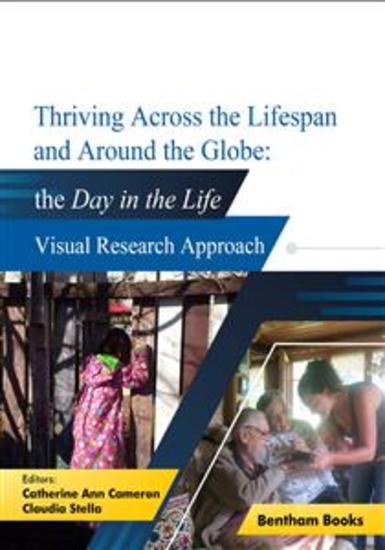
Thriving Across the Lifespan and Around the Globe: Day in the Life Visual Research Approach - cover

Thriving Across the Lifespan and Around the Globe: Day in the Life Visual Research Approach

Catherine Ann Cameron, Claudia Stella

Casa editrice: Bentham Science Publishers

  • 0
  • 0
  • 0

Sinossi

Thriving Across the Lifespan and Around the Globe: The Day in the Life Visual Research Approach is the result of several decades of international, pan-disciplinary research-team collaborations using quasi-ecological visual methodologies to investigate the psychosocial development of children in diverse communities. The initial studies highlighted in this work involved filming a ‘Day in the Life’ of toddlers and primary school children, their families, and schools in diverse communities in Asia, South and North America, and Europe. Filmed in their homes and communities for an entire day, the youngest participants were commonly seen to be thriving in diverse psychosocial domains, such as in their security strivings, emergent literacy and graphic representations, and musicality. Research shows that the nature of a child's development can vary in as many ways as there are diverse contexts. Thriving in the transition from home to primary school is a second developmental milestone investigated in the research.
 
The book serves as an account of the lived experiences of thriving children,among their families, their schools and their communities. The contents give an invaluable insight into the psychology of early childhood while giving the reader an opportunity to understand the resilience of mobile early teenagers as well as independent older adults. The contributions in the book also provide an additional layer to our understanding of visual ethnography by covering such phenomena as agency and communitarianism, spirituality, and the place of humour in the context of challenges encountered across the lifespan. Through presenting quasi-ecological experimental approaches, this reference enhances the reader’s insight into the texture and nature of thriving in situ, in natural contexts.
Disponibile da: 02/01/2024.


Altri libri che potrebbero interessarti

  • State of the Union 1986 - cover

    State of the Union 1986

    Ronald Reagan

    • 0
    • 0
    • 0
    The 1986 State of the Union Address delivered February 4, 1986, was delayed following the Space Shuttle Challenger disaster which killed its seven crew members. Reagan reports the U.S. is the economic miracle to which the world once again turns, with record economic growth and inflation cut from over 12 to under 4 percent.  
    But the federal budget system is broken. “We do not face large deficits because American families are undertaxed; we face those deficits because the Federal Government overspends.” “We must proceed with Grace commission reforms against waste.” Tax cuts have done more to “help America's economy break free than any program since John Kennedy's tax cut almost a quarter century ago.” 
    We “must redouble our efforts for freer and fairer trade.” We oppose legislation touted as providing protection that raises prices for us all.  
    We see a renaissance in education and support “vouchers that give parents freedom of choice”. Hundreds of billions of dollars in poverty programs have led to a breakdown of the family and deteriorating schools. As Franklin Roosevelt said, “Welfare is a narcotic, a subtle destroyer of the human spirit.” Welfare “should be judged by how many of its recipients become independent of welfare.” 
    Reagan sees technology as the solution to “the greatest problem of the 20th century. A security shield can one day render nuclear weapons obsolete and free mankind from the prison of nuclear terror.”  
    “The American dream is a song of hope… to discover a new universe inside a tiny silicon chip or a single human cell.” “So, let us go forward to create our world of tomorrow in faith, in unity, and in love. God bless you, and God bless America.” 
    Audio recording courtesy of the Ronald Reagan Presidential Library. 
    AspenLeafMedia.com
    Mostra libro
  • The Tibetan Book Of The Dead - The Spiritual Meditation Guide For Liberation And The After-Death Experiences On The Bardo Plane - cover

    The Tibetan Book Of The Dead -...

    Padma Padmasambhava, Lãma Kazi...

    • 0
    • 0
    • 0
    The Tibetan Book of the Dead’ provides the guidelines on preparing for death and achieving enlightenment by escaping the cycle of birth, suffering, and death. According to the author, monks can utilize meditation to explore the approximation of the life that exists beyond death and help gain knowledge on the preparation of souls for the afterlife experiences.
    Mostra libro
  • The Devotees of Buddhism - Diary of An Investigation - cover

    The Devotees of Buddhism - Diary...

    Marion Dapsance

    • 0
    • 0
    • 0
    The temple is packed. "It stinks in here," says the master in English. "You mustn't do any more prostrations, or else you'll have to open the windows." A tall, skinny steward discreetly points out that it's pouring rain, and that perhaps this isn't entirely appropriate. The master then grabs him by the hair and shakes him back and forth. "Who are you to judge? I'm your master, you're my slave. Ah, it may not be politically correct with you Westerners, but in Tibet it's like that. You have to submit totally. You must never challenge a great master.
    Anthropologist Marion Dapsance conducts the first field survey of Buddhism in the West, delving into the heart of a hijacked religion that leaves you speechless: sectarian organization, sexual aberrations, financial pyramids, hierarchical humiliations.
    Mostra libro
  • Fuel and Power - Energy Trade and Russian Foreign Relations from Lenin to Putin - cover

    Fuel and Power - Energy Trade...

    Jeronim Perovic

    • 0
    • 0
    • 0
    This is a very timely study of Russia's development into a global energy power from the Russian Revolution to the present day. Beginning in the late nineteenth century, Russia emerged not only as a key producer but also as one of the world's leading exporters of oil. Russia's transformation into a modern global power was connected to its ability to make use of its vast natural resources and produce energy in increasing quantities. While the development of Russia's energy industry went hand in hand with a profound sociopolitical and economic transformation, the book also tells the story of international cooperation and competition, transnational exchanges, and transborder interdependencies. Through energy exports, Russia shaped global energy flows and connections; at the same time, the growth of international trade impacted the views and decisions of Russian leaders, affecting the fabric of the country's foreign relations and, ultimately, the course of Russian history.
    Mostra libro
  • Crime and Punishment in the American Colonies: The History of the Legal Systems in North America Before the Revolutionary War - cover

    Crime and Punishment in the...

    Charles River Editors

    • 0
    • 0
    • 0
    Even though the colonists eventually broke free from Great Britain, plenty of British customs and practices affected the fledgling United States, particularly when it came to law. While the most notable ramifications can be found in the Fourth Amendment to the Constitution, which forbids illegal searches and seizures by the government, the extensive legal background from Britain impacted how American lawyers and courts operated as well, even as legal codes differed considerably from colony to colony because of their charters. The local codes had to broadly conform with the current laws in England, and the early equivalent of the Colonial Office examined colonial laws if someone sued. Laws found to be inconsistent with English practice were sometimes voided.  
    	On paper, the New England codes were extremely harsh, but in practice, they were often mildly enforced, if enforced at all. One law on the books was that a son could be executed if he cursed his parents, but no one was ever executed for it. Many crimes were offenses against public decorum, but there was a wide range of things considered misbehaviors. Punishments varied but tended to be either financial or public, with humiliation and shame being a large part of it.  
    	Conversely, while the New Englanders tended to base their codes on the Old Testament, in Pennsylvania, the Quaker establishment sought to reform criminals rather than punish them. Consequently, they probably had the least number of capital offenses of any place in the English-speaking world. Furthermore, over time, the list of what constituted crimes changed somewhat, as did the emphasis. The fast growth of populations brought large numbers of immigrants and indentured servants and a more complex society. Diversity increased, and the rise of slavery concentrated in (but was not limited to) the Southern colonies, bringing with it codes of law to control slaves and deal with offenses committed by them.
    Mostra libro
  • The Gap Between - Loving and Supporting Someone with Alzheimer's - cover

    The Gap Between - Loving and...

    Mary Moreland

    • 0
    • 0
    • 0
    One woman shares her emotional experience navigating her parents’ declining health, culminating in her mother’s years-long struggle with Alzheimer’s. Mary Moreland details her journey through the stages of grief as she comes to terms with her father’s death, followed by her mother’s Alzheimer’s diagnosis. As her mother’s disease progresses over eight years, Mary walks readers through the earliest phase and all the way to her mother’s deathbed. She provides insightful advice on grieving and caring for loved ones with dementia or Alzheimer’s, alongside her own story of loss.
    Mostra libro