Unisciti a noi in un viaggio nel mondo dei libri!
Aggiungi questo libro allo scaffale
Grey
Scrivi un nuovo commento Default profile 50px
Grey
Iscriviti per leggere l'intero libro o leggi le prime pagine gratuitamente!
All characters reduced
A Century of Negro Migration - cover

A Century of Negro Migration

Carter Godwin Woodson

Casa editrice: Passerino

  • 0
  • 0
  • 0

Sinossi

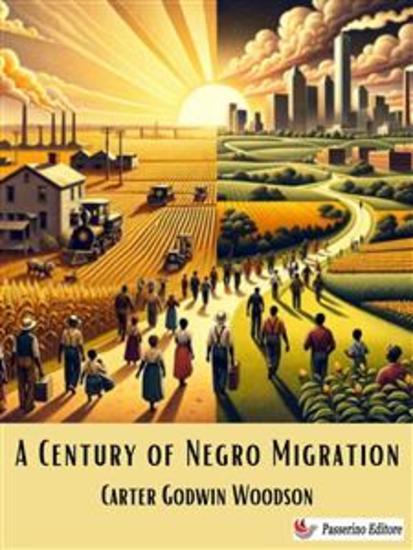
The Great Migration, sometimes known as the Great Northward Migration or the Black Migration, was the movement of six million African Americans out of the rural Southern United States to the urban Northeast, Midwest, and West between 1910 and 1970.
It was substantially caused by poor economic and social conditions due to prevalent racial segregation and discrimination in the Southern states where Jim Crow laws were upheld.
In particular, continued lynchings motivated a portion of the migrants, as African Americans searched for social reprieve. The historic change brought by the migration was amplified because the migrants, for the most part, moved to the then-largest cities in the United States (New York City, Chicago, Detroit, Los Angeles, Philadelphia, Cleveland, and Washington, D.C.) at a time when those cities had a central cultural, social, political, and economic influence over the United States; there, African-Americans established culturally influential communities of their own.

Carter Godwin Woodson (December 19, 1875 – April 3, 1950) was an American historian, author, journalist, and the founder of the Association for the Study of African American Life and History (ASALH). He was one of the first scholars to study the history of the African diaspora, including African-American history.
A founder of The Journal of Negro History in 1916, Woodson has been called the "father of black history." In February 1926, he launched the celebration of "Negro History Week", the precursor of Black History Month. Woodson was an important figure to the movement of Afrocentrism, due to his perspective of placing people of African descent at the center of the study of history and the human experience.
Disponibile da: 06/03/2024.
Altri libri che potrebbero interessarti

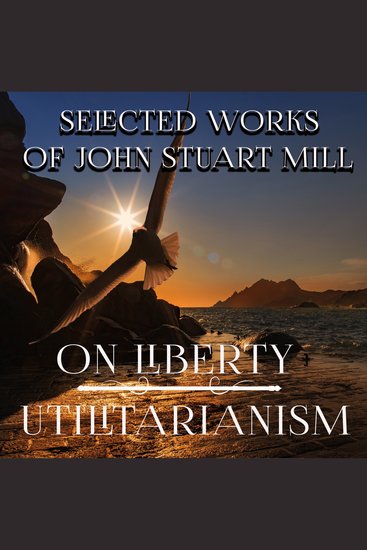
  • Selected Works of John Stuart Mill - On Liberty Utilitarianism - cover

    Selected Works of John Stuart...

    John Mills

    • 0
    • 0
    • 0
    On Liberty is a philosophical essay by the English philosopher John Stuart Mill. Published in 1859, it applies Mill's ethical system of utilitarianism to society and state. Mill suggests standards for the relationship between authority and liberty. He emphasizes the importance of individuality, which he considers prerequisite to the higher pleasures—the summum bonum of utilitarianism. Furthermore, Mill asserts that democratic ideals may result in the tyranny of the majority. Among the standards proposed are Mill's three basic liberties of individuals, his three legitimate objections to government intervention, and his two maxims regarding the relationship of the individual to society.On Liberty was a greatly influential and well-received work. Some classical liberals and libertarians have criticized it for its apparent discontinuity with Utilitarianism, and vagueness in defining the arena within which individuals can contest government infringements on their personal freedom of action. The ideas presented in On Liberty have remained the basis of much political thought. It has remained in print since its initial publication. A copy of On Liberty is passed to the president of the British Liberal Democrats as a symbol of office.Utilitarianism is a classic exposition and defence of utilitarianism in ethics. The essay first appeared as a series of three articles published in Fraser's Magazine in 1861; the articles were collected and reprinted as a single book in 1863.  Mill's aim in the book is to explain what utilitarianism is, to show why it is the best theory of ethics, and to defend it against a wide range of criticisms and misunderstandings. Though heavily criticized both in Mill's lifetime and in the years since, Utilitarianism did a great deal to popularize utilitarian ethics and has been considered "the most influential philosophical articulation of a liberal humanistic morality that was produced in the nineteenth century.Contents:On LibertyUtilitarianism
    Mostra libro
  • How We Think - cover

    How We Think

    John Dewey

    • 0
    • 0
    • 0
    "How We Think" is a seminal work by John Dewey, an influential American philosopher, psychologist, and educational reformer. Published in 1910, the book explores the nature of thought, inquiry, and problem-solving, particularly within the context of education and learning. Dewey argues that thinking is an active process involving inquiry, reflection, and experimentation rather than a passive absorption of knowledge. He emphasizes the importance of critical thinking, creative problem-solving, and the integration of experiences in shaping one's understanding of the world.
    Mostra libro
  • Meaningful Keys to Thrive - "Unlock your potential! Experience impactful audio lessons with Meaningful Keys to Thrive for lasting success" - cover

    Meaningful Keys to Thrive -...

    Orson Duvall

    • 0
    • 0
    • 0
    Meaningful Keys to Thrive 
    ⭐⭐ A Simplified Guide to Success ⭐⭐ 
    Are you eager to advance in your career and enhance your knowledge to excel in your upcoming exams? 
    Looking for an all-in-one resource that includes everything you need to prepare effectively?  
    Your search ends here! 
    This guide is your essential ally for enriching your understanding, honing your skills, and participating in practical exercises, all designed to set you on a path to success. 
    Updated for the 2025 Exam Structure. 
    Key features of this comprehensive guide include: 
    - In-depth insights into the 2025 Exam Certification 
    - Clear explanations of the Meaningful Keys to Thrive 
    - Effective strategies for exam preparation and performance 
    Our guide stands out for its thorough approach, crucial for your exam success. Concepts are explored in detail, rather than just briefly mentioned. 
    Please note that this guide operates independently and is not affiliated with any official examination authority; it is solely a resource created for your benefit. 
    Crafted with an intuitive structure and straightforward language, our guide ensures seamless transitions between topics, allowing you to say goodbye to complex jargon and embrace clear, precise, and technically accurate content. 
    So, why wait? Click the BUY NOW button to secure your guide and embark on your journey to success in the 2025 exams! 
    Start on your journey to growth and achievement with 'Meaningful Keys to Thrive'!
    Mostra libro
  • The Principles of Communism - cover

    The Principles of Communism

    Friedrich Engels

    • 0
    • 0
    • 0
    The Principles of Communism by Friedrich Engels is a foundational political text that outlines the core tenets of communism in a concise and accessible format. Written in 1847 as a preparatory document for the Communist League, the book is structured as a series of questions and answers, making it straightforward for readers to grasp. Engels explores key concepts such as the historical development of class struggles, the rise of capitalism, the exploitation of the working class, and the necessity of a proletarian revolution. He advocates for the abolition of private property, the establishment of collective ownership of the means of production, and the eventual creation of a classless, stateless society. Serving as a precursor to *The Communist Manifesto*, this work provides invaluable insights into the ideological foundations of Marxist theory and remains an important text in the history of socialist thought.
    Mostra libro
  • The Shortest History of War - From Hunter-Gatherers to Nuclear Superpowers—A Retelling for Our Times - cover

    The Shortest History of War -...

    Gwynne Dyer

    • 0
    • 0
    • 0
    War has always been a defining feature of human society. This new addition to the Shortest History series explains why we do it—and how we can stop. 


    Russia's invasion of Ukraine has punctured the longest stretch of peace between major powers since WWII, bringing the horrors of warfare—past, present, and future—to the forefront of listeners' minds. In The Shortest History of War, internationally acclaimed historian Gwynne Dyer adds urgently needed context. 


    Dyer ably charts the evolution of violent conflict: tribal aggression, classical combat, limited war, total war, and cold war—followed by present-day terrorism, nuclear threats, and the development of lethal autonomous weapons systems (LAWS). His brilliant, brisk history is a harrowing must-listen for all who wonder: How will rival superpowers with unprecedented weapons shape the future of our interconnected world?
    Mostra libro
  • Roman Legions - The Military Might of an Empire - cover

    Roman Legions - The Military...

    Rogan Fish

    • 0
    • 0
    • 0
    The Roman legions were the backbone of one of the most formidable military forces in history. Before the rise of the professional army, Rome’s early military structure was largely based on citizen soldiers who fought in times of need. This early system was influenced by both the Etruscans and the Greeks, shaping the foundation of what would become the highly disciplined and organized Roman legions. Over time, reforms, particularly those of Gaius Marius, transformed the Roman military into a professional and highly efficient force that would dominate the ancient world. 
    In the early days of Rome, military service was tied to land ownership. The army was made up of citizen militias, with each man providing his own weapons and armor. This system was similar to that of the Greek hoplites, where soldiers fought in close formations with shields and spears. However, as Rome expanded, it became clear that a more structured and permanent military force was needed. The influence of the Etruscans introduced elements of hierarchy and organization, while the Greeks contributed to Rome’s use of phalanx-style formations in battle. Despite these early influences, the Roman army continued to evolve, adapting to new threats and challenges. 
    The real transformation of the Roman military came during the late Republic, when Gaius Marius introduced the Marian Reforms. These changes allowed for the recruitment of landless citizens, shifting the army from a temporary force to a standing professional military. Soldiers were now equipped by the state, ensuring uniformity in weapons and armor. The structure of the army was also refined, replacing the older phalanx formations with the more flexible manipular and cohort systems. This allowed for greater maneuverability on the battlefield, giving the Romans a significant advantage over their enemies.
    Mostra libro