Unisciti a noi in un viaggio nel mondo dei libri!
Aggiungi questo libro allo scaffale
Grey
Scrivi un nuovo commento Default profile 50px
Grey
Iscriviti per leggere l'intero libro o leggi le prime pagine gratuitamente!
All characters reduced
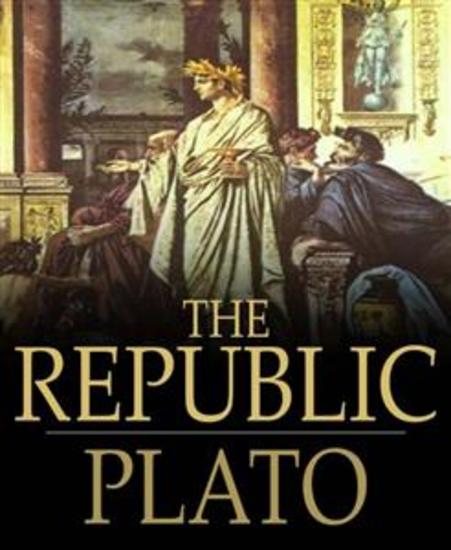
The Republic - cover

The Republic

By Plato

Casa editrice: BookRix

  • 0
  • 0
  • 0

Sinossi

The Republic is a Socratic dialogue, written by Plato around 380 BCE, concerning the definition of justice, the order and character of the just city-state and the just man. The dramatic date of the dialogue has been much debated and though it must take place some time during the Peloponnesian War, "there would be jarring anachronisms if any of the candidate specific dates between 432 and 404 were assigned". It is Plato's best-known work and has proven to be one of the most intellectually and historically influential works of philosophy and political theory. In it, Socrates along with various Athenians and foreigners discuss the meaning of justice and examine whether or not the just man is happier than the unjust man by considering a series of different cities coming into existence "in speech", culminating in a city (Kallipolis) ruled by philosopher-kings; and by examining the nature of existing regimes. The participants also discuss the theory of forms, the immortality of the soul, and the roles of the philosopher and of poetry in society.
Disponibile da: 19/12/2023.
Lunghezza di stampa: 475 pagine.

Altri libri che potrebbero interessarti

  • William Wilberforce - Take up the Fight - cover

    William Wilberforce - Take up...

    Janet Benge, Geoff Benge

    • 0
    • 0
    • 0
    For two hundred years, British slave ships plied in the Middle Passage, taking African men, women, and children to their doom. Ending slavery in the mighty British Empire seemed like an impossible dream, but once William Wilberforce resolved to represent the abolitionists in Parliament, he would fight to the bitter end - for nearly half a century - to achieve that goal. Together with a community of dynamic reformers, Wilberforce struggled to rid his nation of evil and to give dignity and freedom to all people - slave and slave trader, poor and powerful. His example continues to inspire others to use their gifts and influence to do good against the odds.
    Mostra libro
  • The Education of Man - Aphorisms - cover

    The Education of Man - Aphorisms

    Johann Heinrich Pestalozzi

    • 0
    • 0
    • 0
    Timeless words of wisdom from the eighteenth-century teacher who transformed the world of education with his groundbreaking ideas.    Johann Heinrich Pestalozzi rose to prominence during the Age of Enlightenment, bringing the spirit of equal opportunity and respect for human personality into the classroom, just as Thomas Jefferson imbued such virtues into the Declaration of Independence. The foundation of Pestalozzi’s educational philosophy rested on six principles: the inner dignity of the individual; the promise of potential in each child; love as the basis of education (as opposed to punishment); his doctrine of Anschauung, experience-based learning; appropriate action following Anschauung, and an emphasis on repetition of said action.   This philosophical grounding influenced the great remaking of American education from 1830 to 1860, resulting in changes that have been felt through the centuries and remain relevant today. The Education of Man gathers Pestalozzi’s enduring thoughts on subjects as wide-ranging as humanity, teaching, poverty, justice, truth, and nature, including such observations as . . .  People are led by custom and catchwords, but facts they are wont to overlook.  The man who seeks to rule as a father before he has learned to love as a brother will never be a patriarch.  Sooner or later, but of a certainty in the end, Nature will take her toll for what men do against her.  Learning is not worth a penny when courage and joy are lost along the way.  The world grows poor in seeking to avoid poverty; the man who strives for riches most earnestly is seen to be the poorest.
    Mostra libro
  • Dinner with Churchill - Policy-Making at the Dinner Table - cover

    Dinner with Churchill -...

    Cita Stelzer

    • 0
    • 0
    • 0
    A friend once said of Churchill: "He is a man of simple tastes; he is quite easily satisfied with the best of everything." But dinners for Churchill were about more than good food, excellent champagnes, and Havana cigars. "Everything" included the opportunity to use the dinner table both as a stage on which to display his brilliant conversational talents, and an intimate setting in which to glean gossip and diplomatic insights and to argue for the many policies he espoused over a long life. 
    In this riveting, informative, and entertaining book, Stelzer draws on previously untapped material, diaries of guests, and a wide variety of other sources to tell of some of the key dinners at which Churchill presided before, during, and after World War II.
    Mostra libro
  • Epinomis - The Sequel to Laws – A Late Dialogue on Astronomy Theology and the Nature of the Divine - cover

    Epinomis - The Sequel to Laws –...

    Plato, Tim Zengerink

    • 0
    • 0
    • 0
    What if studying the stars could lead to the divine? 
    In Epinomis, Plato or his student unveils a breathtaking conclusion to his philosophical journey. Here, the cosmos becomes the classroom, and astronomy is the curriculum of the soul. This sequel to Laws invites the listener to consider the stars as more than distant objects—they are keys to understanding virtue, order, and the mind of God. 
    What you'll discover inside: 
    •	A Theological Expansion of Laws – Explore how Plato connects divine reason to legal and moral order 
    •	The Stars as Guides to Wisdom – Learn why celestial study is the highest form of education 
    •	A Dialogue on Divine Nature – Thought-provoking discussion on soul, fate, and spiritual truth 
    •	A Clear Modern Translation – Accessible for new readers, faithful to the gravity of Plato’s thought 
    Embark on a final celestial journey with one of antiquity’s greatest thinkers.
    Mostra libro
  • The Civility Book - A Guide to Building Bridges Across the Political Divide - cover

    The Civility Book - A Guide to...

    Stephen Henderson, Nolan Finley,...

    • 0
    • 0
    • 0
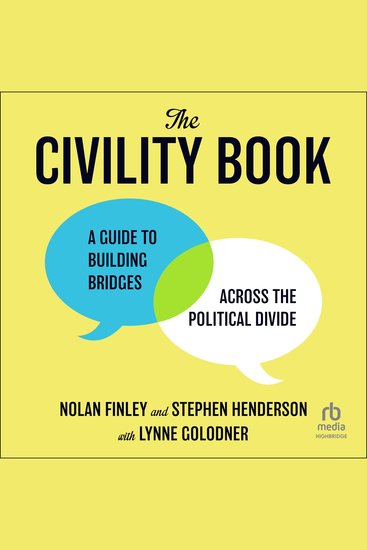
    Once pitted as adversarial counterparts as the opinion editors of Detroit's right- and left-leaning newspapers, veteran journalists Nolan Finley and Stephen Henderson join forces in this groundbreaking work to champion a novel approach to political discourse. Finley, a resolute conservative, and Henderson, a committed progressive, defy expectations by demonstrating that civil conversation is not only possible but also richly rewarding, even across colossal ideological divides. 


    In 2020, they launched the Civility Project with journalist and author Lynne Golodner, beginning their journey to teach Americans how to engage in respectful dialogue and maintain relationships despite political differences. The Civility Book is an extension of that mission, offering practical tools and strategies for fostering civility in everyday interactions. At the core of this work, the authors position their four pillars of civility to explain what civility is, why it matters, and how individuals can use it to overcome the antagonistic rhetoric that threatens our society today, one conversation at a time. This conversational, no-nonsense guide provides valuable lessons, a detailed curriculum, probing questions for consideration, and an extensive appendix of resources outlining ongoing efforts to curb unproductive contention and advance a more harmonious society.
    Mostra libro
  • 21st-Century Virtues - How They Are Failing Our Democracy (In the National Interest) - cover

    21st-Century Virtues - How They...

    Lucinda Holdforth

    • 0
    • 0
    • 0
    Authenticity. Vulnerability. Humility. Transparency. These are some of the 21st-century virtues proselytised by mindset gurus, paraded (if not practised) by big corporations, and lauded by professionals on LinkedIn. The quest for authenticity, for example, is central to progressive campaigns for greater diversity and inclusion, while our political and business leaders are highest praised if they appear to be humble. But are Australia’s newest virtues fit for purpose?In this provocative book, Lucinda Holdforth questions the new orthodoxy. She suggests that these virtues are not only unhelpfully subjective and self-referential but also, in the absence of broader civic values, fail to serve our democracy. This matters when experience around the world, especially in the United States, shows us that no democracy is guaranteed.Holdforth reminds us that arguments for transparency and authenticity are routinely used by totalitarian regimes to justify ultra-nationalism, artistic censorship and population surveillance. Vulnerability may be a facet of the human condition but that is surely no reason to make it an aspiration. Well-meaning people may talk about the power of ‘my’ truth, but if pushed too far this risks a dissolution of agreed facts and shared reality, breaking down the decision-making processes essential to effective democracy.If we agree that Australia needs confident, rational, optimistic and outward-looking citizens to shape our future, then Holdforth challenges us to reconsider the contemporary virtues shaping our society.
    Mostra libro