Unisciti a noi in un viaggio nel mondo dei libri!
Aggiungi questo libro allo scaffale
Grey
Scrivi un nuovo commento Default profile 50px
Grey
Iscriviti per leggere l'intero libro o leggi le prime pagine gratuitamente!
All characters reduced
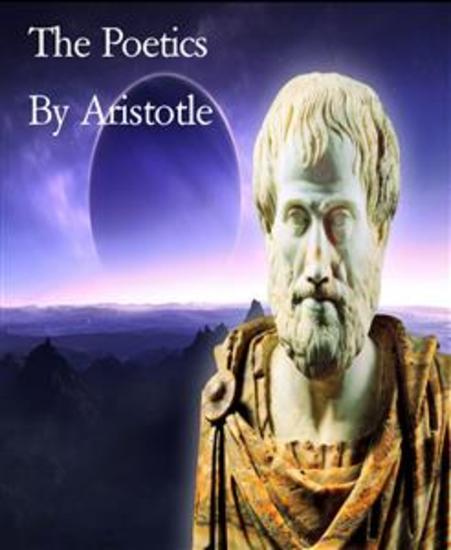
The Poetics - cover

The Poetics

By Aristotle

Casa editrice: BookRix

  • 0
  • 0
  • 0

Sinossi

Aristotle's Poetics is the earliest surviving work of dramatic theory and the first extant philosophical treatise to focus on literary theory. In it, Aristotle offers an account of what he calls "poetry" (a term which in Greek literally means "making" and in this context includes drama—comedy, tragedy, and the satyr play—as well as lyric poetry, epic poetry, and the dithyramb). He examines its "first principles" and identifies its genres and basic elements. His analysis of tragedy constitutes the core of the discussion.

Tragedy consists of six parts which Aristotle enumerates in order of importance, beginning with the most essential and ending with the least: Aristotle considers Tragedy superior to Epics and considers them higher forms of art. Tragedy should make the viewer feel fear and pity. Tragedy arouses the emotions of pity and fear in order to purge away their excess, to reduce these passions to a healthy. Aristotle also talks about “pleasure” that is proper to tragedy, apparently meaning the aesthetic pleasure one gets from contemplating the pity and fear that are aroused through the play. Tragedy is rooted in the fundamental order of the universe; it creates a cause-and-effect chain that clearly reveals what may happen at any time or place because that is the way the world operates.
Disponibile da: 19/12/2023.
Lunghezza di stampa: 63 pagine.
Altri libri che potrebbero interessarti

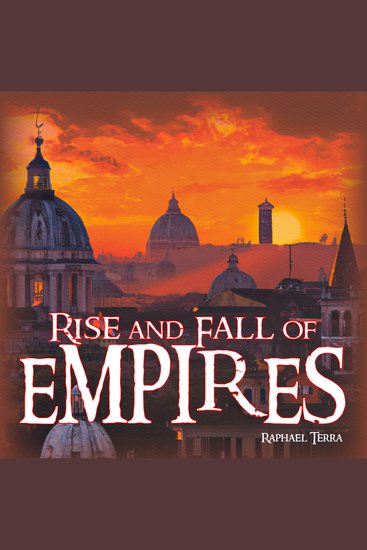
  • Rise and Fall of Empires - cover

    Rise and Fall of Empires

    Raphael Terra

    • 0
    • 0
    • 0
    This audiobook has been recorded using Text to speech (TTS). 
     
    As you sit there in front of the comforting glow of the television screen, the world outside continues as normal. Often, we are oblivious to the fact that ours is but one of many empires that have risen and fallen throughout the course of human history. 
     
    Yet ours is not an empire of a single state, ruled by some emperor. Ours is a global empire – an empire of connection, technology, and consumption. To most, the thought that this globalised, technologically advanced world, is just as fragile as those that came before us seems absurd. Yet the deserts are littered with the great crumbling monuments of once seemingly invincible nations, the citizens of which would have thought the same. 
     
    Those who understand the patterns of human civilisation cannot look around and think that what they see will last forever. The great works we build today will be the crumbling monuments of some future desert. We must therefore look to the past to understand both present realities and future possibilities. 
     
    So, join us now as we explore the rise and fall of past empires. You shall journey through vast cities, witness the creation of grand architecture marvels, worship strange gods long forgotten, and see a reflection of ourselves in the citizens of these empires.
    Mostra libro
  • Bearing the Unbearable - Love Loss and the Heartbreaking Path of Grief - cover

    Bearing the Unbearable - Love...

    Joanne Cacciatore

    • 0
    • 0
    • 0
    Bearing the Unbearable is a Foreword INDIES Award-Winner — Gold Medal for Self-Help. 
    When a loved one dies, the pain of loss can feel unbearable—especially in the case of a traumatizing death that leaves us shouting, “NO!” with every fiber of our body. The process of grieving can feel wild and nonlinear—and often lasts for much longer than other people, the nonbereaved, tell us it should. 
    Organized into fifty-two short chapters, Bearing the Unbearable is a companion for life’s most difficult times, revealing how grief can open our hearts to connection, compassion, and the very essence of our shared humanity. Dr. Joanne Cacciatore—bereavement educator, researcher, Zen priest, and leading counselor in the field—accompanies us along the heartbreaking path of love, loss, and grief. Through moving stories of her encounters with grief over decades of supporting individuals, families, and communities—as well as her own experience with loss—Cacciatore opens a space to process, integrate, and deeply honor our grief. 
    Not just for the bereaved, Bearing the Unbearable will be required reading for grief counselors, therapists and social workers, clergy of all varieties, educators, academics, and medical professionals. Organized into fifty-two accessible and stand-alone chapters, this book is also perfect for being read aloud in support groups.
    Mostra libro
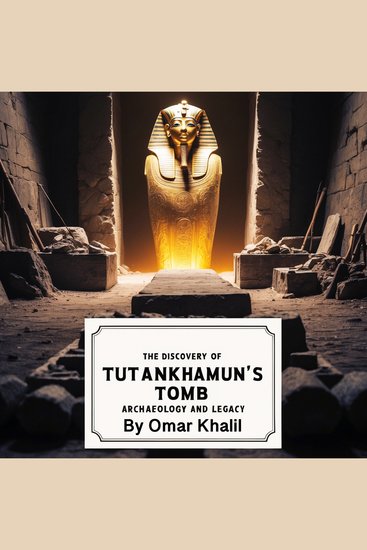
  • The Discovery of Tutankhamun's Tomb - Archaeology and Legacy - cover

    The Discovery of Tutankhamun's...

    Omar Khalil

    • 0
    • 0
    • 0
    The search for Tutankhamun’s tomb was one of the most ambitious archaeological pursuits of the early 20th century. For years, Egyptologists and explorers had scoured the Valley of the Kings, believing that the burial site of the young pharaoh remained hidden beneath the desert sands. Despite previous excavations yielding little success, one man remained convinced that the tomb had yet to be discovered. 
    Howard Carter, a British archaeologist, had spent decades working in Egypt, developing an unmatched expertise in excavation. His belief in the existence of Tutankhamun’s tomb was fueled by fragments of artifacts bearing the young pharaoh’s name, suggesting that his final resting place was still untouched. However, funding such an extensive search required a patron, and it was Lord Carnarvon, a wealthy British aristocrat, who provided the financial backing. In 1917, Carter’s systematic excavation of the Valley of the Kings began, but after several years of fruitless digging, Carnarvon grew impatient. 
    By 1922, with resources nearly depleted, Carter convinced Carnarvon to allow him one final season of excavation. It was in November of that year that Carter’s persistence paid off. While investigating an area near the tomb of Ramses VI, workers uncovered a set of steps leading down into the earth. Clearing away the debris, Carter discovered a sealed doorway marked with the insignia of Tutankhamun. Excitement and caution filled the air as he realized that the tomb had remained undisturbed for centuries.
    Mostra libro
  • Emerson's Essays Volume 2 - cover

    Emerson's Essays Volume 2

    Ralph Waldo Emerson

    • 0
    • 0
    • 0
    "Emerson's Essays" by Ralph Waldo Emerson is a timeless collection of profound and thought-provoking essays that explore the core principles of transcendentalism and offer profound insights into the human experience. In this enriching anthology, Emerson presents a wide array of essays covering topics such as nature, self-reliance, society, and the pursuit of truth and wisdom. Emerson's writing is characterized by its poetic prose, profound reflections, and inspiring rhetoric. His essays offer readers a profound understanding of the human condition, encouraging introspection and self-exploration. Through his timeless wisdom, Emerson challenges readers to question conventional wisdom, explore their own truths, and lead lives of purpose and authenticity.
    Mostra libro
  • The Fire and the Bonfire - A journey into memory - cover

    The Fire and the Bonfire - A...

    Ardyn Halter

    • 0
    • 0
    • 0
    How is the baton of experience passed from generation to generation? What is transmitted? Ardyn Halter explores the legacy of his late father Roman Halter's experiences of the Holocaust. What is received by the "Second Generation" and how can it be expressed in language or art? A journey to Rwanda to complete a commission to commemorate the Rwandan genocide, and a journey to Poland. The Fire and the Bonfire reveals a close - though also difficult - father-son relationship and explores genocide through art, which leads to unexpected discoveries. 
    "This is a book that needs to be read more than once. Ardyn Halter has written about an agonizingly difficult subject with a painter's eye, a novelist's sense of pace and suspense, a philosophical mind - and he has done it superbly." - Hillel Halkin 
    "...this is powerful. Raw and incredibly sad. Your clear eye and honesty had me gasping for breath at times." - Fergal Keane  
    "A hugely eloquent, painfully honest and insightful text... A work of art to be savoured in its own right." - Monica Bohm-Duchen
    Mostra libro
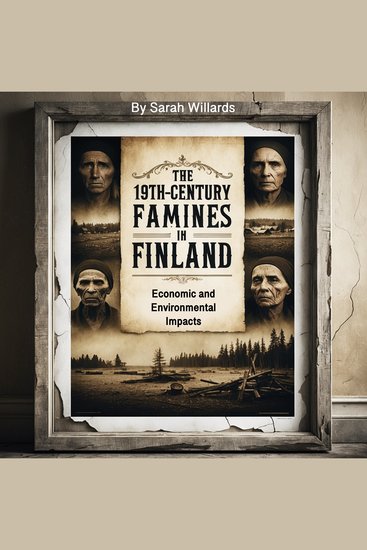
  • The 19th-Century Famines in Finland - Economic and Environmental Impacts - cover

    The 19th-Century Famines in...

    Sarah Willards

    • 0
    • 0
    • 0
    In the 19th century, Finland was a region undergoing profound political, social, and economic transformation. Following centuries of Swedish rule, Finland was ceded to the Russian Empire in 1809, becoming an autonomous Grand Duchy under the Russian crown. This shift in governance marked a significant turning point in the nation's development, as it introduced new administrative structures and a degree of self-rule, yet still tied Finland’s fate closely to the broader political currents of imperial Russia. Despite this autonomy, many rural communities remained deeply influenced by traditional practices rooted in earlier Swedish governance and local customs. 
    Agriculture formed the backbone of the Finnish economy during this period, with the vast majority of the population engaged in farming or forestry. The rural landscape was dominated by small farms and tenant holdings, where subsistence farming was the norm. Crops such as rye, barley, and oats were staples, but yields were highly susceptible to environmental fluctuations. There was limited access to modern tools, techniques, or fertilizers, and storage methods were often inadequate, leaving communities vulnerable to failed harvests. The lack of agricultural diversity and technological stagnation only exacerbated the risks, particularly during years of poor weather or early frosts. 
    Economically, Finland was still in the early stages of development, with only a few urban centers and a limited industrial base. Trade remained modest, and most commerce was localized. The transportation infrastructure, particularly in the countryside, was underdeveloped, which made the movement of goods—especially food—slow and unreliable. The country’s dependence on its immediate environment for food and income meant that any disruption, whether climatic or political, could have devastating consequences. This fragility was compounded by population growth, which put increasing pressure on available land and resources.
    Mostra libro