Unisciti a noi in un viaggio nel mondo dei libri!
Aggiungi questo libro allo scaffale
Grey
Scrivi un nuovo commento Default profile 50px
Grey
Iscriviti per leggere l'intero libro o leggi le prime pagine gratuitamente!
All characters reduced
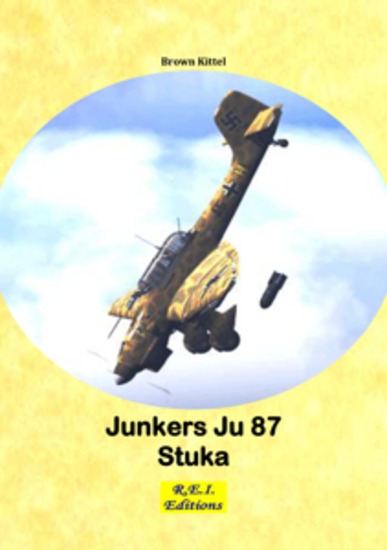
Junkers Ju 87 - The Stuka - cover

Junkers Ju 87 - The Stuka

Brown Kittel

Casa editrice: R.E.I. Editions

  • 0
  • 0
  • 0

Sinossi

The Junker Ju 87, known as the Stuka, was a German bomber of which approximately 5,700 were produced during World War II.Few aircraft that fought in World War II were as controversial and famous as the Junkers Ju 87 Stuka dive bomber.A symbol and instrument of the military power of the Third Reich, these aircraft were the impressive protagonists of the beginning of World War II.From the second half of the 1930s, the Ju-87 represented a new class of fighter aircraft, arousing heated debates, especially within the Luftwaffe high command.	After the Polish and French campaigns, the Ju-87 became almost a legend, actively fueled by its supporters, who created an aura of superior and unparalleled armament around the aircraft.Slow and angular, with poor survivability and rather weak fire protection, the Ju 87 was relatively easy prey for enemy fighters.However, the high accuracy of its bombing and its effectiveness in combat more than made up for many of its shortcomings.	Once it had achieved air supremacy, the aircraft became an effective means of aerial terror, dropping bombs with terrifying accuracy and producing a devastating psychological effect on its victims.The most widely produced version was the D series. The aircraft's armor had been reinforced and the defensive armament of the aircraft had been increased: 4 machine guns and 1,800 kg of bombs. 
Disponibile da: 11/03/2025.
Lunghezza di stampa: 130 pagine.
Altri libri che potrebbero interessarti

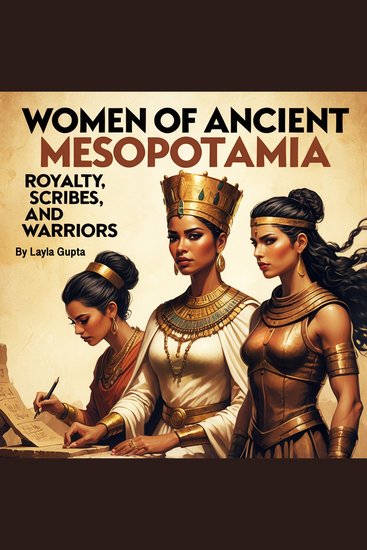
  • Women of Ancient Egypt - Pharaohs Queens and Gods - cover

    Women of Ancient Egypt -...

    Layla Gupta

    • 0
    • 0
    • 0
    The role of women in Ancient Egyptian society was multifaceted, reflecting the complex and dynamic culture of this ancient civilization. Women in Egypt held a relatively high status compared to their counterparts in many other ancient cultures. They were considered equal to men in certain aspects, such as the ability to own property, initiate divorce, and partake in religious rituals. Women were also key figures in the household, and their roles in family and social structures were crucial for the stability and prosperity of Egyptian society. 
    One of the most notable aspects of the role of women in Ancient Egypt was their legal rights. Egyptian women had the legal ability to own land, businesses, and wealth, which provided them with a level of autonomy not commonly found in other ancient societies. This was particularly significant in a culture where family wealth and land were vital to survival and success. In cases of divorce or widowhood, women could retain ownership of their property, and were often entitled to a share of the family’s wealth. Women could also inherit property from their parents, and daughters were not excluded from inheritance as they often were in other cultures. 
    In the social realm, women had significant responsibilities within the family unit. They were primarily responsible for managing household duties, including the care of children, food preparation, and the overall maintenance of the home. These tasks, while often perceived as domestic, were essential to the functioning of society. Women also played important roles as mothers and caregivers, which was highly valued in Egyptian culture. The ideal woman in Egypt was often depicted as a loving and devoted mother, and this image was reflected in religious texts, art, and literature.
    Mostra libro
  • Be The Hero Of Your Own Story - No matter where you are in life this book empowers you to take control building your path brick by brick step by step - cover

    Be The Hero Of Your Own Story -...

    Sara Sadeghloo

    • 0
    • 0
    • 0
    What was your dream? Who did you think you would become—before the world taught your mind to believe in impossibilities? 
    In the beginning, we believe. We see endless possibilities, fueled by a fire in our bellies and a belief so strong it can move mountains. 
    But as we grow, the world imposes doubts, failures, and limited beliefs upon us. The fire dims, our dreams fade, and we settle for the status quo. We feel stuck, confused, and lost. Instead of fighting for our dreams, we complain and live lives cut to fit the world’s expectations. We forget who we are and become victims of our circumstances. 
    Does this sound familiar? 
    In this book, I share my personal journey from being stuck and lost to becoming the hero of my own life. You'll also discover stories of real-life heroes who overcame impossible odds to achieve greatness. 
    Have you been wondering...How can I start believing in myself again?Can I overcome my circumstances and the limitations holding me back?How can I silence the negative voices of doubt and defeat in my mind?How do I reclaim my dreams, purpose, and the person I’m meant to become? 
    If these questions resonate with you, this book will guide you to the answers. 
    In this book, you’ll learn how to:Cultivate the mindset of a hero.Break free from limiting beliefs and get unstuck.Use proven strategies to restore your confidence and self-belief.Set meaningful goals and achieve them with clarity.Leave the past behind and consciously create your dream life.Win—against all odds. 
    And much more! 
    No matter what you’ve been through or who told you it’s not possible, this book proves otherwise. Through real examples and practical advice, you'll learn how to transform your life into one you love.
    Mostra libro
  • JRR Tolkien and CS Lewis: The Lives and Works of the World’s Most Famous Fantasy Authors - cover

    JRR Tolkien and CS Lewis: The...

    Charles River Editors

    • 0
    • 0
    • 0
    For more than half a century, the name J.R.R. Tolkien has been synonymous with epic fantasy. Known across the world for his classic The Hobbit and The Lord of the Rings trilogy, Tolkien both revived interest in fantasy literature and set the standard for the genre. Today he is widely acknowledged as the “Father” of modern fantasy and its most famous author. While Tolkien made Middle Earth famous and vice-versa, his works were influenced by a lifetime of his own personal experiences. His tales concern creatures of myth, yet the plot lines and characters are human at heart. Tolkien drew his inspiration from war, nature, history, love, and language, and through the lens of fantasy he examined bravery, loyalty and friendship. That essential “humanness” at the core of his writing, whether it was displayed by a man, hobbit, or even a tree, struck a chord with readers that continues to resonate today. The Hobbit has been released in more than 40 languages, and The Lord of the Rings has sold more than 150 million copies.   
    Tolkien and C.S. Lewis were good friends before the peaks of their careers, meeting together at Oxford’s University College to read and discuss the unfinished works of the members. Although they discussed readings, they were in essence literary enthusiasts who gathered to celebrate writing and literature, especially fantasy. The Inklings were both important and informal. “Properly speaking, the Inklings was neither a club nor a literary society, though it partook of the nature of both,” said Warren Lewis, a member of the group who also happened to be C.S. Lewis’ older brother. “There were no rules, officers, agendas, or formal elections.” It was a place to simply talk of new ideas and literature in an environment that embraced fantasy, and one of the new ideas was that of mythopoeia, or creating mythology to go along with fiction.
    Mostra libro
  • Little Women Podcast: Why Friedrich Is Poor - cover

    Little Women Podcast: Why...

    Niina Niskanen

    • 0
    • 0
    • 0
    Self-reliance is often rooted in the idea that no matter the circumstances that you were born into, you can still make something of yourself and your life and leave a mark on this world. One of Louisa´s favourite writers was the German poet, Goethe. Goethe was born into great wealth, which eventually led him to challenge himself. Being born as a rich man caused emptiness. Some readers might notice that this is down to tee Laurie´s character. Goethe eventually found writing to be his calling, and he recommended work as the best remedy for a broken heart. In Little Women, when Laurie is in Vienna after he has been rejected by Jo and has been lectured by Amy, he's writing an opera which would quote "harrow Jo´s soul and melt her heart" But he just keeps seeing Jo in the most unflattering ways and soon Jo is replaced by a beautiful ghost who looks a lot like Amy, and Laurie sees himself as a romantic prince. I have seen about 14 Little Women adaptations, and this part of Laurie in Vienna has never been adapted, which is a problem. Laurie is flirting with this ghost for a while, and then he stops and for the first time in his life, Laurie realizes that what he's doing is silly and he remembers Amy's words. She took his hands and said that they were soft and white as a woman's and they had never done a day's work. Only picked flowers for girls and wore Jouvin´s best gloves. As a result of this, Laurie goes to work for his grandfather. Laurie's character arc in Little Women is not about Amy or Jo. It is the story of how Laurie becomes a man. In Louisa May Alcott´s world, the only acceptable wealthy people are philanthropists. With Laurie´s character, Louisa May Alcott criticised the people who are on the top of the class system.
    Mostra libro
  • General Jan Smuts and his First World War in Africa 1914–1917 - Incorporating His German South West and East Africa Campaigns - cover

    General Jan Smuts and his First...

    David Brock Katz

    • 0
    • 0
    • 0
    A new assessment of Jan Smuts’s military leadership through examination of his World War I campaigning, demonstrating that he was a gifted general, conversant with the craft of maneuver warfare, and a command style steeped in the experiences of his time as a Boer general.World War I ushered in a renewed scramble for Africa. At its helm, Jan Smuts grabbed the opportunity to realize his ambition of a Greater South Africa. He set his sights upon the vast German colonies of South-West Africa and East Africa – the demise of which would end the Kaiser’s grandiose schemes for Mittelafrika. As part of his strategy to shift South Africa’s borders inexorably northward, Smuts even cast an eye toward Portuguese and Belgian African possessions.  Smuts, his abilities as a general much denigrated by both his contemporary and then later modern historians, was no armchair soldier. This cabinet minister and statesman donned a uniform and led his men into battle. He learned his soldiery craft under General Koos De la Rey's tutelage, and another soldier-statesman, General Louis Botha during the South African War 1899–1902. He emerged from that war, immersed in the Boer maneuver doctrine he devastatingly waged in the guerrilla phase of that conflict. His daring and epic invasion of the Cape at the head of his commando remains legendary. The first phase of the German South West African campaign and the Afrikaner Rebellion in 1914 placed his abilities as a sound strategic thinker and a bold operational planner on display. Champing at the bit, he finally had the opportunity to command the Southern Forces in the second phase of the German South West African campaign.  Placed in command of the Allied forces in East Africa in 1916, he led a mixed bag of South Africans and Imperial troops against the legendary Paul von Lettow-Vorbeck and his Shutztruppe. Using his penchant for Boer maneuver warfare together with mounted infantry led and manned by Boer Republican veterans, he proceeded to free the vast German territory from Lettow-Vorbeck’s grip. Often leading from the front, his operational concepts were an enigma to the British under his command, remaining so to modern-day historians. Although unable to bring the elusive and wily Lettow-Vorbeck to a final decisive battle, Smuts conquered most of the territory by the end of his tenure in February 1917.  General Jan Smuts and His First World War in Africa makes use of multiple archival sources and the official accounts of all the participants to provide a long-overdue reassessment of Smuts’s generalship and his role in furthering the strategic aims of South Africa and the British Empire in Africa during World War I.
    Mostra libro
  • Break the Limits of Your Brain - Unlocking Mental Power Enhancing Memory and Cultivating Lifelong Learning - cover

    Break the Limits of Your Brain -...

    Leonard Murru

    • 0
    • 0
    • 0
    Break the Limits of Your Brain: Unlocking Mental Power, Enhancing Memory, and Cultivating Lifelong Learning 
    Discover the untapped potential of your mind with Break the Limits of Your Brain. This transformative audiobook offers practical insights and actionable strategies to strengthen your brain, improve your memory, and maintain a healthy mind throughout your life. 🌟 
    💡 What You'll Learn: 
    - The incredible benefits of brain exercise and how it boosts cognitive function 🧠 
    - How to identify and overcome thinking on autopilot to take control of your thoughts 🚀 
    - Brain exercises that reduce the risk of mental illness and promote mental wellness 🌱 
    - The power of new experiences in keeping your brain vibrant and healthy 🌍 
    - How taking up a new hobby can fuel curiosity and learning 🎨 
    - Proven methods to improve your memory and recall important details 🔑 
    - Essential lifestyle habits that support lifelong mental clarity and resilience 🏋️‍♂️ 
    This audiobook is perfect for anyone looking to enhance their mental agility, break free from limiting thought patterns, and live a life of continuous growth and learning. 🎧 
    Start your journey to a healthier, sharper, and more powerful mind today!
    Mostra libro