

¡Acompáñanos a viajar por el mundo de los libros!
Añadir este libro a la estantería
Grey
Escribe un nuevo comentario Default profile 50px
Grey
Suscríbete para leer el libro completo o lee las primeras páginas gratis.
All characters reduced
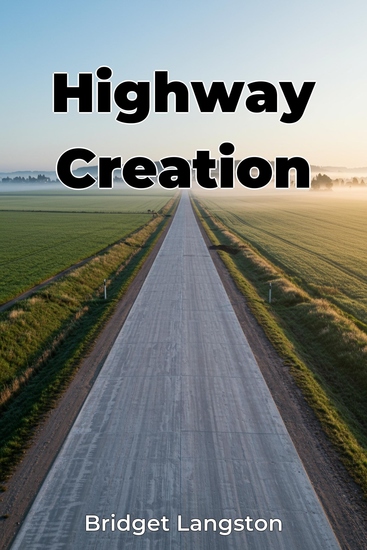
Highway Creation - cover

Highway Creation

Bridget Langston

Traductor A AI

Editorial: Publifye

  • 0
  • 0
  • 0

Sinopsis

Highway Creation examines the transformative impact of the Interstate Highway System on American society and its economy. This book explores how the Federal-Aid Highway Act of 1956 spurred unprecedented mobility and economic development. It reveals that prior to this system, a fragmented network of poorly maintained roads hindered both interstate commerce and personal travel, underscoring the vital role of infrastructure in shaping a nation's trajectory.

 
The book delves into the historical context, economic transformations, and social consequences of highway creation, illustrating how this massive undertaking reshaped urban planning, spurred suburbanization, and influenced commuting patterns. It emphasizes that the Interstate Highway System was more than just a construction project; it acted as a catalyst for economic growth and societal change.

 
Each chapter builds upon the last, beginning with the political climate leading to the 1956 Act, then moving to the economic impacts, and finally assessing the long-term social consequences. Highway Creation offers a comprehensive understanding of a pivotal moment in American history by integrating economic data, historical records, and case studies. By connecting to fields such as urban planning and political science, the book provides valuable insights for students, policymakers, and anyone interested in the forces that have shaped modern America, addressing the lasting legacy of the Interstate Highway System and its relevance to modern transportation needs.
Disponible desde: 06/05/2025.
Longitud de impresión: 56 páginas.
Otros libros que te pueden interesar

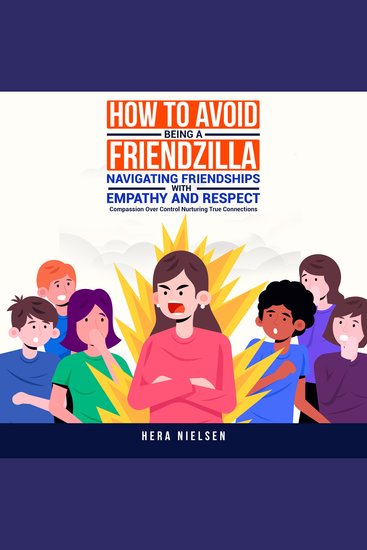
  • How to avoid being a friendzilla: Navigating friendships with empathy and respect - Compassion over control nurturing true connections - cover

    How to avoid being a...

    Hera Nielsen

    • 0
    • 0
    • 0
    You swear you're just being a good friend—but what you call caring, they call being a... friendzilla! 
    Have your friends started taking longer to reply? Do you insist plans go your way? Has anyone ever joked that you're a little too much? Do you sometimes think, If only my friends listened to me...? 
    If so, your behavior sounds like that of a friendzilla! 
    At some point, we're all guilty of such behavior—getting on someone's nerves, talking too much, texting too aggressively, or giving unsolicited advice. You don't mean to be annoying, but still, it happens. So, how do you stop? 
    How to Avoid Being a Friendzilla: Navigating Friendships with Empathy and Respect will help you spot (and stop) those little habits that may be pushing your friends away. It will teach you how to be a better friend, so your friendships can grow stronger, healthier, and way less awkward. Because great friendships take time, balance, and yes, the occasional apology! 
    In this book, you'll discover:Tips for spotting friendzilla tendenciesThe art of guilt-tripping (and why your friends are so over it)How to tell if you're the main character of every hangout (without realizing it)The fine line between caring and controlling (it's thinner than your last nerve)The Sherlock Holmes method for figuring out why you overreactWhy passive-aggressive sticky notes don't help (and what to do instead)The importance of saying what you mean (no one has time for a Shakespearean monologue)Why clinging to one friend may not be your best move 
    Read this funny, step-by-step guide and laugh about your past friendzilla moments as you learn how to navigate friendships with empathy, respect, and self-awareness. 
    Nurture authentic connections and never be that "my way or the highway" kind of friend again!
    Ver libro
  • Economic Recovery Program - cover

    Economic Recovery Program

    Ronald Reagan

    • 0
    • 0
    • 0
    On February 18, 1981, Reagan laid out his economic recovery program before a Joint Session of Congress. Reagan had previously outlined his recovery program in an Oval Office address on February 5, 1981, in which he displayed a dollar bill and 36 cents to show how inflation had reduced the value of a dollar since 1960.  
    Reagan made a further plea for enactment of his recovery program on April 28, 1981, following the assassination attempt on his life. Many economists credit this recovery program for reducing the inflation rate and igniting one of the longest and most robust economic expansions in U.S. history. 
    Reagan paints a grim picture of inflation, the national debt, and lagging productivity plaguing the economy. $41.4 billion of reduced spending is proposed with no reduction for “the poverty stricken, the disabled, the elderly, [and] all those with true need”. Subsidies of the synthetic fuel program, the Export-Import Bank, and the Economic Development Administration are targeted.  
    Block grants to states are proposed, along with changes to Medicaid, the space program, the Postal Service, and the Department of Energy. To counter the Soviet Union’s military build-up, defense is the one department with an increased budget. 
    A 10-percent tax cut for individual taxpayers is proposed for each of the next 3 years, along with increased depreciation allowances to allow business the capital needed to modernize.  
    We “must come to grips with inefficient and burdensome regulations, eliminate those we can and reform the others.”  
    To reduce inflation and interest rates, we need to slow the growth of our money supply. 
    This is our proposal for America’s new beginning. “I'm here tonight to ask you to join me in making it our plan.” Government “must not be used to regulate the economy or bring about social change.” 
    Audio recording courtesy of the Ronald Reagan Presidential Library. 
    AspenLeafMedia.com
    Ver libro
  • Learn French Fast for Beginners: Master Your French Vocabulary with 1000 of the Most Commonly Used Words Verbs and Phrases in Everyday Conversation Level 1 Language Lessons to Listen in Your Car - cover

    Learn French Fast for Beginners:...

    Mark Noble, Paul Frobose

    • 0
    • 0
    • 0
    Learning a new language can seem difficult, if not impossible at the very beginning. If you’re an adult, then it probably seems even scarier. You may have had a bad experience trying to learn a second language in school. You’ve wanted to learn French for some time now. It could just be because you’re in love with the language or you may live in an area where French is routinely spoken. Regardless of the reason, your desire to learn a second language is genuine, and it has driven you here.It’s easier than you thinkYou’re not going to pull out your hair while learning French. It won’t be long until you amaze your friends and family by speaking French to them. It’s entirely possible that you could even hold a conversation with a native French speaker within a mere matter of weeks.Learn the most common words spoken in publicIt seems that learning a foreign language is difficult because there are so many words to learn. In fact, this isn’t the truth at all. There are only about 1,000 words that you need to learn. If you learn just these words, it’s possible to have a conversation with just about anyone. You’ll be talking to strangers in no time, and it will even surprise you.A second language opens up a new world of opportunitiesLearn phrases that you’ll use every daySpeak to the locals while travelingPlace orders at your favorite restaurantsHave casual conversations in FrenchYou may live in a community where French is widely spoken. If so, then you already have a feeling of what you’re missing out on. It’s an even bigger deal if you’re a businessperson who’s losing out on profits. Think about all the lost sales that you’ve had up until this point. You can be one step ahead of the competition by merely speaking the language of those who are seeking products or services.
    Ver libro
  • Sad Love - Romance and the Search for Meaning - cover

    Sad Love - Romance and the...

    Carrie Jenkins

    • 0
    • 0
    • 0
    As a woman with a husband and other partners, philosopher Carrie Jenkins knows that love is complicated. 


    Love is most often associated with happiness, satisfaction, and pleasure. But it has a darker side we ignore at our peril. Love is often an uncomfortable and difficult feeling. The people we love can let us down badly. And the ways we love are often quite different to the romantic ideals society foists upon us. Since we are inevitably disappointed by love, wouldn't we be better off without it? 


    No, says Carrie Jenkins. Instead, we need a new philosophy of love, one that recognizes that the pain and suffering love causes are a natural, even a good part of what makes love worthwhile. What Jenkins calls "sad love" offers no bogus "happy ever afters". Rather, it tries to find a way properly to integrate heartbreak and disappointment into the lived experience of love. 


    It's time we liberated love.
    Ver libro
  • The Courage Connection - How to Build a Life You Love - cover

    The Courage Connection - How to...

    Caleb David

    • 0
    • 0
    • 0
    Unlock the secret to building a life you love with "The Courage Connection: How to Build a Life You Love". This inspiring guide provides a proven framework to help you develop the courage, confidence, and resilience needed to create a fulfilling life. With engaging stories, practical strategies, and expert insights, you'll learn how to overcome fear, build meaningful relationships, and pursue your passions. Get ready to connect with your inner strength, build a life of purpose, and live with courage and intention.
    Ver libro
  • The Early Stewart Kings - Robert II and Robert III 1371–1406 - cover

    The Early Stewart Kings - Robert...

    Stephen Boardman

    • 0
    • 0
    • 0
    The Stewart Dynasty in Scotland series aims to bring the rich political heritage of late medieval and early modern Scotland before as wide a reading public as possible, with specialist authors writing for the general reader as well as the student or academic.  This volume is number one in the series and is also the first scholarly biography of the two kings who established medieval Scotland’s most famous and durable royal dynasty.  Robert II, long regarded as a weak and ineffective king, pursued a determined political and propaganda campaign which largely overcame initial political opposition. Robert III was forced to engage in a long-term struggle with his brother Albany for control of the kingdom.  Firmly based on contemporary documentary sources, Stephen Boardman's study examines the ways in which the unjustly poor reputations of both kings grew from later embellishments to contemporary political propaganda.
    Ver libro
