Join us on a literary world trip!
Add this book to bookshelf
Grey
Write a new comment Default profile 50px
Grey
Subscribe to read the full book or read the first pages for free!
All characters reduced
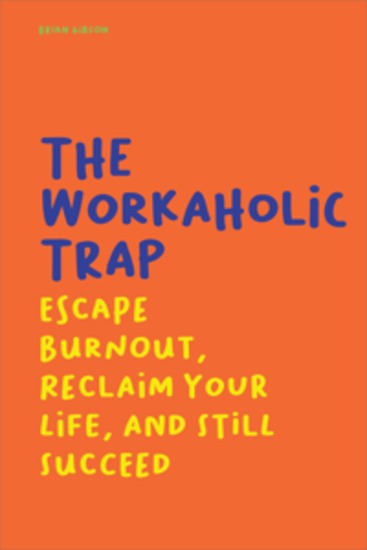
The Workaholic Trap - Escape Burnout Reclaim Your Life And Still Succeed - cover

The Workaholic Trap - Escape Burnout Reclaim Your Life And Still Succeed

Brian Gibson

Publisher: Brian Gibson

  • 0
  • 0
  • 0

Summary

Do you feel trapped in a cycle of endless work, exhaustion, and guilt whenever you try to slow down? You're not alone. In today's hustle-driven world, success often comes at the cost of mental and physical well-being. But what if you could achieve your goals without sacrificing your health, relationships, or happiness?In The Workaholic Trap, you'll uncover the hidden dangers of overwork, the psychological patterns that fuel burnout, and — most importantly — how to break free while still excelling in your career. Packed with real-life insights, science-backed strategies, and practical exercises, this book will help you:Identify the warning signs of workaholism before it takes a toll on your lifeShift your mindset from busyness to purposeful productivitySet boundaries that protect your time, energy, and mental well-beingReclaim joy, creativity, and balance—without losing momentum in your careerRedefine success on your terms so you can thrive both professionally and personallyYou don't have to choose between success and sanity. It's time to escape the Workaholic Trap and start living the fulfilling, balanced life you deserve.Perfect for entrepreneurs, professionals, and high achievers who refuse to let burnout define their success.
Available since: 09/06/2025.

Other books that might interest you

  • The Art of Persuasion - Media And Propaganda in America During The World War II - cover

    The Art of Persuasion - Media...

    Davis Truman

    • 0
    • 0
    • 0
    Delve into the immersive world of World War II through the lens of popular culture with this compelling book. It offers a fresh perspective by meticulously analyzing the overarching themes in various mediums. From the silver screen to the airwaves, and from the pages of comic books to the whimsical world of cartoons, witness how these diverse forms of media coalesced into a formidable instrument of propaganda and public information for the American home front and military. 
    This book illuminates the profound impact of film, radio, cartoons, and comic books in shaping the cultural landscape of wartime America. Gain insight into the prevailing themes permeating the American media, reflecting the ethos and spirit of a nation gripped by conflict. Immerse yourself in a comprehensive exploration that unveils the symbiotic relationship between popular culture and World War II and sheds light on media's profound influence in shaping perceptions and ideologies during one of the most tumultuous periods in history.
    Show book
  • Worship and Awe in Christian Psychology - How Centering God Transforms Mental and Spiritual Health - cover

    Worship and Awe in Christian...

    Joshua J. Knabb

    • 0
    • 0
    • 0
    Mental health resources increasingly focus on the self as the antidote to psychological suffering, offering strategies for prioritizing self-care and self-esteem. Yet as people focus more on the self, their suffering may actually worsen, as evidenced by the prevalence of mental health disorders today. According to Christian clinical psychologist Joshua Knabb, when people focus less on the self and more on God, their mental and spiritual health may improve. 
     
    Combining up-to-date psychological research with theological reflection, this book helps readers better understand the role that awe, pursued through the act of worship, plays in optimal psychological and spiritual functioning. Knabb explains that at its core, Christian mental and spiritual health involves worshipful awe of God, which can be intentionally cultivated throughout the day. The book also includes practices for readers to try out and use in clinical contexts. 
     
    Worship and Awe in Christian Psychology will benefit students in Christian counseling and psychology programs, mental health practitioners, and others who want to improve their mental and spiritual health from a Christian perspective.
    Show book
  • The Roman Empire's Provinces - A Journey through Its Territories - cover

    The Roman Empire's Provinces - A...

    Rogan Fish

    • 0
    • 0
    • 0
    In the early days of the Roman Empire, provinces played a pivotal role in maintaining and expanding Roman control over vast territories. The establishment and management of these provinces were essential to Rome’s transition from a republic to an imperial power. As the empire grew, the need for efficient governance led to the development of a provincial system that would become the backbone of Roman administration. 
    The formation of Roman provinces began during the Republic, but it was under Augustus, the first emperor, that the system became more structured and organized. Augustus divided the provinces into two categories: senatorial and imperial. Senatorial provinces were typically peaceful and long-standing territories governed by proconsuls appointed by the Senate. In contrast, imperial provinces were often frontier areas or regions requiring a significant military presence, administered by legates appointed by the emperor. This division allowed Augustus to maintain control over the army while giving the Senate a role in governance. 
    Provincial boundaries were often drawn based on previous territorial conquests or strategic needs. As Rome continued to expand, new provinces were added, including those in the east after the defeat of Egypt and in the west following the conquest of Gaul and Hispania. Each new territory brought diverse cultures and
    Show book
  • Home Bound - An Uprooted Daughter's Reflections on Belonging - cover

    Home Bound - An Uprooted...

    Vanessa A. Bee

    • 0
    • 0
    • 0
    In this memoir of identity and discovery, Vanessa A. Bee explores the way we define "home" and "belonging"—from her birth in Yaoundé, Cameroon, to her adoption, to experiencing housing insecurity in Europe and her eventual immigration to the US. After her parents' divorce, Vanessa traveled with her mother to Lyon and later to London, eventually settling in Reno, Nevada, as a teenager, right around the financial crisis and the collapse of the housing market. At twenty, still a practicing evangelical Christian and newly married, Vanessa applied to and was accepted by Harvard Law School, where she was one of the youngest members of her class. There, she forged a new belief system, divorced her husband, left the church, and pursued a career in economic justice upon graduation. 


    Vanessa's upbringing has caused her to grapple for years with foundational questions such as: What is home? Is it the country we're born in, the body we possess, or the name we were given and that identifies us? Is it the house we remember most fondly, the social status assigned to us, or the ideology we forge? What defines us and makes us uniquely who we are? 


    Vanessa tackles these timeless questions thematically and unpacks the many layers that contribute to and condition our understanding of ourselves and of our place in the world.
    Show book
  • Out from the Heart - Cultivating Love Compassion and Spiritual Growth - cover

    Out from the Heart - Cultivating...

    James Allen, Tim Zengerink

    • 0
    • 0
    • 0
    What if you discovered that genuine love and compassion could break down every barrier—unleashing greater joy and connection in every area of your life? 
    James Allen’s heartfelt work encourages readers to foster kindness, empathy, and moral clarity as the basis for true spiritual evolution. Adapted for modern readers, this text underscores the power of love to transform not only personal relationships but also the broader world, shining a light on humanity’s shared potential for goodness. 
    What You’ll Discover in This Modern Translation: 
    - The role of compassion and empathy in personal development 
    - Practical steps for nurturing a loving, open-hearted attitude 
    - How acts of kindness can bridge social and emotional divides 
    - Spiritual insights that root your love in a higher, universal truth 
    Imagine living each day guided by a deep sense of compassion—transforming your relationships, uplifting your community, and enriching your inner life. James Allen shows how opening your heart can lead to profound spiritual growth and fulfillment. 
    Step into a life guided by genuine love. Get your copy now and expand the horizons of your mind and spirit.
    Show book
  • Diogenes - The Cynic Who Lived in a Barrel - cover

    Diogenes - The Cynic Who Lived...

    Hector Davidson

    • 0
    • 0
    • 0
    Diogenes of Sinope, one of the most famous figures in ancient philosophy, is a man whose life and ideas have left an indelible mark on the world. Known for his eccentric behavior and unwavering commitment to a life of simplicity, Diogenes was one of the founders of the philosophical school of Cynicism. His life was a statement, rejecting the norms and conventions of society in pursuit of a personal freedom that few could fully understand, much less emulate. To this day, his legacy remains a profound reminder of the power of nonconformity and the pursuit of virtue above material wealth. 
    Born in Sinope (modern-day Sinop, Turkey), Diogenes was a figure who viewed the world with a unique lens. He rejected the luxuries and complexities of Athenian society, seeking instead a life of self-sufficiency, minimalism, and authenticity. His choice to live in a barrel, or more accurately, a large ceramic jar, in Athens became a symbol of his commitment to simplicity and his disdain for materialism. Diogenes wasn’t just a philosopher; he was a living critique of the social structures around him. His constant questioning of authority, wealth, and societal expectations created a lasting legacy that went beyond words and doctrines. 
    The Cynic philosophy that Diogenes embodied was radical for its time. It was a philosophy that urged individuals to cast off the superficial trappings of society—wealth, fame, and social standing—and instead focus on living virtuously and naturally. Diogenes practiced what he preached, often engaging in acts that were both shocking and humorous, yet deeply philosophical. His public antics, such as walking around Athens in broad daylight with a lantern claiming to be "looking for an honest man," were not mere provocations but expressions of a profound philosophical stance against the moral decay he saw in society.
    Show book