Unisciti a noi in un viaggio nel mondo dei libri!
Aggiungi questo libro allo scaffale
Grey
Scrivi un nuovo commento Default profile 50px
Grey
Iscriviti per leggere l'intero libro o leggi le prime pagine gratuitamente!
All characters reduced
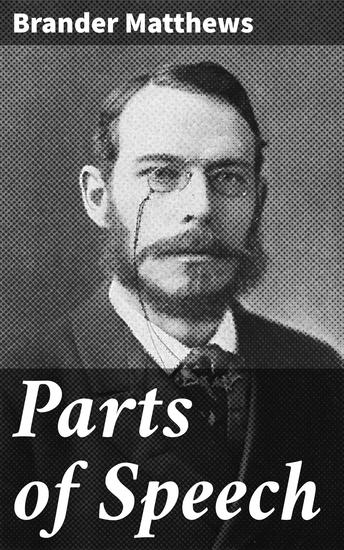
Parts of Speech - Essays on English - cover

Parts of Speech - Essays on English

Brander Matthews

Casa editrice: Good Press

  • 0
  • 0
  • 0

Sinossi

In 'Parts of Speech,' Brander Matthews masterfully navigates the intricacies of the English language, dissecting its fundamental elements with both precision and flair. The work is characterized by its engaging prose and analytical rigor, blending scholarly critique with accessible explanation. Matthews explores the nuances of grammar, punctuation, and syntax through a series of meticulously crafted essays that reflect the author's deep understanding of linguistic structure, placing the work within the broader context of late 19th-century American literature, where a growing interest in pedagogy and linguistic clarity resonated with contemporaneous literary discussions. Brander Matthews, often considered one of the first American literary critics, had a rich background in theater and literature, which undoubtedly influenced his approach to language and its artistic expression. His diverse experiences'Äîas a playwright, critic, and educator'Äîafforded Matthews a unique perspective on the utility and artistry of the English language. This book serves not merely as an academic resource but also as a testament to Matthews' belief in the essential role of language in culture and communication. For scholars, writers, and anyone passionate about mastering English, 'Parts of Speech' is an invaluable resource. Matthews'Äô insightful analyses and clear illustrations guide readers through the labyrinth of language, making it an essential companion for anyone looking to deepen their understanding of English grammar and elevate their writing prowess.
Disponibile da: 21/08/2022.
Lunghezza di stampa: 178 pagine.
Altri libri che potrebbero interessarti

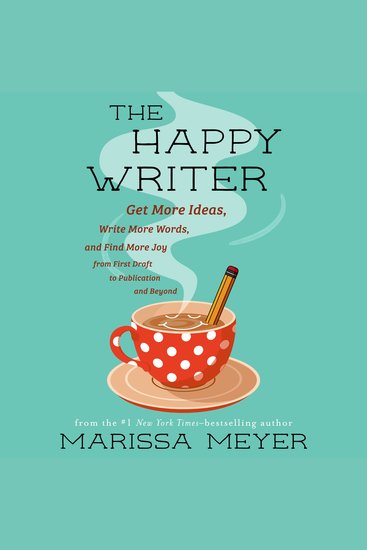
  • The Happy Writer - Get More Ideas Write More Words and Find More Joy from First Draft to Publication and Beyond - cover

    The Happy Writer - Get More...

    Marissa Meyer

    • 0
    • 0
    • 0
    This program is read by the author.From #1 New York Times bestselling author and the creator and host of the popular podcast, The Happy Writer, comes the ultimate guide to writing with less stress and more JOY.If you aren’t suffering, you aren’t creating. Right? Wrong! Writing can and should be joyful, fulfilling… even fun! Applicable to writers in all genres and disciplines—from screenwriters to novelists, journalists to picture book authors, aspiring to many-times published—The Happy Writer is a heartfelt and optimistic guide that will show you the way to a happier writing journey.Part craft guide, part writing coach, and part cheerleader, this book offers useful advice on a slew of common writing and publishing ailments, such as how to end procrastination, how to build a social media platform that reflects your personality, how to get your imagination to overflow with new ideas, how to listen to your intuition when receiving a critique on your work, how to overcome impostor syndrome, what to do when you’re stuck in the query trenches, and so much more.No matter where a writer might be on their creative journey, Meyer encourages them to tap into their own personal sources of joy and to celebrate every milestone, all while confronting challenges (writer’s block! rejection! burnout!) with a reservoir of resources for every temperament, budget, and career.Known in writers’ circles as a generous mentor, Meyer shares stories from her own writing path to help every writer discover the ultimate joys of living their best writing life.A Macmillan Audio production from Feiwel & Friends.
    Mostra libro
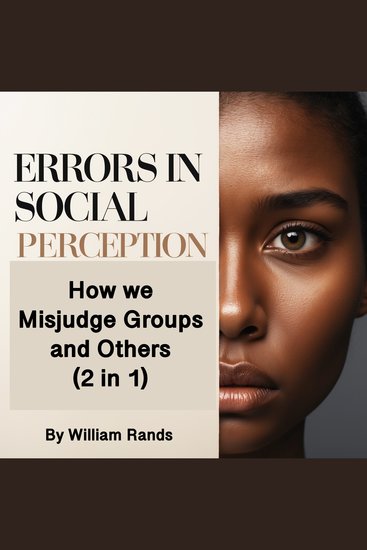
  • Errors in Social Perception - How We Misjudge Groups and Others (2 in 1) - cover

    Errors in Social Perception -...

    William Rands

    • 0
    • 0
    • 0
    This book contains these two topics: 
    - The False Consensus Effect: The roots of the False Consensus Effect trace back to psychological and social mechanisms. From a psychological standpoint, it arises from our natural tendency to see ourselves as typical and representative of a larger group. We are more likely to surround ourselves with like-minded individuals, reinforcing our views and making them appear more widely held. This is further exacerbated by our desire for validation and the comfort that comes from seeing our beliefs reflected in others. As a result, we are inclined to believe that our preferences or values are the norm, even when they may be quite particular to our own experiences. 
    - The In-Group Bias: At its core, in-group bias serves a functional purpose in social behavior. Evolutionarily, humans have relied on social groups for survival, and belonging to a cohesive group provided benefits such as shared resources, protection, and mutual support. However, as societies evolved and became more complex, these group dynamics also gave rise to preferential treatment of those within the same group. This is not limited to obvious groups like tribes or clans but can extend to any group with which an individual identifies. Whether through shared beliefs, common goals, or even simple social interactions, in-group bias manifests in everyday life, influencing decisions, relationships, and behaviors.
    Mostra libro
  • Learn Hebrew With Music - cover

    Learn Hebrew With Music

    Innovative Language Learning, ...

    • 0
    • 0
    • 0
    Can learning Hebrew be as simple as listening to music? 


    And as easy as remembering song lyrics?


    Just think. You remember song lyrics because lyrics are catchy, repeated throughout the song, and go with the music, right? Now, if you stuck in Hebrew, you’d easily learn Hebrew words and phrases the same way! 


    So, yes, learning Hebrew is as easy as listening to music… with the Learn Hebrew With Music Audiobook.


    Just press play, and you’ll hear Hebrew words and phrases repeated to the beat of upbeat and cheerful music. And… follow along!


    You’ll learn 180+ most common Hebrew words and phrases… while relaxing at home, or while driving to work.


    Learn Hebrew With Music is the easiest way to start learning Hebrew.. without getting overwhelmed by complicated explanations. Perfect for new learners with little to no language learning experience.


    What will you learn?
     
    180+ Words & Phrases Including...
     
    • Basic Greetings
     
    • Numbers
     
    • Common Questions and Answers
     
    • Parts of the Body & Talking About Your Wellbeing
     
    • Common Hobbies
     
    • And much more


    Learn Hebrew With Music includes...
     
    • 15 Songs/Lessons Inside (Each is about 7 minutes long)
     
    • Fast-Paced Review Section at the End of Each Lesson
     
    • 1 Hour 50 Minutes in Total
     
    • Accompanying PDF eBook with the Words, Phrases and Translations


    Download the PDF and read along
    Mostra libro
  • London - cover

    London

    John Scott

    • 1
    • 4
    • 0
    Come with us to London - a city as old as the Romans, and as new as the twenty-first century. There are places to go - from Oxford Street to Westminster Abbey, from Shakespeare's Globe Theatre to Wimbledon Tennis Club. And things to do - ride on the London Eye, visit the markets, go to the theatre, run in the London Marathon. Big, beautiful, noisy, exciting - that's London.
    Mostra libro
  • The Bandwagon Effect - How Popular Opinion Influences Individual Choices - cover

    The Bandwagon Effect - How...

    William Rands

    • 0
    • 0
    • 0
    The bandwagon effect is a psychological phenomenon that occurs when people tend to align their opinions, behaviors, or preferences with the majority or popular opinion, often without critically evaluating the subject at hand. This effect is driven by the inherent desire to fit in, avoid conflict, and adhere to social norms. The term "bandwagon" originally emerged in the 19th century, with its roots in political campaigns where politicians would refer to a parade or vehicle that people would literally "jump onto" once it gained popularity. Over time, it evolved to describe the broader tendency to follow the crowd, especially in decision-making processes. 
    The bandwagon effect is grounded in the psychology of conformity, which has been extensively studied. Humans are social beings, and much of our behavior is influenced by the groups we belong to. From childhood, individuals learn to adopt behaviors and opinions based on what is seen as acceptable or desirable within their social circles. This need to belong can be so strong that individuals may forego independent thought in favor of adopting the views of others, even when these views may not align with their personal beliefs or values. 
    One of the primary drivers of the bandwagon effect is the desire for social approval. People often feel that aligning with popular opinion will grant them a sense of acceptance and belonging within a group. Additionally, there is a cognitive bias at play. When individuals perceive that a particular opinion or behavior is widely held, they may believe that it is correct or valid, simply because others hold it. This is closely related to the concept of social proof, where individuals look to others as a guide in uncertain situations. The more people who adopt a certain belief, the more likely others are to follow, creating a cycle of reinforcement.
    Mostra libro
  • Importance of Speech - cover

    Importance of Speech

    Saurabh Kumar

    • 0
    • 0
    • 0
    This book tells us about the importance of speech.It allows us to form connections, influence decisions, and motivate change.
    Mostra libro