Unisciti a noi in un viaggio nel mondo dei libri!
Aggiungi questo libro allo scaffale
Grey
Scrivi un nuovo commento Default profile 50px
Grey
Iscriviti per leggere l'intero libro o leggi le prime pagine gratuitamente!
All characters reduced
The Greatest Short Stories of Bram Stoker - Occult & Supernatural Tales Gothic Horror Classics & Dark Fantasy Collections - cover

The Greatest Short Stories of Bram Stoker - Occult & Supernatural Tales Gothic Horror Classics & Dark Fantasy Collections

Bram Stoker

Casa editrice: Good Press

  • 0
  • 0
  • 0

Sinossi

In "The Greatest Short Stories of Bram Stoker," readers are invited into the rich and atmospheric world crafted by one of the Gothic literature's most revered figures. This collection encompasses a diverse range of narratives that deftly blend elements of horror, suspense, and the supernatural, showcasing Stoker's exceptional command of language and his ability to evoke a visceral sense of dread. From the chilling narrative of a tragic love lost to the eerie distortions of reality, each tale reveals Stoker's exploration of societal fears and human psychology against the backdrop of the late Victorian era, a time marked by both fervent scientific inquiry and a fascination with the occult. Bram Stoker, best known for his iconic novel "Dracula," draws heavily from his own life experiences and the cultural tensions of his time which have informed his profound understanding of the darker aspects of the human condition. His diverse career, which included positions as a theater manager and a personal assistant to the renowned actor Henry Irving, greatly influenced his storytelling technique and thematic choices. Stoker's engagement with folklore and history is also crucial, providing depth and realism to his imaginative works. This collection is a must-read for those intrigued by Gothic fiction and the intricate layering of characters and themes in Stoker's narratives. It not only serves as a testament to his literary genius but also provides a glimpse into the shadowy corners of the human psyche. Readers will find themselves captivated by the timeless quality of these tales, which continue to resonate with modern audiences, inviting contemplation of both fear and fascination.
Disponibile da: 12/01/2024.
Lunghezza di stampa: 533 pagine.
Altri libri che potrebbero interessarti

  • Christine: Book summary & analysis - cover

    Christine: Book summary & analysis

    Alexander Pike

    • 0
    • 0
    • 0
    This content is an independent and unofficial summary created for informational and educational purposes only. It is not affiliated with, authorized, approved, licensed, or endorsed by the original author or publisher. All rights to the original work belong to its respective copyright holders. This summary is not intended to substitute the original book, but to offer a concise overview and interpretation of its main ideas. 
     
    Immerse yourself in a dark, electrifying tale where a classic 1958 Fury becomes more than metal and chrome—it’s a living force of obsession and power. Follow a shy teenager’s journey from timid outsider to confident risk-taker as he breathes new life into an abandoned car, only to discover that passion untethered can turn into a deadly compulsion. With edge-of-your-seat suspense and an undercurrent of transformative grit, this audiobook challenges you to harness your ambitions wisely—and reminds you that true mastery lies in keeping your greatest creations from mastering you.
    Mostra libro
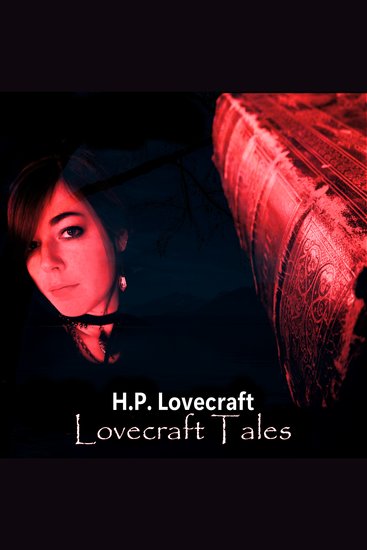
  • Lovecraft Tales - HP Lovecraft - cover

    Lovecraft Tales - HP Lovecraft

    H. P. Lovecraft

    • 0
    • 0
    • 0
    Lovecraft Tales - H.P. Lovecraft 
    Short Story Collection 
     
    Chapter List 
     
    1.	Beyond the Wall of Sleep  
    2.	The Nameless City  
    3.	Herbert West: Reanimator – Part A  
    4.	Herbert West: Reanimator – Part B  
    5.	The White Ship
    Mostra libro
  • A Northanger Abbey Double Feature - The Castle of Wolfenbach by Eliza Parsons & The Necromancer by Lawrence Flammenberg - cover

    A Northanger Abbey Double...

    Eliza Parsons

    • 0
    • 0
    • 0
    A woman visits a haunted castle, and two friends share tales of the supernatural in these two gothic novels featured in Jane Austen’s Northanger Abbey. In Jane Austen’s Northanger Abbey, the main character, Catherine, receives a reading list of gothic novels. Once thought to be fabricated by Austen, these novels were rediscovered in the 1920s and are now referred to as the “Northanger Horrid Novels.” Two of the Northanger Horrid Novels, The Castle of Wolfenbach and The Necromancer, are presented here as A Northanger Double Feature.  With hidden identities, damsels in distress, creepy castles, and villainous Counts, The Castle of Wolfenbach (1793) is a showcase for the gothic genre. The story follows the beautiful Matilda as she escapes unwanted advances, braves the haunted castle, and attempts to find safety, and maybe even love, all while being pursued by her murderous uncle. The Castle of Wolfenbach is Eliza Parsons’s most famous novel and an important foundational work in the gothic genre. The Necromancer (1794) is by far the strangest of the Northanger Horrid Novels. The story begins with two friends, Herman and Hellfried, passing a stormy night by exchanging supernatural stories. The weirdness continues to unfold through a series of letters. The work is an example of the gothic genre’s use of framing narratives surrounding first person accounts from multiple characters. The Necromancer takes this trope to staggering heights by nesting multiple narratives inside each other. The resulting stories are a bizarre collection of violence and supernatural shenanigans centered around the mysterious Valkert, who is rumored to have returned from the dead.  Both of these stories are amazing examples of early gothic works and can be enjoyed as such for fans of the genre or read as a companion to Austen’s Northanger Abbey.
    Mostra libro
  • The Doll's Ghost - cover

    The Doll's Ghost

    Francis Marion Crawford

    • 0
    • 0
    • 0
    "The Doll's Ghost" included in the short story collection Wandering Ghosts. Mr. Puckler is a doll doctor, and the dolls he repairs become very, very life like.A beautiful doll named Nina is broken Lady Gwendolen. Can Mr Puckler, the doll doctor, mend the doll? What happens after Nina's deep gash is healed and Else (Puckler's daughter) tries to return the doll to its owner?
    Mostra libro
  • The Hound - cover

    The Hound

    H. P. Lovecraft

    • 0
    • 0
    • 0
    "The Hound" is a short story written by H. P. Lovecraft in September 1922 and published in the February 1924 issue of Weird Tales. It contains the first mention of Lovecraft's fictional text the Necronomicon.The story opens with the unnamed narrator preparing to commit suicide. Lamenting his fate, he reflects upon the events which led him to this moment.The narrator and his friend, St. John, are a pair of loners who both have a deranged interest in robbing graves. They constantly defile crypts and often keep souvenirs of their nocturnal expeditions. Since they reside in the same house, they have the opportunity to set up a sort of morbid museum in their basement. Using the objects collected from the various graves they have robbed, the two men organize a private exhibition. The collection consists of headstones, preserved bodies, skulls, and several heads in different phases of decomposition. It also includes statues, frightful paintings, and a locked portfolio bound in tanned human skin.One day, the two learn of a particular grave, which sparks a profound interest in them: an old grave in a Holland cemetery which holds a legendary tomb raider within, one who is said to have stolen, many years ago, a "potent thing from a mighty sepulchre." They travel to the old cemetery where the man was buried...
    Mostra libro
  • Frankenstein by Mary Shelley - adapted for radio by Michael Henrik Wynn - cover

    Frankenstein by Mary Shelley -...

    Mary Shelley

    • 0
    • 0
    • 0
    This is a radio play version of Mary Shelley's classic novel, about the scientist Victor Frankenstein who created a monster. Recent biographies of Mary Shelley have pointed to the fact that Mary Shelley's motives for writing her story differ from those the public eventually attributed to it. There is good support for this because Mary Shelley wrote a preface to the 1831 edition of her novel in which she explicitly states this. And the themes she mentions are also present in her less talked about novel, The Last Man. 
    This is an adaptation by Michael Henrik Wynn for the education net radio stream Historyradio.org, and he also narrates and plays the various parts.
    Mostra libro