Unisciti a noi in un viaggio nel mondo dei libri!
Aggiungi questo libro allo scaffale
Grey
Scrivi un nuovo commento Default profile 50px
Grey
Iscriviti per leggere l'intero libro o leggi le prime pagine gratuitamente!
All characters reduced
Qualities to look for in a caregiverelderly - cover

Qualities to look for in a caregiverelderly

Borreg Amber

Casa editrice: OBART

  • 0
  • 0
  • 0

Sinossi

There are no Sundays or holidays. There is no rest for those who have assumed the responsibility of caring for a family member in a serious and chronic condition (examples are not lacking: AIDS, cancer, Alzheimer's, serious psychiatric pathologies,...) even though there are times when other people replace them in this absorbing task. The caregiver is that person who, although he does not belong to the healthcare world or has been trained as such, is responsible for the care of the dependent patient at home. The existence of the informal caregiver (according to the definition of the World Health Organization) is fundamental in our society, but it is not without risks. On many occasions, throughout the disease process, the caregiver feels that he is running out of strength to carry on.
Disponibile da: 13/06/2023.

Altri libri che potrebbero interessarti

  • Dwapar Katha - Mahabharat ki Gathayen Bhaag-1 - cover

    Dwapar Katha - Mahabharat ki...

    Sudipta Bhawmik

    • 0
    • 0
    • 0
    The Mahabharata, one of India's most cherished epics, has fascinated generations. The age-old saga of warring cousins-the valiant Pandavas and the formidable Kauravas-has left an indelible mark on our collective imagination. Yet, beneath the stories of valour and villainy lie complex human emotions that challenge our ideas about 'good' and 'evil'. Can the virtuous always conquer the malevolent? Are the Kauravas truly the embodiment of darkness, while the Pandavas exude righteousness? Does Dharma triumph in the end? 
    In Dwapar Katha: The Stories of the Mahabharata, Sudipta Bhawmik delves deep into the intricacies of human nature as he explores the psyches of an eclectic cast of characters, unearthing their motivations and desires. He immerses us in their ceaseless inner struggles on a battlefield more profound than Kurukshetra. Feel the seething anger of Bheem as he rages against the silent Yudhishtir during Draupadi's disrobing and grieve with Duroyadhan when he loses his dear friend Karna in the war. Explore the concepts of Dharma and Karma along with the Pandavas, as Sudipta unearths age-old tales of the Vana Parva, where rishis share life lessons with the exiled Pandavas. 
    Rooted in Sudipta's immensely popular podcast, which has recorded over 20 million downloads, Dwapar Katha is a delight to read. The captivating prose and stunning illustrations breathe new life into this timeless tale where darkness and light intertwine and heroes are often indistinguishable from villains. The Mahabharata has never been more enchanting, thought-provoking and alive.
    Mostra libro
  • Speaking Across Generations - Messages That Satisfy Boomers Xers Millennials Gen Z and Beyond - cover

    Speaking Across Generations -...

    Darrell E. Hall

    • 0
    • 0
    • 0
    Different generations communicate differently. If you are speaking across generations, you need to understand how different generations hear. Pastor Darrell Hall (a millennial) harnesses the insights of generational science to explore how generations are distinct people groups with their own cultures and languages. With fresh research from the Barna Group on how generations communicate, Hall sheds light on how each generation receives verbal messages, from boomers and Xers to millennials and Gen Z and those not yet named.
    Discover how generational science can equip you to communicate effectively. Bridge the communication gap between speaker and listener so people of all generations can hear clearly.
    Mostra libro
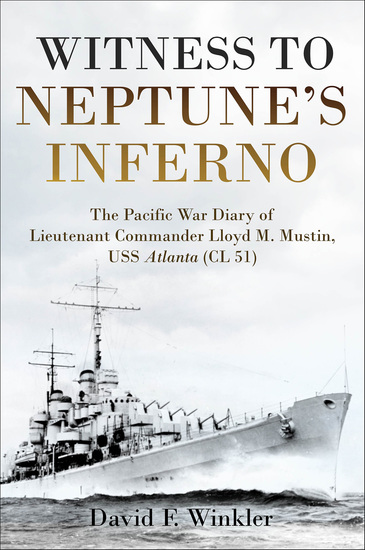
  • Witness to Neptune’s Inferno - The Pacific War Diary of Lieutenant Commander Lloyd M Mustin USS Atlanta (CL 51) - cover

    Witness to Neptune’s Inferno -...

    David F. Winkler

    • 0
    • 0
    • 0
    “… a tantalizing window into Mustin’s experiences during the early years of the conflict, with vivid details captured by Mustin’s war diary and his personal recollections of the Battle of Guadalcanal from a naval perspective.” — American Rifleman
    
    1942 would prove crucial for the United States in the Pacific following the Japanese attack on Pearl Harbor and a series of setbacks in the Southwest. As the first ship commissioned following America’s entry into World War II, the light cruiser USS Atlanta would be thrust into the Pacific fight, joining the fleet in time for the pivotal battle of Midway and on to the Guadalcanal campaign in the Southwest Pacific. Embarked was an exceptionally astute observer, Lieutenant Commander Lloyd M. Mustin, who faithfully recorded his thoughts on the conflict in a standard canvas-covered logbook.
    
    Diaries were not supposed to be kept by those serving in the U.S. Navy during World War II, and for good reason. If recovered by the Japanese, they would likely have revealed that the Japanese code had been broken prior to the battle of Midway. Thus, Mustin’s diary is a rare day-to-day accounting of the Pacific from a very opinionated mid-grade officer. Beginning with the commissioning of Atlanta at the Brooklyn Navy Yard on Christmas Eve 1941, Mustin covers the ship’s workups and her deployment to the Pacific in time for the battle of Midway.
    
    It’s then on to the Southwest Pacific, where the ship first engages enemy aircraft at the battle of the Eastern Solomons in late August 1942. Mustin’s final entry covers the battle of Santa Cruz in late October 1942. The story is completed by an account of the battle of Guadalcanal and beyond, drawing upon Mustin’s oral history. This is a valuable document, fully interpreted to provide a better understanding of the Pacific War during that critical year.
    Mostra libro
  • How to Listen - An Ancient Guide to Learning from Others - cover

    How to Listen - An Ancient Guide...

    Plutarch, Jeffrey Beneker

    • 0
    • 0
    • 0
    A lively new translation of Plutarch’s charming and timeless essay on how to be a good listener—and why listening is essential to learning and living wellListening is a skill—even an art—and it’s essential to learning and to life. Indeed, as Plutarch writes in How to Listen, “listening well is the foundation for living well.” In this volume, Jeffrey Beneker presents a vivid and accessible new translation of Plutarch’s classic essay about how to become a skilled listener, complete with an inviting introduction and the original Greek on facing pages.Plutarch is most famous as the author of Parallel Lives, a series of biographies of Greek and Roman statesmen. But he was also an expert on teaching and learning and How to Listen is arguably one of his best pedagogical works. A proponent of active listening well before its time, Plutarch explains the skills we need—and the obstacles and distractions we must overcome—to become effective listeners. Good listening requires, above all, an acknowledgement of our own ignorance in certain subjects and a commitment to gaining knowledge. We must set aside pride and envy so we can respect the expertise of others. We must also train ourselves to see through style and focus on substance, to discriminate between weak and strong arguments, and to criticize ideas fairly and accurately.Filled with shrewd insights and advice, How to Listen shows how to cultivate a skill that everyone who wants to learn and live well must master.
    Mostra libro
  • Start Ghetto - No-Nonsense Goal Setting for Self-Help Haters - cover

    Start Ghetto - No-Nonsense Goal...

    la tetra o.

    • 0
    • 0
    • 0
    A Blueprint for Those Who Can’t Afford to Wait 
    You didn’t wait to be chosen. You chose. Broke. Tired. Still moving. That’s momentum. 
    Start Ghetto is a sharp, irreverent tool for anyone who started with nothing but audacity, old shame, and seven crinkled dollars to their name. This book asks you to build with what you’ve got, from where you are… especially when the world forces you to “make it enough.” 
    Start Ghetto is a field guide for dreamers who are done pretending they don’t want more but are tired of being told to manifest better, dream harder, and pray a little longer. Through real talk, callouts, and permission-free practices, you’ll learn to:Confront the internal lies that keep you stuckRewrite how you speak to yourself when no one’s listeningUnhook from shame-based ambition and false urgencySet grounded goals backed by your truth, not their timeline 
    With the inclusion of the G.H.E.T.T.O. Method™—a radical blueprint for goal-setting that doesn’t require perfection, privilege, or permission—you’ll learn how to move like someone who belongs to themselves. 
    Narrated by the author for an unfiltered, straight-from-the-source experience. 
    The first book in the F*ck Around & Flourish series, Start Ghetto is for the ones still broke, still dreaming, and still not asking for permission.
    Mostra libro
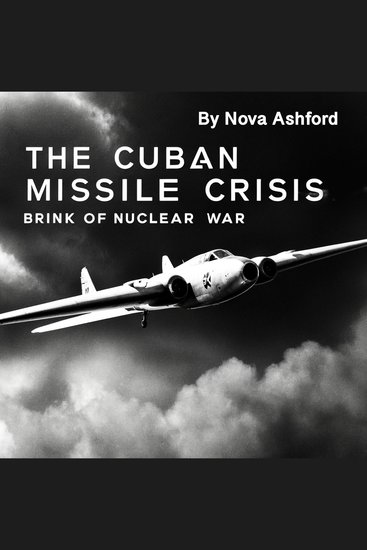
  • The Cuban Missile Crisis - Brink of Nuclear War - cover

    The Cuban Missile Crisis - Brink...

    Nova Ashford

    • 0
    • 0
    • 0
    The Cuban Missile Crisis, one of the most critical moments in the Cold War, did not emerge in isolation but was the culmination of a decades-long geopolitical struggle between the United States and the Soviet Union. The context of this crisis lies deeply within the broader Cold War, which began shortly after the end of World War II. This period was marked by intense ideological rivalry, military standoffs, and a nuclear arms race that would define much of the second half of the 20th century. 
    The origins of the Cold War can be traced back to the conflicting political and economic ideologies of the two superpowers. The United States, championing capitalism and democracy, viewed the spread of communism, led by the Soviet Union, as a direct threat to global stability and democratic values. On the other hand, the Soviet Union, under the leadership of Joseph Stalin, sought to expand the reach of communism and solidify its control over Eastern Europe, which had been acquired as a result of the war. This division between the capitalist West and the communist East created a tense geopolitical environment that shaped every diplomatic interaction between the two powers. 
    In the early stages of the Cold War, several key events served to heighten the distrust between the U.S. and the Soviet Union. The Berlin Blockade in 1948, the Korean War in the early 1950s, and the formation of opposing military alliances like NATO (North Atlantic Treaty Organization) and the Warsaw Pact solidified the division of the world into two hostile camps. As both nations escalated their military capabilities, the nuclear arms race emerged as a central aspect of Cold War tensions. The development and stockpiling of nuclear weapons made the Cold War not just an ideological battle but also a dangerous game of survival, with the constant threat of global annihilation hanging over every political and military maneuver.
    Mostra libro