Join us on a literary world trip!
Add this book to bookshelf
Grey
Write a new comment Default profile 50px
Grey
Subscribe to read the full book or read the first pages for free!
All characters reduced
Indian Wars - History of Conflicts Between European Colonists and the Indigenous Peoples of North America: Wars in West Virgina North Carolina Montana & Illinois - cover

Indian Wars - History of Conflicts Between European Colonists and the Indigenous Peoples of North America: Wars in West Virgina North Carolina Montana & Illinois

Black Hawk, Charles M. Scanlan, Alexander Scott Withers, Enoch Lawrence Lee, Joseph Kossuth Dixon

Publisher: e-artnow

  • 0
  • 0
  • 0

Summary

Indian Wars is the collective name for the various armed conflicts fought by European governments and colonists, and later the United States government and American settlers, against the indigenous peoples of North America. These conflicts occurred from the time of the earliest colonial settlements in the 17th century until the 1920s. Contents:  Indian Wars in North Carolina 1663-1763 Chronicles of Border Warfare – Indian Wars in West Virginia  Autobiography of the Sauk Leader Black Hawk and the History of the Black Hawk War of 1832  The Vanishing Race - The Last Great Indian Council
Available since: 12/15/2023.
Print length: 867 pages.
Other books that might interest you

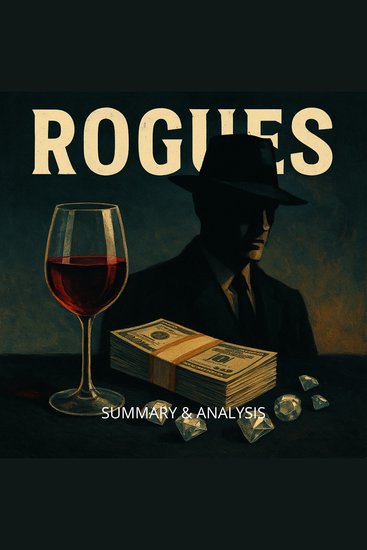
  • Rogues: Book Summary & Analysis - cover

    Rogues: Book Summary & Analysis

    Alexander Pike

    • 0
    • 0
    • 0
    This content is an independent and unofficial summary created for informational and educational purposes only. It is not affiliated with, authorized, approved, licensed, or endorsed by the original author or publisher. All rights to the original work belong to its respective copyright holders. This summary is not intended to substitute the original book, but to offer a concise overview and interpretation of its main ideas.


    Step into the minds of the bold, the brilliant, and the morally complex. Rogues is a riveting collection of true stories that explores the lives of rule-breakers, outliers, and master manipulators—individuals who operate at the blurred edge of genius and deception. From wine fraudsters and arms dealers to whistleblowers and media moguls, these portraits reveal the choices that separate ambition from corruption, and brilliance from ruin.
     
    With sharp storytelling and a cinematic lens, each chapter dives deep into the psychology of high-functioning individuals who defy systems, rewrite rules, and reshape the world around them—for better or worse. But behind every scheme and scandal lies a deeper question: what happens when skill outruns ethics?
    Show book
  • Conversations with Isaiah Berlin - cover

    Conversations with Isaiah Berlin

    Ramin Jahanbegloo

    • 0
    • 1
    • 0
    An illuminating and witty dialogue with one of the greatest intellectual figures of the twentieth century. Ramin Jahanbegloo's interview with Isaiah Berlin grew into a series of five conversations which offer an intimate view of Berlin and his ideas. They include discussions on pluralism and liberty as well as the thinkers and writers who influenced Berlin. This revised edition provided an excellent introduction to Berlin's thought. Ramin Jahanbegloo is an Iranian philosopher, who has taught in Europe and North America. In 2006 he was imprisoned for several months in Iran. He is currently teaching Political Philosophy at Toronto University. 'Though like Our Lord and Socrates he does not publish much, he thinks and says a great deal and has had an enormous influence on our times'. Maurice Bowra 'Berlin never talks down to the interviewer. Conversations here means the minds of the interviewed and interviewer meet on equal terms in language that is transparently clear, informed, witty and entertaining'. Stephen Spender 'He is wise without seeming pompous, witty without seeming trivial, affectionate without seeming sentimental'. Michael Ignatieff 'Isaiah Berlin... has for fifty years in this talkative and quarrelsome city (Oxford) been something special, admired by all and disliked by no-one... a benevolent super-don'. John Bayley http://berlin.wolf.ox.ac.uk/
    Show book
  • Carbon Queen - The Remarkable Life of Nanoscience Pioneer Mildred Dresselhaus - cover

    Carbon Queen - The Remarkable...

    Maia Weinstock

    • 0
    • 0
    • 0
    The life of trailblazing physicist Mildred Dresselhaus, who expanded our understanding of the physical world. 


    As a girl in New York City in the 1940s, Mildred "Millie" Dresselhaus was taught that there were only three career options open to women: secretary, nurse, or teacher. In Carbon Queen, science writer Maia Weinstock describes how, with curiosity and drive, Dresselhaus defied expectations and forged a career as a pioneering scientist and engineer. Dresselhaus made highly influential discoveries about the properties of carbon and other materials and helped reshape our world in countless ways—from electronics to aviation to medicine to energy. She was also a trailblazer for women in STEM and a beloved educator, mentor, and colleague. 


    Her path wasn't easy. Her graduate adviser felt educating women was a waste of time. But Dresselhaus persisted, finding mentors in Nobel Prize–winning physicists Rosalyn Yalow and Enrico Fermi. Eventually, Dresselhaus became one of the first female professors at MIT, where she would spend nearly six decades. Weinstock explores the basics of Dresselhaus's work in carbon nanoscience accessibly and engagingly, describing how she identified key properties of carbon forms, leading to applications that range from lighter, stronger aircraft to more energy-efficient and flexible electronics.
    Show book
  • Foundations of Fiction The - Werewolves - Hear the stories that gave birth to the modern genre craze - cover

    Foundations of Fiction The -...

    Rudyard Kipling, Arthur Conan...

    • 0
    • 0
    • 0
    A dog may be man’s best friend.  It is also one of his worst nightmares.  The idea that humans could suddenly present themselves as demonic werewolves can only have come from the deepest, darkest and most diabolical recesses of an author’s mind. 
     
    In this volume we present a roll-call of classic authors including Rudyard Kipling, Saki, Arthur Conan Doyle, Catherine Crowe and many others who short story by short story establish the building blocks of this horrific yet thrilling genre.  Here all manner of characters and narratives weave together to bring a unique yet intricate account of the beginnings of this most troubling of literary genres. 
    1 - Foundations of Fiction - Werewolves - An Introduction 
    2 - Mark of the Beast by Rudyard Kipling 
    3 - A Pastoral Horror by Arthur Conan Doyle 
    4 - Tarnhelm or The Death of My Uncle Robert by Hugh Walpole 
    5 - Gabriel-Ernest by Saki 
    6 - The She-Wolf by Saki 
    7 - The Lame Priest by Susan Morrow writing as S Carleton 
    8 - The Thing in the Forest by Bernard Capes 
    9 - Vampirismus or Aurelia by E T A Hoffman 
    10 - A Story of a Weir-Wolf by Catherine Crowe
    Show book
  • Werewolves - A Short Story Collection - Classic short stories that inspired the modern fascination with Werewolves - cover

    Werewolves - A Short Story...

    Arthur Conan Doyle, ETA...

    • 0
    • 0
    • 0
    Many of us are cautious around dogs.  However friendly they seem their energy and open panting jaws seem to summon some primitive instinct within us to be aware. 
     
    Once we advance to wolves those fears become rather more persuasive. Their wild and seemingly vicious, determined natures can induce panic in even the most foolhardy of us.  Nature admires winners. 
     
    From there it is but a short step to the supernatural evil of Werewolves.  Now fear is definitely the thing we feel pulsing through our veins summoning a flight response.  But no matter what our hopes are werewolves, whether real or in the imaginations of this cast of chilling unrepentant authors, stroke knowing chords of terror into every sentence, as the pages turn our uneasiness begins to escalate.  Terror begins to track our every step.   
     
    With such literary craftsmen as Saki, Hugh Walpole, Ambrose Bierce, Rudyard Kipling, Arthur Conan Doyle and others, that feeling happens time and time again. 
     
    1 - Werewolves - A Short Story Collection - An Introduction 
    2 - Mark of the Beast by Rudyard Kipling 
    3 - A Pastoral Horror by Arthur Conan Doyle 
    4 - Gabriel-Ernest by Saki 
    5 - The Eyes of the Panther by Ambrose Bierce 
    6 - Tarnhelm or The Death of My Uncle Robert by Hugh Walpole 
    7 - The She-Wolf by Saki 
    8 - Vampirismus or Aurelia by E T A Hoffman 
    9 - TheThing in the Forest by Bernard Capes 
    10 - A Story of a Weir-Wolf by Catherine Crowe 
    11 - The Lame Priest by Susan Morrow writing as S Carleton 
    12 - Alymer Vance & The Vampire by Alice and Claude Askew
    Show book
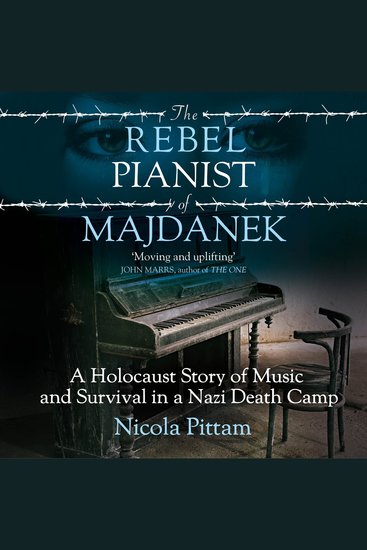
  • The Rebel Pianist of Majdanek - A Holocaust Story of Music and Survival in a Nazi Death Camp - cover

    The Rebel Pianist of Majdanek -...

    Nicola Pittam

    • 0
    • 0
    • 0
    'A moving and uplifting story of one woman’s fight against the Nazis through her love of music. It will stay with you long after you’ve finished reading.' John Marrs, author of The One and The Marriage Act 
    Former Polish teenage piano prodigy Mosha Gebert is teaching when the Nazis come for her. They kill her student, but she is taken to Majdanek concentration camp. There, Commandant Josef Hanke spots her and recognises her as the pianist he fell in love with years earlier. 
    Hanke demands that Mosha play ‘Ode to Joy’ for him, but she refuses. She will never play in such a horrific place – or for such an evil monster. So begins a battle of wills and repeated torture. Even when Hanke causes her to lose her hearing, Mosha refuses to play. 
    When her sister arrives in the camp, Hanke tries to use her as leverage but Mosha is steadfast in her hatred for Hanke and the Nazis. Even when her sister is subjected to worse punishment, Mosha does not waver. Instead of playing for Hanke, she begins teaching the women camp songs. 
    Hanke finally turns his anger on Mosha, breaking one of her fingers. She convinces prison guard Elsa to smash the rest of her fingers with a rock. 
    Mosha believes crippling herself is the only way for her to survive and triumph over Hanke, but what will this do to him? Will Hanke forgive her? Or will this last desperate act finally push him over the edge?
    Show book