Unisciti a noi in un viaggio nel mondo dei libri!
Aggiungi questo libro allo scaffale
Grey
Scrivi un nuovo commento Default profile 50px
Grey
Iscriviti per leggere l'intero libro o leggi le prime pagine gratuitamente!
All characters reduced
Solution-Focused Brief Therapy in Education - A Practical Guide for Teachers Counselors and Mentors with 950 Questions & Techniques to Inspire Student Growth - cover

Solution-Focused Brief Therapy in Education - A Practical Guide for Teachers Counselors and Mentors with 950 Questions & Techniques to Inspire Student Growth

Bert Hansel Ramsey, Anthony Elgin Olson

Casa editrice: TherapyBooks Publishing

  • 0
  • 0
  • 0

Sinossi

Are you an educator, counselor, or mentor looking for a practical, research-backed approach to guide students toward success? Solution-Focused Brief Therapy (SFBT) is a proven method that shifts conversations from problems to possibilities, helping students build confidence, resilience, and self-motivation.
 
-- This book provides 950 powerful solution-focused questions and techniques designed to help you:--- Engage students in meaningful, forward-thinking conversations--- Encourage problem-solving and self-reflection--- Foster a positive learning environment in classrooms and counseling settings--- Help students overcome challenges and take actionable steps toward success
 
With real-world examples, practical strategies, and easy-to-use questioning techniques, this guide is perfect for:--Teachers – Build a solution-focused classroom culture-- School Counselors – Guide students through challenges with effective questioning-- Mentors & Coaches – Inspire and empower students to reach their goals-- Anyone Working with Youth – Practical tools for fostering student growth and engagement
 
-- Transform the way you support students—turn setbacks into solutions!
Disponibile da: 01/03/2025.
Lunghezza di stampa: 200 pagine.

Altri libri che potrebbero interessarti

  • Discovering Your Plot - Think like a Pro Writer 6 - cover

    Discovering Your Plot - Think...

    M.A. Lee

    • 0
    • 0
    • 0
    What do writers want from plot? 
    What do writers need from plot? 
    Are those questions the same? Not really. As wordsmiths, we writers know that want and need are two different words. 
    ·      The want is a circumstance that we writers can control. We want plot specifics to help us craft story and exceed reader expectations. 
    ·      The need is a circumstance of obligations from reader expectations of story. While readers may want the comfort of the genre elements (the tropes), they also wish to have their interest and curiosity piqued. 
    Can we writers deliver on the expectations and the surprises in order to please our readers? That’s the question that Discovering Your Plot answers. 
    This guidebook covers plot structure and the necessities of genre expectations so we writers can anticipate what readers want. It explores the six most common plot structures and has a detailed examination of 12 major sections in all novels, no matter the genre. 
    By the end of Discovering Your Plot¸ writers will have the tools to construct a story as well as diagnose problems with pacing, tension and suspense, and sequencing events. 
    Discovering Your Plot is Book 6 in the Think like a Pro Writer series and the second of the Discovering set of how-to guidebooks for writers at all skill levels. While the approach is for newbies, every writer can benefit from this fresh look at any novel’s framework. 
    With her two other pen names, author M.A. Lee has published over 50 titles of fiction and nonfiction.
    Mostra libro
  • Eliminate Negative Thoughts - Practical Guide on How to Eliminate Negative Thoughts and Turn Them into Positive - cover

    Eliminate Negative Thoughts -...

    Luke Raim

    • 0
    • 0
    • 0
    Do you have trouble finding answers to your problems? Because you don't have a free and calm mind?You're not alone, and you know about 60% of the population suffers from some mental illness. Anxiety affects the adult population since it is prevalent. Negative thoughts overpower you, causing an anxiety attack or uninteresting existence. Our instincts are attracted to bad things, while our minds are drawn to positive ones. We are pre-programmed to search for possible threats in everyday life. When your mind becomes used to negative thoughts, it becomes difficult to think positively. Without devoting itself to something, it becomes stagnant and flat. Recognizing new possibilities that exist in daily life I a gift for us. If you don't take action and attempt to control and remove the problem, it will become worse. You'll become caught up in a vicious loop of negative thinking.Consider what it would be like if you could be free of negative thoughts.How will it feel to find answers to all of your problems? And be more upbeat and encourage others to do the same? This book will assist you in regaining control of your life in a few simple steps. Clean out your thoughts and boost your optimism.In this book, you will know about:How to develop your concentration and, as a result, your attitude to positivityNegativity may be transformed into positiveManaging and controlling your negative thoughtsIdentifying and resolving issuesRegaining your self-esteem and affection for yourselfThis book will show you how to deal with and conquer everyday challenges. Negative ideas should be replaced with optimistic ones. Don't overthink things. Enhance the quality of your life.Are you ready to take action right now and get rid of your problems? So buy this book now and start having a dream life!
    Mostra libro
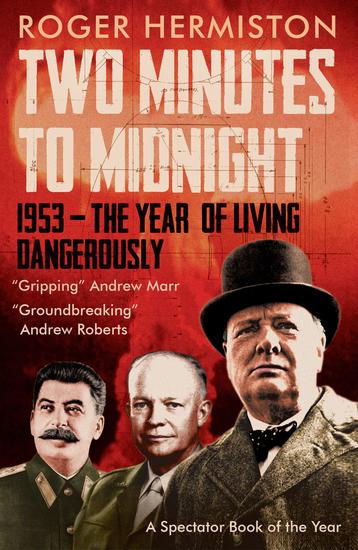
  • Two Minutes to Midnight - 1953 – The Year of Living Dangerously - cover

    Two Minutes to Midnight - 1953 –...

    Roger Hermiston

    • 0
    • 0
    • 0
    A SPECTATOR BOOK OF THE YEAR – 'a dark remembrance of 1953, when nuclear annihilation was only the press of a button away'.
    January 1953. Eight years on from the most destructive conflict in human history, the Cold War enters its deadliest phase. An Iron Curtain has descended across Europe, and hostilities have turned hot on the Korean peninsula as the United States and Soviet Union clash in an intractable and bloody proxy war.
    Former wartime allies have grown far apart. An ageing Winston Churchill, back in Downing Street, yearns for peace with the Kremlin – but new American President Dwight Eisenhower cautions the West not to drop its guard. Joseph Stalin, implacable as ever, conducts vicious campaigns against imaginary internal enemies.
    Meanwhile, the pace of the nuclear arms race has become frenetic. The Soviet Union has finally tested its own atom bomb, as has Britain. But in the middle of the Pacific Ocean, the United States has detonated its first thermonuclear device, dwarfing the destruction unleashed on Hiroshima and Nagasaki.
    For the first time, the Doomsday Clock is set at two minutes to midnight, with the risk of a man-made global apocalypse increasingly likely. As the Cold War powers square up, every city has become a potential battleground and every citizen a target. 1953 is set to be a year of living dangerously.
    Mostra libro
  • Big Book of New York Ghost Stories - cover

    Big Book of New York Ghost Stories

    Cheri Revai

    • 0
    • 0
    • 0
     Hauntings lurk and spirits linger in the Empire State—from Manhattan’s Ear Inn to the Seneca Hill Ghost in Oswego.   Reader, beware! Turn these pages and enter the world of the paranormal, where ghosts and ghouls alike creep just out of sight. Author Cheri Farnsworth shines a light in the dark corners of New York and scares those spirits out of hiding in this thrilling collection. From apparitions and objects that fly off of tables at the Manhattan Bistro, to a specter that stalks Pulpit Rock in Lake Placid, there’s no shortage of bone-chilling tales to keep you up at night. Around the campfire or tucked away on a dark and stormy night, this big book of ghost stories is a hauntingly good read.  “Whether you’re an armchair ghost enthusiast or prefer to visit haunted locales, this book, excellently organized for both, is a perfect guide and companion.” —Tamara Thorne, author of Old Wives’ Tales
    Mostra libro
  • Dark Psychology - Influencing Others and Avoiding Manipulation and Blackmail - cover

    Dark Psychology - Influencing...

    Wesley Felt

    • 0
    • 0
    • 0
    Deception, as defined by the dictionary, involves intentionally leading someone to believe something that is untrue. This act is deeply ingrained in human nature, allowing anyone to practice it. Deception can engage either the mind or emotions, leveraging our desire for knowledge or information to manipulate us. When deception targets the mind, it often comes in the form of false or distorted information presented as "knowledge." 
      
    When aimed at the body, deception involves persuading someone to undertake actions that have concealed negative consequences. However, the gravest form of deception affects the human spirit. This form is particularly serious because it can influence one’s ultimate fate, even though many people trivialize spiritual matters due to deceptive beliefs. 
    Self-deception occurs when we deceive ourselves into accepting false claims about ourselves as true. This process involves convincing ourselves of a truth that is not actually true, effectively hiding our self-awareness of the deception. Self-deception is a strategic way of maintaining belief in the stories we tell ourselves. If successful, it reduces the likelihood of revealing our true nature, much like overconfidence and optimism. Though similar to these biases, self-deception has its own set of benefits and drawbacks. 
      
    An inflated sense of self-belief can enhance our overall well-being by helping us cope with stress, increasing our persistence in challenging tasks, and encouraging us to seek new experiences. However, when deceit pervades our lives and the lives of those around us, it undermines trust and complicates our existence. While optimism about a bright future is appealing, self-deception can lead to significant disappointments when reality confronts us.
    Mostra libro
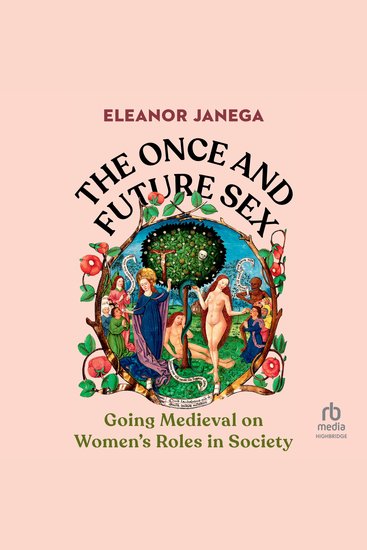
  • The Once and Future Sex - Going Medieval on Women's Roles in Society - cover

    The Once and Future Sex - Going...

    Eleanor Janega

    • 0
    • 0
    • 0
    A vibrant and illuminating exploration of medieval thinking on women's beauty, sexuality, and behavior. 


    What makes for the ideal woman? How should she look, love, and be? In this high-spirited history, medievalist Eleanor Janega turns to the Middle Ages, the era that bridged the ancient world and modern society, to unfurl its suppositions about women and reveal what's shifted over time—and what hasn't. 


    Enshrined medieval thinkers, almost always male, subscribed to a blend of classical Greek and Roman philosophy and Christian theology for their concepts of the sexes. For the height of female attractiveness, they chose the mythical Helen of Troy, whose imagined pear shape, small breasts, and golden hair served as beauty's epitome. Casting Eve's shadow over medieval women, they derided them as oversexed sinners, inherently lustful, insatiable, and weak. And, unless a nun, a woman was to be the embodiment of perfect motherhood. 


    In The Once and Future Sex, Janega unravels the restricting expectations on medieval women and the ones on women today. She boldly questions why, if our ideas of women have changed drastically over time, we cannot reimagine them now to create a more equitable future.
    Mostra libro