Unisciti a noi in un viaggio nel mondo dei libri!
Aggiungi questo libro allo scaffale
Grey
Scrivi un nuovo commento Default profile 50px
Grey
Iscriviti per leggere l'intero libro o leggi le prime pagine gratuitamente!
All characters reduced
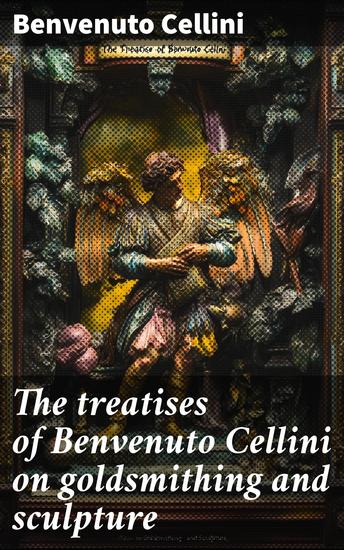
The treatises of Benvenuto Cellini on goldsmithing and sculpture - cover

The treatises of Benvenuto Cellini on goldsmithing and sculpture

Benvenuto Cellini

Casa editrice: Good Press

  • 0
  • 0
  • 0

Sinossi

In "The Treatises of Benvenuto Cellini on Goldsmithing and Sculpture," the illustrious Renaissance artist provides an in-depth exploration of his artistic philosophy and the technical expertise required in the intricate arts of goldsmithing and sculpture. Written with vibrant prose and a meticulous attention to detail, Cellini's treatises serve as both instructional manuals and personal narratives, encapsulating the spirit of the 16th century. His passionate reflections on creativity, craftsmanship, and aesthetic beauty resonate through vivid anecdotes and practical advice, marking a significant contribution to the burgeoning field of art theory during the Renaissance. Benvenuto Cellini (1500-1571) was not only a master goldsmith but also a sculptor and an author, with a life that intertwined artistry and adventure. His experiences—ranging from court intrigues to personal rivalries—shaped his perspective on art as a discipline of both skill and emotion. Inspired by the classical ideals and the burgeoning humanist thought of his era, Cellini's works reflect a deep-seated belief in the power of individual creativity and the importance of personal expression in art. This treatise is an essential read for students, artists, and historians alike, offering invaluable insights into Renaissance artistry and Cellini's indomitable spirit. Through his eloquent and engaging narrative, readers are invited to engage with the artistic processes of a genius whose influence continues to reverberate through the world of art today.
Disponibile da: 02/03/2025.
Lunghezza di stampa: 150 pagine.

Altri libri che potrebbero interessarti

  • Wisdom of the East The: The Instruction of Ptah-hotep and The Instruction Of Ke'gemni - cover

    Wisdom of the East The: The...

    Battiscombe G. Gunn

    • 0
    • 0
    • 0
    "The Instruction of Ptahhotep and The Instruction of Ke'gemni" stand as remarkable testimonies to the enduring wisdom and ethical insights of ancient Egyptian civilization. These texts, attributed to viziers Ptahhotep and Ke'gemni respectively, provide invaluable guidance on navigating the complexities of life with integrity, wisdom, and virtue. Dating back to the Fifth Dynasty of Egypt, around 2400 BCE, these works are among the oldest surviving examples of wisdom literature in human history. Through a series of moral teachings, aphorisms, and advice passed down from generation to generation, readers are offered profound insights into the social, ethical, and spiritual values of ancient Egyptian society. The teachings encompass a wide range of topics, including the importance of humility, the pursuit of knowledge, the value of integrity in leadership, and the significance of familial and societal bonds. Each instruction serves as a timeless reminder of the universal principles that underpin a flourishing and harmonious life."The Instruction of Ptahhotep" is particularly renowned for its emphasis on wisdom acquired through experience and humility, as Ptahhotep imparts his knowledge to his son in a spirit of paternal care and guidance. Meanwhile, "The Instruction of Ke'gemni" similarly offers invaluable lessons on ethical conduct and leadership, drawing from the experiences and wisdom of another esteemed vizier of ancient Egypt. Together, these texts provide a comprehensive ethical framework for individuals seeking to lead a virtuous and meaningful life, offering practical guidance that remains relevant and inspiring across cultures and millennia.As readers delve into these ancient teachings, they are transported back in time to a civilization that valued wisdom, integrity, and moral excellence above all else. Despite the vast temporal and cultural distance that separates modern readers from ancient Egypt, the wisdom contained within these texts transcends boundaries of time and space, resonating with universal truths about human nature and the human condition. Whether pondering the intricacies of personal relationships, reflecting on the responsibilities of leadership, or contemplating the pursuit of spiritual enlightenment, readers will find in these ancient teachings a source of timeless wisdom and guidance that continues to illuminate the path toward a life of virtue and fulfillment.
    Mostra libro
  • RMF ISSO: Foundations (Guide) - NIST 800 Risk Management Framework For Cybersecurity Professionals - cover

    RMF ISSO: Foundations (Guide) -...

    Brown Brown

    • 0
    • 0
    • 0
    This is a breakdown of the NIST risk management framework process for cybersecurity professionals getting into security compliance. It is written in layman's terms without the convoluted way it is described in the NIST SP 800-37 revision 2. It goes into what the information system security officer does at each step in the process and where their attention should be focused. 
    Although the main focus is on implementation of the NIST 800 RMF process, this book covers many of the main concepts on certifications such as the ISC2 CGRC.
    Mostra libro
  • The Italian City-States - Birthplaces of the Renaissance - cover

    The Italian City-States -...

    Harris Ropes

    • 0
    • 0
    • 0
    The Italian city-states emerged as powerful economic, political, and cultural centers during the late Middle Ages and early Renaissance. Unlike the feudal kingdoms of northern Europe, Italy developed a unique system of independent cities, each governed by its own political structure. These city-states, including Florence, Venice, Milan, and Genoa, thrived due to their strategic locations, economic prosperity, and the weakening of feudalism. Their rise laid the foundation for the Renaissance, a period of unprecedented artistic and intellectual achievement. 
    One of the key factors behind the growth of the Italian city-states was the decline of feudalism. In much of Europe, feudal lords controlled vast territories, but in Italy, urban centers gained power as trade and commerce flourished. The weakening of the Holy Roman Empire’s authority in the region allowed cities to assert their independence. Many city-states established their own governments, often ruled by merchant families or oligarchies rather than hereditary monarchs. This shift created a political climate that encouraged innovation, diplomacy, and economic expansion. 
    Geography also played a crucial role in the rise of these city-states. Italy’s position in the Mediterranean made it a central hub for trade between Europe, Asia, and North Africa. Cities like Venice and Genoa developed extensive maritime trade networks, importing luxury goods such as silk and spices while exporting textiles and banking services. The wealth generated from commerce enabled these cities to fund artistic and architectural projects, further elevating their cultural status.
    Mostra libro
  • If You Want to Write - A Book about Art Independence and Spirit - cover

    If You Want to Write - A Book...

    Brenda Ueland

    • 0
    • 0
    • 0
    Feeling stifled by "shoulds" and yearning to find your authentic voice? Uncork your creativity with Brenda Ueland's timeless classic, "If You Want to Write." Originally published in 1938, this inspiring guide is more than just craft tips; it's a passionate manifesto for artistic independence. Ueland, a mentor to writers like Anaïs Nin and Flannery O'Connor, believes everyone has a unique story to tell and urges you to silence self-doubt and embrace the inherent joy of writing. With warmth, humor, and practical wisdom, she encourages you to:Ditch the rules: Forget rigid structures and find your own rhythm.Mine your experiences: Everyday life is a treasure trove of inspiration.Write for yourself first: Prioritize your genuine voice over external expectations.Embrace imperfection: Don't let fear paralyze you; write freely and learn as you go.Celebrate the journey: Find joy in the process, not just the outcome.Whether you're a budding writer or a seasoned storyteller seeking a spark, "If You Want to Write" is your invitation to unleash your creative spirit and embark on a journey of self-discovery through the power of words.
    Mostra libro
  • Like a Prisoner - Stories of Endurance - cover

    Like a Prisoner - Stories of...

    Fatos Lubonja

    • 0
    • 0
    • 0
    The book contains eleven dramatic and often horrifying stories, each describing the life of a different prisoner in the camps and prisons of communist Albania. The prisoners adapt, endure, and generally survive, all in different ways. They may conform, rebel, construct alternative realities of the imagination, cultivate hope, cling to memories of lost love, or devisenincreasingly strange and surreal strategies of resistance.
    
    The characters inndifferent stories are linked to one another, and in their human relationships create a total picture of a secret and terrifying world. In the prisoners' back stories, the anecdotes they tell, and their political discussions, the book also reaches out beyond the walls and barbed wire to give the reader a panoramic picture of life in totalitarian Albania.
    Mostra libro
  • Maurya Empire - The Rise of Ancient India's First Great Dynasty - cover

    Maurya Empire - The Rise of...

    Rolf Hedger

    • 0
    • 0
    • 0
    The Maurya Empire, one of the most significant dynasties in Indian history, emerged in the late 4th century BCE. Its foundations were laid by Chandragupta Maurya, who, with the guidance of his advisor Chanakya, overthrew the ruling Nanda dynasty and established a powerful empire. The rise of the Mauryas marked a turning point in Indian history, as they created a centralized and efficient administration that governed vast territories. 
    Before the Maurya Empire, the Indian subcontinent was fragmented into various kingdoms and republics. The dominant power during this time was the Nanda dynasty, which ruled over Magadha, a region in present-day Bihar. Though the Nandas controlled a significant portion of northern India, their rule was marked by heavy taxation and unpopular policies, which created discontent among the people and the military. This environment of dissatisfaction provided an opportunity for Chandragupta Maurya to challenge their authority. 
    Chandragupta’s rise to power is closely linked to Chanakya, a scholar and strategist who had been humiliated by the Nandas. Seeking revenge, Chanakya trained Chandragupta in statecraft, military tactics, and governance. With his mentor’s guidance, Chandragupta built an army and gradually expanded his influence. By allying with local rulers and gaining the support of disgruntled soldiers, he launched a successful campaign against the Nandas, eventually seizing control of Magadha around 321 BCE.
    Mostra libro