Join us on a literary world trip!
Add this book to bookshelf
Grey
Write a new comment Default profile 50px
Grey
Subscribe to read the full book or read the first pages for free!
All characters reduced
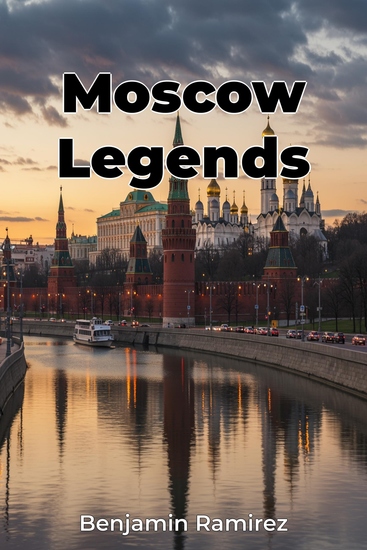
Moscow Legends - cover

Moscow Legends

Benjamin Ramirez

Translator A AI

Publisher: Publifye

  • 0
  • 0
  • 0

Summary

"Moscow Legends" explores the rich tapestry of Russia's capital, revealing how its architecture and cultural heritage reflect centuries of political and social transformation. The book journeys through Moscow's evolution, highlighting the city's role as a symbol of Russian power and identity.

 
From the grandeur of the Kremlin to the imposing structures of the Soviet era, Moscow's landscape tells a story of tsarist ambitions, ideological shifts, and the enduring traditions that have shaped its character. Discover how Moscow resisted Peter the Great's reforms and the impact of events like the Napoleonic invasion and the Bolshevik Revolution on its identity.

 
The book uniquely examines Moscow as a palimpsest, where each historical layer leaves an indelible mark on its buildings and monuments. By drawing on historical chronicles, architectural plans, and personal accounts, "Moscow Legends" provides fresh insights into the cultural and political forces that have shaped Moscow's urban history.

 
The book progresses from the city's early settlements to the present day, examining key architectural periods and exploring Moscow's efforts to reclaim its heritage after the fall of the Soviet Union.
Available since: 02/20/2025.
Print length: 57 pages.

Other books that might interest you

  • A Short History of Russia - How the World's Largest Country Invented Itself from the Pagans to Putin - cover

    A Short History of Russia - How...

    Anonymous

    • 0
    • 0
    • 0
    A Library Journal 2020 Title to Watch"Terrific - and an amazing achievement to cover so much ground in such a short and wonderfully readable book." -Peter Frankopan, bestselling author of The Silk RoadsRussia’s epic story told in an accessible, lively and short form, using the country's fascinating history to help us understand its actions today and what the future might hold A country with no natural borders, no single ethnic group, no true central identity, Russia has mythologized its past to unite its people, to justify its military decisions, and to signal strength to outsiders. Mark Galeotti takes us behind the myths to the heart of the Russian story, covering key moments such as:the formation of a nation through its early legends, including Ivan the Terrible and Catherine the Greatthe rise and fall of the Romanovs, the Russian Revolution, the Cold War, Chernobyl and the Soviet Unionthe arrival of an obscure politician named Vladimir Putin and his ambitions for RussiaA Short History of Russia explores the history of this fascinating, extraordinary, desperate and exasperating country through two intertwined issues: the way successive influences from beyond its borders have shaped Russia, and the way Russians came to terms with this influence, writing and rewriting their past to understand their present and try to shape their future. In turn, this self-invented history has come to affect not just their constant nation-building project but also their relations with the world.
    Show book
  • The Life and Times of Queen Elizabeth II - cover

    The Life and Times of Queen...

    Pearson Phillips

    • 0
    • 0
    • 0
    The reign of Queen Elizabeth II has seen huge changes in the lifestyle and expectations of peoples and nations. She has proved to be the constitutional monarch par excellence – while primarily a figurehead she has guided the concept of monarchy through difficult times, both national and personal. And even when her family has been rocked by scandals, she has maintained a quiet dignity. In this informative yet entertaining audio-biography, Pearson Phillips reflects on her life and times.
    Show book
  • Spiderweb Capitalism - How Global Elites Exploit Frontier Markets - cover

    Spiderweb Capitalism - How...

    Kimberly Kay Hoang

    • 0
    • 0
    • 0
    In 2015, the anonymous leak of the Panama Papers brought to light millions of financial and legal documents exposing how the superrich hide their money using complex webs of offshore vehicles. Spiderweb Capitalism takes you inside this shadow economy, uncovering the mechanics behind the invisible, mundane networks of lawyers, accountants, company secretaries, and fixers who facilitate the illicit movement of wealth across borders and around the globe. 


    Kimberly Kay Hoang conducted hundreds of in-depth interviews with private wealth managers, fund managers, entrepreneurs, C-suite executives, bankers, auditors, and other financial professionals. She traces the flow of capital from offshore funds in places like the Cayman Islands, Samoa, and Panama to special-purpose vehicles and holding companies in Singapore and Hong Kong, and how it finds its way into risky markets onshore in Vietnam and Myanmar. Hoang reveals the strategies behind spiderweb capitalism and examines the moral dilemmas of making money in legal, financial, and political gray zones. 


    Spiderweb Capitalism sheds critical light on how global elites capitalize on risky frontier markets, and deepens our understanding of the paradoxical ways in which global economic growth is sustained through states where the line separating the legal from the corrupt is not always clear.
    Show book
  • Dirk Nowitzki: A short biography - 5 Minutes: Short on time – long on info! - cover

    Dirk Nowitzki: A short biography...

    5 Minutes, 5 Minute Biographies,...

    • 0
    • 0
    • 0
    Dirk Nowitzki, German basketball star and NBA legend: Life and work in a short biography! Everything you need to know, brief and concise. Infotainment, education and entertainment at its best!
    Show book
  • Playboy Swings - How Hugh Hefner and Playboy Changed the Face of Music - cover

    Playboy Swings - How Hugh Hefner...

    Patty Farmer

    • 0
    • 0
    • 0
    Playboy—the magazine, the empire, the lifestyle—is one of the world's best-known brands. Since the launch of Playboy magazine in 1953, two elements have been remarkably consistent: the first, obviously, is the celebration of nubile, female flesh. The second, readers may be surprised to learn, is Playboy's involvement in the music scene. The Playboy experience was never just about sex but about lifestyle. Music—particularly the finest jazz, a personal passion of Hefner's—has always been an essential component of that lifestyle. Playboy Swings focuses specifically on Playboy's involvement in the music scene, its impact on popular entertainment (and vice versa), and the fabulous cadre of performers who took to the stages of the mythic Playboy Clubs and Jazz Festivals. Throughout Playboy Swings, Farmer demonstrates how Playboy helped change the world through music by integrating the TV shows, festivals, and the clubs.Complied through interviews with hundreds of people who were on the scene throughout Playboy's rise, fall, and on-going renaissance, Playboy Swings carries readers on a seductive journey through the history of the empire—all the while focusing on the musical entertainment that made it unique. Hef's personal passion for music—and his belief in it as a cornerstone of the Playboy ethos—has expressed itself in a wide range of media over Playboy's 60-year history, and all of it comes alive in these pages. Famer takes the reader from the inception of the Playboy empire through the 1959 jazz festival, to the opening of club after club. With approximately 60 black and white photos, and a complete Playboy music reference guide, readers will think of music, not just Bunnies, when thinking about Playboy. Throughout the book, it is the artists who do most of the talking—and they have a lot to say about the golden era of Playboy entertainment.
    Show book
  • The North Korean Famine - A Chronicle of Suffering - cover

    The North Korean Famine - A...

    Sarah Willards

    • 0
    • 0
    • 0
    The roots of the North Korean famine can be traced back to a combination of political decisions, economic isolation, and environmental misfortune. In the decades following the Korean War, North Korea embraced a rigid command economy based on Juche, or self-reliance, which emphasized centralized planning and rejected significant foreign trade or aid. While this model initially allowed for rapid industrial growth and agricultural development, it was not sustainable in the long term. The system lacked flexibility and efficiency, and over time, infrastructure and productivity began to deteriorate. 
    A major turning point came with the dissolution of the Soviet Union in the early 1990s. North Korea had relied heavily on Soviet subsidies, favorable trade terms, and access to cheap fuel and machinery. The collapse of this relationship led to a sharp decline in industrial output and a severe energy crisis. The loss of external support laid bare the fragility of North Korea’s economy, which was unable to function independently at the necessary scale to support its population. 
    Compounding these issues were a series of natural disasters that struck the country in the mid-1990s. Heavy flooding in 1995 and 1996 destroyed large areas of farmland, washed away infrastructure, and further reduced the already-limited food supply. The government’s agricultural methods, which were outdated and heavily dependent on chemical fertilizers and machinery, proved ill-suited to withstand environmental shocks. Poor land management and deforestation made the country even more vulnerable to flooding and soil erosion.
    Show book